

The Indian automotive landscape is currently navigating a period of unprecedented transformation. As the world’s third-largest emitter of greenhouse gases and a nation heavily reliant on energy imports, India is under immense pressure to decarbonize its transport sector. While the global narrative often leans heavily toward total electrification, the Indian context demands a more nuanced, multi-pronged approach.
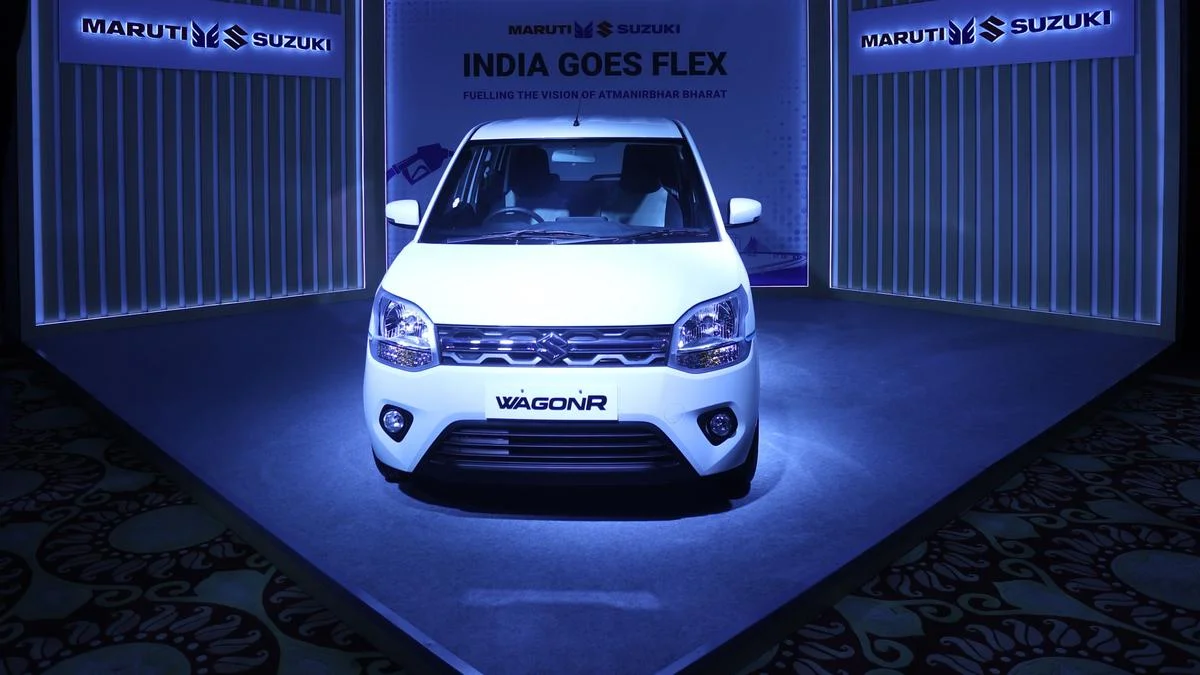
Central to this strategy is the emergence of Flex-Fuel Vehicles (FFVs). Recently, Maruti Suzuki, India’s largest carmaker, showcased its Wagon R Flex Fuel prototype—a vehicle that represents more than just a new variant of a popular hatchback. It signifies a strategic pivot toward "Atmanirbhar Bharat" (Self-Reliant India) by leveraging the country’s agricultural prowess to power its mobility needs.
Main Facts: The Wagon R Flex Fuel and the Shift to Ethanol
The Maruti Suzuki Wagon R Flex Fuel is engineered to operate on a wide spectrum of ethanol-petrol blends. While standard vehicles in India are currently transitioning to E20 (20% ethanol, 80% petrol), the Wagon R Flex Fuel is designed to handle anything from E20 to E100 (100% ethanol).
Technical Specifications and Engineering
To the untrained eye, the Wagon R Flex Fuel looks identical to its petrol-powered counterpart. However, the internal modifications are extensive. Ethanol is chemically different from petrol; it is more corrosive and has a lower energy density. To combat this, Maruti Suzuki’s engineers have:
- Upgraded Fuel Systems: Installed ethanol-compatible fuel pumps, injectors, and fuel lines that resist the corrosive nature of high-concentration alcohol.
- Advanced Engine Control Unit (ECU): The heart of the vehicle is a sophisticated ECU equipped with sensors that detect the ethanol-to-petrol ratio in real-time. It automatically adjusts ignition timing and fuel injection to ensure optimal performance regardless of the blend.
- Reinforced Components: Valves and valve seats have been hardened to withstand the different combustion temperatures and lubrication properties of ethanol.
Positioning in the Market
By choosing the Wagon R—a perennial bestseller and a symbol of middle-class Indian mobility—Maruti Suzuki is signaling that flex-fuel technology is not a niche luxury but a mass-market solution. With an expected price range of INR 7.50 to 8.00 lakh, the vehicle aims to remain accessible while offering a "greener" alternative to traditional internal combustion engine (ICE) vehicles.
Chronology: India’s Ethanol Roadmap
The journey toward a flex-fuel future has been a calculated progression by the Government of India, moving through several key milestones:

- 2003: The Pilot Phase: The Ethanol Blending Program (EBP) was first launched in select states with a modest 5% blending target.
- 2018: National Policy on Biofuels: The government set an ambitious target of 20% ethanol blending by 2030.
- 2021: Acceleration of Targets: Recognizing the urgency of climate change and the rising cost of crude oil, Prime Minister Narendra Modi advanced the E20 target from 2030 to 2025-26.
- 2023: The E20 Rollout: E20 fuel began appearing at select petrol pumps across the country. Simultaneously, Maruti Suzuki and Toyota showcased their flex-fuel prototypes to demonstrate technical readiness.
- 2024 and Beyond: The focus has shifted from mere blending to the introduction of dedicated Flex-Fuel Vehicles (FFVs) and Flex-Fuel Strong Hybrid Electric Vehicles (FF-SHEVs) that can utilize higher concentrations like E85 and E100.
Supporting Data: The Economics of Ethanol
The push for flex-fuel is driven by three primary data points: energy security, environmental impact, and agricultural support.
Energy Security and Forex Savings
India imports over 85% of its crude oil requirements. In the 2022-2023 fiscal year, India’s oil import bill exceeded $150 billion. According to NITI Aayog, achieving the E20 target alone can save the country approximately $4 billion (INR 30,000 crore) per year in foreign exchange. Moving toward E100 capabilities further insulates the economy from the volatility of global Brent crude prices.
The Agricultural Synergy
India is the world’s second-largest producer of sugar. Ethanol is primarily derived from sugarcane molasses, but the government has expanded the "feedstock" basket to include damaged food grains, maize, and rice husk.
- Surplus Management: India often produces a surplus of sugar, which depresses domestic prices and hurts farmers. Diverting this surplus to ethanol production provides a "floor price" for farmers and ensures timely payments from sugar mills.
- Rural Wealth: The transition to ethanol effectively turns the agricultural sector into an energy provider, transferring wealth from oil-exporting nations to India’s rural heartland.
Emissions Profile
Ethanol is a renewable fuel that contains oxygen, which allows for more complete combustion of the fuel. Data from the Society of Indian Automobile Manufacturers (SIAM) suggests that E100 can reduce carbon monoxide emissions by up to 50% and hydrocarbon emissions by 20% compared to neat petrol.
Official Responses: Industry and Government Perspectives
The rollout of the Wagon R Flex Fuel has drawn significant commentary from stakeholders across the spectrum.
The Government’s Stance:
Nitin Gadkari, the Union Minister for Road Transport and Highways, has been the most vocal proponent of flex-fuel technology. He has frequently urged manufacturers to accelerate the production of FFVs, stating, "If Brazil can succeed with flex-fuel engines, there is no reason why India, the world’s top sugar producer, cannot do the same. This is the key to reducing our import bill and helping our farmers become ‘Urjadata’ (energy providers)."

Maruti Suzuki’s Strategy:
Hisashi Takeuchi, Managing Director & CEO of Maruti Suzuki India, has emphasized that while the company is committed to EVs (with their first electric SUV, the eVX, on the horizon), a "one-size-fits-all" approach will not work for India. "The Wagon R Flex Fuel shows our capability to adapt to the government’s vision. Our goal is to provide a variety of technologies—CNG, Hybrids, EVs, and Flex-Fuel—to cater to different consumer needs and infrastructure realities."
SIAM and Industry Experts:
The Society of Indian Automobile Manufacturers (SIAM) has expressed technical optimism but remains cautious about the "ecosystem." Industry experts point out that while the vehicles are ready, the "well-to-wheel" efficiency must be maintained. They argue that for flex-fuel to succeed, the government must ensure a consistent supply of high-grade ethanol and provide tax incentives to make the fuel cheaper for the end consumer.
Implications: Challenges on the Road Ahead
Despite the technical success of the Wagon R Flex Fuel, several hurdles remain before ethanol becomes a mainstream reality for the Indian motorist.
1. The Calorific Value Gap
The most significant challenge for the consumer is fuel efficiency. Ethanol has roughly 33% less energy density than petrol. This means a car running on E100 will likely see a 15-25% drop in mileage compared to when it runs on pure petrol. Unless the price of ethanol at the pump is significantly lower than petrol (reflecting its lower energy content), the consumer has little financial incentive to switch.
2. Infrastructure and Distribution
While ethanol can leverage existing petrol pumps, the logistics of transporting ethanol from distilleries to fuel stations nationwide are complex. Ethanol is hygroscopic (it absorbs water), meaning it cannot be transported through existing pipelines used for petrol. It requires dedicated tankers and storage tanks with specialized linings to prevent contamination.
3. Public Perception and Maintenance
There is a lingering concern among car owners regarding the long-term effects of ethanol on engine health. Older vehicles (pre-BS6) are not designed for high ethanol blends, and using such fuel can lead to the degradation of rubber seals and plastic components. Clear labeling at fuel stations and a robust public awareness campaign are essential to prevent "misfueling" and consumer anxiety.

4. The "Food vs. Fuel" Debate
As India moves toward E100, the demand for feedstock will skyrocket. Critics argue that diverting land and crops for fuel production could impact food security or lead to increased water consumption in already water-stressed regions where sugarcane is grown. Balancing the needs of the dining table with the needs of the fuel tank will be a delicate policy act for future governments.
Conclusion: A Multi-Modal Future
The Maruti Suzuki Wagon R Flex Fuel is a testament to Indian engineering’s adaptability. It serves as a bridge between the era of fossil fuels and an era of sustainable mobility. By placing this technology in a mass-market vehicle, Maruti Suzuki has effectively ended the "experimental" phase of flex-fuel in India.
However, the success of this vehicle—and the technology at large—depends on a synchronized evolution of the entire ecosystem. The product is ready, and the engineering is sound. The next chapter will be written by policymakers, sugar millers, and the infrastructure developers who must ensure that when a customer drives their Wagon R to a pump, the choice to "go green" is both easy and economically sound.
India’s path to net zero will not be paved with a single technology. It will be a mosaic of electric motors, hydrogen cells, and, as the Wagon R proves, the high-octane potential of homegrown ethanol.
Maruti Suzuki Wagon R Flex Fuel expected price: (INR 7.50 – 8.00 lakh)
Motorscribes, in association with The Hindu, brings you the latest in cars and bikes. Follow them on Instagram @motorscribes
