

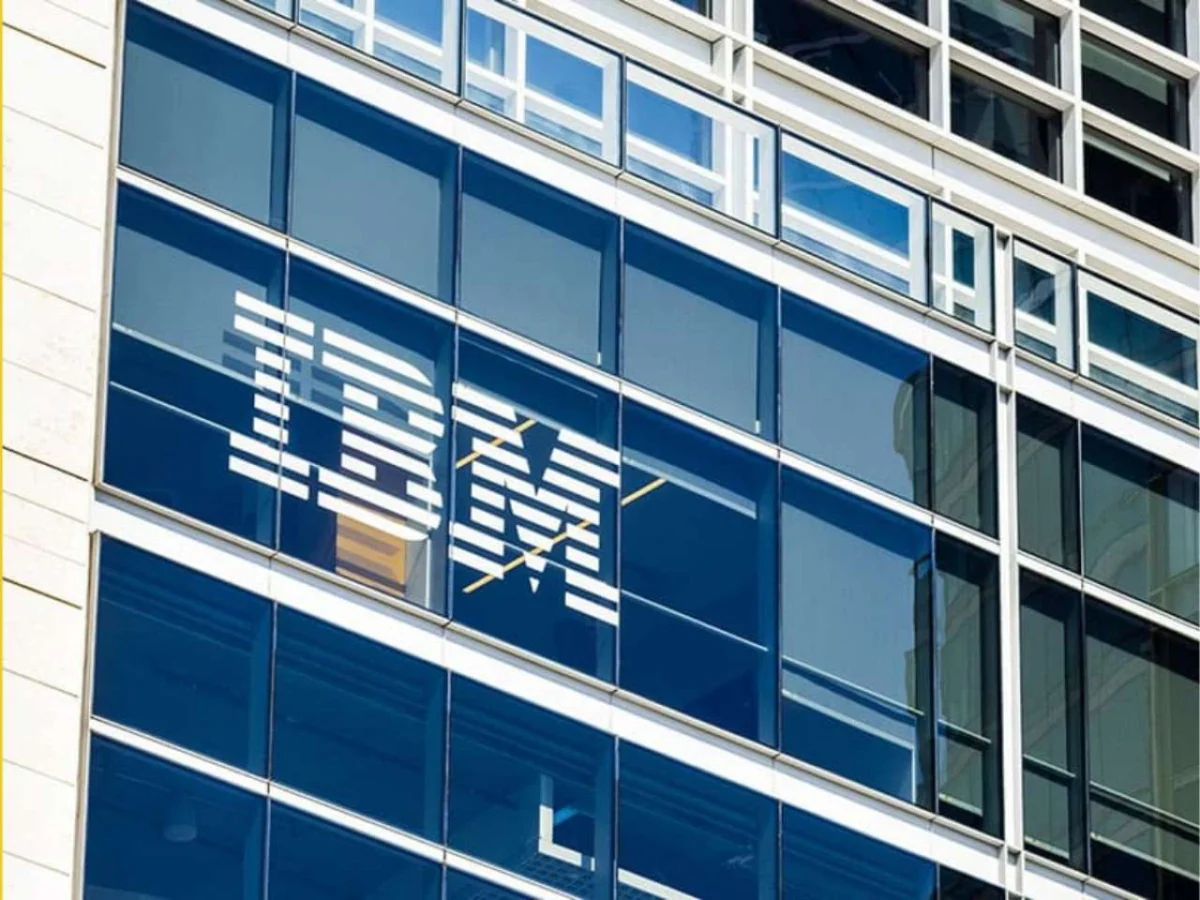
New York, NY – July 16, 2026 – International Business Machines (IBM), a titan of the technology world, faced a devastating blow on Tuesday as its shares plummeted by an astonishing 25 percent. The dramatic sell-off, triggered by the release of unsatisfactory preliminary second-quarter results, wiped out an estimated $67 billion to $70 billion in market capitalization in a single trading day. This cataclysmic event marks the company’s worst stock performance in a staggering 58 years, a period stretching back over half a century, undershining the severe challenges confronting the venerable tech giant.
The immediate fallout sent shockwaves through the financial markets, not just for the sheer scale of the loss but for its implications on a company synonymous with enterprise computing and technological innovation. Investors reacted swiftly and decisively to the revelation that IBM’s revenue for the three months ending in June climbed a mere one percent to $17.2 billion, a figure that starkly undershot market expectations and underscored deeper operational and strategic vulnerabilities.
A Staggering Setback for a Tech Icon
The magnitude of Tuesday’s market reaction cannot be overstated. For a company founded in 1911, with a legacy spanning the birth of modern computing, the mainframe era, the personal computer revolution, and the advent of artificial intelligence, a 25 percent single-day drop represents an existential tremor. IBM, often seen as a bellwether for the broader enterprise technology sector, found itself in an unenviable position, grappling with investor discontent and a reevaluation of its strategic trajectory.
The $67 billion to $70 billion loss in market capitalization is more than just a number; it represents a significant erosion of shareholder wealth and a blow to the confidence of institutional and individual investors alike. It places immense pressure on CEO Arvind Krishna and his leadership team to articulate a clear path forward, reassuring stakeholders that this historic stumble is not a harbinger of a prolonged decline but rather a critical inflection point for recalibration and renewed focus. The immediate concern is the stark contrast between IBM’s deep-rooted history of innovation and its present struggle to capture sufficient growth in an intensely competitive and rapidly evolving technological landscape.
)
Chronology: The Road to a Tumultuous Quarter
IBM’s journey to this tumultuous second quarter has been characterized by a multi-year transformation effort, spearheaded by CEO Arvind Krishna. Since taking the helm in 2020, Krishna has aggressively pursued a strategy focused on hybrid cloud and artificial intelligence, aiming to pivot IBM away from its legacy hardware and services segments towards higher-growth, software-centric offerings. A key move in this strategy was the spin-off of Kyndryl, its managed infrastructure services business, in late 2021, a move intended to streamline IBM and allow it to concentrate on its core strengths. The acquisition of Red Hat for $34 billion in 2019 also formed a cornerstone of its hybrid cloud ambitions, providing open-source capabilities crucial for enterprise cloud deployments.
Leading up to the second quarter of 2026, IBM had presented a mixed picture to investors. While the company had shown modest revenue growth in recent quarters, largely attributed to its software and consulting segments, concerns lingered about the overall pace of transformation and its ability to significantly accelerate growth. Analysts had been cautiously optimistic about the Red Hat integration and IBM’s positioning in the burgeoning hybrid cloud market, but the underlying narrative often highlighted the ongoing challenges of shedding its legacy image and truly competing with hyperscale cloud providers like Amazon Web Services, Microsoft Azure, and Google Cloud.

The preliminary second-quarter results, unveiled on Tuesday, revealed a stark deceleration in this growth narrative. The overall revenue increase of just one percent to $17.2 billion fell significantly short of market expectations, suggesting that the strategic pivot was either not yielding results fast enough or facing unforeseen headwinds. Digging deeper into the segmental performance, the report highlighted critical areas of concern:
- Infrastructure Business Under Pressure: The company’s infrastructure business, which includes its iconic mainframe line, witnessed a seven percent decline in revenue. This segment, historically a cash cow for IBM, showed significant weakness, indicating a potential shift in client spending patterns away from these high-margin core systems.
- Software Growth Below Expectations: While software revenue did see a five percent increase, this growth was notably below analyst projections. In a period marked by unprecedented demand for enterprise software, particularly in areas like AI and data analytics, IBM’s inability to capitalize more robustly on this trend raised questions about its competitive positioning and product relevance.
- The Unanticipated Shift: The core of the problem, as articulated by IBM’s leadership, was an "unanticipated magnitude of capex reprioritization" by clients, particularly in the latter weeks of June. This sudden shift caught the company off guard, leading directly to the unsatisfactory preliminary results and the subsequent investor backlash.
The immediate reaction on Tuesday was one of profound disappointment and shock. Trading desks buzzed with frantic activity as institutional investors reevaluated their positions, leading to a cascade of sell orders. The sheer volume of shares traded and the speed of the decline underscored the market’s unforgiving nature when a company of IBM’s stature fails to meet performance benchmarks, especially after communicating a clear growth strategy.
)
Supporting Data: Unpacking the Underlying Pressures
The factors contributing to IBM’s disastrous second quarter are multifaceted, reflecting a complex interplay of internal execution challenges, shifting client priorities, and broader industry trends. Understanding these underlying pressures is crucial to comprehending the depth of the crisis.
The Mainframe Meltdown and Client Capex Reprioritization
At the heart of the infrastructure business’s decline was a significant drop in demand for IBM’s mainframe computers. These powerful, secure, and highly reliable machines, like the Z-series, have long been the backbone of critical operations for banks, insurance companies, governments, and large corporations, processing millions of transactions daily. IBM’s dominance in this niche has historically provided a stable, high-margin revenue stream.
)
However, CEO Arvind Krishna revealed a critical shift in client behavior during the quarter. "In the last few weeks of June, we saw clients shift their quarterly capex spend toward servers, storage, and memory purchases to secure supply-constrained infrastructure ahead of expected price increases," Krishna stated in his letter to investors. This massive purchasing spree moved capital away from IBM’s higher-margin mainframe computers and related software. This indicates that major corporate clients, facing global supply chain uncertainties and inflationary pressures, made strategic decisions to prioritize the acquisition of more general-purpose, readily available hardware. They sought to lock in prices and ensure supply for essential components that underpin modern cloud and distributed computing environments, rather than investing in new mainframe cycles.
This trend highlights a broader industry movement towards hybrid and multi-cloud architectures. While mainframes remain indispensable for certain mission-critical workloads, enterprises are increasingly seeking flexibility, scalability, and cost-efficiency that cloud-native solutions and distributed systems offer. IBM’s challenge is to ensure its hybrid cloud strategy effectively integrates with, rather than competes against, its mainframe business, providing compelling reasons for clients to continue investing in both. The recent quarter suggests that, at least for some clients, the immediate imperative was to secure foundational cloud infrastructure, even if it meant deferring mainframe upgrades.
)
The AI Infrastructure Arms Race and Supply Chain Strain
The "global race for building artificial intelligence infrastructure" has indeed triggered unprecedented demand for servers, high-performance memory chips, and storage solutions. The computational intensity of training large language models (LLMs) and deploying AI applications requires vast quantities of specialized hardware, particularly Graphics Processing Units (GPUs) and high-bandwidth memory (HBM). This surge in demand has naturally led to skyrocketing prices and exacerbated existing supply shortages across the industry, particularly for advanced semiconductors.
While this boom presents enormous opportunities for tech companies involved in hardware and infrastructure, it also creates significant challenges. Companies like IBM, which offer integrated solutions including hardware, software, and services, must navigate this volatile supply chain environment. If clients are aggressively buying components directly to build their AI infrastructure, it could bypass IBM’s higher-value integrated offerings or squeeze its margins if it struggles to secure components at competitive prices. The inability to fully meet or anticipate client demand for these foundational AI components, coupled with clients’ direct procurement strategies, likely contributed to IBM’s Q2 underperformance. The focus on securing "supply-constrained infrastructure" by clients directly speaks to the urgency and scarcity in the market for AI-enabling hardware.
)
Cybersecurity: A Paradoxical Headwind
Adding another layer of complexity, IBM reported that "cybersecurity concerns across the industry weighed on client spending during the quarter." This might seem counterintuitive, as increased cybersecurity threats should theoretically drive demand for security solutions, an area where IBM has a significant portfolio. However, Krishna elaborated that businesses were "prioritising investments in cybersecurity as the rapid adoption of AI has made cyberattacks increasingly sophisticated."
This suggests a reallocation of IT budgets. Instead of investing in other areas, perhaps new software licenses or infrastructure upgrades, clients were diverting capital specifically towards bolstering their cybersecurity defenses. While IBM offers robust cybersecurity products and services, the shift in spending priority meant that other segments of its business, such as mainframes or certain software categories, felt the pinch. The paradox is that while AI presents new opportunities, its accelerated adoption simultaneously creates new vulnerabilities, compelling businesses to ring-fence their existing IT estates first, potentially at the expense of new strategic investments with partners like IBM. This indicates a defensive posture by clients, impacting discretionary IT spending that IBM relies on for growth.
)
Competitive Landscape and Market Share Pressures
IBM operates in a fiercely competitive environment. In cloud computing, it faces the immense scale and innovation of AWS, Microsoft Azure, and Google Cloud Platform. In enterprise software, it contends with Oracle, SAP, Salesforce, and a myriad of specialized SaaS providers. In hardware, Dell Technologies and Hewlett Packard Enterprise are significant players. IBM’s hybrid cloud strategy, while sound in principle, requires constant innovation and aggressive market penetration to carve out meaningful share against these well-entrenched and rapidly evolving competitors. The Q2 results suggest that, in certain segments, IBM is struggling to keep pace or differentiate itself sufficiently to capture the available market growth.
Official Responses: Leadership’s Reckoning and Strategic Course Correction
The immediate aftermath of the preliminary Q2 results saw IBM’s leadership front and center, attempting to explain the unexpected downturn and reassure a jittery market. CEO Arvind Krishna’s candor was notable, particularly his stark admission: "We faltered… and did not adapt and move quickly enough." This direct acknowledgment of internal shortcomings, rather than solely attributing the issues to external market forces, signals a critical self-assessment within the company’s highest echelons. Such an admission, while perhaps painful in the short term, can be a crucial first step towards rebuilding trust and demonstrating accountability.
)
Krishna elaborated on the primary driver of the revenue shortfall, reiterating the theme of "capex reprioritisation" by major corporate clients. He stated, "While we anticipated some supply-chain related impact in our expectations, we did not anticipate the magnitude of the capex reprioritisation." This explanation, while offering a specific mechanism for the revenue miss, implicitly highlights a gap in IBM’s market intelligence or agility. Predicting and adapting to significant shifts in client spending, especially in a dynamic market influenced by global supply chain issues and inflationary pressures, is a core competency expected of a leading technology firm. The unexpected "magnitude" of this shift suggests a failure to accurately forecast or respond quickly enough to evolving client needs and market dynamics.
During a subsequent investor call, Krishna and CFO James Kavanaugh further detailed the company’s immediate responses. They emphasized a renewed focus on enhancing supply chain resilience and improving demand forecasting capabilities to better anticipate such shifts in the future. Furthermore, the leadership team reaffirmed IBM’s unwavering commitment to its core hybrid cloud and AI strategy. They outlined plans to double down on research and development in key areas like generative AI, quantum computing, and advanced security solutions, aiming to differentiate IBM’s offerings and create new growth vectors. While specific cost-cutting measures were not explicitly detailed, the underlying message was clear: a disciplined approach to spending and a sharper focus on high-return investments would be paramount.
)
Analyst reactions to IBM’s official statements were mixed. While some appreciated Krishna’s transparency and the acknowledgment of internal missteps, others questioned the robustness of IBM’s strategic planning and execution. Leading technology analyst firms, such as Gartner and Forrester, began to scrutinize whether IBM’s hybrid cloud strategy, while conceptually strong, was translating into sufficient competitive advantage and market share gains against hyperscale cloud providers. Questions also arose regarding the effectiveness of IBM’s sales force in adapting to evolving client spending patterns and effectively communicating the value proposition of its higher-margin solutions in a period of economic uncertainty and budget reprioritization. The consensus was that while IBM’s strategic direction remained broadly sound, the execution and ability to predict market shifts needed significant improvement.
Implications: Navigating a Shifting Tech Landscape
The profound stock slump and the underlying issues revealed in IBM’s preliminary Q2 results carry significant implications, not only for the company itself but for the broader technology industry and its investors.
)
For IBM’s Valuation and Future
The immediate impact on IBM’s valuation is undeniable, with billions wiped off its market capitalization. Rebuilding investor confidence will be a long and arduous journey, requiring consistent positive performance and clear evidence that the company has learned from its mistakes. Investors will be scrutinizing IBM’s upcoming quarterly reports with unprecedented intensity, looking for signs of recovery in its infrastructure segment, accelerated growth in software, and strong traction in its AI and hybrid cloud offerings. The ability to fund future R&D, potential strategic acquisitions, and talent retention could also be impacted if the stock remains depressed, making it harder to attract top talent in a competitive market. IBM’s reputation for stability and reliability has been dented, and regaining that perception will be crucial for both investor and client trust.
Broader Industry Ramifications
IBM’s struggle serves as a potent cautionary tale for other legacy technology companies navigating the rapid pace of digital transformation. It underscores the brutal reality that even established giants must constantly innovate, adapt, and remain acutely attuned to evolving client needs and market dynamics. The incident highlights:
)
- The Intensity of the AI Race: The scramble for AI infrastructure is real and fierce, with significant implications for supply chains and capital expenditure decisions across industries. Companies that cannot effectively supply or leverage this demand risk being left behind.
- Supply Chain Fragility: The "capex reprioritisation" driven by supply concerns underscores the ongoing fragility of global supply chains and their profound impact on corporate spending decisions. Companies must build greater resilience and foresight into their procurement and sales strategies.
- The Power of Cloud Migration: The shift away from mainframes towards more agile, cloud-centric infrastructure is a structural trend. While mainframes retain their importance, the incident suggests that even this entrenched segment is not immune to competitive pressures and changing client priorities.
Investor Outlook and the Road Ahead
For investors, IBM’s recent performance signals a period of heightened volatility and uncertainty. Key metrics to watch in the coming quarters will include:
- Infrastructure Segment Recovery: Can IBM stem the decline in mainframe revenue and show renewed growth in its broader infrastructure offerings?
- Software and Consulting Acceleration: Can these higher-growth segments deliver above-expectation performance to offset other weaknesses?
- Hybrid Cloud and AI Adoption: Is IBM’s flagship hybrid cloud platform gaining market share, and are its AI solutions being widely adopted by enterprises?
- Supply Chain Management: How effectively does IBM manage its supply chain to ensure product availability and competitive pricing?
The road ahead for IBM is undoubtedly challenging. However, IBM has a long history of reinvention, having navigated numerous technological paradigm shifts throughout its existence. The company’s deep enterprise relationships, robust intellectual property, and strategic focus on hybrid cloud and AI still position it with significant assets. The critical test will be whether CEO Arvind Krishna and his team can leverage these strengths, learn from the Q2 misstep, enhance their agility, and execute a strategy that not only stabilizes the company but propels it back into a trajectory of sustainable, meaningful growth in the AI-driven future. The world will be watching to see if this tech icon can once again adapt and thrive.
