

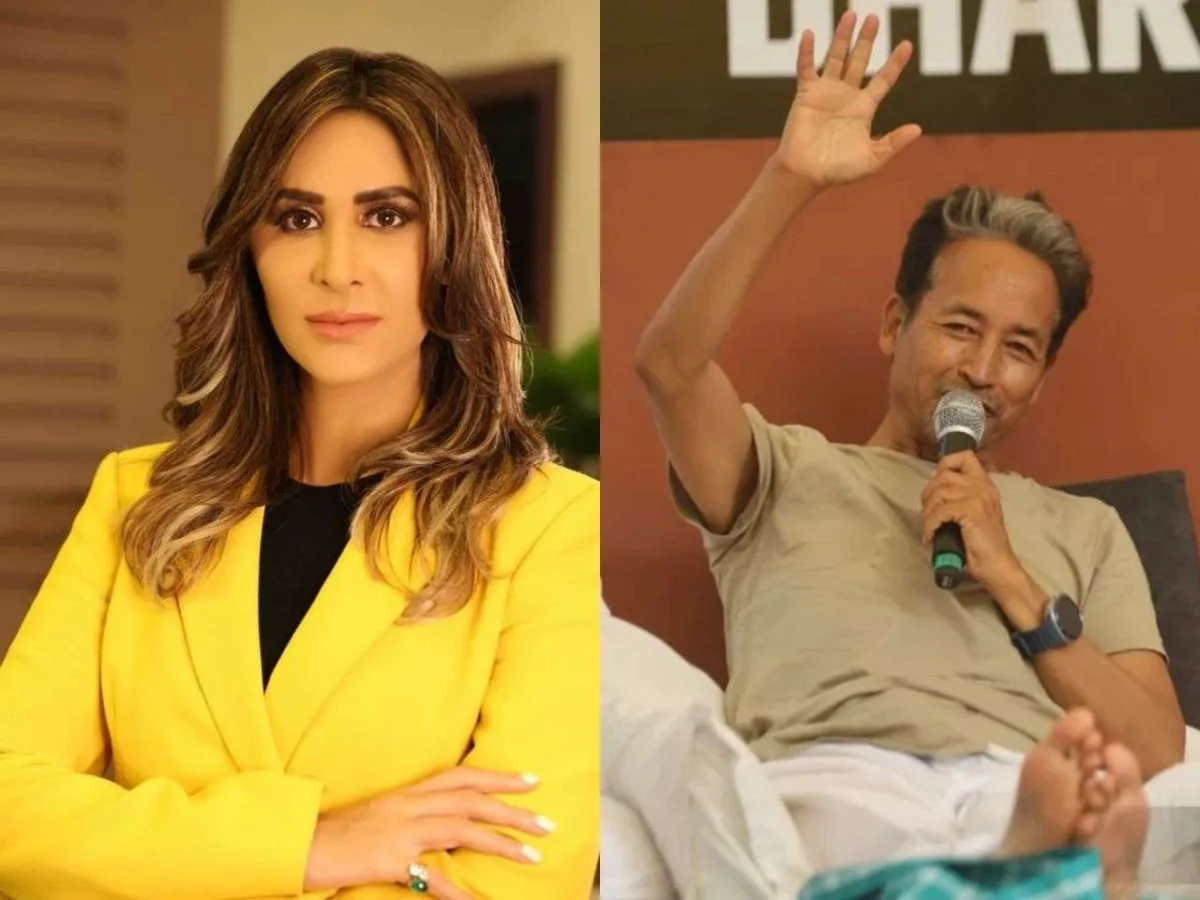
New Delhi, India – July 18, 2026 – The escalating protest by engineer and activist Sonam Wangchuk, now in its nineteenth day of an indefinite hunger strike at Jantar Mantar, has garnered significant attention across various sectors. While many are closely watching the government’s response to Wangchuk’s demands, a prominent voice from the world of celebrity beauty has emerged in strong support. Dr. Shagun Gupta, a renowned cosmetologist and beauty expert, has publicly aligned herself with Wangchuk’s cause, articulating a principled stand rooted in constitutional loyalty and the imperative to safeguard the nation’s youth and future.
Dr. Gupta’s endorsement transcends mere celebrity endorsement, positioning her as a vocal advocate for peaceful dissent and the urgent need for accountability within governmental structures. Her statements, disseminated across social media platforms, emphasize a commitment to truth, the Constitution of India, and the nation’s well-being, explicitly stating her loyalty lies with these ideals, not any specific political party. This stance is particularly significant given the sensitive nature of political discourse surrounding Wangchuk’s protest.
The Core of Wangchuk’s Protest: Accountability and Educational Integrity
Sonam Wangchuk’s hunger strike is a desperate plea for governmental accountability, specifically targeting the Education Minister, Dharmendra Pradhan. The catalyst for this prolonged protest is a series of perceived lapses in the management of competitive examinations under Pradhan’s tenure, most notably the NEET-UG 2026 paper leak. This incident, which has tragically resulted in the suicides of twelve students, has ignited widespread outrage and fueled Wangchuk’s demand for the minister’s resignation. The activist argues that such recurrent failures undermine the integrity of the educational system and betray the aspirations of countless young Indians.
Wangchuk’s protest is not merely about a single incident but represents a broader concern about systemic issues plaguing India’s education sector. He advocates for transparency, robust anti-cheating mechanisms, and a commitment to ensuring a level playing field for all aspiring students. His decision to undertake a hunger strike, a method that places his own life at grave risk, underscores the perceived urgency and severity of the situation, aiming to compel the government to acknowledge and address these critical flaws.
)
Dr. Shagun Gupta’s Declaration of Support: "My Silence is Never for Sale"
In a series of heartfelt social media posts, Dr. Shagun Gupta articulated her unwavering support for Sonam Wangchuk’s peaceful demonstration. Her message resonates with a powerful sense of civic duty and a deep concern for the future of India.
"The future of the country and its youth and India is my home," Gupta stated, setting a tone of nationalistic commitment. "My silence is never for sale. When the future of my nation, the dignity of its people, or the power of education calls, I will stand with courage. My loyalty is to the Constitution of India, to truth, and to my country—not to any political party."
)
This declaration directly addresses the often-politicized nature of such protests, aiming to disassociate her support from partisan affiliations. Gupta’s emphasis on constitutional loyalty signifies a belief in the fundamental principles that govern India and a call for governance that upholds these tenets.
Furthermore, she elaborated on the specific reasons for her solidarity: "I stand with Sonam Wangchuk not because of politics or headlines, but because I believe every peaceful voice raised for education, our environment, and India’s future deserves to be heard. My loyalty is to India, its people, and my conscience. India First. Always."

Gupta’s inclusion of "our environment" and "India’s future" broadens the scope of her support, suggesting an understanding of Wangchuk’s activism as part of a larger movement for national progress and sustainability. Her affirmation of "India First. Always" serves as a powerful closing statement, reinforcing her commitment to the nation above all else.
Chronology of Sonam Wangchuk’s Hunger Strike and Growing Support
Sonam Wangchuk, a celebrated engineer and innovator, known for his work in Ladakh and his inspiration for the character Phunsukh Wangdu in the Bollywood film "3 Idiots," commenced his hunger strike on July 1, 2026. His chosen venue, Jantar Mantar in New Delhi, has historically been a focal point for public protests and demonstrations, providing a platform for his demands to be visible.
)
Early Days (Week 1-2): Wangchuk’s initial days were marked by a low-key presence, drawing attention from environmental and educational activist circles. The protest gained momentum as news of his self-imposed hardship spread, and initial media coverage began to highlight the gravity of his demands, particularly concerning the NEET-UG 2026 paper leak.
Growing Public and Celebrity Attention (Week 2-3): As the hunger strike continued, Wangchuk’s plight began to resonate with a wider audience. Several Bollywood personalities and public figures started voicing their support, some directly, while others through indirect endorsements. This phase saw a rise in social media discussions and calls for the government to engage with Wangchuk.
)
Dr. Shagun Gupta’s Public Endorsement (Week 3): Dr. Shagun Gupta’s strong statement of support on July 18, 2026, marked a significant moment. As a prominent figure in the beauty and lifestyle industry, her public alignment with Wangchuk’s cause brought a different demographic into the fold of supporters and amplified the message beyond traditional activist and political spheres. Her emphasis on constitutional loyalty and the future of youth resonated with a segment of the population concerned about governance and national direction.
Ongoing Protest and Government Response: As of July 18, 2026, Wangchuk remains resolute in his hunger strike, with his health reportedly deteriorating. The government’s official response has been largely measured, with some statements acknowledging the concerns but stopping short of meeting Wangchuk’s specific demand for the Education Minister’s resignation. The continued protest, coupled with growing support from individuals like Dr. Gupta, puts increasing pressure on the administration to take more decisive action.
)
Supporting Data and Context: The NEET-UG 2026 Crisis
The NEET-UG 2026 paper leak is not an isolated incident but a symptom of a larger problem of examination irregularities that have plagued India in recent years. The National Eligibility cum Entrance Test (NEET) is a crucial examination for aspiring medical students, and its integrity is paramount.
- Number of Affected Students: The NEET-UG 2026 leak involved a vast number of students who had prepared rigorously for the exam, only to face the disheartening reality of systemic corruption. While specific numbers are still being compiled and investigated, the scale of the leak suggests widespread compromise.
- Tragic Outcomes: The most devastating consequence of the paper leak has been the reported suicides of twelve students. This stark statistic underscores the immense pressure and despair experienced by young individuals whose futures are jeopardized by such incidents. These deaths have become a potent symbol of the human cost of administrative failures.
- Previous Incidents: The NEET-UG 2026 leak follows a pattern of other significant paper leaks and examination controversies in recent years, including those related to other competitive exams. This history fuels public distrust and strengthens the argument that current preventative measures are insufficient.
- Impact on Aspirations: For many students, particularly those from economically weaker sections, NEET is their primary pathway to higher education and a better life. Paper leaks not only shatter individual dreams but also perpetuate socio-economic disparities, as those with access to illicit information gain an unfair advantage.
Official Responses and Public Reactions
The response from the government and various political factions to Sonam Wangchuk’s hunger strike has been varied and, at times, contradictory.
)
Government Stance: While the Ministry of Education has acknowledged the seriousness of the NEET-UG 2026 paper leak and has initiated investigations, they have largely resisted calls for the Education Minister’s resignation. Official statements have emphasized the government’s commitment to fair examinations and punitive action against those involved in the leak. However, concrete steps to address the systemic issues or meet Wangchuk’s specific demand for accountability have been perceived as insufficient by many.
Political Opposition: Opposition parties have seized upon the issue, using it to criticize the ruling government’s performance and highlight alleged corruption. They have often voiced support for Wangchuk’s protest, framing it as a fight for justice for students and a demand for good governance.
)
Public and Celebrity Reactions: The public response has been largely empathetic towards Wangchuk, with many citizens expressing solidarity through social media and demonstrations. The involvement of celebrities, including those who have previously spoken out on social issues, has amplified the protest’s visibility. However, there have also been instances of skepticism and criticism, with some questioning the motives or the efficacy of hunger strikes as a form of protest. The inclusion of figures like Dr. Shagun Gupta in the list of supporters demonstrates a broadening spectrum of endorsement, moving beyond traditional political activists and entertainers.
Implications of Dr. Gupta’s Support and Wangchuk’s Protest
The implications of Dr. Shagun Gupta’s vocal support for Sonam Wangchuk’s hunger strike are multifaceted:
)
- Broadening the Appeal: By lending her voice, Dr. Gupta extends the reach of Wangchuk’s message to a demographic that might not typically engage with political activism. This can help to create a more inclusive movement and garner wider public sympathy and pressure on the government.
- Emphasizing Non-Partisanship: Gupta’s explicit declaration of loyalty to the Constitution and the country, rather than a political party, serves to reinforce Wangchuk’s image as a non-political activist fighting for a just cause. This framing can be crucial in garnering support from individuals who are disillusioned with partisan politics.
- Highlighting Youth and Future Concerns: The beauty and lifestyle industry often caters to a younger demographic. Dr. Gupta’s involvement can underscore the concern for the future of India’s youth, a demographic directly impacted by the integrity of the education system.
- Inspiring Civic Engagement: Her willingness to speak out on a sensitive issue can inspire others, including professionals in various fields, to engage more actively in civic discourse and advocate for issues they believe in.
- Potential for Government Engagement: The increasing visibility and diverse support base for Wangchuk’s protest, amplified by figures like Dr. Gupta, could put greater pressure on the government to engage in meaningful dialogue and address the core issues raised. A sustained and widespread protest, backed by influential voices, is more likely to yield a responsive outcome.
Sonam Wangchuk’s hunger strike is more than just a personal protest; it is a critical moment of reckoning for India’s commitment to educational fairness and governmental accountability. The support from individuals like Dr. Shagun Gupta signifies a growing realization that the future of the nation is a collective responsibility, demanding active participation and courageous voices from all walks of life. The world watches to see if this widespread concern will translate into the systemic changes necessary to restore faith in India’s educational future.
