


New Delhi – July 30, 2026 – In a remarkable display of personal resilience and a commitment to pushing physical limits, television personality Hina Khan, aged 38, has recently extended her ice bath duration from seven continuous minutes to an impressive twelve minutes. This feat, shared via an Instagram video, highlights a growing interest in extreme wellness practices, particularly among individuals navigating significant health challenges. Khan, who is a prominent breast cancer survivor, emphasized that this rigorous practice is undertaken under "strict supervision" of medical professionals, underscoring a crucial distinction between personal experimentation and medically guided recovery.
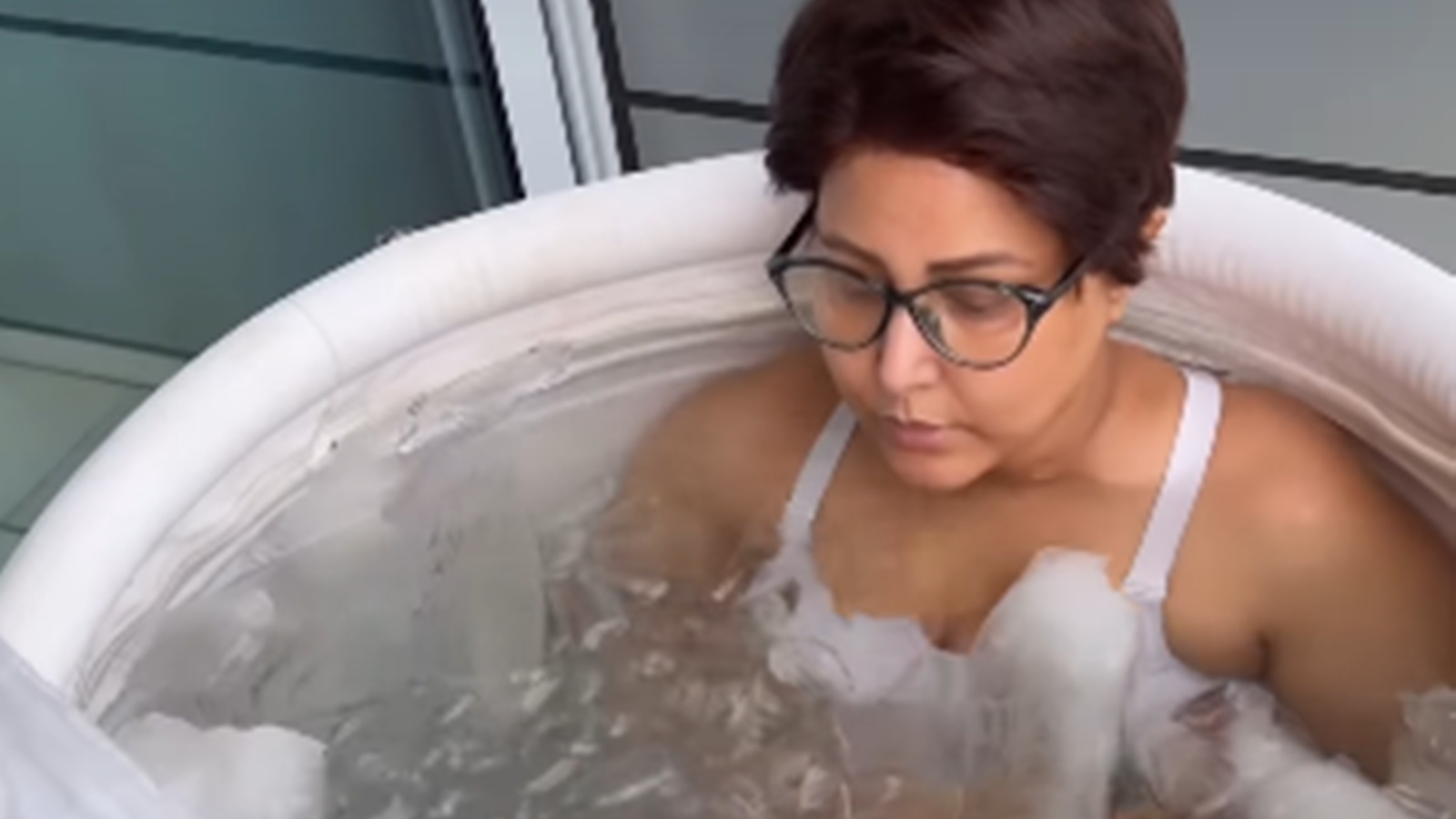
The actress’s Instagram post featured her immersed in an ice-filled tub, detailing the challenge: "Last record: 7 minutes. Let’s try to break it. 70 kg ice. And it’s 12 minutes." She further elaborated on the therapeutic benefits she perceives from the practice, describing ice therapy as "Heaven," while reiterating the necessity of professional guidance. "I do it under strict doctors’ supervision; do not attempt it without professional guidance. Take it easy and Go slow.. Listen to your body," she advised her followers, expressing gratitude to Dr. Chandni Mehta and the facility @aquamaxfit for their support.
This personal achievement by Hina Khan has ignited a broader conversation about the efficacy and safety of ice therapy, or cryotherapy, particularly for individuals recovering from serious illnesses like breast cancer. While Khan’s personal journey with cancer is a powerful narrative of survival and proactive health management, the application of such intense physical modalities necessitates a careful examination of expert opinions and established medical protocols.
A Personal Milestone: Hina Khan’s Extended Ice Bath Challenge
Hina Khan, a beloved figure in the Indian television industry, has consistently shared aspects of her personal life and health journey with her extensive fan base. Her candidness about her battle with Stage 3 breast cancer, which she announced in June 2024, has resonated deeply with many. Her recent foray into extended ice baths appears to be a manifestation of her proactive approach to well-being and physical conditioning post-treatment.
The initial announcement of her cancer diagnosis marked a significant moment, prompting widespread support and admiration for her courage. Now, her commitment to challenging her physical limits through practices like prolonged ice immersion suggests a desire to rebuild strength and resilience. The act of incrementally increasing her ice bath duration, from seven to twelve minutes, demonstrates a methodical and controlled approach to this demanding therapy.
Khan’s explicit mention of medical supervision is a critical caveat. It signals that her actions are not a casual endorsement of a trend but a carefully managed personal regimen. This distinction is vital, as ice therapy, while gaining traction in wellness circles, carries inherent risks if not approached with appropriate caution and professional oversight. Her gratitude towards her medical team and the facility further reinforces the idea that this is a guided therapeutic intervention, not an uncontrolled personal experiment.
The Medical Perspective: Cryotherapy and Breast Cancer Recovery
The practice of using extreme cold for therapeutic purposes, known as cryotherapy or ice therapy, has a long history and is employed in various medical and athletic contexts. For individuals recovering from breast cancer, the potential benefits of such therapies are a subject of ongoing discussion and research.
Dr. Amit Chakraborty, Head and Neck Surgeon and Surgical Oncologist at SSO Hospital in Mumbai, provided an expert opinion on the matter. He explained that ice therapy can be beneficial for some breast cancer survivors, particularly in the post-operative and rehabilitation phases. "Ice therapy can help to reduce pain, swelling, and inflammation, especially after surgery or during physical rehabilitation," Dr. Chakraborty stated. This aligns with the general understanding of how cold therapy works by constricting blood vessels, which can reduce swelling and numb nerve endings, thereby alleviating pain.
However, Dr. Chakraborty was quick to emphasize that this is not a one-size-fits-all solution. He cautioned that ice therapy is not suitable for everyone and that specific patient conditions must be taken into account. "Patients who have reduced skin sensation after surgery, poor blood circulation, nerve damage, or lymphedema should avoid using ice without medical advice, as it may cause skin injury or worsen certain conditions," he elaborated. Lymphedema, a common side effect of breast cancer treatment involving lymph node removal, can be particularly sensitive to extreme temperatures and pressure. The potential for skin injury due to reduced sensation is also a significant concern, as individuals may not be able to accurately gauge the temperature or duration of exposure, leading to frostbite or other cold-related tissue damage.
Navigating the Nuances: Not a Universal Panacea
Dr. Meghal Sanghavi, Consultant Onco Surgeon at Wockhardt Hospitals, Mumbai Central, echoed Dr. Chakraborty’s sentiment, stressing the individuality of cancer recovery. "The path to recovering from cancer cannot be standardized, and as a result remedies that are favoured by athletes or people interested in wellness might not be automatically appropriate for survivors of breast cancer," Dr. Sanghavi pointed out. This statement is crucial in differentiating the needs of elite athletes, who may use cryotherapy for performance enhancement and rapid recovery from intense training, from those of cancer survivors, whose recovery is often a more complex and delicate process focused on restoring overall health and function.
Dr. Sanghavi further elaborated on the current state of research regarding whole-body cryotherapy (WBC) in the context of breast cancer rehabilitation. "Although whole-body cryotherapy is becoming more widely known for its potential to reduce discomfort after exercise, its advantages for the rehabilitation of breast cancer patients are still under investigation and are by no means established," she stressed. This highlights a critical gap in scientific evidence. While anecdotal reports and observations of potential benefits exist, robust clinical trials specifically examining the long-term efficacy and safety of cryotherapy for breast cancer survivors are still needed.
Holistic Recovery: Beyond Extreme Therapies
Both experts underscored that while novel therapies might garner attention, they should be viewed as supplementary, not primary, components of recovery. The cornerstone of a safe and effective recovery plan for breast cancer survivors, according to Dr. Sanghavi, involves a multi-faceted approach. "Gentle exercises, proper wound care, healthy nutrition, and regular follow-up with the oncology team are equally important for safe healing and restoring strength after breast cancer treatment," she stated.
This holistic perspective emphasizes the importance of evidence-based practices that have a proven track record in aiding recovery and improving quality of life. Gentle exercises can help regain strength, flexibility, and range of motion, particularly in the affected arm and shoulder, while also combating fatigue. Proper wound care is essential to prevent infection and promote healing after surgery. A balanced and nutritious diet plays a vital role in supporting the body’s healing processes, boosting the immune system, and maintaining energy levels. Finally, consistent follow-up with oncologists ensures that any potential recurrence or long-term side effects are monitored and managed promptly.
A Word of Caution: Prioritizing Professional Medical Advice
The proliferation of wellness trends on social media can sometimes create a perception that popular practices are universally beneficial and safe. Hina Khan’s proactive approach, coupled with her emphasis on medical supervision, serves as a timely reminder for the public to exercise caution.
"Don’t try to follow any trends such as ice therapy on your own or just because others are doing so. It is important to consult the doctor and then only follow any trend," Dr. Chakraborty strongly advised. This cautionary note is paramount, especially when dealing with therapies that involve extreme physiological responses. Without understanding an individual’s specific medical history, current health status, and potential contraindications, engaging in such practices can lead to adverse outcomes.
The disclaimer accompanying the original article, "This article is based on information from the public domain and/or the experts we spoke to. Always consult your health practitioner before starting any routine," reinforces this critical message. It serves as a universal reminder that while public figures may share their personal experiences, these should not be interpreted as medical endorsements or a substitute for personalized professional medical advice.
Implications and Future Directions
Hina Khan’s public sharing of her extended ice bath challenge, while a personal milestone, has inadvertently brought to the forefront the complex relationship between wellness trends and medical recovery. It highlights a growing societal interest in pushing physical and mental boundaries, often inspired by celebrities and influencers. However, it also underscores the crucial need for a discerning public that prioritizes evidence-based medical guidance over anecdotal endorsements.
For breast cancer survivors, the journey of recovery is intensely personal and requires a tailored approach. While innovative therapies like cryotherapy may hold promise for certain aspects of healing, their integration into a survivor’s care plan must be a collaborative decision between the patient and their medical team. Further research is essential to establish the definitive role of cryotherapy in breast cancer rehabilitation, moving beyond preliminary observations to robust clinical validation.
Until then, the message from medical experts remains clear: safety, individualized care, and informed decision-making are paramount. The pursuit of enhanced well-being should always be grounded in sound medical advice, ensuring that personal aspirations for resilience and strength are pursued responsibly and effectively. Hina Khan’s commendable journey serves as an inspiration, but her responsible approach to medical supervision is the most valuable takeaway for her audience.
