

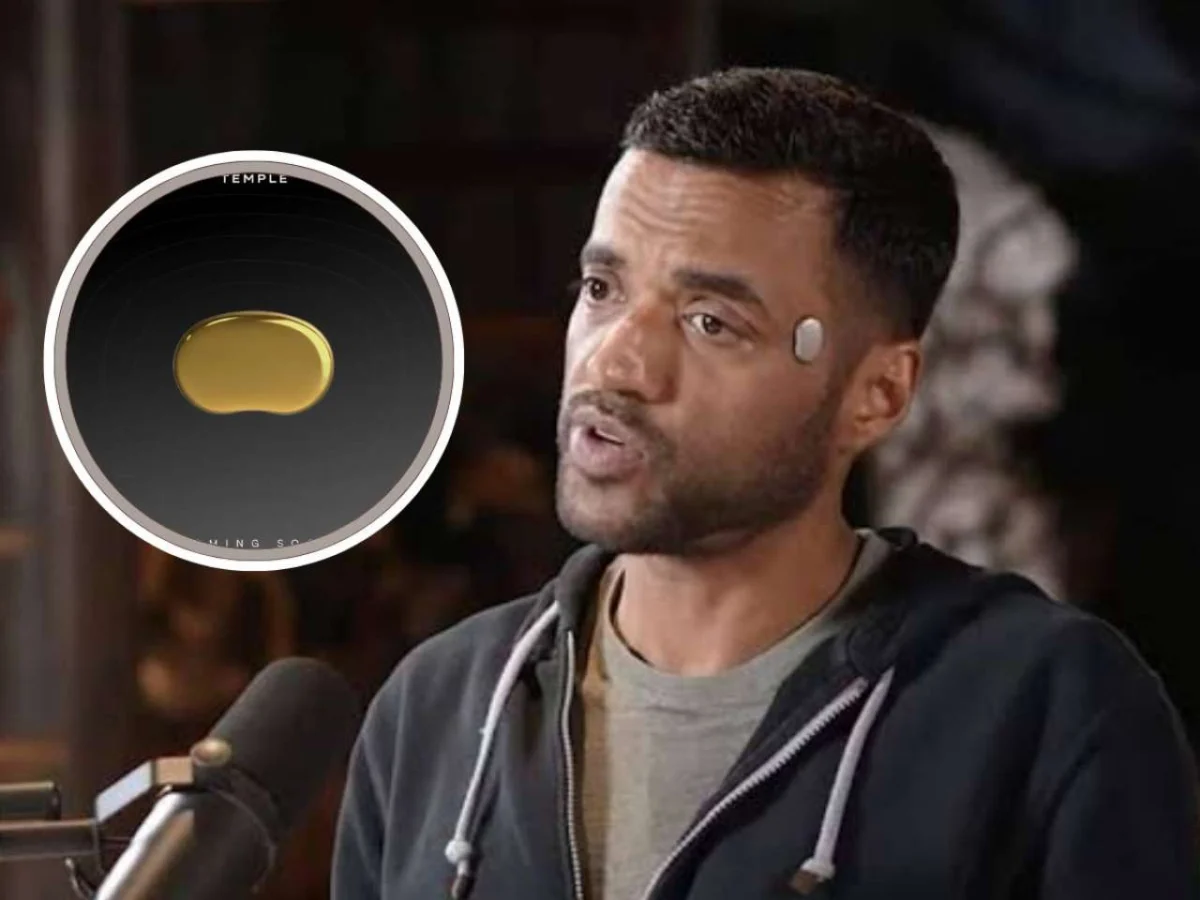
NEW DELHI, India – In a bold venture set to redefine personal health monitoring, Deepinder Goyal, the visionary co-founder of food delivery giant Zomato, is preparing to launch a groundbreaking wearable device named "Temple." Priced at approximately USD 1,000 (roughly INR 1 lakh), this high-tech gadget promises to track a novel biomarker called ‘entropy,’ offering unprecedented insights into an individual’s metabolic health. With an anticipated launch window of 6 to 12 months, Goyal’s latest brainchild aims to debut as a wellness device, backed by rigorous peer-reviewed studies, before potentially evolving into a medical-grade instrument.
The announcement has ignited considerable curiosity and anticipation, especially given Goyal’s track record of disrupting industries. Temple, a discreet, bean-shaped wearable designed to be worn on the side of the forehead, deviates significantly from conventional fitness trackers that primarily focus on heart rate or step counts. Its core innovation lies in its purported ability to monitor the body’s metabolic condition in real-time by detecting subtle changes in a newly identified biomarker.
Goyal, who also previously helmed the health and wellness startup Eternal, has acknowledged the ambitious nature of the project and the inherent challenges in bringing such cutting-edge technology to fruition. Despite facing developmental delays, the project has garnered immense interest, evidenced by over 100,000 applicants vying for early access to the initial batch of just 100 units. This overwhelming demand underscores a global appetite for sophisticated, data-driven tools that empower individuals to take a proactive role in managing their health and optimizing their well-being. Temple is not merely another gadget; it represents a potential paradigm shift in how we understand and interact with our own physiological data.
The Genesis of a New Era in Wellness: Main Facts Unveiled
Deepinder Goyal’s "Temple" emerges as a testament to the ongoing convergence of technology and personal health. At its core, Temple is conceived as a sophisticated, non-invasive wearable device designed to offer a granular view of an individual’s metabolic state. Unlike the myriad of smartwatches and fitness bands that inundate the market, Temple’s unique selling proposition revolves around its ability to measure ‘entropy’ – a biomarker that Goyal and his team assert is directly correlated with metabolic rate.
This innovative approach aims to unlock insights into various critical aspects of human physiology, including stress levels, the efficacy of meditation practices, the quality of recuperation, sleep patterns, and the impact of physical exercise. By directly detecting subtle changes within the body’s internal environment, Temple seeks to move beyond mere activity tracking, providing a deeper, more actionable understanding of an individual’s holistic well-being.
The device’s physical form factor is notably distinct: a bean-shaped garment worn on the side of the forehead. This placement is crucial for its intended function, allowing for continuous and precise monitoring of the biomarker. With a projected price point of USD 1,000, Temple is positioned at the premium end of the consumer wearable market, signaling its advanced capabilities and the specialized nature of its offering.
)
Upon its initial launch, Temple will be introduced strictly as a "wellness device." This strategic categorization is crucial, as it navigates the complex regulatory landscape surrounding medical devices. To bolster its credibility and validate its health claims, the company plans to release peer-reviewed studies alongside the product’s debut. This commitment to scientific rigor aims to establish trust and demonstrate the tangible benefits of the technology.
Goyal’s personal motivation for developing Temple adds another layer of intrigue. He openly admits that he is "constructing it solely for myself," viewing the potential "business as a side effect of what we’re doing for ourselves." This personal quest for self-optimization suggests a deep-seated belief in the technology’s transformative potential, born from a desire to achieve peak human performance and understanding. Consequently, the initial target demographic for Temple includes high-performance athletes, individuals who are already acutely attuned to their body’s signals and constantly seek data-driven edges. Prominent figures like badminton star PV Sindhu have already been observed sporting the device, including during the 2026 Uber Cup, providing early glimpses of Temple in real-world application. This strategic visibility within the elite athletic community not only serves as a powerful endorsement but also underscores the device’s potential utility in optimizing training, recovery, and competitive performance.
A Journey Through Innovation: The Chronology of Temple’s Development
Deepinder Goyal’s entrepreneurial journey is marked by a history of bold ventures, from co-founding Zomato, which revolutionized food delivery, to his subsequent involvement with Eternal, a health and wellness platform. The genesis of Temple can be traced back to Goyal’s evolving interest in personal optimization and his recognition of a gap in the market for truly insightful, data-driven health monitoring.

While specific dates for the project’s inception remain somewhat under wraps, Goyal’s public statements offer clues. He has mentioned "repeating it for the past eighteen months," indicating that the concept and its impending launch have been a significant focus for at least a year and a half prior to recent announcements. This suggests a development cycle that began well before the current public disclosure, likely involving intense research and development phases under the umbrella of his post-Zomato endeavors.
The early stages of Temple’s development would have encompassed foundational scientific research into biomarkers, sensor technology, and data analytics algorithms capable of interpreting complex physiological signals. The concept of ‘entropy’ as a key biomarker would have emerged from this period, leading to the design of prototypes. These initial iterations would have been critical for validating the feasibility of non-invasive measurement from the forehead and refining the sensor suite.
Public visibility began subtly, with Goyal himself being seen wearing an early version of the device. This initial personal usage, aligning with his philosophy of building it for himself, served as an internal validation process. The sight of a prominent figure like Goyal, known for his high standards and demanding work ethic, utilizing such a device would naturally pique interest among his inner circle and early adopters.
)
A significant milestone in the project’s timeline was the expansion of its testing to include high-performance athletes. The appearance of badminton Olympian PV Sindhu wearing Temple during the 2026 Uber Cup was a crucial moment, signaling that the device had progressed beyond mere prototyping into a phase of real-world athletic application. Such high-profile usage not only tests the device under strenuous conditions but also generates considerable buzz and credibility within the target demographic.
Following these discreet trials, the official announcement of the device and its proposed launch timeline came into public view. This included the revelation of the pricing, the "wellness device" categorization, and the commitment to peer-reviewed studies. Concurrently, the company initiated an early access program, inviting interested individuals to apply for a chance to be among the first to experience Temple. The overwhelming response – over 100,000 applications for just 100 units – provided tangible evidence of widespread interest and unmet demand for advanced health tracking solutions.
Goyal has candidly acknowledged that the project has faced "delays," admitting that the "timeline has previously slipped." This transparency is a common feature in hardware development, especially for devices pushing the boundaries of technology. Overcoming technical hurdles, refining algorithms, ensuring manufacturing quality, and navigating regulatory pathways are all time-consuming processes. Despite these setbacks, the current projection of a 6-12 month launch window suggests that the team is confident in having addressed many of the prior challenges and is nearing a market-ready product. The journey of Temple, therefore, is one marked by ambitious innovation, rigorous testing, strategic public exposure, and a pragmatic approach to the complexities of hardware development.
)
Unpacking the Innovation: Supporting Data, Technology, and Market Landscape
The true essence of Temple lies in its scientific and technological underpinnings, aiming to carve a unique niche in the burgeoning health tech market. To fully appreciate its potential and challenges, it’s imperative to delve into the proposed science of ‘entropy,’ the competitive landscape, and the practical implications of its design.
The Science of ‘Entropy’ and Metabolic Insights
At the heart of Temple’s innovation is the concept of ‘entropy’ as a novel biomarker. While the full scientific details and the peer-reviewed studies are yet to be publicly released, Goyal’s team asserts that this biomarker is directly correlated with metabolic rate. In thermodynamics, entropy broadly refers to the degree of disorder or randomness in a system. In a biological context, changes in metabolic entropy could potentially reflect the body’s energetic state, its efficiency in processing nutrients, and its overall physiological balance.
Traditional fitness trackers often rely on proxies like heart rate variability (HRV), sleep stages, and activity levels to infer stress, recovery, and fitness. Temple, however, claims to offer a more direct window into metabolic function. By detecting ‘entropy,’ the device proposes to provide insights into:
)
- Stress: How the body’s metabolic system responds to physical and mental stressors.
- Meditation and Recuperation: The physiological impact of rest and mindfulness on metabolic efficiency.
- Sleep Quality: Beyond sleep duration, how deeply the body restores and rebalances its metabolic processes during sleep.
- Exercise Efficacy: The real-time metabolic response to physical activity, potentially allowing for optimized training loads and recovery periods.
The purported advantage of ‘entropy’ is its potential to offer a more holistic and fundamental metric of physiological state compared to isolated vital signs. If validated, this could represent a significant leap forward, moving beyond correlative data to a more direct measurement of underlying metabolic health.
However, a crucial point of contention and the primary challenge for Temple remains the "independent validation of the science underlying entropy [which] is still lacking." This is a significant hurdle. For any new biomarker to gain widespread acceptance in the scientific and medical communities, it requires extensive, reproducible research, often across diverse populations, published in reputable journals, and subsequently replicated by independent research groups. Without this, the claims, no matter how promising, remain speculative from a strictly scientific standpoint. The company’s commitment to releasing peer-reviewed studies is a critical step towards addressing this, but the depth and breadth of these studies will be paramount.
The Competitive Landscape and Market Positioning
The wearable technology market is fiercely competitive and continuously expanding. It includes:
)
- Smartwatches: Apple Watch, Samsung Galaxy Watch, Google Pixel Watch, offering comprehensive health tracking, communication, and lifestyle features.
- Fitness Trackers: Fitbit, Garmin, catering to activity tracking, basic heart rate, and sleep monitoring.
- Smart Rings: Oura Ring, Whoop, providing discreet, continuous tracking of sleep, recovery, and activity, often with a subscription model.
- Specialized Devices: Continuous Glucose Monitors (CGMs) for diabetes management, smart patches for specific vital signs.
Temple’s USD 1,000 price point places it firmly in the premium segment, competing with high-end smartwatches and specialized health devices. For context, an Oura Ring Gen3 typically costs around USD 300-400, while a top-tier Apple Watch Ultra 2 retails for approximately USD 800. This pricing suggests that Temple is not aiming for mass-market appeal but rather a discerning clientele willing to invest in advanced, unique health insights.
The distinction between a "wellness device" and a "medical device" is also critical. A wellness device generally provides information for general well-being and lifestyle choices, not for diagnosis, treatment, or prevention of disease. This classification allows for a faster market entry, bypassing the stringent and lengthy regulatory approval processes (like FDA clearance in the US or CE marking in Europe) required for medical devices. Goyal’s clear intention to "launch it as a wellness device with peer-reviewed studies and everything" is a strategic move. However, his acknowledgment that "future features might need medical authorisation" and that "we will launch them after obtaining regulatory approvals" signals a long-term vision to transition Temple into a more clinically relevant tool, pending further validation and regulatory compliance. This phased approach is common in health tech, allowing companies to build a user base and gather real-world data while simultaneously pursuing more rigorous medical certifications.
The overwhelming demand for early access – 100,000 applications for 100 units – is a powerful indicator of market interest. It suggests that despite the high price point and the unvalidated nature of ‘entropy,’ there is a significant segment of consumers, particularly those interested in biohacking, personal optimization, and advanced health monitoring, who are eager to embrace new technologies that promise deeper insights into their bodies.
)
Design, User Experience, and Data Presentation
The "bean-shaped garment that is intended to be worn on the forehead’s side" presents both opportunities and challenges.
- Opportunities: The forehead is rich in blood vessels and nerve endings, potentially offering a stable and accurate site for continuous physiological monitoring, especially for parameters not easily captured by the wrist. Its proximity to the brain could also be relevant if the device intends to measure signals related to cognitive states or neurological activity in the future.
- Challenges: Aesthetic acceptance and comfort. Unlike a watch or a ring, a forehead-worn device is more conspicuous. User comfort during extended wear, especially during sleep or strenuous activity, will be crucial for adoption. The social perception of wearing such a device in public settings will also play a role.
The data presented to users will need to be intuitive, actionable, and free from overwhelming jargon. How will ‘entropy’ be translated into meaningful insights about stress, recovery, or exercise? The accompanying mobile application will be critical in visualizing this data, offering personalized recommendations, and perhaps even integrating with other health platforms. The success of Temple will not only depend on the accuracy of its measurements but also on its ability to empower users with clear, understandable, and beneficial information.
The Architect’s Vision: Official Responses and Strategic Intent
Deepinder Goyal’s public statements regarding Temple offer a clear window into his philosophy, the project’s strategic direction, and the challenges encountered along the way. His candidness provides valuable context to this ambitious undertaking.
)
Goyal’s primary stance, as conveyed in interviews, emphasizes a commitment to scientific rigor despite the innovative nature of the ‘entropy’ biomarker. He explicitly stated to Bloomberg, "We will launch it as a wellness device with peer-reviewed studies and everything." This declaration is a strategic response to the inherent skepticism that accompanies any novel health claim. By committing to peer-reviewed research, Goyal aims to build a foundation of credibility and scientific validation, which is crucial for establishing trust in a health-focused product, especially one introducing a new biomarker. This approach signals a deliberate effort to differentiate Temple from speculative wellness gadgets that often lack empirical backing.
His personal motivation for developing Temple is a recurring theme. "I am constructing it solely for myself," he admitted, adding that "business is a side effect of what we’re doing for ourselves." This resonates with a common entrepreneurial drive: solving a personal pain point or fulfilling a personal need, which then translates into a broader commercial opportunity. For Goyal, a high-performance individual, the quest for optimizing his own health and understanding his body at a deeper level appears to be the primary impetus. This also aligns with the initial targeting of high-performance athletes, individuals who share a similar drive for self-optimization and are willing to experiment with cutting-edge tools.
Goyal has also been transparent about the difficulties inherent in hardware development. Acknowledging that the "timeline has previously slipped," he remarked, "However, I’ve been repeating it for the past eighteen months. Thus, I’m not sure." This honest appraisal of delays is not uncommon in complex tech projects, especially those involving novel sensor technologies and sophisticated data processing. Developing a robust, accurate, and user-friendly wearable from scratch, while simultaneously conducting scientific validation, is a monumental task. His admission suggests the team has faced significant technical hurdles, but the continued commitment to a launch within 6-12 months implies a belief that these challenges are now largely addressed or manageable.
)
The long-term vision for Temple extends beyond its initial classification as a wellness device. Goyal articulated this clearly: "We’re developing features that will make it a medical device. Therefore, whenever we have those functionalities, we will launch them after obtaining regulatory approvals." This phased approach is a pragmatic strategy. It allows the company to introduce the product to the market sooner, gather user feedback, and refine the technology, while simultaneously working towards the more arduous and time-consuming process of securing medical regulatory clearances. Achieving medical device status would significantly broaden Temple’s applicability, potentially allowing it to be used for diagnostic support, disease management, or personalized therapeutic interventions, thereby unlocking a much larger market and greater impact.
Goyal’s involvement with Eternal, his previous health and wellness venture, provides a backdrop for Temple. While details of Eternal’s specific contributions to Temple are not fully public, it likely served as a platform for early research, team building, and conceptualization within the broader health tech space. Temple appears to be a natural evolution of this interest, pushing the boundaries even further with its focus on a novel biomarker and real-time metabolic monitoring. Ultimately, Goyal’s statements paint a picture of an entrepreneur driven by personal conviction, committed to scientific validation, and pursuing a long-term vision of transforming personal health through advanced technology, even in the face of significant developmental and regulatory challenges.
Charting the Future: Implications and Potential Impact
Deepinder Goyal’s "Temple" stands at the precipice of a significant disruption in the health and wellness technology sector. Its implications stretch across several domains, from personal health management to the broader scientific and economic landscapes.
)
Potential Impact on Health Technology
If the ‘entropy’ biomarker and its correlation with metabolic rate are independently validated through robust peer-reviewed studies, Temple could revolutionize personal health monitoring. It would introduce a new, fundamental metric for understanding the body’s internal state, potentially offering a more granular and actionable picture than existing wearables. This could lead to:
- Truly Personalized Wellness: Users could receive highly individualized insights into how specific foods, exercises, stress levels, or sleep patterns affect their metabolic efficiency, enabling truly personalized lifestyle adjustments.
- Proactive Health Management: By detecting subtle metabolic shifts, Temple might offer early warnings of potential health imbalances, empowering users to intervene proactively before issues escalate.
- Enhanced Performance Optimization: For athletes and individuals seeking peak performance, real-time metabolic data could fine-tune training regimens, recovery protocols, and nutritional strategies with unprecedented precision.
- New Avenues for Research: The validation of ‘entropy’ could open up entirely new fields of research into metabolic health, aging, and disease progression.
Challenges and Hurdles Ahead
Despite its promising potential, Temple faces formidable challenges:
- Scientific Validation: This is the paramount hurdle. Without robust, independent, and reproducible scientific validation of ‘entropy’ as a reliable and meaningful biomarker, Temple’s claims will remain unproven. Building this scientific consensus is a long and arduous process.
- Regulatory Approval: The transition from a "wellness device" to a "medical device" is a complex, costly, and time-consuming journey. It requires extensive clinical trials, adherence to strict manufacturing standards, and rigorous data security protocols to gain approvals from bodies like the FDA or EMA.
- Market Acceptance and Aesthetics: The USD 1,000 price point and the forehead-worn design are significant barriers to mass adoption. While high-performance athletes might overlook aesthetics for functionality, broader consumer acceptance will depend on comfort, discretion, and a clear demonstration of value that justifies the cost.
- Competition: The market is saturated with established players with significant R&D budgets and brand loyalty. Temple needs to clearly articulate its unique value proposition and demonstrate a superior user experience.
- Overcoming Skepticism: Given past instances of wellness tech making unsubstantiated claims, Temple will need to work hard to build trust and overcome potential skepticism from both consumers and the scientific community, especially concerning its novel biomarker.
Broader Vision and Economic Impact
Goyal’s ambition with Temple extends beyond just creating a product; it hints at a larger vision for human optimization and self-understanding. His emphasis on building it for himself first suggests a passion-driven project aiming for genuine impact. If successful, Temple could:
)
- Catalyze Innovation in India: As a high-tech venture rooted in India, Temple could inspire a new wave of deep tech and health tech innovation within the country, fostering talent and attracting investment.
- Create New Job Opportunities: From R&D scientists and engineers to manufacturing and customer support, the success of Temple would generate significant employment.
- Contribute to the Global Health Dialogue: By introducing a novel approach to metabolic monitoring, Temple could significantly contribute to the global conversation on preventative health and personalized medicine.
Ethical Considerations
As with any technology that delves deep into personal biological data, ethical considerations are paramount:
- Data Privacy and Security: The sensitive nature of metabolic health data necessitates robust privacy frameworks and impenetrable security measures to prevent misuse or breaches.
- Accuracy and Misinterpretation: Inaccurate readings or misinterpretation of data by users could lead to unnecessary anxiety, self-diagnosis, or inappropriate lifestyle changes. Clear guidelines and educational resources will be vital.
- Equity of Access: The high price point raises questions about equity of access to potentially transformative health insights, creating a divide between those who can afford such advanced tools and those who cannot.
In conclusion, Deepinder Goyal’s Temple is a high-stakes endeavor with the potential to be a game-changer in personalized health tracking. Its success hinges on rigorous scientific validation, strategic market navigation, and the ability to overcome significant technical and regulatory hurdles. Should it deliver on its ambitious promises, Temple could not only redefine how we monitor our health but also solidify Goyal’s legacy as a serial innovator dedicated to pushing the boundaries of what technology can achieve for human well-being. The coming months will be crucial in determining whether Temple will indeed become a beacon of a new era in health tech or another ambitious project that struggled to find its footing.
