

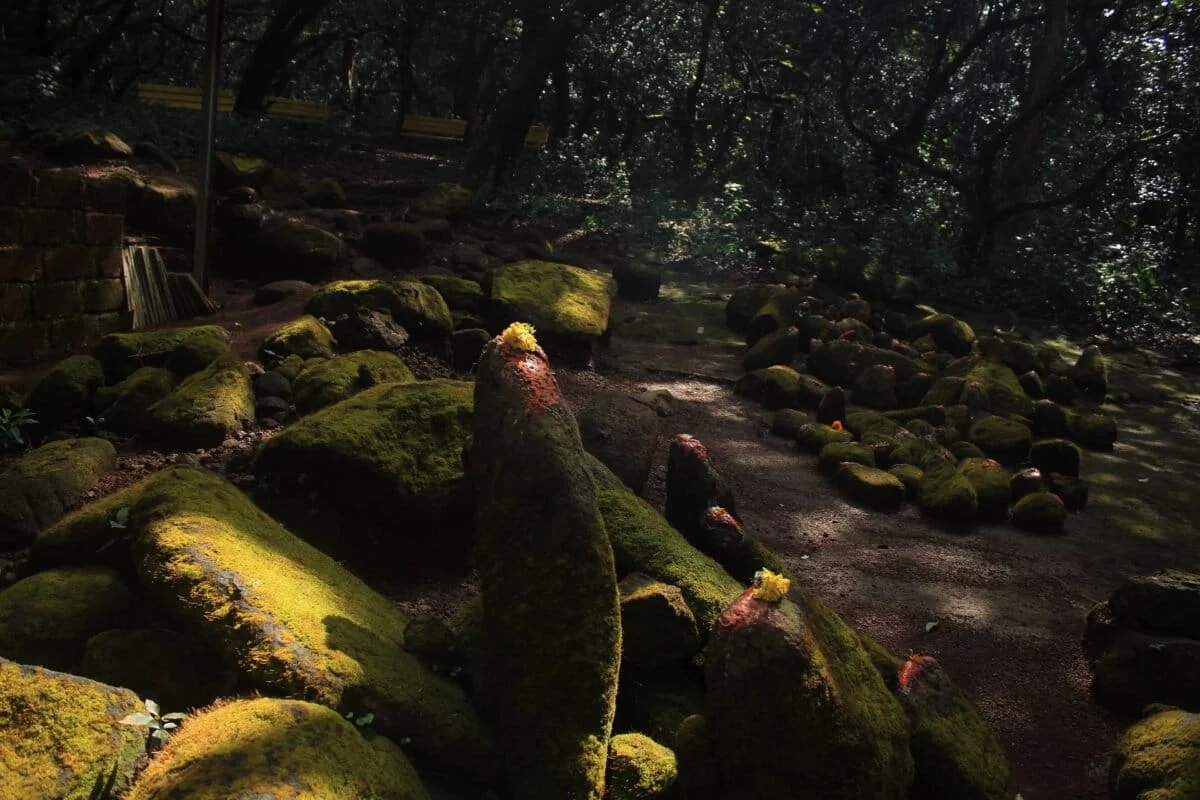
In the rugged, mist-shrouded folds of India’s Western Ghats, a biological miracle is unfolding, not within the patrolled boundaries of national parks, but in small, ancient patches of forest known as sacred groves. These "ecological time capsules," protected for centuries by local communities through spiritual belief and ancestral reverence, have recently been identified as the primary engines of forest regeneration in one of the world’s most critical biodiversity hotspots.
A groundbreaking study published in the journal PLOS One has revealed that these groves are far more than mere relics of the past; they are active, high-functioning nurseries for the next generation of giant trees. According to the research, young trees—particularly those with large seeds—regenerate with significantly higher success rates within these sacred precincts than in the surrounding agricultural landscapes and village settlements. With India hosting an estimated 100,000 sacred groves, the findings underscore a vital truth in modern conservation: the survival of the wilderness often depends on the cultural traditions of the people living alongside it.
The Discovery: Mapping the Memory of the Forest
The Western Ghats mountain range stretches approximately 1,600 kilometers (994 miles) along India’s western coast, traversing six states. While much of the region’s conservation focus remains on large-scale reserves, a research team from the Applied Environmental Research Foundation (AERF) discovered that the "giants" of the forest were hiding in plain sight.
The study’s origin was somewhat serendipitous. While conducting a "giant-tree program" aimed at identifying old-growth specimens, the AERF team visited Vanzole village in Maharashtra. They were initially drawn by a massive Terminalia bellirica (beheda) tree growing in a villager’s yard. However, upon arrival, they realized the village was teeming with ancient trees, many tucked away in small, undisturbed pockets.
"It sparked a series of questions," said study co-author Kevin Matteson, associate director of Project Dragonfly at Miami University in Ohio. "How many giant trees were hiding in plain sight, and were birds like hornbills really using trees in such busy places?"
To answer these questions, the research team adopted a collaborative approach, blending modern silviculture with indigenous wisdom. They enlisted local experts Namdev and Anant Shivgan, who provided a "mental map" of the landscape that no satellite could replicate. While the scientists measured the girth of trunks, the local guides identified the cultural history and unique ecological functions of four specific sacred groves within the village vicinity.

"We can use scientific methods to measure the girth of a trunk," wrote lead author Omkar Pai, who led the field research, "but it is the local knowledge holders who actually map the memory and unique functions of the forest."
Comparative Data: Orchards vs. Ecological Time Capsules
The research team meticulously measured 82 giant, old-growth trees—defined as those with a circumference of more than one meter—representing 20 different species. The data revealed a stark contrast between the biodiversity of village settlements and that of the sacred groves.
In the villages, the landscape is "curated." Human intervention favors trees that provide immediate economic or nutritional value, such as mango (Mangifera indica) and jackfruit (Artocarpus heterophyllus). These species dominate the village canopy, creating a managed orchard environment. In contrast, the sacred groves serve as repositories for rarer, non-commercial species. Twelve of the 20 species identified were found exclusively within the groves.
The "Catcher’s Mitt" Effect
One of the most compelling findings of the study involves the role of giant trees as "ecological catcher’s mitts." Once a tree surpasses a certain size, its role in the ecosystem shifts. According to Matteson, it "graduates from being a competitor in the forest to becoming a host."
These giants provide the structural complexity—strong branches, thick crowns, and natural hollows—that large avian species like the Great Hornbill require. Jayant Sarnaik, AERF’s joint director, noted that large birds cannot utilize saplings or smaller trees. Watching a Great Hornbill attempt to perch on a young tree, he said, is akin to "watching an adult try to balance on a toddler’s plastic chair."
By attracting these large, fruit-eating birds, the giant trees in the groves facilitate a "seed rain." The birds consume fruits from across the landscape and deposit the seeds in their droppings while perched in the safety of the old-growth canopy.

Regeneration Statistics
While giant trees in both villages and groves attract birds, the survival rate of the resulting seeds differs dramatically. The study focused on two focal species: the fishtail palm (Caryota urens) and the Strychnos nux-vomica, a tree with large fruits favored by hornbills.
- Fishtail Palm (Caryota urens): Saplings were found growing under 91% of giant trees in sacred groves, compared to only 47% in village settlements.
- Strychnos nux-vomica: The disparity was even more pronounced. Saplings were present under 77% of grove trees but appeared under only 5% of trees in the villages.
The reason for this "regeneration gap" is human and livestock disturbance. In villages, the ground is frequently cleared of undergrowth, trampled by foot traffic, or grazed by livestock, all of which kill off emerging saplings. In the sacred groves, the ground remains largely untouched, providing the "nursery habitat" necessary for these large-seeded trees to survive their vulnerable early years.
The Role of "Protective Fear" and Spiritual Ecology
The protection of these groves is rarely the result of government legislation; rather, it stems from deeply held Hindu, Buddhist, and animist beliefs. In these communities, the trees are believed to belong to deities or ancestors. Cutting a branch or even removing fallen wood is often seen as an act that could invite divine displeasure.
Ditro Wibisono Wardi Parikesit, an ecologist who has studied similar belief-based conservation in Indonesian Borneo, noted that these systems create "relatively undisturbed refuges within a broader landscape." He pointed out that while "fear" is often viewed as a negative emotion, in the context of conservation, it functions as a potent "protective force."
The sacred groves in the study were remarkably small, averaging only 6,587 square meters (about 1.6 acres). Yet, despite their size, Omkar Pai argues they serve as a "reference forest"—a living baseline that shows what the region’s natural biodiversity looked like before human modification.
Official Responses: The Threat of "Formalization"
Despite their centuries of survival, these groves now face a modern and paradoxical threat: "formalization." As villages modernize, the traditional, minimalist shrines—often just a collection of stones or a small wooden icon—are being replaced by large concrete temples.
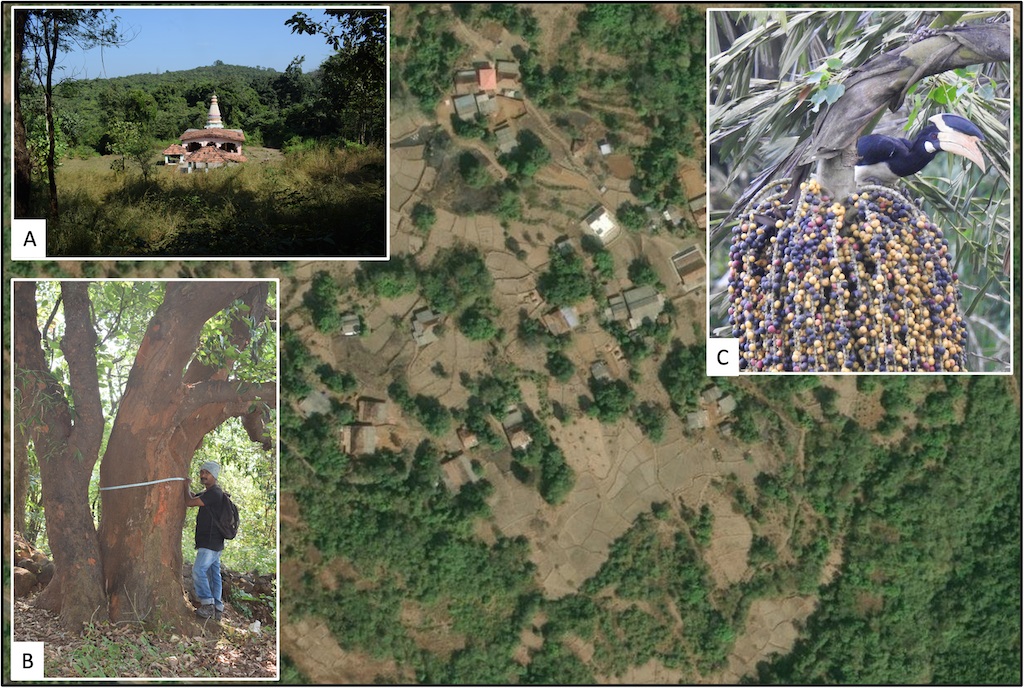
Conservationists warn that this trend is ecologically disastrous. "From an ecological perspective, pouring concrete over root zones and clearing undergrowth physically removes the nursery habitat," Pai explained. By "tidying up" the groves to accommodate more pilgrims or modern aesthetics, the community inadvertently destroys the very environment that allows the "deity’s trees" to reproduce.
Archana Godbole, Director of AERF, emphasizes that the future of these forests depends on recognizing the link between cultural heritage and ecological health. "Conservation here isn’t just about drawing a fence around a national park," she stated. "It’s about actively supporting the communities that maintain these sacred groves… recognizing that preserving this unique cultural heritage is the same work as preserving the region’s ecological network."
Implications for the Landscape Mosaic
The study’s findings have significant implications for how we view wildlife corridors and landscape-scale conservation. Sacred groves do not exist in isolation; they function as "stepping stones" for megafauna moving between larger protected areas.
AERF recently recorded a Royal Bengal tiger (Panthera tigris tigris) and a black leopard (Panthera pardus) in a private forest area near a tiger reserve. These sightings confirm that large predators and herbivores depend on a "landscape mosaic"—a patchwork of national parks, private forests, and sacred groves—rather than a single, contiguous block of wilderness.
If the sacred groves are lost, the "seed rain" provided by hornbills will fail to produce new trees, leading to an aging forest population that cannot replace itself. Furthermore, the loss of these "stepping stones" could isolate wildlife populations, leading to genetic bottlenecks and increased human-wildlife conflict.
Conclusion: A Model for Community-Based Conservation
The Western Ghats study provides a powerful argument for the integration of traditional knowledge into global conservation strategies. In an era of rapid climate change and habitat loss, the 100,000 sacred groves of India offer a pre-existing, community-led framework for forest restoration.

The success of the groves in Vanzole village suggests that the most effective way to grow a forest is not necessarily to plant one, but to protect the "nursery habitats" where nature can do the work itself. By valuing the "protective fear" and the ancestral traditions of local communities, conservationists can ensure that the giant trees of the Western Ghats continue to have a place to grow, and that the "ecological catcher’s mitts" of the future remain ready to catch the seeds of the next generation.
As Archana Godbole concluded, the act of preserving a minimalist shrine is, in itself, a "profound act of biodiversity conservation." The future of the Western Ghats may not lie in new laws or more fences, but in the continued reverence for the ancient spirits that have guarded these trees for a thousand years.
