

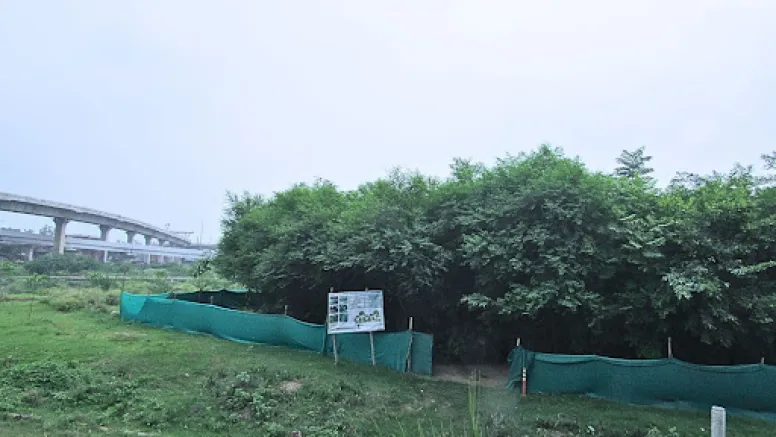
GANDHINAGAR — For decades, the universal mantra for mitigating the "Urban Heat Island" effect has been simple: plant more trees. In the sweltering concrete jungles of the 21st century, urban forests have been championed as the primary defense against rising temperatures. However, groundbreaking new research has revealed a startling counter-intuitive reality. In humid climates, the very trees planted to cool our streets may actually be making the air feel hotter and more oppressive for the people living beneath them.
A comprehensive study conducted by researchers from the Indian Institute of Technology (IIT) Gandhinagar and Northeastern University in the United States has identified what they call the "Urban Greening Paradox." After analyzing nearly two decades of data across 138 Indian cities, the team discovered that in humid regions, dense leaf canopies can trap moisture and stifle ventilation, driving the "perceived heat" or Heat Index to dangerous levels.
Main Facts: The Double-Edged Sword of Urban Forests
The central finding of the study, published in August 2026, challenges the "more is better" philosophy of urban afforestation. While trees are undeniably effective at cooling the ground surface, their impact on human comfort—measured by the Heat Index—is far more complex.
The Heat Index is a metric that combines air temperature and relative humidity to determine how hot the human body actually feels. The research indicates that in humid urban environments, dense clusters of trees can increase this perceived temperature by as much as 2 degrees Celsius.

The Mechanism of Discomfort
To understand why this happens, one must look at how trees interact with their environment. Vegetation typically cools an area through two primary mechanisms:
- Shading: Leaves block solar radiation, preventing the sun from heating up pavements and buildings.
- Evapotranspiration: Much like human perspiration, plants release water vapor into the air. This process consumes sensible heat, effectively lowering the ambient air temperature.
In arid or semi-arid cities, such as those in Rajasthan or the NCR region, this moisture is a blessing. The dry air readily absorbs the water vapor, and the resulting cooling effect is significant. However, in tropical, humid cities like Mumbai, Chennai, or Kolkata, the air is already near its saturation point. When dense canopies add more moisture through evapotranspiration, the air becomes "heavy." Furthermore, if these trees are planted in high-density areas with tall buildings and narrow "street canyons," the canopy acts as a physical lid, trapping the humid air and blocking the wind that would otherwise provide relief.
Chronology: Two Decades of Climate Observation (2003–2020)
The study was not a snapshot but a longitudinal analysis covering a 17-year period from 2003 to 2020. This extensive timeframe allowed researchers to account for seasonal variations, long-term climate shifts, and the rapid pace of Indian urbanization.
- Phase 1: Data Collection (2003–2010): Researchers gathered high-resolution satellite imagery and meteorological data from 138 cities, representing a diverse cross-section of India’s microclimates—ranging from the parched northwest to the monsoon-heavy coastal regions.
- Phase 2: The Shift to Human-Centric Metrics (2010–2018): Historically, urban heat studies relied on Land Surface Temperature (LST)—the temperature of the ground as seen from space. The team realized that LST does not accurately reflect human physiological stress. They shifted their focus to the Heat Index and wet-bulb temperatures to better understand the lived experience of city dwellers.
- Phase 3: Machine Learning Integration (2018–2024): Using advanced machine learning algorithms, the researchers processed the massive dataset to identify specific "thresholds." They looked for the exact point where the benefits of greening (shading) were overtaken by the liabilities (humidity and air stagnation).
- Phase 4: Synthesis and Publication (2025–2026): The final findings were synthesized, revealing that the "tipping point" of urban greening is highly dependent on local humidity levels and urban morphology.
Supporting Data: Thresholds and Thermal Realities
The researchers employed a metric known as fPAR (fraction of Photosynthetically Active Radiation), which measures the health and productivity of vegetation. By correlating fPAR with the Heat Index, they found a distinct divergence between dry and humid cities.

Key Data Points:
- The 2-Degree Spike: In several humid Indian cities, areas with the highest density of vegetation showed a Heat Index up to 2°C higher than moderately green areas during peak humidity months.
- The Arid Contrast: Conversely, in dry cities, an increase in green cover consistently led to a decrease in both surface temperature and the Heat Index, proving that the paradox is climate-specific.
- Surface vs. Air: The study found that while dense trees could lower the surface temperature (the temperature of the asphalt) by 3–5°C, they simultaneously raised the humidity-adjusted air temperature (the Heat Index) due to trapped moisture.
- The Evaporation Factor: Human cooling relies on the evaporation of sweat. The study noted that in humid, densely forested urban pockets, the "vapor pressure deficit" becomes so low that sweat cannot evaporate from human skin, leading to a higher risk of heat exhaustion and heatstroke.
Official Responses and Scientific Perspectives
The findings have sparked a necessary debate among climate scientists, urban planners, and government officials regarding the future of "Nature-Based Solutions" (NbS).
Dr. Vimal Mishra, a lead researcher from IIT Gandhinagar, emphasized that the study is not an argument against trees, but an argument for smarter planting. "The cooling effect of trees is not a universal constant," Mishra noted. "In our rush to green our cities, we have often ignored the fundamental laws of thermodynamics. If you add moisture to an environment that is already saturated and stagnant, you are creating a sauna, not a sanctuary."
Urban Planning Experts have responded by suggesting that the "Forest City" model, popular in temperate European climates, cannot be imported wholesale to the tropics. Representatives from municipal corporations in coastal states have expressed interest in the data, noting that it explains why certain "green" neighborhoods often feel more "stuffy" than older, windier parts of the city.
Environmental Scientists from Northeastern University added that the research highlights the importance of "Urban Morphology"—the shape and layout of buildings. They argue that in humid cities, the focus should shift from "dense forests" to "ventilated greening," where trees are spaced to allow sea breezes and wind currents to flush out the moisture.

Implications for Future Urban Design
The "Urban Greening Paradox" has profound implications for how the world’s fastest-growing cities will adapt to a warming planet. As climate change increases the frequency of "humid-heat" events, the strategy for urban survival must evolve.
1. Moving Beyond "One Size Fits All"
The primary implication is the death of the universal greening policy. Urban planners must now adopt "Climate-Responsive Design."
- In Arid Cities: High-density planting remains a primary tool for cooling.
- In Humid Cities: Planners should prioritize "sparse canopies" and "linear green belts" that align with prevailing wind directions to ensure that moisture is carried away rather than trapped.
2. Strategic Shading
The study suggests that in humid environments, artificial shading or "cool roofs" might sometimes be more effective than high-transpiration trees. By using architectural features to provide shade without adding moisture to the air, cities can reduce solar gain without increasing the Heat Index.
3. Public Health and Equity
The paradox is also a matter of social justice. Often, the densest greening is found in affluent neighborhoods, while poorer areas are "heat islands" of concrete. However, if greening is done incorrectly in a humid city, even the "leafy suburbs" could become health risks for the elderly and vulnerable. Future heat action plans must take the Heat Index—not just the temperature—into account when issuing health warnings.

4. Rethinking Species Selection
Not all trees are equal in their transpiration rates. Future research will likely focus on identifying tree species that provide ample shade but have lower transpiration rates, specifically for use in humid tropical urban centers.
Conclusion: A New Era of Tropical Urbanism
The research from IIT Gandhinagar and Northeastern University serves as a critical course correction for global climate adaptation strategies. It reminds us that nature-based solutions are only effective when they are harmonized with local ecological realities.
As India continues to urbanize at an unprecedented rate, the insights from these 138 cities will be vital. The goal remains the same—to create livable, cool, and resilient cities—but the path to getting there has become more nuanced. In the humid heart of the tropics, the coolest path forward may not be a dense forest, but a carefully engineered balance of shade, wind, and water. By respecting the complex physics of the atmosphere, city planners can ensure that the "green lungs" of our cities do not inadvertently stifle the people they were meant to protect.
