

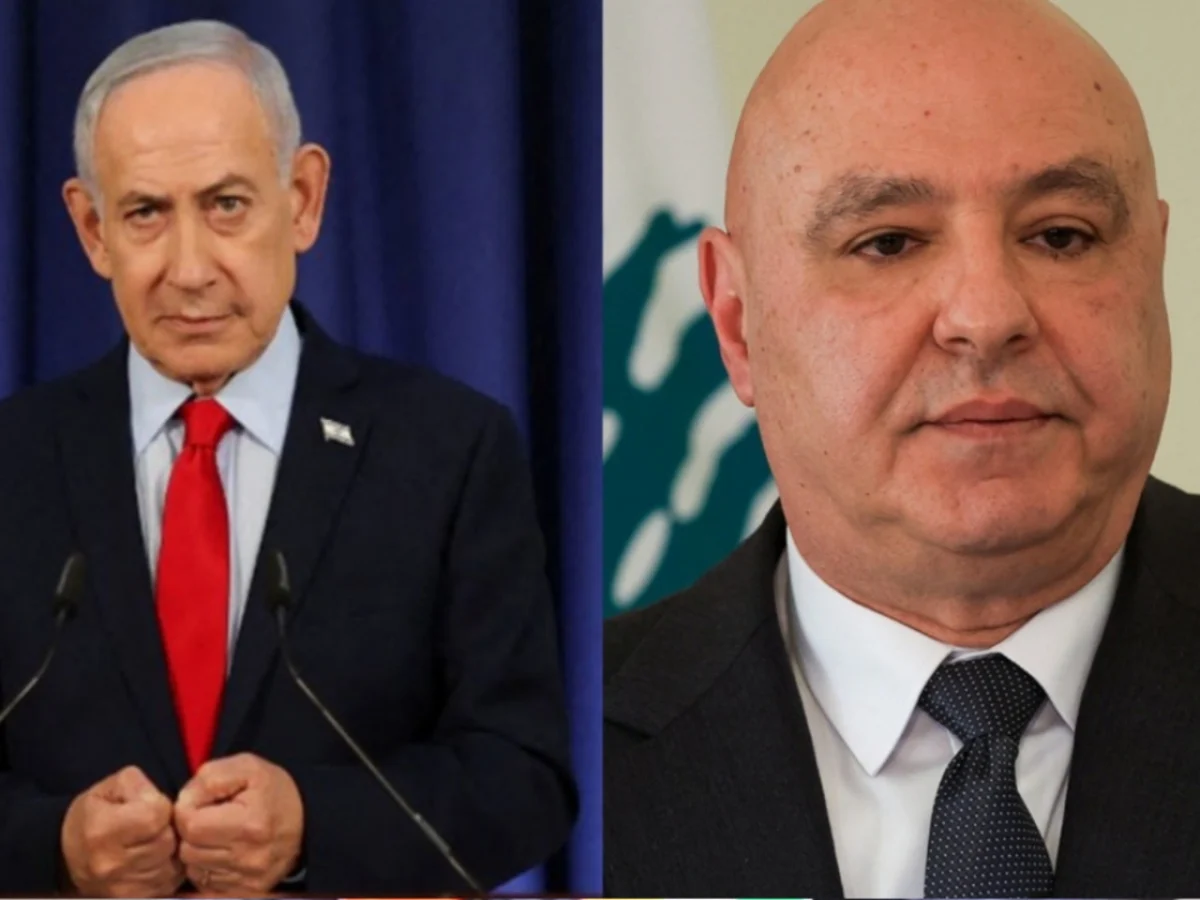
WASHINGTON D.C. – June 23, 2026 – In a significant diplomatic push aimed at de-escalating long-standing tensions and forging a path toward lasting stability, the United States is currently hosting Israeli and Lebanese delegations for three days of intensive negotiations in Washington. The talks, facilitated by the U.S. State Department and Department of Defense, are designed to consolidate the existing ceasefire between the two nations and lay the groundwork for a broader, comprehensive peace and security agreement. This renewed American engagement underscores a determined effort to break a persistent "cycle of violence" that has plagued the Levant for decades.
The high-level discussions, featuring Israeli and Lebanese representatives, are being treated with cautious optimism by international observers, who recognize the immense challenges inherent in bridging the deep chasm of distrust and conflict. While specific details of the agenda remain tightly guarded, U.S. officials have emphasized the goal of empowering both states to negotiate as sovereign entities, fostering mutual security and stability.
A New Chapter in Bilateral Diplomacy: The Washington Talks
The current round of talks, unfolding over three days in the U.S. capital, marks a pivotal moment in the fraught relationship between Israel and Lebanon. For years, the two countries have remained in a technical state of war, separated by a volatile border and punctuated by periodic flare-ups of violence. The United States, leveraging its unique diplomatic position, has stepped forward as a critical enabler, providing the neutral ground and robust framework necessary for these direct, albeit sensitive, negotiations.
According to a State Department official, the American delegation is being led by Counsellor Dan Holler and Assistant Secretary of Defence for International Security Affairs Dan Zimmerman, underscoring the dual military and political dimensions of the peace effort. The carefully structured format for the negotiations includes an initial joint military and political session, designed to establish common ground and address immediate concerns from both security and diplomatic perspectives. This will be followed by a dedicated military session, likely delving into specific security arrangements, border protocols, and de-escalation mechanisms. The talks are slated to conclude with a political closing round, intended to synthesize progress and outline future steps towards a more permanent resolution.
)
"Our shared goal is to end the cycle of violence for good," stated a State Department official, highlighting the ambitious scope of the U.S. initiative. This objective extends beyond merely maintaining a ceasefire; it seeks to address the underlying causes of friction and build momentum for a broader settlement that could fundamentally alter the security landscape of the eastern Mediterranean. The commitment to a comprehensive peace and security agreement signals a long-term vision, acknowledging that true stability requires more than just the absence of conflict.
The very act of both delegations remaining in Washington for three days signifies a serious commitment to the process, allowing for sustained engagement and the potential for genuine breakthroughs. This intensive format contrasts with previous, often ad-hoc, interactions, signaling a more structured and dedicated approach to problem-solving.

Chronology of Engagement: From Tensions to Talks
The current Washington talks do not emerge in a vacuum but are the culmination of decades of strained relations, punctuated by both overt conflict and periods of uneasy truce. Understanding this historical context is crucial to appreciating the significance and fragility of the present diplomatic efforts.
Historical Backdrop of Enduring Hostility
The relationship between Israel and Lebanon has been defined by conflict since the founding of the State of Israel in 1948. Despite sharing a border, the two nations have never signed a formal peace treaty, operating instead under an armistice agreement from 1949 which has frequently been violated. Major military incursions by Israel into Lebanon in 1978 and 1982, the latter leading to an extended occupation of southern Lebanon, cemented a deep-seated animosity. The 2006 Lebanon War, a month-long conflict between Israel and Hezbollah, the powerful Shiite militant group and political party within Lebanon, further underscored the region’s volatility and the complex interplay of state and non-state actors.
)
Throughout these decades, the absence of clearly demarcated and mutually recognized borders, both land and maritime, has been a persistent source of contention. Security concerns, particularly Israel’s apprehension regarding Hezbollah’s military capabilities and its influence within the Lebanese government, have consistently fueled tensions along the Blue Line – the demarcation line established by the United Nations in 2000 following Israel’s withdrawal from southern Lebanon. For Lebanon, concerns over Israeli air and naval incursions, alongside the broader issue of national sovereignty and territorial integrity, remain paramount. This "cycle of violence" the U.S. seeks to end refers to this recurring pattern of military engagement, retaliatory strikes, and the chronic insecurity that prevents either nation from fully focusing on internal development and regional cooperation.
Recent Diplomatic Overtures
The immediate precursor to these Washington talks involved a series of high-level diplomatic engagements initiated by the United States. U.S. Secretary of State Marco Rubio, recognizing the escalating risks of renewed hostilities, undertook critical consultations with both sides. Reports indicate that Secretary Rubio engaged directly with Israeli Prime Minister Benjamin Netanyahu and Lebanese President Joseph Aoun, aiming to solidify the existing ceasefire and lay the groundwork for these future discussions. These calls were vital in securing the buy-in necessary from both leaderships to commit to direct negotiations in Washington.
)
A significant outcome of these preparatory diplomatic efforts was the establishment of a CENTCOM (United States Central Command) monitoring mechanism. This innovative initiative is designed to provide real-time updates on fighting in Lebanon, offering a crucial layer of transparency and early warning to prevent misunderstandings and accidental escalation. The CENTCOM mechanism serves as a vital confidence-building measure, providing a neutral, verifiable source of information that can help de-escalate potential flashpoints along the border and foster an environment conducive to ongoing dialogue. Its implementation signals a tangible commitment from the U.S. to not only facilitate talks but also to actively manage the security environment that underpins them. This mechanism is particularly important given the complex operating environment in southern Lebanon, where various armed groups operate alongside state forces.
Key Agenda Items and Negotiating Format
The structured format of the Washington talks – moving from a joint military-political session to a dedicated military session, and finally a political closing round – reflects the multi-faceted nature of the challenges at hand. This approach allows for a granular examination of specific issues while maintaining a holistic view of the ultimate goal: a comprehensive peace and security agreement.
)
The initial joint military-political session is expected to serve as an opportunity for both sides to articulate their primary concerns and objectives. Militarily, this would likely involve discussions on the ongoing ceasefire, recent border incidents, and establishing clear lines of communication between respective armed forces to prevent miscalculation. Politically, it would set the stage for acknowledging each nation’s sovereignty and reiterating the commitment to peaceful coexistence. This session would also likely address the overall framework for negotiations, including principles of mutual respect and non-aggression.
The subsequent dedicated military session would delve into more technical and operational aspects. Key topics on the table would undoubtedly include:
)
- Border Demarcation: The precise delineation of both the land border (the Blue Line) and the disputed maritime border, which holds significant economic implications due to offshore gas reserves. Previous U.S.-mediated efforts, such as the 2022 maritime border agreement, could serve as a precedent or framework for further discussions.
- Security Arrangements: Detailed protocols for troop deployments, buffer zones, and the role of international peacekeepers (UNIFIL). Discussions would also likely touch upon measures to prevent cross-border infiltration and the presence of non-state armed actors, particularly Hezbollah, which poses a significant security challenge for Israel.
- De-escalation Mechanisms: Formalizing channels for immediate communication in times of crisis, joint patrols, and procedures for investigating border incidents to avoid escalation.
- Confidence-Building Measures (CBMs): These could range from sharing information on military exercises to cultural exchanges or joint economic projects in areas of mutual interest, aimed at reducing suspicion and fostering trust over time.
The concluding political round would then aim to consolidate any agreements reached during the military sessions and address broader diplomatic and political considerations. This could involve discussions on future steps, the establishment of permanent joint committees, and perhaps a roadmap for eventually normalizing relations. While a full peace treaty may be a distant goal, these talks are strategically positioned to achieve incremental progress that could build toward such an outcome. The emphasis on "building momentum for a broader settlement" suggests that these three days are seen as a critical stepping stone, not necessarily the final destination.
Supporting Data: The Complex Tapestry of Regional Dynamics
The Israel-Lebanon negotiations are not isolated events but are deeply embedded within the intricate geopolitical landscape of the Middle East. Success or failure will reverberate across the region, influenced by, and in turn influencing, a multitude of internal and external factors.
)
Geopolitical Imperatives and External Influences
The Levant region is a nexus of competing interests and influences. Iran, through its robust support for Hezbollah in Lebanon, plays a significant role in shaping the security dynamics. Hezbollah’s substantial military arsenal and its deep political integration within Lebanon present a unique challenge to any peace agreement, as it operates as both a national actor and a proxy force for external powers. Any deal that does not address Hezbollah’s future role or its security implications for Israel will likely face insurmountable obstacles.
Syria’s ongoing instability, marked by a prolonged civil war and the presence of various international and non-state actors, further complicates the regional picture. The porous border between Lebanon and Syria, and the potential for spillover effects, means that security arrangements between Israel and Lebanon must also implicitly consider the broader Syrian context. Regional powers like Saudi Arabia and Qatar, while not direct participants, exert influence through their diplomatic and financial leverage, often aligning with or opposing the interests of other regional players. The United Nations Interim Force in Lebanon (UNIFIL) has been a constant presence along the Blue Line since 1978, playing a vital role in monitoring the ceasefire and providing a buffer, but its mandate and effectiveness are continually tested by the complex realities on the ground. The U.S. also maintains significant strategic interests in preventing a wider regional conflict and ensuring the security of its allies.
)
Economic Stakes and Resource Potential
Beyond security, significant economic incentives underscore the urgency of these talks. Lebanon, in particular, has been grappling with an unprecedented economic crisis, marked by hyperinflation, widespread poverty, and political paralysis. Stability along its southern border is crucial for any hope of economic recovery and attracting much-needed foreign investment. A lasting peace agreement could unlock significant economic opportunities, including potential for shared development of offshore natural gas fields in the eastern Mediterranean. The successful U.S.-mediated maritime border agreement in 2022, which allowed both countries to proceed with gas exploration in their respective zones, demonstrated the tangible economic benefits that can arise from diplomatic engagement. Further cooperation on shared resources, trade, and infrastructure projects could provide powerful incentives for maintaining peace, transforming a historically conflict-ridden border into one of economic opportunity. For Israel, regional stability enhances its own economic security and potential for new markets, while reducing the significant costs associated with constant security vigilance.
Official Responses: Statements and Expectations
The official rhetoric surrounding these talks, though carefully calibrated, provides insight into the aspirations and fundamental positions of each party.
)
The American Stance: Facilitation for Lasting Peace
The U.S. State Department has consistently framed its role as that of an impartial facilitator, emphasizing its commitment to empowering Israel and Lebanon to negotiate as "sovereign states for peace and security." This language underscores Washington’s intent to avoid imposing solutions, instead fostering a process where both nations determine their own future. The statements from Counsellor Dan Holler and Assistant Secretary Dan Zimmerman, particularly the declaration of a "shared goal… to end the cycle of violence for good," reflect a genuine desire to move beyond mere crisis management to achieve sustainable peace. For the U.S., these talks are a test of its diplomatic leadership in a region where its influence has sometimes been questioned. Success here would reinforce its role as a credible mediator and a guarantor of regional stability.
Israeli Perspectives: Security First
For Israel, represented by Prime Minister Benjamin Netanyahu’s administration, security remains the paramount concern. The primary objective will be to ensure the long-term safety of its northern border, which has historically been vulnerable to attacks from Lebanon-based groups. This includes seeking robust guarantees against future aggression, explicit recognition of its borders, and mechanisms to curb the military capabilities and influence of Hezbollah. While economic opportunities might be appealing, they are secondary to security imperatives. Israel will likely demand clear, verifiable commitments and monitoring mechanisms to ensure any agreements are upheld. The presence of Assistant Secretary of Defense for International Security Affairs Dan Zimmerman leading the U.S. delegation alongside Holler signals to Israel that its security concerns are being taken seriously at the highest levels of American defense policy.
)
Lebanese Aspirations: Sovereignty and Stability
Lebanese President Joseph Aoun and his delegation approach these talks with a complex set of internal and external pressures. For Lebanon, asserting its sovereignty and territorial integrity is crucial. This includes resolving all outstanding border disputes, ensuring an end to Israeli incursions into Lebanese airspace and territorial waters, and securing international support for its economic recovery. The Lebanese delegation also faces the delicate task of balancing its national interests with the powerful domestic influence of Hezbollah, which commands significant political and military sway. Any agreement must be perceived as serving Lebanon’s national interests and not undermining its internal cohesion, which is often fragile. The talks also present an opportunity for Lebanon to garner international support for its stability and to potentially unlock avenues for economic relief.
Interconnected Diplomacy: The US-Iran Talks in Switzerland
A crucial, yet distinct, diplomatic track runs parallel to the Israel-Lebanon negotiations: the ongoing U.S.-Iran talks in Switzerland. While seemingly separate, these discussions are profoundly interconnected with the stability of the broader Middle East, particularly concerning Lebanon, where Iran wields significant influence through Hezbollah.
)
The first round of these U.S.-Iran talks, mediated by Qatar and Pakistan, concluded with an agreement on a 60-day roadmap toward a final deal. This framework encompasses a range of critical issues, signaling a broader attempt to de-escalate tensions between Washington and Tehran. A key development was the U.S. waiver of Iranian oil sanctions until August 21, providing Iran with a temporary economic reprieve. In return, Iran reported the release of some of its frozen assets, a vital injection into its struggling economy.
Crucially, these talks also yielded the establishment of a "Lebanon de-confliction cell" and a Strait of Hormuz communication line. The Lebanon de-confliction cell directly links the U.S.-Iran dialogue to the Israel-Lebanon context. This mechanism aims to prevent misunderstandings and reduce the risk of accidental escalation in Lebanon, a theatre where both U.S. allies (Israel) and Iranian proxies (Hezbollah) are active. The Strait of Hormuz communication line, meanwhile, seeks to ensure open shipping lanes in the vital waterway, reducing the risk of naval confrontations that could disrupt global oil supplies.
)
Adding another layer of complexity, Vice President JD Vance stated that Iran had agreed to IAEA (International Atomic Energy Agency) inspections, a move that would provide crucial oversight of its nuclear program. However, Tehran promptly denied that nuclear talks were held, highlighting the deep mistrust and divergent narratives that continue to plague U.S.-Iran relations. Despite this denial, technical teams from both sides are reportedly continuing negotiations in Switzerland, with the ambitious goal of reaching a final agreement within 60 days.
The success or failure of the U.S.-Iran talks will undoubtedly cast a long shadow over the Israel-Lebanon negotiations. A breakthrough with Iran could potentially reduce Tehran’s incentive to destabilize the region via proxies, thereby easing pressure on Lebanon. Conversely, a breakdown in U.S.-Iran diplomacy could exacerbate regional tensions, making any lasting peace between Israel and Lebanon significantly harder to achieve. The establishment of the Lebanon de-confliction cell, however, suggests a pragmatic recognition from both Washington and Tehran of the need to manage their indirect confrontation in Lebanon, regardless of broader agreement.
)
Implications: Navigating the Path to a Stable Future
The Washington talks carry immense implications, not just for Israel and Lebanon, but for the entire Middle East. The path forward is fraught with challenges, yet the potential rewards of a stable border and reduced conflict are profound.
Potential for Breakthroughs and Challenges Ahead
The immediate success of these talks would be the consolidation of the ceasefire and the establishment of reliable de-escalation mechanisms. Even small, incremental agreements – such as a clearer understanding on border patrols, maritime rights, or joint committees for incident investigation – could build crucial confidence. A significant breakthrough could involve a mutually agreed-upon framework for permanent border demarcation and security arrangements that address the legitimate concerns of both nations. Such a framework could pave the way for economic cooperation, potentially unlocking the region’s full economic potential.
)
However, formidable challenges remain. Decades of deep-seated mistrust, fueled by historical conflicts and ongoing grievances, are not easily overcome. The internal political fragilities within both countries also pose significant obstacles. Lebanon’s chronic political instability, compounded by the powerful and often independent role of Hezbollah, makes it difficult for any Lebanese government to commit to agreements that might be perceived as undermining its national resistance or sovereignty. Similarly, Israeli domestic politics and the need for a strong security posture against perceived threats will heavily influence its negotiating positions. The specter of Hezbollah, with its significant military capabilities and its ideological opposition to Israel, represents a constant potential spoiler for any peace agreement. Its willingness to abide by, or even participate in, any security arrangements will be critical.
Regional Repercussions
The outcome of these talks will have significant regional repercussions. A successful de-escalation and the initiation of a path towards peace could serve as a powerful model for resolving other protracted conflicts in the Middle East, demonstrating the efficacy of U.S. diplomacy and the potential for direct engagement. It could also shift regional alliances and priorities, potentially reducing the influence of extremist groups and fostering greater cooperation among moderate states. Conversely, a failure could plunge the region back into heightened tensions, further entrenching the "cycle of violence" and undermining the credibility of U.S. mediation efforts. It could also empower those who argue that peace with Israel is impossible, further complicating efforts in other conflict zones. The broader regional impact will also be tied to the progress, or lack thereof, in the U.S.-Iran talks, given the intertwined nature of Middle Eastern security.
)
The Road Ahead: Monitoring and Sustained Engagement
Regardless of the immediate outcomes of these three-day talks, the "road ahead" will require sustained engagement and robust monitoring. The CENTCOM monitoring mechanism will be crucial for ensuring compliance with any security agreements and providing a transparent platform for reporting incidents. Follow-up meetings, potentially at technical or expert levels, will be necessary to flesh out the details of any agreed-upon frameworks. The U.S. will likely need to maintain its role as a persistent facilitator, ready to intervene and mediate when impasses arise. The long-term vision of a comprehensive peace requires not just a single agreement, but a continuous process of confidence-building, dialogue, and mutual assurance, ultimately aimed at transforming a relationship defined by conflict into one characterized by coexistence and shared security.
Conclusion
The Washington talks between Israel and Lebanon represent a moment of cautious hope amidst a landscape long defined by conflict. Facilitated by the United States, these three days of intense diplomacy aim to consolidate a fragile ceasefire and embark on the challenging journey towards lasting peace and security. While the historical baggage and complex regional dynamics, including the parallel U.S.-Iran negotiations, present formidable obstacles, the commitment of all parties to engage directly signals a recognition of the high stakes involved. The world watches, hopeful that these discussions will mark the beginning of a new chapter, one that finally breaks the cycle of violence and ushers in an era of stability and cooperation for the people of Israel and Lebanon.
