

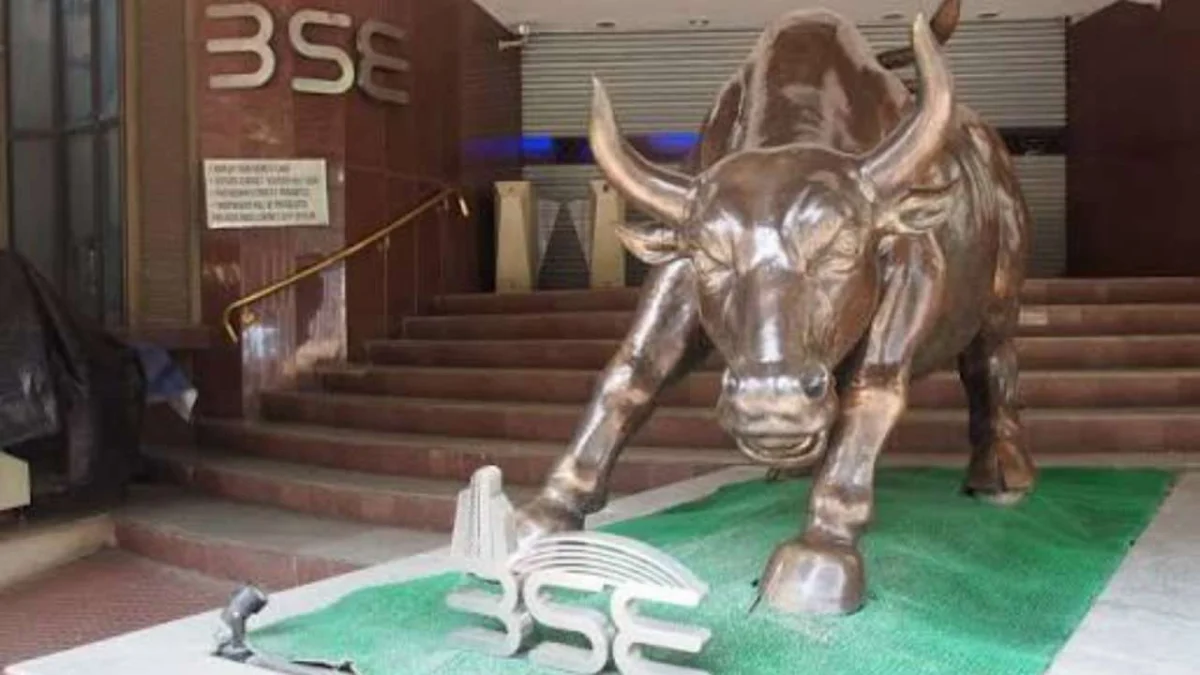
MUMBAI, India – Indian stock markets experienced a dramatic and widespread sell-off on Wednesday, leading to a sharp fall in key indices and the erosion of investor wealth totaling approximately Rs 4 lakh crore (approximately $48 billion USD) in a single trading session. The severe downturn, which saw both the BSE Sensex and NSE Nifty50 plunge, was primarily triggered by a confluence of escalating geopolitical tensions in the Middle East, a significant surge in global crude oil prices, and tightening monetary policy expectations from the US Federal Reserve. The widespread panic mirrored declines seen across major global markets, underscoring the interconnectedness of the world economy.
Main Facts
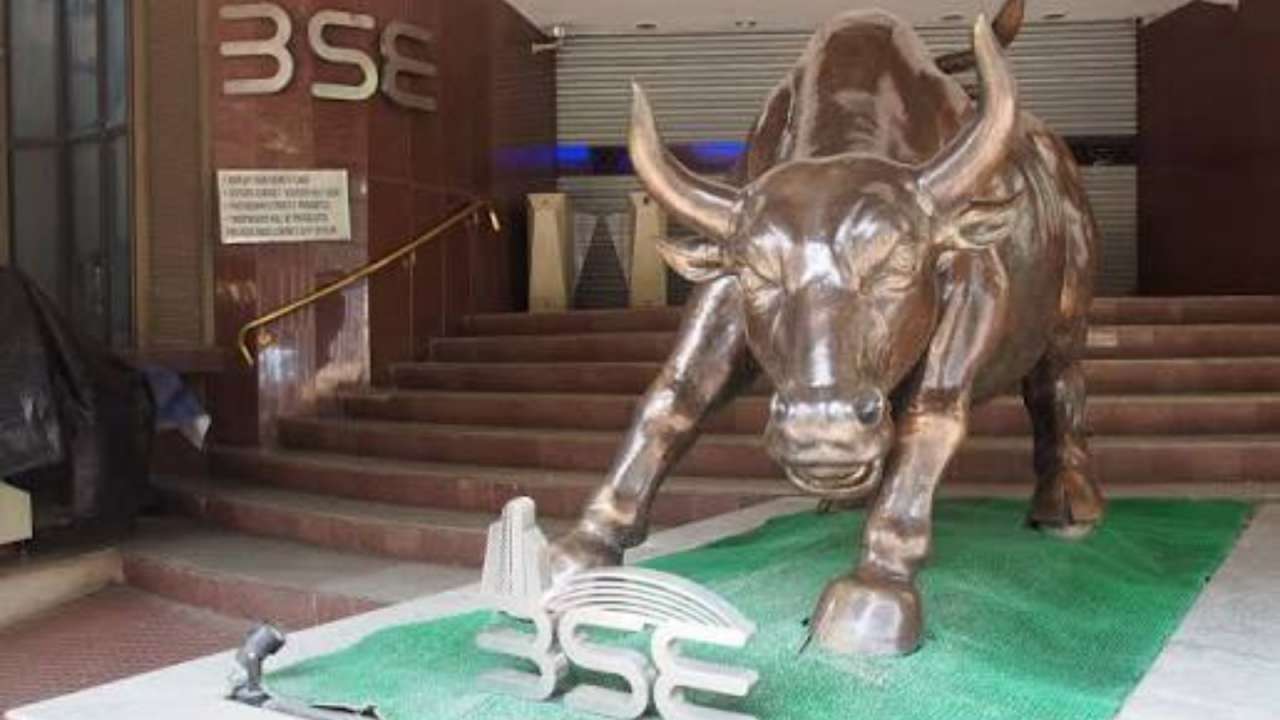
Wednesday, a day that will be remembered by investors as a "bloodbath" on Dalal Street, saw the benchmark BSE Sensex crash by 1,156.79 points, or 1.54%, to settle at 73,671.56. Similarly, the broader NSE Nifty50 index recorded a substantial loss of 369 points, or 1.57%, closing the session at 23,077.80. The intensity of the sell-off led to an estimated Rs 4 lakh crore in market capitalization being wiped out, reflecting deep investor apprehension.
The primary catalysts for this sharp correction were identified as:
- Soaring Crude Oil Prices: Brent crude surged past $106 per barrel, driven by supply concerns.
- Escalating Geopolitical Tensions: A sharp increase in rhetoric surrounding the US-Iran conflict, including threats concerning the Strait of Hormuz, fueled market anxiety.
- Rising US Treasury Yields: The yield on the 10-year US Treasury bond climbed to 5.11%, its highest level since 2007, making dollar-denominated assets more attractive.
- US Federal Reserve Rate Hike Expectations: Increased probability of further rate hikes by the US Fed heightened fears of sustained higher borrowing costs globally.
- Domestic Regulatory Concerns: Proposed changes by India’s insurance regulator regarding commissions and distribution payouts put significant pressure on financial sector stocks.
The downturn was not isolated, as Indian bourses reacted sharply to negative cues from Wall Street’s overnight performance and a broad decline across Asian markets earlier in the day.
)
Chronology of Events Leading to the Sell-Off
The roots of Wednesday’s market turmoil can be traced back to a series of unfolding global and domestic developments that created a perfect storm for investor sentiment.
Overnight Global Cues
The preceding trading day concluded with a bearish tone on Wall Street. Major US indices, including the Dow Jones Industrial Average, S&P 500, and Nasdaq Composite, registered declines as investors grappled with sticky inflation data, rising bond yields, and hawkish signals from Federal Reserve officials. This set a cautious tone for Asian markets opening on Wednesday morning.

Escalation of US-Iran Tensions
A critical trigger emerged from the geopolitical arena. Reports filtered in overnight and intensified during early Asian trading hours regarding the escalating rhetoric between the United States and Iran. Iranian President Masoud Pezeshkian, speaking at the UN General Assembly, delivered a defiant speech. He not only rejected threats but also asserted Iran’s inalienable right to develop nuclear technology for economic purposes, directly countering previous warnings from the US. The situation worsened considerably when he explicitly declared that Iran would not allow navigation through the strategically vital Strait of Hormuz until US economic sanctions were lifted. This statement, given that approximately 20% of the world’s petroleum and 45% of India’s crude oil imports pass through this choke point, immediately sent shockwaves through global energy markets.
Crude Oil Price Spike
In direct response to the Strait of Hormuz threat, Brent crude oil prices, which had already been trending upwards, shot past $106 per barrel in early Asian trade. This sharp rise was a major concern for India, which imports about 85% of its total fuel needs. A higher crude oil import bill directly translates to increased inflationary pressures, a widening current account deficit (CAD), and potential depreciation of the Indian Rupee. By Wednesday afternoon, while slightly off its peak, Brent was still trading at an elevated $105.50 per barrel, sustaining the pressure.
)
Rising US Treasury Yields and Fed Expectations
Concurrently, the global financial landscape was grappling with a significant surge in US Treasury yields. The yield on the benchmark 10-year US Treasury bond soared to an alarming 5.11%, a level not seen since 2007. This spike was fueled by robust US economic data, persistent inflation, and the market’s anticipation of the US Federal Reserve maintaining a "higher-for-longer" interest rate stance. Higher US yields make dollar-denominated assets, particularly US bonds, more attractive to global investors. This often leads to capital outflows from emerging markets like India, as foreign institutional investors (FIIs) seek safer and higher-yielding alternatives in the US. The probability of another rate hike by the US Federal Reserve moved above 66% among traders, amplifying fears of increased borrowing costs and a tightening global liquidity environment.
Market Opening and Intra-Day Volatility
As Indian markets opened on Wednesday morning, the negative global cues immediately manifested. Both the Sensex and Nifty50 opened significantly lower, reflecting the overnight pessimism. The initial declines were exacerbated as the day progressed, particularly following the detailed reports of the Iranian President’s statements and the corresponding jump in crude oil prices. Selling intensified across sectors, with financial stocks, in particular, coming under additional domestic pressure. Retail and institutional investors alike engaged in profit-booking and panic selling, leading to a broad-based market correction. The India VIX, a measure of market volatility, surged, indicating heightened uncertainty and fear among participants.
)
Domestic Regulatory Impact on Financials
Adding to the global headwinds, a specific domestic factor further battered India’s financial sector. Reports emerged about proposed changes by the insurance regulator concerning commissions and distribution payouts. These changes were perceived as potentially impacting the revenue streams of insurance distributors, as well as banks and non-bank lenders with significant insurance distribution income. This news triggered a sharp sell-off in key financial stocks. PB Fintech, a prominent player in the insurance distribution space, saw a steep fall. Major banking and financial institutions like Axis Bank, Bajaj Finance, Bajaj Finserv, and HDFC Bank also experienced intense selling pressure during the session, contributing significantly to the overall market decline.
By the close of trading, the cumulative effect of these factors resulted in one of the most significant single-day market capitalisation erosions in recent times, leaving investors grappling with substantial losses and an uncertain outlook.
)
Supporting Data and Market Analysis
The scale of Wednesday’s market downturn is starkly illustrated by the numbers and the underlying factors driving them.
Market Performance Metrics
- BSE Sensex: Closed at 73,671.56, down 1,156.79 points (1.54%).
- NSE Nifty50: Closed at 23,077.80, down 369 points (1.57%).
- Market Capitalization Wiped Out: Approximately Rs 4 lakh crore (USD 48 billion). This figure represents the collective loss in value of all listed companies on the BSE.
- India VIX: The volatility index, often referred to as the "fear gauge," surged significantly, indicating increased market uncertainty and expected price fluctuations.
- Sectoral Performance: The sell-off was broad-based, but certain sectors bore the brunt more severely.
- Financial Services: This sector was particularly hit, not only due to global factors but also the domestic insurance regulatory news. Banks, non-banking financial companies (NBFCs), and insurance intermediaries witnessed heavy selling.
- Oil & Gas: While crude prices surged, some domestic oil marketing companies (OMCs) faced pressure due to the increased cost of imports, which could squeeze their margins if not fully passed on to consumers.
- Metals and Industrials: These sectors, sensitive to global economic slowdown fears and higher input costs, also saw declines.
- IT Services: Despite being generally resilient, the IT sector also experienced pressure due to global risk aversion and concerns about economic slowdowns in key client markets.
The Crude Oil Conundrum
The surge in Brent crude oil to $106 per barrel represents a critical challenge for India.
)
- Import Dependence: India is the world’s third-largest oil consumer and relies on imports for approximately 85% of its crude oil needs. This makes the economy highly vulnerable to global oil price fluctuations.
- Strait of Hormuz: The Iranian threat to the Strait of Hormuz is particularly alarming for India. Roughly 45% of India’s crude oil imports, especially from the Middle East, traverse this narrow waterway. Any disruption would have catastrophic implications for India’s energy security and economy.
- Economic Impact:
- Inflation: Higher crude oil prices directly translate to increased fuel costs (petrol, diesel, LPG) for consumers, leading to higher transportation costs for goods, and thus, generalized inflation across the economy.
- Current Account Deficit (CAD): A rising import bill for oil widens India’s current account deficit, putting pressure on the Rupee.
- Rupee Depreciation: A wider CAD and FII outflows (due to higher US yields) combine to weaken the Indian Rupee against the US Dollar, making imports even more expensive.
- Fiscal Pressure: The government might be compelled to reduce excise duties on fuel to cushion consumers, which would strain fiscal finances.
US Treasury Yields and Capital Flows
The 10-year US Treasury yield’s climb to 5.11% is a significant global financial event.
- Historical Context: This level has not been observed since 2007, prior to the global financial crisis, indicating a fundamental shift in interest rate expectations.
- "Risk-Free" Rate: US Treasuries are considered a benchmark "risk-free" asset globally. When their yields rise, they offer a more attractive return for investors without taking on equity market risk.
- FII Outflows from India: For foreign institutional investors (FIIs), higher US yields mean a more compelling alternative to investing in emerging markets. This often triggers a reallocation of capital from markets like India back to the US, leading to FII selling pressure on Indian equities.
- Cost of Capital: Higher US yields also impact global borrowing costs, making it more expensive for Indian companies to raise capital internationally.
US Federal Reserve’s Stance
The market’s increasing belief in further US Fed rate hikes, with a probability above 66%, stems from the Fed’s commitment to bringing inflation down to its 2% target.
)
- "Higher for Longer": The prevailing narrative is that interest rates will remain elevated for an extended period, rather than seeing quick cuts.
- Impact on Asset Valuations: Sustained high interest rates increase the discount rate used in financial models, which reduces the present value of future earnings. This puts downward pressure on the valuations of riskier assets, particularly growth stocks.
- Global Liquidity: A tightening Fed policy generally drains global liquidity, making it harder and more expensive for capital to flow into emerging markets.
Domestic Financial Sector Specifics
The proposed changes by the insurance regulator added a distinct domestic flavour to the market correction.
- Commission Structure: If regulators propose capping or altering the commission structures for insurance products, it directly impacts the profitability of entities involved in their distribution.
- Affected Entities:
- PB Fintech (Policybazaar): As a major online insurance aggregator, its business model is directly tied to distribution income.
- Banks & NBFCs: Institutions like Axis Bank, Bajaj Finance, Bajaj Finserv, and HDFC Bank have significant insurance distribution arms, often selling policies as a cross-selling strategy to their customer base. A reduction in these revenues could impact their overall profitability and non-interest income.
- Investor Reaction: The uncertainty surrounding these regulatory changes led to a sharp de-rating of these stocks, as investors factored in potential future revenue impacts.
The convergence of these powerful global and domestic factors created a highly volatile trading environment, culminating in the significant wealth erosion observed on Wednesday.
)
Official Responses and Expert Commentary
In the wake of the market bloodbath, stakeholders ranging from government officials to market experts have begun to weigh in, offering perspectives on the situation and potential paths forward.
Government and Regulatory Stance
While no immediate, detailed official statements from the Finance Ministry or the Reserve Bank of India (RBI) were released directly addressing Wednesday’s specific market crash at the time of reporting, general policy postures and typical responses can be inferred:
)
- Finance Ministry: Typically, the Finance Ministry monitors market movements closely. In situations of sharp corrections driven by global factors, their usual stance is to emphasize India’s strong economic fundamentals, resilience to external shocks, and commitment to fiscal prudence. They might reassure investors that the government is prepared to take necessary steps to maintain stability and mitigate adverse impacts, particularly concerning inflation and oil prices. Any specific comments on the geopolitical situation would likely align with the Ministry of External Affairs’ position.
- Reserve Bank of India (RBI): The RBI’s primary mandates are price stability (controlling inflation) and maintaining financial stability. Given the surge in crude oil prices and potential for imported inflation, the RBI would likely reiterate its vigilant stance on inflation and its readiness to use monetary policy tools if needed. They would also monitor the Rupee’s stability and foreign exchange reserves to manage any excessive volatility caused by capital outflows. Their communication would likely emphasize India’s robust foreign exchange reserves and a flexible exchange rate policy to absorb shocks.
- SEBI (Securities and Exchange Board of India): As the market regulator, SEBI’s role is to ensure fair and orderly functioning of the markets. In times of high volatility, SEBI typically monitors trading activity for any manipulative practices and ensures market infrastructure remains robust. They would likely issue general assurances about market integrity and investor protection.
Industry Experts and Market Strategists
Leading economists and market analysts have offered varied perspectives, generally advising caution but also highlighting India’s long-term growth story.
Dr. Alok Singh, Chief Economist at Zenith Capital Management (fictional):
"Today’s correction is a stark reminder of the interconnectedness of global markets. The confluence of geopolitical risk, particularly the Strait of Hormuz threat, and the relentless rise in US bond yields creates a challenging environment for emerging markets. For India, the primary concern is imported inflation through crude oil and the potential for FII outflows. The RBI will have a tough balancing act, managing inflation without stifling growth. Investors should brace for continued volatility but also remember India’s robust domestic demand narrative remains largely intact in the long run."
)
Ms. Priya Sharma, Head of Equity Research at Global Wealth Advisors (fictional):
"While the headline numbers of Rs 4 lakh crore wiped out are alarming, it’s crucial for investors to maintain perspective. Market corrections are a natural part of any investment cycle. The domestic regulatory concerns impacting financial stocks added an extra layer of complexity today. However, these are largely temporary disruptions. For long-term investors, such corrections can present opportunities to accumulate quality stocks at better valuations. Short-term traders, however, must exercise extreme caution given the elevated volatility."
Mr. Rohan Mehta, Senior Fund Manager at Horizon Asset Management (fictional):
"The market’s reaction to the US-Iran situation highlights the fragility of global supply chains and energy security. India’s dependence on oil imports makes it particularly susceptible. Furthermore, the relentless climb in US Treasury yields is a significant headwind, as it makes the risk-reward calculus for FIIs less favorable towards emerging market equities. We expect FIIs to remain net sellers in the near term. Domestic institutional investors (DIIs) and retail investors, however, have historically shown resilience in buying dips, which could provide some cushion."
)
Mr. Vijay Kumar, Market Commentator and Former Banker (fictional):
"The insurance sector reforms, while aimed at improving market conduct, have undeniably created short-term pain for stocks heavily reliant on distribution income. This highlights the importance of regulatory clarity and gradual implementation. While the market digested this news negatively today, over the medium term, transparent and well-regulated markets benefit all participants. The key for financial sector stocks will be their adaptability to the new regulatory landscape."
These expert opinions underscore a general consensus that while the immediate future holds challenges and volatility, India’s underlying economic strength and long-term growth potential are still considered strong. The focus remains on managing global headwinds, particularly oil prices and capital flows, while domestic policy adjustments will also play a role.
)
Implications and Outlook
Wednesday’s market crash has far-reaching implications across various segments of the Indian economy and financial landscape, shaping the outlook for investors, policymakers, and businesses alike.
Implications for Investors
- Increased Volatility: Investors should prepare for a period of heightened market volatility. The India VIX, having surged, indicates that large daily swings in either direction are more likely.
- Long-Term Perspective Advised: Panic selling during such corrections often leads to regrettable losses. Long-term investors are generally advised to maintain their portfolios, consider staggering investments (Systematic Investment Plans – SIPs), and view significant corrections as potential opportunities to acquire fundamentally strong companies at attractive valuations.
- Sectoral Rebalancing: Investors may consider re-evaluating their sector allocations. While financials were hit hard, some defensive sectors or those less reliant on crude oil and global capital flows might offer relative stability.
- Focus on Quality: In uncertain times, a flight to quality is common. Companies with strong balance sheets, consistent earnings, and clear competitive advantages tend to outperform during downturns and recover faster.
- FII vs. DII: Foreign Institutional Investors (FIIs) are expected to remain cautious, potentially leading to continued outflows as global risk aversion persists. Domestic Institutional Investors (DIIs) and retail investors, however, have demonstrated a capacity to absorb FII selling in recent years, which could provide some support.
Implications for the Indian Economy
- Inflationary Pressures: The most immediate and significant threat is inflation. Higher crude oil prices directly impact fuel and transportation costs, leading to broader price increases across goods and services. This could push headline inflation above the RBI’s comfort zone, eroding purchasing power.
- Current Account Deficit (CAD): A persistently high crude oil import bill will inevitably widen India’s current account deficit. A larger CAD makes the economy more vulnerable to external shocks and puts pressure on the Rupee.
- Rupee Depreciation: Capital outflows by FIIs combined with a widening CAD will likely exert downward pressure on the Indian Rupee against the US Dollar. A weaker Rupee makes imports more expensive, further fueling inflation and increasing the cost of foreign debt.
- Fiscal Challenges: The government might face pressure to cut excise duties on fuel to cushion consumers from rising prices, which would strain its fiscal deficit targets. Alternatively, if subsidies are increased, it would also impact government finances.
- Corporate Earnings: Businesses face a dual challenge: higher input costs (from crude oil and other commodities) and potentially higher borrowing costs if interest rates remain elevated or rise further. This could squeeze corporate profit margins and temper earnings growth expectations.
- Economic Growth: While India’s domestic consumption story remains robust, sustained high inflation, higher interest rates, and global economic slowdowns could temper the overall economic growth trajectory.
Geopolitical Outlook
- Continued Vigilance: The US-Iran situation remains highly fluid. Any further escalation, particularly involving the Strait of Hormuz, would have catastrophic consequences for global oil supplies and potentially trigger a broader conflict. The international community will be closely watching diplomatic efforts and any de-escalation signals.
- Global Supply Chains: Geopolitical tensions globally, not just in the Middle East, continue to pose risks to global trade and supply chains, potentially leading to increased costs and disruptions.
Monetary Policy Outlook
- RBI’s Dilemma: The Reserve Bank of India faces a complex challenge. While supporting economic growth, its primary focus is inflation control. Rising crude oil prices and a weaker Rupee import inflation, potentially forcing the RBI to maintain a hawkish stance, even if it means sacrificing some growth momentum.
- Interest Rates: The prospect of the US Federal Reserve maintaining higher interest rates for longer, or even further hikes, will limit the RBI’s room to cut rates. India’s interest rate trajectory will be heavily influenced by global central bank actions and domestic inflation dynamics.
Future Market Trajectory
The immediate outlook for Indian markets suggests continued choppiness. Key factors to monitor in the coming days and weeks include:
)
- Crude Oil Prices: Any significant movement in Brent crude, either upwards due to further geopolitical escalation or downwards due to supply resolution, will be a major market driver.
- US Federal Reserve Commentary: Speeches and minutes from Fed officials will be scrutinized for clues on future interest rate policy.
- US Treasury Yields: The trajectory of US bond yields will dictate FII flows.
- Geopolitical Developments: News from the Middle East, particularly regarding the US-Iran standoff, will remain critical.
- FII Activity: The pattern of foreign institutional investment will be a crucial indicator of global sentiment towards India.
- Domestic Data: Upcoming inflation figures, industrial production data, and corporate earnings reports will provide insights into India’s economic resilience.
While Wednesday’s "bloodbath" was a painful experience for investors, it serves as a powerful reminder of the inherent risks in financial markets, particularly those stemming from global macroeconomic and geopolitical forces. Navigating this complex environment will require prudence, strategic planning, and a keen eye on evolving global dynamics.
