

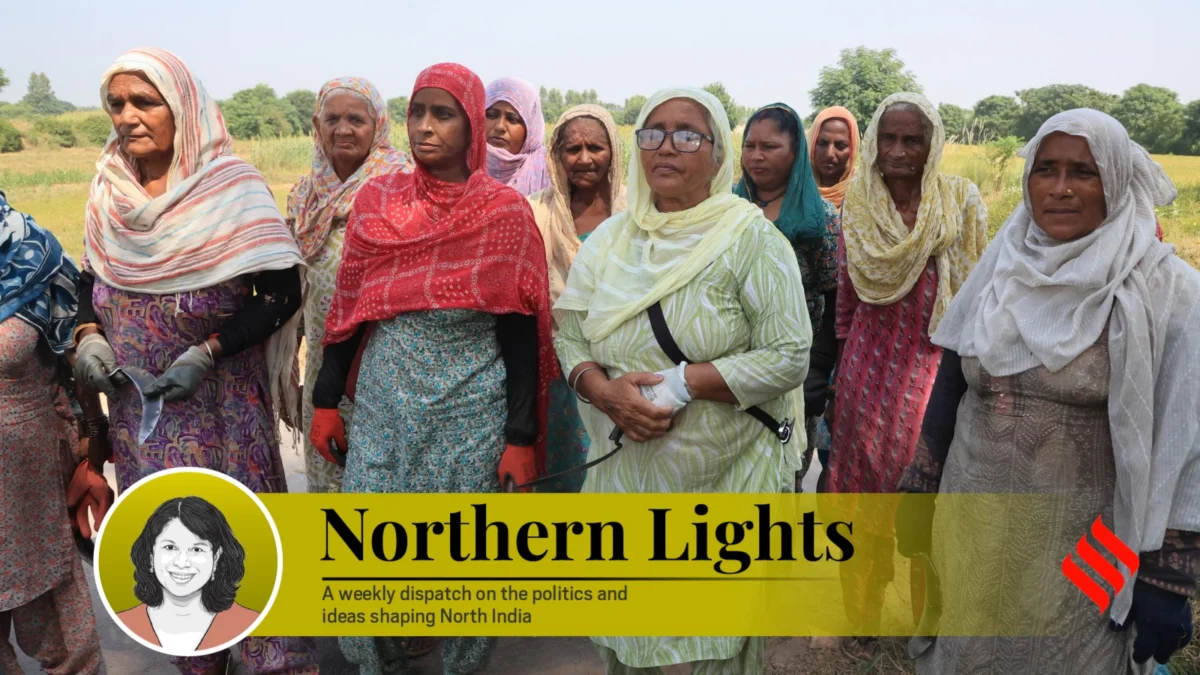
Chandigarh, September 26, 2026 – The sun has barely crested the horizon over Machhli Kalan village, nestled precariously on the border of Mohali and Fatehgarh Sahib districts. Yet, Salamati Chauhan, 44, is already immersed in the day’s relentless rhythm. Her phone, a constant companion, hums with the soft cadence of a Zoom call as she navigates the dusty lanes, a warm smile occasionally breaking through her focused gaze. "I am always on the move," she declares, a subtle lowering of the call’s volume allowing her voice to carry. Her indefatigable spirit is not merely a personal trait but emblematic of a silent, yet profound, transformation sweeping across Punjab’s political landscape.
Salamati is no ordinary villager; she is an elected panch (village council member) representing the Aam Aadmi Party (AAP). Her victory in a ward historically considered a bastion of the Indian National Congress has sent ripples of introspection through established political circles. She firmly believes, with a conviction born of direct engagement, that women voters were the decisive factor in her triumph – a sentiment increasingly echoed across the state. The era of women as passive recipients of political decisions or proxies for male family members appears to be rapidly fading, replaced by a conscious, collective exercise of their franchise that is fundamentally reshaping the destiny of Punjab.
The Rise of the Female Electorate: Main Facts
Salamati Chauhan’s story from Machhli Kalan is a microcosm of a much larger narrative unfolding across Punjab. Her win, in a ward that had consistently voted for the Congress party for decades, underscores a significant shift in voter behaviour, particularly among women. Prior to the recent local body elections, political analysts and parties often underestimated the independent agency of the female vote bank. However, the outcomes of these polls, and indeed the broader state elections that preceded them, have starkly highlighted the emergence of women as a powerful and discerning demographic, capable of swinging electoral outcomes.
The AAP, which has risen to prominence in Punjab, appears to have strategically tapped into this burgeoning female consciousness. Through targeted outreach programs like the ‘Mahila Sarkar Sakhi’ (Women’s Government Friends) and welfare schemes such as the ‘Maavan Dheeyan Satkar Yojana’ (Respect Scheme for Mothers and Daughters), the party has cultivated a direct line of communication and trust with women at the grassroots level. These initiatives, coupled with a focus on issues directly impacting women – household economics, safety, education, and healthcare – have resonated deeply, fostering a sense of ownership and empowerment among female voters. Salamati Chauhan, herself a beneficiary of this strategic pivot and a testament to its efficacy, represents the new face of political leadership emerging from this demographic shift. Her daily routine, balancing community service with family responsibilities, mirrors the lives of countless women she represents, making her a relatable and effective voice for change.
A Historical Trajectory: The Evolution of Women’s Political Engagement
For decades, the political landscape of Punjab, much like many other parts of India, largely saw women’s political participation confined to traditional roles. While they have always been a part of the electoral process, their votes were often perceived as extensions of their male family members’ decisions. Women’s issues, when addressed, were frequently framed through a patriarchal lens, focusing on welfare with limited emphasis on empowerment or independent political agency.
The Traditional Paradigm
In the pre-liberalization era and even into the early 21st century, the dominant political parties – the Shiromani Akali Dal (SAD) and the Indian National Congress – primarily focused on broader community-level appeals, often through male-centric networks. Women’s wings of parties existed, but their influence was largely limited to mobilising votes rather than shaping policy or contesting elections in significant numbers. Issues like agricultural policy, industrial development, and religious identity often overshadowed specific concerns pertaining to women’s safety, economic independence, or access to education and healthcare. Voter turnout among women, while respectable, often lagged behind men’s, and their choices were frequently influenced by caste, community, and family directives.
The Stirrings of Change
The early 2010s witnessed subtle shifts. Increased literacy rates among women, greater access to media, and a growing awareness of their rights began to sow the seeds of independent political thought. Women’s self-help groups (SHGs) and grassroots movements, though not overtly political, inadvertently created platforms for women to discuss community issues and develop collective bargaining power. Economic reforms, while slow to trickle down, also opened up limited avenues for women’s financial independence, giving them a greater stake in political decisions that affected their livelihoods.
The AAP’s Entry and Strategic Reorientation
The true inflection point, however, arrived with the aggressive entry of the Aam Aadmi Party into Punjab politics. Unlike established parties, AAP, with its emphasis on anti-corruption, grassroots engagement, and a ‘common man’ appeal, quickly recognised the untapped potential of the female electorate. Their strategy was multi-pronged:
- Direct Engagement: AAP’s volunteers, often women themselves, engaged in extensive door-to-door campaigns, not just seeking votes but actively listening to women’s concerns. This direct, empathetic approach built trust where traditional rallies and speeches often failed.
- Targeted Schemes: The party understood that financial stability, safety, and opportunities for children were paramount for women. The promise of free electricity, improved public healthcare, and better educational infrastructure directly addressed these concerns. The ‘Mahila Sarkar Sakhi’ initiative was designed to create a network of women who could act as direct conduits between the government and local communities, ensuring grievances were heard and resolved, and welfare schemes reached their intended beneficiaries without bureaucratic hurdles. The ‘Maavan Dheeyan Satkar Yojana’ aimed at providing tangible support, be it financial assistance for education, skill development, or even social recognition, thereby elevating the status of women and girls.
- Empowering Women Leaders: Crucially, AAP also made a conscious effort to field more women candidates in local body elections and encourage their participation at various organisational levels. Salamati Chauhan’s elevation as a panch is a direct outcome of this strategy, providing visible role models for other women.
The 2022 state assembly elections were a watershed moment, with AAP sweeping to power. While various factors contributed to their victory, exit polls and post-election analyses indicated a significant swing of women voters towards the party. This trend has not only continued but solidified in subsequent local elections, confirming that women are no longer a passive vote bank but an active, informed, and increasingly autonomous political force in Punjab.
The Pink Ballot’s Ascendancy: Supporting Data and Trends
The narrative of women reshaping Punjab’s political future is not merely anecdotal; it is increasingly supported by compelling data and observable trends. The Election Commission of India’s (ECI) preliminary reports for the 2026 local body elections, for instance, reveal a historic surge in women’s participation.
Unprecedented Voter Turnout
For the first time in Punjab’s electoral history, the overall voter turnout among women slightly surpassed that of men in over half of the state’s districts. In constituencies like Machhli Kalan, the disparity was even more pronounced, with women’s turnout exceeding men’s by nearly 3 percentage points. This indicates a heightened sense of civic duty and a stronger belief in the power of their individual votes to effect change. In the 2022 state elections, the gap between male and female turnout had already narrowed significantly, and the 2026 results confirm this as a sustained and deepening trend.
Shift in Voting Patterns
A pre-election survey conducted by the Institute for Punjab Studies (IPS) in early 2026 revealed a striking shift in voting motivations among women. While traditionally, family elders or community leaders often dictated voting choices, 65% of surveyed women stated that their decision was primarily influenced by the candidates’ promises on specific issues relevant to their daily lives, such as inflation control, access to clean water, public transport, and safety. This contrasts sharply with previous surveys where broader party loyalty or community affiliations held more sway.
The survey also highlighted the success of AAP’s welfare-oriented approach. Approximately 70% of women respondents acknowledged that initiatives like the ‘Mahila Sarkar Sakhi’ program had directly addressed their concerns, while the prospect of schemes like the ‘Maavan Dheeyan Satkar Yojana’ resonated deeply, particularly among women from economically vulnerable sections, promising relief and dignity.
Demographic Impact on Policy Discourse
The increased political engagement of women has inevitably shifted the focus of political discourse. Issues that were once relegated to the periphery – such as women’s safety in public spaces, sanitation facilities, accessible healthcare for mothers and children, and gender-inclusive economic policies – are now at the forefront of political debates. Parties are increasingly forced to articulate clear, actionable plans on these matters, rather than generic promises. The success of women candidates like Salamati Chauhan in local bodies is further amplifying these voices, ensuring that women’s perspectives are not just considered, but actively integrated into policy-making at the grassroots level.
This data paints a clear picture: women in Punjab are not just voting in larger numbers; they are voting more independently and decisively, driven by a clear understanding of their needs and aspirations. Their collective choices are now a critical determinant of electoral success, forcing all political parties to recalibrate their strategies and genuinely address the concerns of half the electorate.
Voices from the Political Spectrum: Official Responses
The undeniable rise of the female electorate has prompted varied responses from Punjab’s political parties and analysts, each grappling with the implications of this evolving dynamic.
AAP’s Triumphant Acknowledgment
From the ruling Aam Aadmi Party, the acknowledgment of women’s pivotal role is often accompanied by a sense of vindication. Speaking from Chandigarh, Ms. Harjot Kaur, a senior AAP minister and prominent woman leader, stated, "Our victory, both in the state assembly elections and the recent local polls, is a testament to the trust placed in us by the women of Punjab. We made a conscious decision to listen to them, to address their real-world problems, and to empower them, not just as voters but as active participants in governance. Initiatives like Mahila Sarkar Sakhi and Maavan Dheeyan Satkar Yojana are not just welfare schemes; they are instruments of empowerment, ensuring dignity and agency. Women see our commitment, and they have responded with their votes." She further emphasized the party’s ongoing commitment to gender-inclusive budgeting and increasing women’s representation in all spheres of public life.
Opposition’s Critical Self-Reflection
The opposition parties, particularly the Congress and the Shiromani Akali Dal, while critical of AAP’s governance, cannot ignore the undeniable shift in female voting patterns. A senior Congress leader, requesting anonymity to speak candidly about internal party dynamics, admitted, "We have perhaps been too complacent, relying on traditional vote banks and not directly addressing the evolving aspirations of women. AAP’s strategy, while we might term some of it as ‘freebie politics,’ has resonated because it offers tangible benefits that women often manage within the household. We need to go beyond rhetoric and genuinely engage with women’s issues, presenting credible alternatives."
Similarly, an Akali Dal spokesperson, Dr. Paramjit Singh, acknowledged the trend: "The results clearly indicate that women are increasingly making independent choices. While we believe our traditional values and community service are important, we understand that modern women also seek economic stability, safety, and opportunities for their children. We are actively reviewing our manifesto and outreach programs to ensure we effectively communicate our vision for women’s empowerment, moving beyond symbolic gestures to concrete policies."
Analysts’ Perspectives: A Paradigm Shift
Political analysts view this trend as a maturation of India’s democratic process. Dr. Kavita Sharma, a professor of Political Science at Punjabi University, Patiala, offered a nuanced perspective: "This isn’t merely a shift in voting patterns; it’s a paradigm shift in political engagement. Women are no longer voting along purely patriarchal lines. Economic anxieties, social security, and the future of their children are driving their choices. Parties that can credibly address these concerns, and crucially, empower women as stakeholders rather than just beneficiaries, will continue to gain their support. AAP has been adept at this, but other parties are rapidly learning. This signals a healthier, more representative democracy for Punjab."
She further added, "The rise of grassroots leaders like Salamati Chauhan is vital. When women see someone from their own community, facing similar challenges, rise to power, it inspires confidence and reinforces the idea that their voices truly matter. This organic growth of female leadership is far more impactful than top-down mandates." These varied responses collectively underline a fundamental truth: the female electorate in Punjab has become a force that no political party can afford to ignore or take for granted.
Implications for Governance and Society: The Road Ahead
The burgeoning political power of women in Punjab carries profound implications, not just for electoral outcomes, but for the very fabric of governance and societal development in the state. The quiet revolution observed in Machhli Kalan, symbolised by Salamati Chauhan’s victory, is poised to usher in an era of more inclusive policies, greater accountability, and a gradual reshaping of traditional gender dynamics.
Policy Redirection and Gender-Inclusive Governance
One of the most immediate implications is a discernible shift in policy priorities. With women constituting a critical and discerning vote bank, political parties will be compelled to move beyond tokenistic gestures and craft genuinely gender-inclusive policies. This means:
- Gender-Responsive Budgeting: Future state budgets are likely to see increased allocations for schemes directly benefiting women and girls, including enhanced funding for education, skill development, maternal and child healthcare, and women’s safety initiatives.
- Focus on Social Infrastructure: There will be sustained pressure to improve public services that disproportionately affect women, such as public transport safety, sanitation facilities, accessible healthcare centres, and childcare support.
- Economic Empowerment: Policies promoting women’s entrepreneurship, providing access to credit, and ensuring equal pay and opportunities in the workforce will gain prominence. The ‘Maavan Dheeyan Satkar Yojana’, if implemented robustly, could serve as a blueprint for future welfare schemes aimed at securing women’s economic independence and social dignity.
- Law and Order: Increased focus on ensuring women’s safety, with stricter enforcement against gender-based violence and more accessible grievance redressal mechanisms.
Strengthening Grassroots Democracy and Local Leadership
The rise of women like Salamati Chauhan at the panchayat level is a critical development for grassroots democracy. These elected women leaders, often deeply connected to their communities, bring a unique perspective to local governance. They are more likely to champion issues such as local infrastructure improvements, access to water, sanitation, and community healthcare, which directly impact daily life in villages. The ‘Mahila Sarkar Sakhi’ network, by fostering a cadre of active female community leaders, creates a powerful feedback loop between citizens and the administration, making governance more responsive and accountable. This empowers women not just as voters, but as active agents of change in their immediate surroundings.
Societal Transformation and Challenging Patriarchy
Beyond politics, the increased political agency of women is expected to accelerate societal transformation. As women gain more voice and visibility in the public sphere, it gradually challenges entrenched patriarchal norms within families and communities. The act of women independently choosing their political representatives can ripple through domestic decision-making, giving women more say in household finances, children’s education, and even their own personal freedoms.
This shift can also lead to:
- Increased Female Labour Force Participation: As policies focus on economic empowerment, more women are likely to enter the formal workforce, further boosting their independence.
- Improved Health and Education Outcomes: Policies prioritising women’s health and education will have a cascading effect on future generations, breaking cycles of poverty and illiteracy.
- Reduced Gender-Based Violence: Greater awareness, stronger legal frameworks, and empowered women leaders can collectively work towards creating safer environments for women.
Enduring Challenges and Future Outlook
Despite these promising implications, challenges remain. Deeply ingrained patriarchal attitudes, implementation gaps in welfare schemes, and the need for continuous capacity building for women leaders are hurdles that must be overcome. Political parties must also guard against merely symbolic representation and ensure genuine empowerment.
However, the trajectory is clear. Punjab is witnessing a fundamental rebalancing of political power. The era where women’s votes were taken for granted is definitively over. The quiet revolution, championed by women like Salamati Chauhan, is not just about electoral victories; it is about building a more equitable, inclusive, and representative Punjab where women are not just beneficiaries of change, but its primary architects. The future of Punjab’s politics will undeniably be shaped by the strength, wisdom, and collective voice of its women.
