

New Delhi: India’s parliamentary landscape finds itself in an unusual state of protracted inactivity, as the Lok Sabha’s "Eighth Session of the 18th Lok Sabha" has now acquired the distinction of witnessing the third-longest sine die adjournment in the nation’s history, spanning a remarkable 46 days and counting. This extended period of legislative limbo, a first for any BJP-led National Democratic Alliance (NDA) government since it came to power in 2014, has ignited considerable political debate and speculation regarding the government’s strategic intentions and the potential future legislative agenda.
While the immediate "2023 Monsoon Session" of Parliament, which ran from July 21 to August 21 with 21 sittings, was formally prorogued on August 22, the overarching "Eighth Session of the 18th Lok Sabha" appears to remain in a state of sine die adjournment. This peculiar distinction underscores a crucial procedural nuance: an adjournment sine die ends the sitting without fixing a date for the House to meet again, but unlike prorogation, it does not formally terminate the session itself. The continued non-prorogation of this broader session, as interpreted by parliamentary records, is the basis for the unprecedented 46-day count and fuels ongoing speculation about a possible reconvening.
The two longest such adjournments in history occurred during previous Congress governments in the 1980s, both amidst significant national controversies. This current period, however, marks the longest the Lok Sabha has been held in a state of sine die adjournment without a subsequent prorogation under the BJP-led NDA government, eclipsing previous records set in 2015 and 2021.
A Session Marred by Discord: The 2023 Monsoon Session in Review
The backdrop to this historic adjournment was a particularly turbulent Monsoon Session, which officially began on July 20 (though sittings commenced July 21) and was adjourned sine die on August 13. Throughout its 21 sittings, the House was frequently engulfed in heated exchanges and disruptions over a multitude of contentious issues that resonated deeply with the public.
Foremost among these was the NEET paper leak scandal, which exposed alleged systemic failures in the national medical entrance examination, sparking widespread outrage among students and parents. Opposition parties vehemently demanded accountability and a comprehensive investigation, often leading to stalemates in parliamentary proceedings. The government’s handling of the protests and its response to calls for transparency became a significant flashpoint.
Another issue that fuelled parliamentary unrest was the alleged theft at the Ayodhya Ram Temple. Given the immense religious and political sensitivity surrounding the temple’s construction, any security lapse or impropriety there quickly escalated into a major point of contention, with the Opposition demanding answers and assurances from the government.
Furthermore, the session saw persistent demands for Union Home Minister Amit Shah to respond to allegations concerning actions against youth and Gen Z protesters. These protests, often linked to various social and political issues, brought to the fore concerns about civil liberties, freedom of expression, and the government’s approach to dissent, particularly from younger demographics. The Opposition pressed for a ministerial statement, arguing that the issues were of national importance and required direct government address.
Beyond the parliamentary floor, the intervening period since the sine die adjournment on August 13 has also witnessed significant political developments that could shape future legislative dynamics. These include defections involving Aam Aadmi Party (AAP) Rajya Sabha MPs and a split within the Trinamool Congress (TMC). Such shifts in party allegiances and internal strife within opposition ranks inevitably alter the balance of power and negotiating positions, potentially influencing the government’s strategy for legislative action or parliamentary management.
Decoding Parliamentary Procedures: Adjournment Sine Die vs. Prorogation
To fully grasp the significance of the current situation, it is crucial to understand the distinct parliamentary procedures of "adjournment sine die" and "prorogation." While often confused, their differences carry profound implications for the functioning and continuity of Parliament.
According to "Practice and Procedure of Parliament" by M.N. Kaul and S.L. Shakdher, the authoritative text on Indian parliamentary practice, a House may be adjourned in several ways during a session: from day to day, for a specified period longer than a day, or sine die.
Adjournment Sine Die: When a House is adjourned sine die (Latin for "without a day"), it means the sitting is concluded without fixing a specific date for its next meeting. Crucially, an adjournment sine die does not terminate the session itself. The session remains technically active, albeit in a state of indefinite suspension. This distinction is paramount because it implies that the legislative business of that session is not necessarily closed, and the Speaker retains the power to reconvene the House at any time after it has been adjourned sine die, even without a prior fixed date. This flexibility is a key aspect of parliamentary management.
Prorogation: In contrast, prorogation is a formal act that brings a session of Parliament to an end. Under Article 85(2) of the Constitution, a session is formally terminated by an order of the President. Prorogation formally closes the legislative business of the session. Its consequences are significant:
- All pending notices (questions, resolutions, motions) lapse, requiring fresh notice for the next session.
- Bills introduced in the Lok Sabha that have not yet been passed by both Houses may lapse (unless carried over, as in the case of a dissolution).
- All parliamentary committees cease to function unless explicitly re-constituted or given an extension.
Ordinarily, prorogation follows an adjournment sine die, providing a definitive conclusion to a session after its sittings have ended. The President exercises the power to prorogue Parliament on the advice of the Prime Minister, a critical constitutional check. While prorogation may technically occur at any time, even while the House is sitting, the established convention involves an adjournment sine die preceding the formal prorogation order. The current situation, where the "Eighth Session" remains sine die adjourned for such an extended period despite the formal prorogation of the specific "Monsoon Session," highlights the government’s calculated use of these procedural tools.
A New Benchmark for the NDA Era
The current 46-day-and-counting sine die adjournment represents a significant milestone for the BJP-led NDA government. It is the longest such period since the NDA first assumed power in 2014, surpassing all previous records under its administration.
Prior to this, the longest duration a Lok Sabha session went without being prorogued after being declared adjourned sine die under the NDA government were:
- A 28-day period between August 12, 2015, and September 10, 2015.
- A 20-day period between August 11, 2021, and August 31, 2021.
These previous instances, while notable at the time, pale in comparison to the current prolonged state of legislative suspension. The extended non-prorogation of the "Eighth Session" under the current administration suggests a deliberate strategy, keeping parliamentary options open and potentially providing the government with tactical flexibility in managing its legislative agenda or responding to evolving political circumstances.
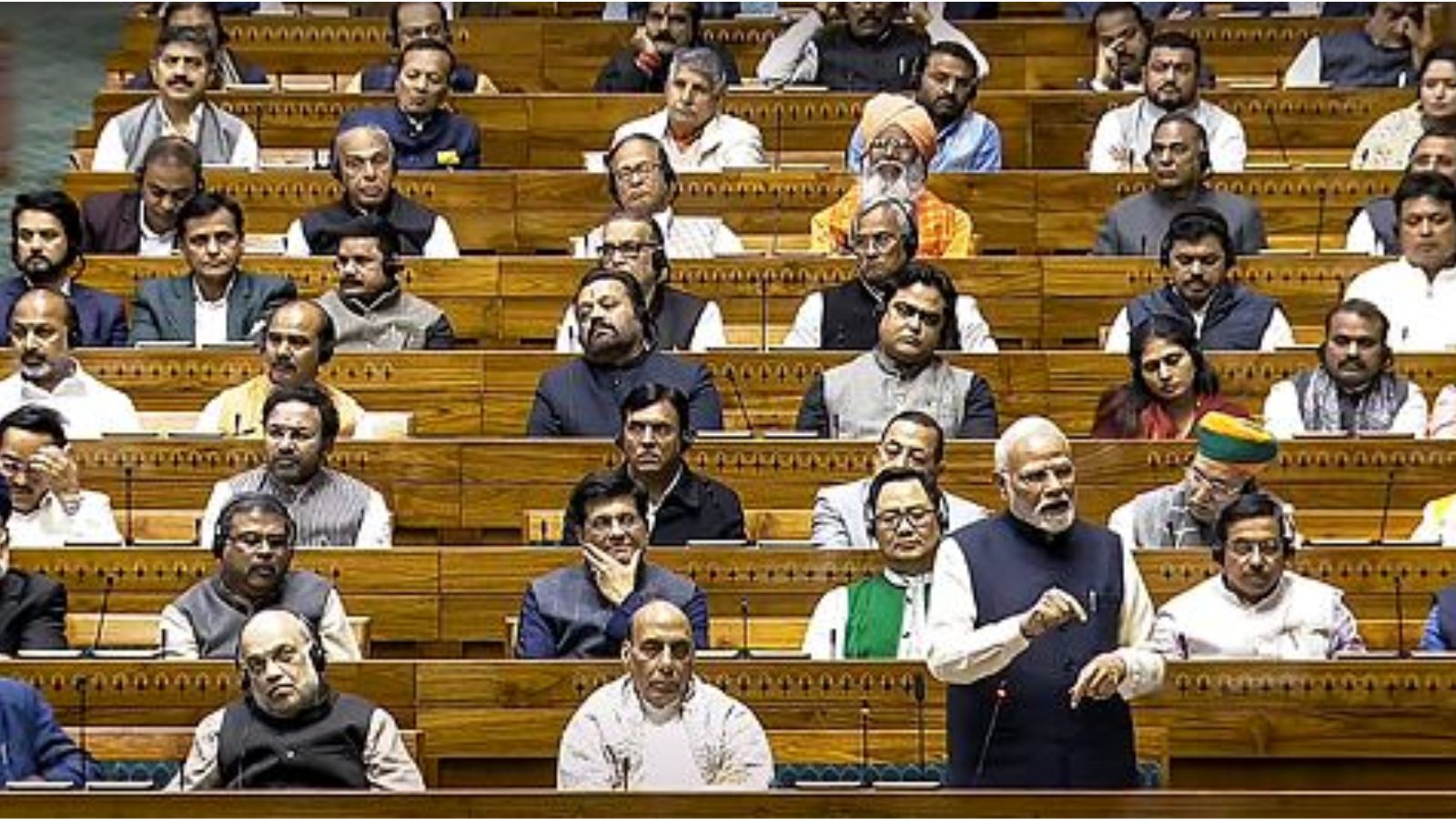
Echoes of History: India’s Longest Parliamentary Lulls
The current adjournment, while a record for the NDA era, ranks as the third-longest sine die adjournment in the Lok Sabha’s history. The two most extended periods of parliamentary suspension both occurred during the Eighth Lok Sabha, under Congress governments, and were triggered by major political crises that rocked the nation.
The Bofors Shadow: 1987 – 76 Days of Suspension
The longest sine die adjournment in Lok Sabha history stretched for an unprecedented 76 days in 1987, during the Eighth Session of the Eighth Lok Sabha. This period was against the tumultuous backdrop of the infamous Bofors controversy, a scandal that severely tarnished the image of the Rajiv Gandhi government and became a defining political crisis of the late 1980s.
The scandal erupted following allegations of kickbacks paid to Indian officials and politicians in connection with India’s 1986 agreement with Swedish arms manufacturer Bofors AB for the supply of 400 Howitzer field guns. The accusations of corruption, involving a massive defence deal, led to widespread public outrage and relentless opposition attacks.
The Eighth Session began on February 23, 1987, and was consumed by the Bofors allegations. Amidst continuous disruptions and a charged political atmosphere, the House was adjourned sine die on May 12, 1987. However, the Speaker, exercising the special power available under the proviso to Rule 15 of the Rules of Procedure and Conduct of Business in Lok Sabha, decided to reconvene the House. Sittings resumed from July 27 to August 28, effectively continuing the same session despite the long intervening gap.
During these reconvened sittings, the Lok Sabha adopted a motion on August 6 to constitute a 30-member Joint Parliamentary Committee (JPC) to inquire into the Bofors deal. The Rajya Sabha subsequently adopted a corresponding motion on August 12, leading to the formation of a powerful committee comprising 20 Lok Sabha members and 10 Rajya Sabha members. This JPC was a direct response to the political pressure generated by the scandal and the prolonged parliamentary impasse. The Lok Sabha was finally prorogued on September 3, 1987, bringing the entire extended session to a close after the remarkable 76-day intervening adjournment. This episode vividly demonstrated how a major national scandal could lead to unprecedented parliamentary inaction, eventually compelling a political and procedural response.
Another Bofors Fallout: 1989 – 61 Days of Impasse
Just two years later, another significant period of parliamentary suspension occurred, becoming the second-longest in Lok Sabha history, lasting 61 days. This again took place during the Fourteenth Session of the Eighth Lok Sabha, and was once more deeply intertwined with the lingering shadow of the Bofors controversy.
The Fourteenth Session commenced on July 18, 1989. The period was marked by an intensified political confrontation following the tabling of a damning report by the Comptroller and Auditor General (CAG) on the Bofors deal. The CAG report further fuelled allegations of financial irregularities and lack of transparency, exacerbating the already tense political climate. In a dramatic display of protest, around 100 Opposition MPs resigned en masse from the House, signifying a complete breakdown of parliamentary consensus and a profound loss of faith in the government’s handling of the matter.
Amidst this unprecedented political crisis, the House was adjourned sine die on August 18, 1989. Similar to the 1987 episode, the Speaker once again invoked the power under the proviso to Rule 15 to reconvene the House. Sittings resumed from October 11 to October 16. The House was subsequently adjourned sine die on October 13 (during the reconvened period) and finally prorogued on October 20, 1989. The intervening period between the initial sine die adjournment and the reconvening of sittings amounted to 61 days.
The political ramifications of this prolonged impasse and the Opposition’s mass resignations were immediate and profound. Within weeks, the Rajiv Gandhi government was voted out in the general elections that followed, paving the way for the V.P. Singh-led National Front government, which came to power with crucial outside support from the BJP. These historical episodes underscore how parliamentary adjournments, especially prolonged ones, often reflect deeper political crises and can precipitate significant shifts in India’s political landscape.
The Evolution of Parliamentary Procedure: A Historical Perspective
The procedural framework governing the summoning, prorogation, and dissolution of India’s legislature has deep historical roots, evolving from changes introduced during the late 1920s under British colonial rule. These historical precedents are critical in understanding the present-day balance of power within Parliament.
Before 1929, orders from the Governor-General concerning the summoning, prorogation, and dissolution of the Central Legislature were obtained and formally notified through the Legislative Department of the Government of India. This meant that the executive held significant sway over the legislative calendar.
A pivotal shift occurred at a conference chaired by Governor-General Lord Irwin on June 17, 1929. Attendees included Legislative Assembly President Vithalbhai Patel, the Home Member, and the Law Member. It was decided that henceforth, orders concerning the Legislative Assembly would be obtained and notified by the Legislative Assembly Department itself. This marked an important step towards establishing the autonomy of the legislature from direct executive control, allowing the Speaker’s office greater authority over parliamentary proceedings. This practice continued after India gained Independence, solidifying the separation of powers.
However, attempts were made post-Independence to revert some of this control to the executive. In 1955, the Minister of Parliamentary Affairs proposed that presidential orders related to the summoning and prorogation of the Lok Sabha should be obtained and notified under the orders of that ministry. A similar proposal was put forth by the Home Minister in 1958. Both proposals were firmly rejected by the then Speaker of the Lok Sabha.
The reasoning recorded in parliamentary records for the Speaker’s rejection was rooted in fundamental constitutional principles and the safeguarding of parliamentary independence. The arguments put forth included:
- President as Head of State and Constituent Part of Parliament: The President is not merely an executive head but also an integral part of the parliamentary structure (Article 79). Therefore, matters concerning Parliament’s functioning should not be solely under the purview of a single executive ministry.
- Preventing Government Overreach: Allowing the executive ministry to solely control the summoning and prorogation could potentially allow the government in power to manipulate the legislative schedule, stifle dissent, or avoid parliamentary scrutiny.
- Protecting Opposition and Minority Rights: The regulation of sittings, adjournments, and reconvening after an adjournment sine die are interconnected functions. Granting full discretion to the government could disadvantage the Opposition or minority groups, whose ability to raise issues and hold the government accountable relies on the timely and independent functioning of Parliament.
- Speaker’s Central Role: The Speaker plays a central and impartial role in regulating the business of the House. The Speaker’s view was that matters relating to the summoning, prorogation, and normal dissolution of the Lok Sabha were part of the broader parliamentary process and that the Speaker should fix dates in consultation with the government, subsequently communicating them to the President. This ensures a more balanced approach, incorporating the needs of both the government and the broader parliamentary body.
These historical debates underscore the delicate balance between the executive and legislative branches and the institutional mechanisms designed to uphold parliamentary autonomy and democratic accountability.
Underlying Tensions and Future Prospects
The current extended sine die adjournment of the "Eighth Session of the 18th Lok Sabha" and
