

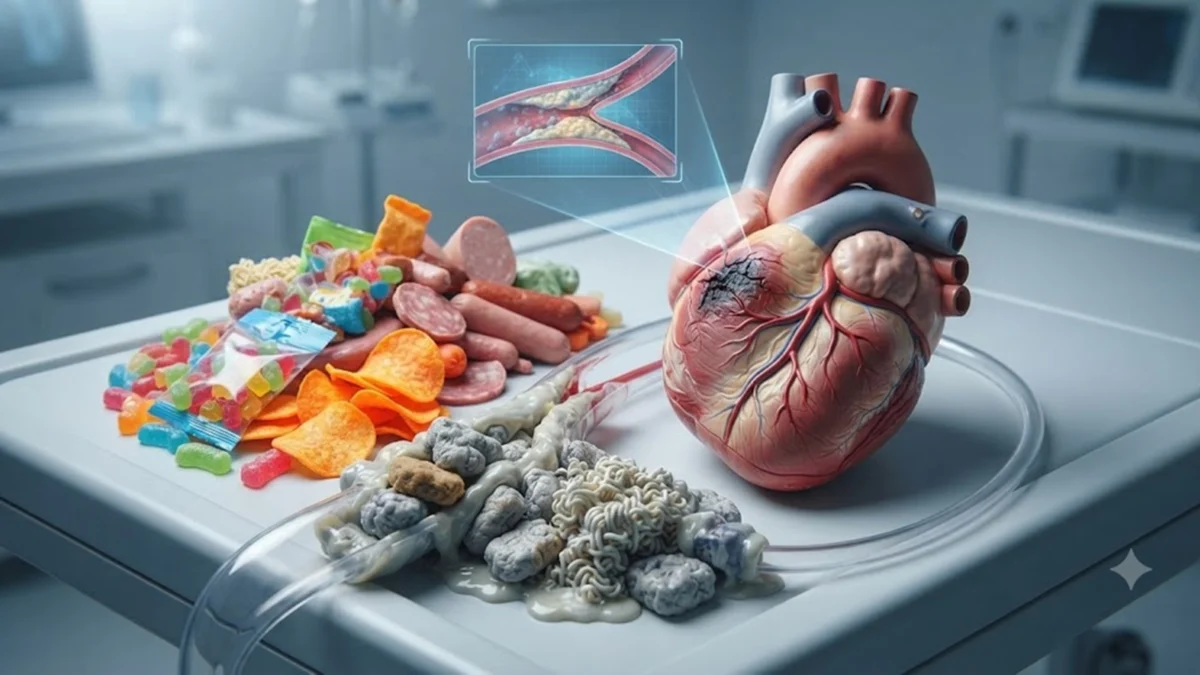
In an era defined by the rapid acceleration of lifestyle and the industrialization of the global food supply, the convenience of pre-packaged meals has come at a staggering physiological price. A comprehensive new study published in the prestigious journal Family Medicine and Community Health has sounded a rigorous alarm regarding the consumption of ultra-processed foods (UPFs). The research indicates a direct, dose-response relationship between the intake of these industrially manufactured products and a myriad of life-threatening conditions, most notably cardiovascular disease.
The study’s findings are particularly harrowing for the modern consumer: for every additional 100 grams of ultra-processed food consumed daily, the risk of experiencing a major cardiovascular event—such as a heart attack or stroke—climbs by 14 percent. This data arrives at a time when UPFs constitute more than half of the daily caloric intake in many developed and developing nations, signaling a public health crisis that transcends borders and socioeconomic status.
Main Facts: Quantifying the Impact of Ultra-Processed Foods
Ultra-processed foods are defined not merely by being "packaged," but by their complex industrial formulations. These products typically include substances not used in culinary preparations, such as hydrogenated oils, modified starches, protein isolates, and a chemical laboratory’s worth of additives designed to enhance shelf-life, texture, and palatability.
The research highlights that the dangers of UPFs are not confined to a single organ system but represent a systemic assault on human biology. According to the study, high consumption of these foods is associated with:
- Digestive Diseases: A 31 percent higher risk, likely due to the lack of fiber and the presence of emulsifiers that disrupt gut microbiota.
- Mental Health Disorders: A 27 percent higher risk of depression and anxiety, pointing toward the "gut-brain axis" and the inflammatory nature of processed ingredients.
- Metabolic Syndrome and Diabetes: A 24 percent higher risk, driven by rapid glucose spikes and insulin resistance.
- Obesity and Overweight: A 23 percent higher risk, attributed to the hyper-palatable nature of these foods which bypasses natural satiety signals.
- All-Cause Mortality: An 18 percent higher risk of premature death from any cause.
- Cancer: A 12 percent higher overall risk, with specific increases in certain types of malignancies.
The granularity of the data provides a chilling look at the "dose-response" effect. Beyond the 14 percent jump in cardiovascular events per 100g/day, each 100-gram increment also correlates with an 11 percent rise in hypertension risk and a 4 percent increase in cancer risk. Furthermore, every 10 percent increase in the proportion of UPFs in a person’s total energy intake was linked to a 16 percent higher risk of developing metabolic syndrome or type 2 diabetes.
Chronology: From Kitchens to Factories
The rise of ultra-processed foods is a relatively recent phenomenon in human history, spanning the last six to seven decades. To understand the current health crisis, one must look at the timeline of dietary shifts:
- Pre-1950s: Diets were primarily composed of "Group 1" foods (unprocessed or minimally processed) such as grains, vegetables, and meats prepared at home.
- 1960s–1980s: The "Convenience Revolution." The entry of women into the workforce and the acceleration of urban life led to a demand for quick meals. This era saw the birth of the "TV dinner" and the rise of high-fructose corn syrup as a cheap caloric filler.
- 1990s–2010s: Global Expansion. Multi-national food corporations expanded into emerging markets. The "Western Diet," characterized by high UPF intake, became a global standard.
- 2010–Present: The Identification of the UPF Category. Scientists, led by Carlos Monteiro and his team at the University of São Paulo, developed the NOVA classification system, which allowed researchers to finally distinguish between "processed" foods (like canned vegetables) and "ultra-processed" foods (like soda or instant noodles).
This latest study in Family Medicine and Community Health represents the "Third Wave" of UPF research—moving beyond simple observations of obesity toward a sophisticated understanding of how these chemical matrices affect cellular health and long-term mortality.
Supporting Data: The "Cocktail Effect" and Biological Mechanisms
One of the most significant contributions of the study is the emphasis on the "cocktail effect." While regulatory bodies often approve food additives based on the safety of a single substance in isolation, the study authors note that humans rarely consume just one.
The Synergistic Danger
Ultra-processed foods often contain a mixture of artificial sweeteners, emulsifiers, preservatives, and flavoring agents. The "cocktail effect" suggests that the combined biological impact of these chemicals may exceed the sum of their parts. For instance, certain emulsifiers used to give ice cream or baked goods a creamy texture have been shown in animal models to thin the protective mucus lining of the gut. When combined with artificial sweeteners that alter gut bacteria, the resulting inflammation can be significantly more potent, leading to systemic issues like "leaky gut" and chronic low-grade inflammation—a known precursor to heart disease and cancer.
The Nutrient Displacement Theory
The data also supports the "displacement" theory. As UPF consumption rises, the intake of protective nutrients—such as phytochemicals, antioxidants, and dietary fiber—drops. This creates a "double burden" on the body: it is simultaneously being assaulted by harmful additives while being deprived of the very nutrients required to repair cellular damage.
Official Responses: Insights from Medical Experts
Medical professionals have expressed deep concern over these findings, emphasizing that the issue is not just about "junk food" but about the fundamental architecture of the modern diet.
Fauziya Ansari, a prominent dietitian at Apollo Spectra Hospital in Mumbai, emphasizes the psychological engineering of these foods. "The concern with ultra-processed foods is not simply that they are packaged, but that many are designed to be convenient, highly palatable, and easy to consume in larger quantities," Ansari noted. She warns that this "hyper-palatability" leads to a cycle of overconsumption that inevitably results in hypertension and abnormal cholesterol levels.
Dr. Parin Sangoi, a consultant interventional cardiologist at Wockhardt Hospitals, provides a nuanced view of the "cocktail effect." While he acknowledges the emerging nature of the research, he warns that the biological effects of multiple additives are a growing concern in cardiology. "Ultra-processed foods often contain several additives… this remains an emerging area of research, so these findings should be interpreted carefully," Dr. Sangoi told indianexpress.com. However, he stresses that the goal is not to instill fear but to encourage a return to dietary quality. "An occasional packaged food is unlikely to be the deciding factor… The concern is when these products become a regular and substantial part of the diet."
Dr. Swarup Swaraj Pal, a senior consultant cardiovascular and thoracic surgeon at Gleneagles Hospitals, takes a more urgent stance. He advocates for an immediate shift in lifestyle. "Avoid chips, desserts, sodas, colas, and ready-to-eat meals. Reading food labels and watching portion sizes is essential. It is better to cut down on packaged foods and take care of your heart now rather than later," Dr. Pal stated.
Implications: A Call for Policy and Personal Change
The implications of this study extend from the individual dinner table to the halls of government policy. The 14 percent increase in cardiovascular risk per 100 grams is a statistic that public health officials cannot afford to ignore.
For the Individual: The "Whole Food" Foundation
The experts interviewed suggest a practical hierarchy for eating:
- The Foundation: Home-cooked meals using whole grains, pulses, fresh vegetables, and fruits.
- The Swaps: Replacing packaged snacks with traditional whole foods like roasted chana (chickpeas), makhana (fox nuts), or sprouts.
- The Occasional: Reserving instant noodles, sugary drinks, and processed meats for rare occasions rather than daily staples.
For Public Health Policy
The study adds significant weight to the argument for "front-of-pack" warning labels. Much like tobacco products, foods high in the UPF spectrum may eventually require clear signaling to consumers regarding their link to chronic disease. There is also a growing movement for "sugar taxes" and stricter regulations on the marketing of UPFs to children, who are the most vulnerable to the long-term metabolic changes these foods induce.
The Future of Research
While the link between UPFs and cardiovascular disease is becoming clearer, more research is needed to fully map the "cocktail effect." Scientists are now looking into how specific combinations of additives affect the human genome (nutrigenomics) and how they might trigger dormant genetic predispositions to cancer or autoimmune diseases.
Conclusion
The study published in Family Medicine and Community Health serves as a sobering reminder that in the quest for convenience, we may have compromised the very foundation of our health. With cardiovascular disease already the leading cause of death globally, the revelation that a mere 100 grams of ultra-processed food can increase that risk by 14 percent is a call to action.
The path forward is a return to simplicity: reading labels, understanding ingredients, and prioritizing whole, minimally processed foods. As the term "cardiovascular" trends in public discourse, the message from the medical community is clear: the most powerful medicine is not found in a pharmacy, but in the choices we make in the grocery aisle and the kitchen.
DISCLAIMER: This article is based on information from the public domain and medical experts. Health-related data and study findings are for informational purposes only. Always consult your health practitioner or a qualified medical professional before starting any new dietary routine or making significant lifestyle changes, especially if you have pre-existing conditions like hypertension or diabetes.
