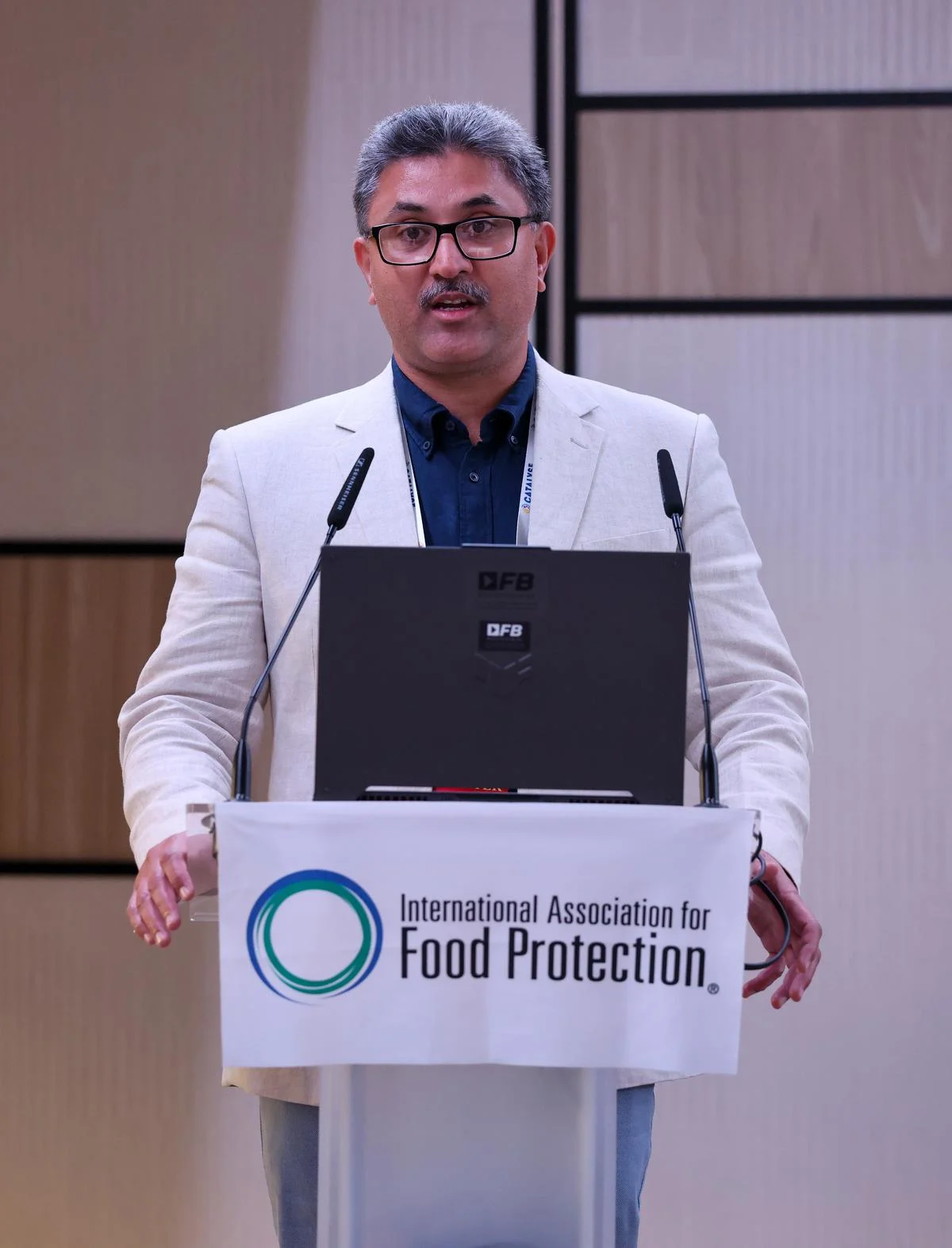
In the high-stakes world of global food security, few names carry as much weight as Sukhvinder Pal Singh. Known affectionately in scientific circles as SP Singh, the 46-year-old senior research scientist has spent the better part of two decades bridging the gap between traditional agricultural practices and cutting-edge microbial safety. In 2025, this journey reached a pinnacle when he was awarded the Australian Institute of Food Science and Technology’s (AIFST) National Food Safety Award, one of the most prestigious accolades in the industry.
Singh’s story is one of profound transformation—not just of a career, but of the very standards that govern what we eat. From his humble beginnings in a farming family in Una, Himachal Pradesh, to leading critical research at the New South Wales (NSW) Department of Primary Industries and Regional Development in Ourimbah, Australia, Singh has become a pivotal figure in the fight against foodborne pathogens and systemic adulteration.
Main Facts: A Career Defined by Crisis and Innovation
Sukhvinder Pal Singh’s current role involves overseeing fresh-produce safety and traceability for one of Australia’s most vital agricultural departments. However, his influence extends far beyond the laboratories of New South Wales. His work is increasingly being viewed as a template for developing nations, particularly India, as they grapple with the dual challenges of a burgeoning population and a complex, often unregulated, food supply chain.
The core of Singh’s expertise lies in identifying the "invisible killers" in our food—bacteria like Listeria monocytogenes, chemical contaminants, and the emerging threat of antimicrobial-resistant organisms. His recognition in 2025 was not merely for academic excellence but for the practical application of science that has saved lives.
The AIFST National Food Safety Award specifically recognized Singh’s contribution to transforming horticultural practices. By integrating advanced traceability—the ability to track a piece of fruit from a specific tree to a specific supermarket shelf—Singh has helped create a "culture of compliance" that prioritizes consumer health over short-term profit margins.
Chronology: The 2018 Catalyst and the Path to Reform
To understand Singh’s impact, one must look back to 2018, a watershed year for food safety in Australia. This period marked a deadly outbreak of Listeria linked to contaminated rockmelons (cantaloupes). The statistics were sobering: 22 people were infected, seven lost their lives, and one miscarriage was recorded.

The outbreak sent shockwaves through the Australian agricultural sector and the international community. It was at this juncture that Singh’s research became instrumental.
- Post-2018 Investigation: Singh led a series of rigorous studies to identify the point of failure. His team discovered that the bacteria were not just on the surface of the fruit but were thriving in the "packing sheds" due to inadequate cleaning protocols and contaminated wash water.
- Regulatory Overhaul: Following his findings, Singh worked closely with industry bodies to rewrite the protocols for fresh produce handling. This included the implementation of stricter temperature controls and the mandatory use of approved sanitizers in washing processes.
- The 2025 Recognition: Seven years after the outbreak, the Australian Institute of Food Science and Technology acknowledged that Singh’s interventions had fundamentally lowered the risk profile of Australian horticulture. The 2025 award served as a validation of his "farm-to-fork" safety philosophy.
Supporting Data: The Indian Context and the Burden of Adulteration
While Singh’s professional life is rooted in Australia, his focus has increasingly turned toward his home country. In a recent interview, he highlighted a disturbing trend: the disproportionate impact of food adulteration on India’s low-to-medium-income households.
The Socio-Economic Divide
According to Singh, food fraud is not a "one-size-fits-all" problem. While affluent consumers can afford premium, certified-organic, or imported goods that undergo rigorous testing, the majority of the Indian population relies on local markets and informal vendors. In these environments, affordability often trumps safety.
"Low-income households are more prone to food fraud due to affordability and accessibility issues," Singh notes. "While some adulteration is primarily an economic deception—like watering down milk—others, such as using industrial dyes in spices, create genuine, life-threatening health risks."
The Data Deficit
One of the most significant hurdles in India, according to Singh’s research, is a "knowledge gap." Unlike Australia, which maintains a centralized database of foodborne illness outbreaks and chemical exposure, India’s data remains fragmented.
- Chemical Exposure: There is limited longitudinal data on how cumulative exposure to heavy metals (like lead in turmeric) affects the Indian population over decades.
- Emerging Threats: The presence of microplastics in salt and bottled water, as well as the rise of antimicrobial-resistant (AMR) bacteria in poultry and meat, are "silent crises" that lack comprehensive public data.
Official Responses and the Regulatory Gap
In India, the Food Safety and Standards Authority of India (FSSAI) is the primary watchdog. However, Singh argues that the current approach is often "reactive" rather than "proactive."

The Retail Sampling Trap
Currently, much of India’s enforcement is concentrated at the retail end—sampling products from shop shelves and street vendors. Singh identifies this as a major strategic weakness.
"Given the enormous scale and complexity of India’s food economy, from farms and mandis to processors and street vendors, monitoring compliance at the final point of sale cannot adequately control risks that originate much earlier in the supply chain," he explains.
The Intelligence-Led Approach
Singh advocates for a shift toward "risk-based, intelligence-led enforcement." Instead of attempting to monitor millions of small retailers, he suggests that Indian authorities should focus on the "Top 10" high-risk, high-volume food categories:
- Milk and Dairy Products (Vulnerable to urea, detergents, and water dilution)
- Spices (Vulnerable to synthetic colors and lead chromate)
- Edible Oils (Vulnerable to cheaper, toxic oils like argemone)
- Meat and Seafood (Vulnerable to formalin and bacterial contamination)
- Fresh Produce (Vulnerable to pesticide residues and contaminated irrigation water)
By mapping these specific supply chains and concentrating regulatory resources at bulk manufacturing and distribution points, the government could achieve a much higher "safety-to-spend" ratio.
Implications: Climate Change and the Future of Food
The final pillar of Singh’s warning involves a factor often overlooked in food safety discussions: the environment. As a scientist working in a country that experiences extreme weather, Singh is acutely aware of how climate change exacerbates food risks.
The Climate-Food Safety Nexus
Rising global temperatures and frequent flooding are not just agricultural problems; they are food safety catalysts.
- Heat Stress: Higher ambient temperatures lead to "temperature abuse" in the supply chain. If milk or meat is transported without a continuous cold chain in 45-degree Celsius heat, bacterial loads can reach dangerous levels in hours.
- Flooding: Extreme rain events often lead to the overflow of sewage into agricultural lands, contaminating fresh produce with pathogens like E. coli and Salmonella.
A Call for Behavioral Change
Singh’s vision for India does not require a total, immediate overhaul of the entire system, which would be economically unfeasible. Instead, he proposes a bottom-up and top-down hybrid model.
"India can concentrate resources on a manageable number of high-risk food chains while simultaneously building safer behavior from the household upwards," he suggests. This includes public education campaigns on how to identify adulterated goods and the importance of basic food hygiene.

Conclusion: Moving Toward Anticipation
The ultimate objective, according to Singh, is a paradigm shift. The global food industry must move from a system that detects problems after people get sick to a system that anticipates risks before the food even reaches the market.
Sukhvinder Pal Singh’s journey from the farms of Himachal Pradesh to the award stages of Australia serves as a bridge between two worlds. His expertise offers a roadmap for India to navigate its food safety crisis, emphasizing that while the challenges are vast, they are not insurmountable with the right combination of science, strategy, and political will. As he continues his work in 2025 and beyond, the "SP Singh model" of intelligence-led safety may well become the global standard for the 21st century.
The author is a Kolkata-based independent journalist specializing in public health and agricultural policy.