Chennai, August 12, 2026 – For art aficionados and budding artists alike, the opportunity to stand in the presence of seminal works by India’s most revered modern masters is a rare and profound experience. Apparao Galleries, a cornerstone of the Indian art scene, has once again curated an exhibition that transcends mere display, offering a deeply insightful journey into the creative minds that have shaped contemporary Indian art. "Masters in Madras," presented as part of their ongoing "Contemporary Now" series, brings together an extraordinary collection of works by luminaries such as A. Ramachandran, Anju Dodiya, Arpita Singh, Anjolie Ela Menon, F.N. Souza, Ganesh Pyne, Himmat Shah, K.G. Subramanyan, M.F. Husain, Nicholas Roerich, Ravinder Reddy, S.H. Raza, and Sakti Burman. This exhibition is not just a showcase of finished masterpieces; it is an invitation to witness the genesis of ideas, the evolution of techniques, and the very soul of artistic expression.
A Pantheon of Artistic Giants: Unveiling the Exhibition’s Core
The exhibition’s strength lies in its audacious ambition to gather such a distinguished constellation of artists under one roof. These are not merely names in art history textbooks; they are the architects of a visual language that has inspired, challenged, and captivated generations. The sheer breadth of talent on display is a testament to the enduring legacy of Indian modernism. From the visceral energy of F.N. Souza to the introspective depths of Ganesh Pyne, "Masters in Madras" offers a multifaceted panorama of artistic evolution.
One of the most captivating aspects of the exhibition is the inclusion of Ganesh Pyne’s preparatory sketches. These are not polished, finished pieces, but rather intimate windows into his creative process. Seemingly scribbled notes and fragmented ideas, these drawings reveal themselves as precursors to his larger, more celebrated paintings. Some bear the artist’s musings in English or Bengali, while others are imbued with poetic verses. A particularly poignant example, a poem found within one of these sketches, reads:
"What we are to our inward vision, and what man appears to be… can only be expressed by way of myth. Myth is more individual and expresses life more precisely than does science."
This profound statement encapsulates Pyne’s artistic philosophy, hinting at his ability to translate the abstract realms of human experience into potent visual narratives. These sketches, therefore, offer an unparalleled glimpse into the artist’s inner world, revealing the genesis of his iconic imagery and his deep engagement with the mystical and the psychological.
A Curatorial Journey Through Artistic Evolution
Sharan Apparao, the curator and director of Apparao Galleries, has meticulously assembled a collection that speaks volumes about the artists’ journeys and their unique contributions. Her vision extends beyond presenting individual masterpieces, aiming instead to illuminate the threads of continuity and innovation that bind these diverse artistic practices.
"We have three beautiful Nicholas Roerich works that were studies for an opera in London that never ever happened," Apparao shares, highlighting the serendipitous nature of some of the pieces included. "These are not things you get to see." Roerich, a Russian polymath, artist, and mystic, brings a unique geopolitical and spiritual dimension to the exhibition. His costume series, created around 1919-1920, are sketches for Nikolai Rimsky-Korsakov’s opera, The Tale of Tsar Saltan. These vibrant designs, depicting characters like Tsarevich Gvidon, are imbued with his fascination for pagan history and Slavic folk costumes, showcasing his mastery in capturing the essence of tradition and legend.
The exhibition also features Sakti Burman’s watercolors, offering a glimpse into his distinctive visual language. More significantly, the inclusion of his larger works from the 1970s provides a fascinating insight into the evolution of his marbling technique. Viewers can trace the development of this intricate process, understanding how Burman experimented and refined his approach over time, leading to the unique textures and visual depth that characterize his art.
Ravinder Reddy’s presence in the exhibition is marked by two "very iconic paintings," as described by Apparao. Reddy’s powerful, often monumental, figurative works are known for their bold forms and intense emotional resonance. Their inclusion undoubtedly adds a significant layer of gravitas and immediate impact to the exhibition’s narrative.
Diverse Mediums, Universal Themes: A Tapestry of Expression
The exhibition is a vibrant testament to the diverse mediums and thematic concerns that define Indian modern art. Arpita Singh, a celebrated figurative artist and modernist, is represented by works rendered in watercolor, ink, and acrylic. Her pieces demonstrate a profound engagement with folk-art traditions, subtly weaving their motifs and aesthetics into her contemporary compositions. Furthermore, Singh’s art often foregrounds her feminist perspective, exploring the complexities of the female figure and its societal positioning. A notable work, "Black" (2010), exemplifies this, portraying a woman in a sari, inviting viewers to contemplate Singh’s nuanced exploration of femininity and identity within her distinctive visual vocabulary.
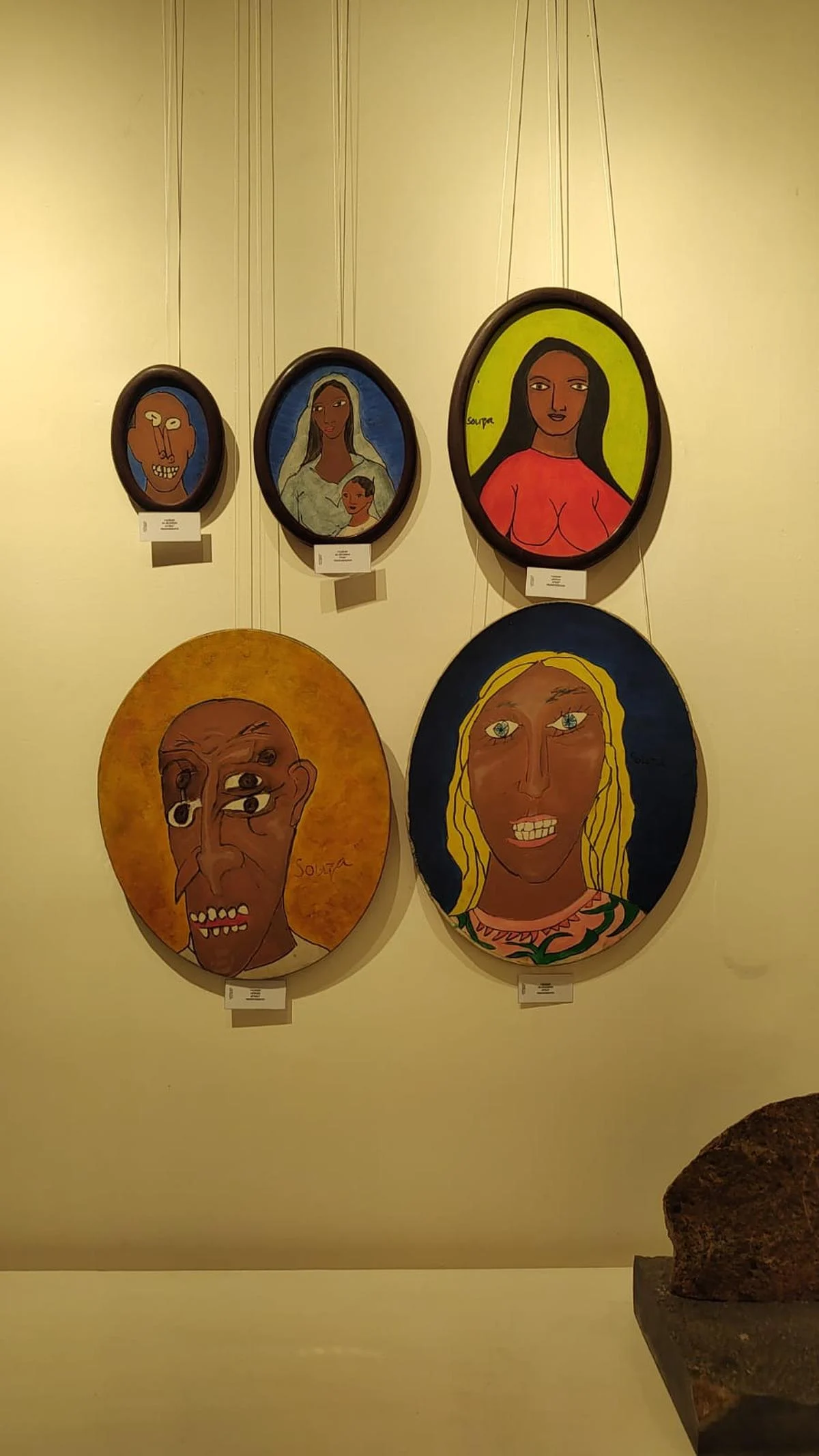
The presence of F.N. Souza, a pivotal figure of the Bombay Progressive Artists’ Group, is marked by a series of his characteristic colorful portraits. These works are a testament to his lifelong fascination with distortion. Mismatched eyes, skewed mouths, and fractured facial structures are hallmarks of his style, through which Souza audaciously challenged conventional notions of beauty and representation, particularly within the Western art historical context. His distorted figures become powerful conduits for exploring psychological states and societal critiques.
Chronology: Tracing the Roots of Modern Indian Art
While "Masters in Madras" is a contemporary exhibition, its significance is deeply rooted in the historical trajectory of Indian art. The artists featured represent different waves and movements that have shaped the nation’s artistic landscape over the past century.
Early 20th Century and Beyond: Artists like Nicholas Roerich, though not Indian by birth, had a profound influence on Indian art through their engagement with spirituality, mysticism, and Eastern philosophies. His work bridges the gap between international artistic currents and the burgeoning Indian art scene.
The Progressive Artists’ Group Era (Mid-20th Century): Figures like F.N. Souza were instrumental in establishing a modern Indian artistic identity, moving away from colonial influences and embracing new forms of expression. This period saw a surge of experimentation and a desire to create art that was both globally relevant and distinctly Indian.
The Post-Independence Bloom (Late 20th Century): The artists showcased in "Masters in Madras" represent the rich and diverse artistic output of the latter half of the 20th century and into the 21st. This era witnessed the emergence of distinct individual styles, the exploration of diverse mediums, and a deeper engagement with social, political, and personal narratives. Ganesh Pyne, K.G. Subramanyan, and S.H. Raza, among others, developed unique visual lexicons that continue to resonate.
Contemporary Voices (Late 20th Century – Present): Anju Dodiya, Arpita Singh, and Ravinder Reddy represent the continued evolution of Indian art, pushing boundaries and engaging with contemporary issues through their unique artistic lenses. Their works, alongside those of their predecessors, form the bedrock of the vibrant contemporary art scene.
Supporting Data: The Enduring Impact of These Masters
The inclusion of these specific artists in "Masters in Madras" is not arbitrary. Each artist has a significant body of work that has been critically acclaimed, widely exhibited, and has commanded significant market value.
Market Resonance: Works by artists like M.F. Husain, S.H. Raza, and F.N. Souza have consistently achieved high prices at international auctions, underscoring their global appeal and the enduring demand for their art. This exhibition offers collectors and enthusiasts a rare opportunity to acquire or appreciate these significant pieces.
Academic and Critical Acclaim: These artists are subjects of extensive scholarly research, numerous monographs, and have been celebrated in major art institutions worldwide. Their inclusion in this exhibition validates their position as cornerstones of art history.
Influence on Younger Generations: The "Masters in Madras" exhibition serves as an educational platform, offering emerging artists direct exposure to the techniques, conceptual approaches, and thematic explorations of their artistic forebears. This direct engagement can foster new dialogues and inspire future creative endeavors.
Official Responses and Curatorial Intent
The curatorial vision behind "Masters in Madras" is to foster a deeper understanding and appreciation of Indian modern art. By bringing together such a distinguished group, Apparao Galleries aims to:
Celebrate Artistic Legacies: The exhibition is a heartfelt tribute to the artists who have laid the foundation for contemporary Indian art, recognizing their groundbreaking contributions and enduring influence.
Provide Educational Value: It offers a unique opportunity for the public to engage with diverse artistic styles, techniques, and historical contexts, enriching their understanding of art history.
Promote Dialogue: By juxtaposing works from different eras and artists, the exhibition encourages viewers to draw connections, identify thematic resonances, and appreciate the evolution of artistic thought.
Showcase Rare Works: As highlighted by Sharan Apparao, the inclusion of lesser-seen works, such as Nicholas Roerich’s opera studies, adds an element of discovery and exclusivity to the exhibition.
Implications: A Catalyst for Artistic Discourse and Appreciation
The "Masters in Madras" exhibition at Apparao Galleries is more than just an art show; it is a cultural event with far-reaching implications.
Elevating Chennai as an Art Hub: By hosting such a prestigious exhibition, Chennai reinforces its position as a significant center for art and culture in India. The presence of these masters draws attention to the city’s vibrant art ecosystem.
Inspiring Future Artistry: For aspiring artists, the exhibition serves as a powerful source of inspiration. Witnessing the mastery of these legends can fuel their ambition, encourage experimentation, and deepen their commitment to their craft.
Broadening Public Engagement with Art: By making these significant works accessible, the exhibition democratizes art appreciation, inviting a wider audience to engage with and understand the value and beauty of modern Indian art.
Preserving and Promoting Cultural Heritage: The exhibition plays a crucial role in preserving and promoting India’s rich artistic heritage, ensuring that the contributions of these masters are remembered and celebrated for generations to come.
"Masters in Madras" is a profound testament to the enduring power of artistic vision. It is an exhibition that not only showcases exceptional talent but also illuminates the very essence of creativity, offering a rare and unforgettable journey through the heart of Indian modern art. The exhibition is on view until August 14th at Apparao Galleries, Thousand Lights, from Tuesday to Saturday between 3 pm and 6:30 pm. It is an opportunity not to be missed by anyone who seeks to understand the soul of Indian artistic expression.