

By Berty Ashley
Published: August 13, 2026, 11:46 am IST
As the world stands on the precipice of August 15th, 2026, a nation prepares to commemorate its 79th year of independence. This anniversary, like all before it, serves as a potent reminder of the pivotal moment when India, after centuries of colonial rule, awoke to freedom. At the stroke of midnight, on August 15, 1947, a new dawn broke, not just over a subcontinent, but over the global consciousness. This transition, etched in history, was not merely a political upheaval but a profound awakening, eloquently captured by the words that echoed through the hallowed halls of Parliament. This article delves into the genesis of that momentous occasion, examining the historical context, the enduring legacy of the "Tryst with Destiny" speech, and its continuing resonance in contemporary India.
The Genesis of a Nation: A Crucible of Struggle and Hope
The journey to India’s independence was a long and arduous one, a tapestry woven with threads of unwavering resilience, profound sacrifice, and diverse ideologies. For over two centuries, the Indian subcontinent had been under the dominion of the British Crown, a period marked by economic exploitation, social stratification, and the suppression of indigenous cultures. The seeds of dissent, however, were sown early, germinating through various uprisings and reform movements that gradually coalesced into a formidable national consciousness.
The Indian National Congress, formed in 1885, initially sought greater representation within the British administration. However, as the movement gained momentum, its aspirations evolved, culminating in the demand for complete self-rule. Leaders like Mahatma Gandhi, Jawaharlal Nehru, Sardar Vallabhbhai Patel, and Maulana Abul Kalam Azad, each with their unique approaches, spearheaded the struggle. Gandhi’s philosophy of non-violent civil disobedience, or Satyagraha, galvanized millions and became the bedrock of the independence movement. Simultaneously, revolutionary fervor, though often met with brutal suppression, continued to fuel the desire for freedom.
The Second World War significantly altered the geopolitical landscape, weakening the British Empire and amplifying nationalist sentiments across its colonies. The Quit India Movement in 1942, despite the arrest of key leaders, demonstrated the unyielding resolve of the Indian people. Post-war, the British government, facing immense pressure both domestically and internationally, recognized the inevitability of Indian independence. However, the path ahead was fraught with challenges, most notably the deeply divisive issue of Partition, which would lead to the creation of Pakistan.
The "Tryst with Destiny": A Speech That Defined an Era
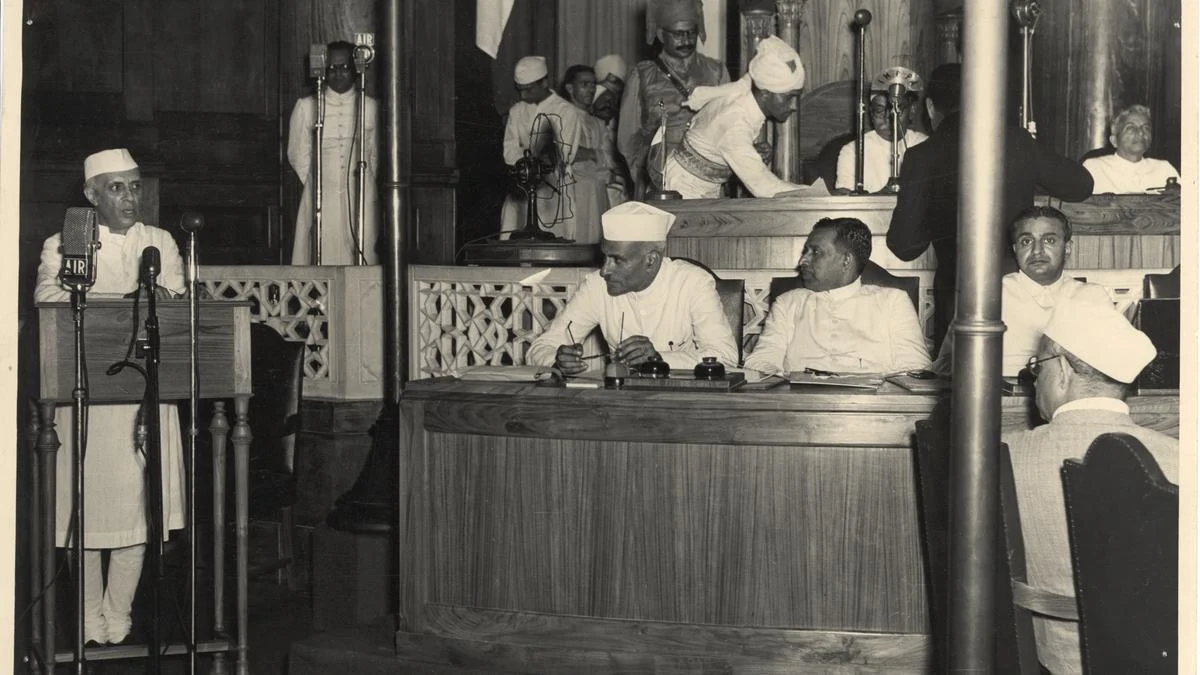
It was within this crucible of historical transition that Jawaharlal Nehru, the first Prime Minister of independent India, delivered his seminal address to the Constituent Assembly on the eve of independence. The speech, often referred to as the "Tryst with Destiny," is widely regarded as one of the most powerful and eloquent pronouncements in modern history. Delivered on August 14, 1947, at midnight, it marked not just the birth of a nation but the articulation of its aspirations, its challenges, and its unwavering commitment to a democratic future.
Nehru began by acknowledging the profound significance of the moment: "Long years ago we made a tryst with destiny, and the time has now come when we shall redeem our pledge, not wholly or in full measure, but very substantially. At the stroke of the midnight hour, when the world sleeps, India will awake to life and freedom." These opening lines, imbued with a sense of gravitas and anticipation, immediately set the tone for a speech that would resonate for generations.
He then eloquently described the arduous journey that had led to this point, acknowledging the sacrifices made and the struggles endured. Nehru spoke of India’s rich past, its cultural heritage, and its potential to contribute to world peace. He did not shy away from the immense responsibilities that lay ahead. "Freedom and power bring responsibility," he stated, recognizing that independence was not an end in itself, but the beginning of a new chapter of nation-building.
The speech also addressed the immense challenges India faced, particularly the specter of poverty, illiteracy, and disease that plagued its vast population. Nehru articulated a vision of a modern, progressive India, committed to social justice, economic development, and secularism. He pledged to work towards building a nation where every citizen would have the opportunity to flourish, irrespective of their background.

Perhaps the most poignant aspect of the speech was its forward-looking vision. Nehru spoke of the "dawning of a new era," and the responsibility of independent India to play its part in building a peaceful and cooperative world order. He emphasized the need for unity and solidarity, both within India and on the global stage.
Supporting Data: The Demographic and Economic Landscape of 1947
To fully appreciate the monumental task that lay before the newly independent India, it is crucial to examine the socio-economic landscape of 1947. The nation inherited a legacy of deep-seated inequalities and underdeveloped infrastructure, a direct consequence of colonial policies.
- Population: India’s population in 1947 was approximately 340 million. This vast population, while a source of immense potential, also presented significant challenges in terms of resource allocation, employment, and social welfare.
- Poverty and Illiteracy: A staggering percentage of the population lived in abject poverty. Estimates suggest that over 80% of Indians were illiterate. Access to basic healthcare was minimal, and the infant mortality rate was alarmingly high.
- Economic Structure: The Indian economy was predominantly agrarian, with a large segment of the population dependent on subsistence farming. Industrialization was nascent, and the country relied heavily on the import of manufactured goods. The partition further exacerbated economic challenges, disrupting trade routes and dividing crucial agricultural lands and industrial centers.
- Infrastructure: The colonial administration had prioritized infrastructure development primarily for its own administrative and economic needs, leading to an uneven distribution of resources. Roads, railways, and communication networks were inadequate to support the needs of a rapidly modernizing nation.
- Social Stratification: Centuries of the caste system had created deep social fissures, perpetuating inequality and discrimination. Addressing these deeply entrenched social hierarchies was a formidable challenge.
The "Tryst with Destiny" speech, therefore, was not just a declaration of independence but a bold articulation of a vision to overcome these monumental obstacles and build a nation that was equitable, prosperous, and modern.
Official Responses and International Reactions
The "Tryst with Destiny" speech was met with overwhelming acclaim both within India and on the international stage.
Within India:
- Constituent Assembly: The members of the Constituent Assembly, representing the diverse fabric of India, were deeply moved by Nehru’s words. The speech served as a unifying force, instilling a sense of shared purpose and national pride. It set a moral and ethical compass for the nascent democracy.
- Public Reception: Across the country, the speech was broadcast and widely discussed, igniting hope and a sense of collective responsibility. It provided a powerful narrative for the sacrifices made and a beacon for the future.
- Political Leaders: Leaders across the political spectrum, even those with differing ideologies, acknowledged the significance of Nehru’s vision and the imperative of national unity.
International Reactions:
- Global Admiration: The speech was widely reported and lauded by international media. It was seen as a landmark moment in the global decolonization movement, inspiring other nations yearning for self-determination.
- Diplomatic Recognition: Many world leaders sent congratulatory messages, recognizing India’s emergence as an independent nation and its potential to contribute to global peace and stability.
- Scholarly Analysis: Historians and political scientists continue to analyze the speech for its rhetorical power, its articulation of democratic ideals, and its enduring influence on post-colonial thought.
The speech’s emphasis on secularism and democracy was particularly significant in a world grappling with ideological divides. It positioned India as a champion of these values on the global stage.
Enduring Implications: The Legacy of a Midnight Hour
The "Tryst with Destiny" speech is far more than a historical artifact; it is a living testament to the ideals that continue to shape India’s journey. Its implications are profound and far-reaching, influencing various facets of the nation’s development and identity.
- Foundational Philosophy of Governance: The speech laid the groundwork for India’s democratic framework. Its emphasis on justice, liberty, equality, and fraternity became the guiding principles enshrined in the Indian Constitution. The commitment to secularism, as articulated by Nehru, has been a cornerstone of India’s diverse social fabric, though not without its contemporary challenges.
- Nation-Building and Development: The aspirations for economic progress, eradication of poverty, and upliftment of the marginalized, voiced in the speech, continue to drive India’s development agenda. While significant strides have been made in economic growth and poverty reduction, the challenges of equitable distribution and inclusive development remain central to national discourse.
- Foreign Policy and Global Role: Nehru’s vision of India contributing to world peace and cooperation found expression in the Non-Aligned Movement, a significant foreign policy initiative. India’s continued advocacy for multilateralism and its growing influence on the global stage can be seen as a continuation of this early commitment.
- Inspiration for Future Generations: The speech serves as a perpetual reminder of the struggles and sacrifices that led to independence. It inspires young Indians to engage with their civic responsibilities, to contribute to nation-building, and to uphold the democratic values that were so eloquently articulated at midnight.
- Cultural and Literary Resonance: The "Tryst with Destiny" has permeated Indian literature, art, and popular culture. It continues to be quoted and referenced in various contexts, underscoring its enduring power as a symbol of national awakening and aspiration.
As India stands on the cusp of its 79th Independence Day, the echoes of that midnight hour continue to reverberate. The promises made, the challenges acknowledged, and the vision articulated by Jawaharlal Nehru remain profoundly relevant. The journey since 1947 has been one of immense progress, punctuated by its share of trials and tribulations. The "Tryst with Destiny" serves as a constant reminder of the nation’s foundational ideals and the ongoing imperative to strive towards fulfilling its potential – a potential that was so powerfully unveiled at the stroke of midnight, ushering in a new era for India and the world. The ongoing quest for a more just, equitable, and prosperous India is, in essence, the continuous redemption of that solemn pledge made on the dawn of freedom.
