

For decades, India’s conservation narrative has been synonymous with the Bengal tiger. As a flagship species, the tiger has commanded the lion’s share of funding, administrative focus, and public imagination. However, a groundbreaking study published in the prestigious journal Conservation Letters suggests that the "tiger model" of conservation—protecting a charismatic species to safeguard its entire ecosystem—is a strategy that should be expanded to a broader group of "anchor species."
The research, led by Aakash Lamba and a team from the National University of Singapore, identifies nine key species whose habitat protection could revolutionize India’s approach to both biodiversity loss and climate change. By shifting the focus from a single predator to a diverse guild of "anchor species," the study argues that India can protect over 700 vertebrate species and sequester massive amounts of carbon, providing a dual solution to two of the most pressing environmental crises of the 21st century.
The Anchor Species: A New Conservation Guild
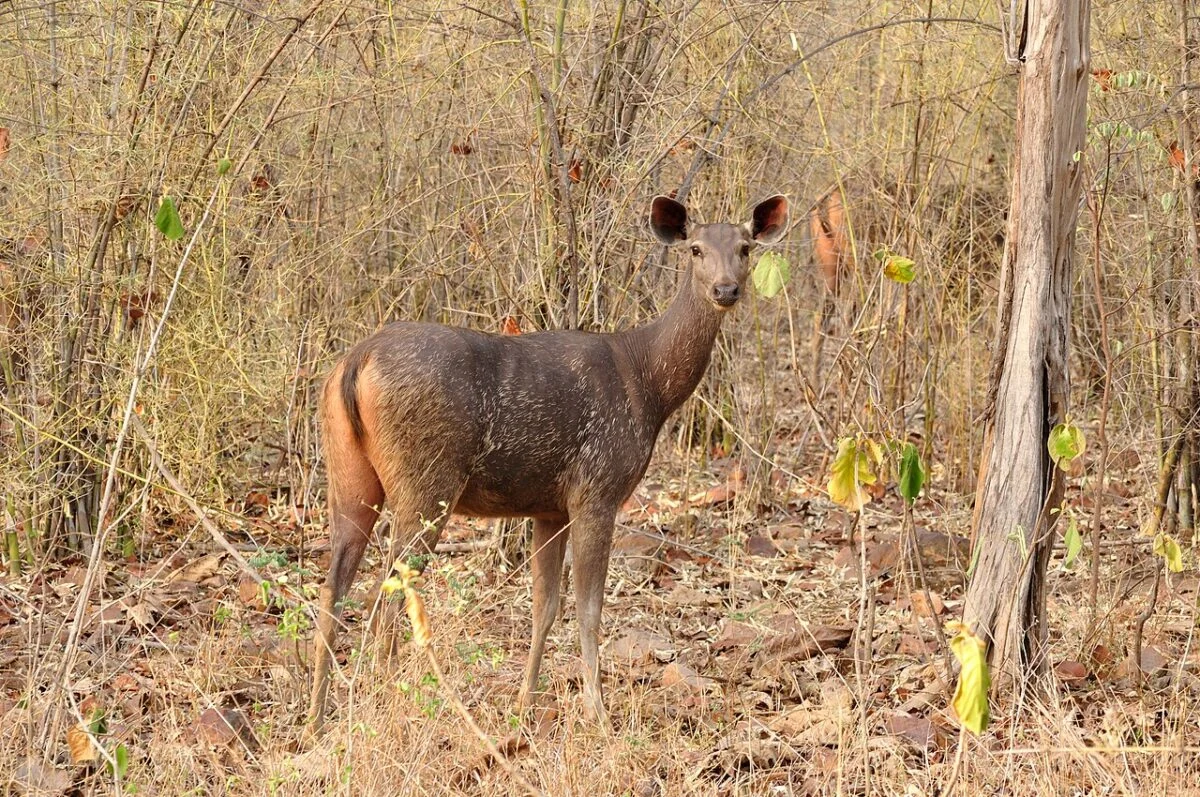
The researchers have identified nine species that serve as biological and climatic anchors for India’s ecosystems: the Sambar deer (Rusa unicolor), the dhole or Asiatic wild dog (Cuon alpinus), the king cobra (Ophiophagus hannah), the gaur (Bos gaurus), the sloth bear (Melursus ursinus), the Indian pangolin (Manis crassicaudata), the great hornbill (Buceros bicornis), the leopard (Panthera pardus), and the tiger (Panthera tigris).
The logic behind this selection is rooted in the "umbrella species" concept, but with a modern, data-driven twist. The study found that protecting the habitat of even one of these nine species simultaneously benefits more than 700 other vertebrates. Furthermore, these habitats are massive carbon sinks. According to the study’s estimates, the collective habitat of these nine species stores approximately 1.1 gigatonnes of above-ground carbon across India.
“Biodiversity is often an afterthought in carbon markets,” explains co-author Aakash Lamba, a conservation scientist at the Centre for Nature-based Climate Solutions. “Existing frameworks often treat biodiversity as an added benefit of climate projects. We are arguing for a model where biodiversity is central to climate mitigation.”

Chronology: From Tiger Reserves to National Strategy
The concept of "anchor species" did not emerge in a vacuum. It is the result of years of evolving research into the efficacy of India’s Protected Area (PA) network.
In 2023, Lamba published research demonstrating that India’s tiger reserves were doing more than just saving big cats; they were functioning as powerful climate tools. That study found that between 2007 and 2020, the enhanced protection within tiger reserves prevented the loss of over 5,800 hectares of forest. This "avoided deforestation" translated to more than a million metric tons of carbon dioxide equivalent emissions that remained sequestered in the biomass rather than being released into the atmosphere.
Building on this, the research team asked a fundamental question: If the tiger could achieve such results, which other species could serve as similar catalysts? This led to the 2026 paper, which utilized high-resolution habitat maps for over 2,000 vertebrates listed on the IUCN Red List.
The team refined these maps using "Area of Habitat" (AOH) modeling, which accounts for specific habitat suitability and elevation rather than just broad geographic ranges. From this massive data set, they narrowed their focus to 160 vertebrates protected under Schedule I of India’s Wildlife Protection Act and listed as endangered or vulnerable. The final nine "anchor species" were chosen because they represent the highest potential for policy traction, funding, and cross-species benefits.
Supporting Data: The Synergy of Carbon and Life
The study’s findings provide a quantitative backbone to what many ecologists have long suspected. The link between high-quality habitats and carbon sequestration is profound.

1. Carbon Sequestration Potential
The Sambar deer emerges as a surprising heavyweight in the climate fight. The study estimates that Sambar habitats contain roughly 3.12 gigatonnes of above-ground carbon. When combined, the habitats of the Sambar, the leopard, and the dhole cover enough territory to shelter more than half of India’s above-ground carbon and half of its co-occurring vertebrate species.
2. Biodiversity Overlap
The leopard, often viewed as a generalist, showed the greatest overlap with other vertebrates. Because leopards can survive in diverse environments—from dense forests and grasslands to semi-arid deserts and rocky outcrops—their habitat protection benefits over 1,500 other species.
3. The 30×30 Target
India is a signatory to the Kunming-Montreal Global Biodiversity Framework, which sets the "30×30" goal: protecting 30% of the world’s land and oceans by 2030. Currently, only about 5% of India’s land is under formal protection. The study found that a staggering amount of anchor species’ habitat lies outside the current protected network:
- Sambar deer: 90.7% of habitat is unprotected.
- Dhole: 88.2% of habitat is unprotected.
- Leopard: 75.1% of habitat is unprotected.
These figures suggest that expanding protection to these specific areas is the most efficient pathway for India to meet its international conservation obligations.
Official Responses and Scientific Debate
While the research has been hailed as a "next-generation" model, it has also sparked a healthy debate among the Indian scientific community regarding the nuances of ecosystem management.

The Case for Generalists vs. Specialists
Vikram Aditya, a principal scientist at the Centre for Wildlife Studies in Bengaluru, notes that while the data is compelling, the "anchor" concept must be applied carefully. He points out that species like the leopard are highly adaptable and do not always require the "high-quality dense forests" that sequester the most carbon. Conversely, the Sambar deer is a specialist that thrives primarily in dense cover. "It is difficult to draw simplistic inferences on biodiversity and carbon stock based solely on these results," Aditya suggests, calling for even finer-scale mapping in future studies.
The Forest Bias
Alok Bang, an ecologist at Azim Premji University, raises a critical concern regarding "forest-centric" conservation. Because the study links biodiversity to carbon stocks (which are naturally higher in forests), it may inadvertently neglect grasslands, arid zones, and semi-arid ecosystems.
"Indian ecologists have repeatedly highlighted how grasslands are often misclassified as degraded forests," Bang says. This misclassification can lead to the exclusion of species like the Great Indian Bustard—a critically endangered bird that lives in carbon-poor but biodiversity-rich grasslands—from mainstream conservation funding.
Lamba acknowledges this limitation, noting that the study was designed to create a statistical lever for carbon markets, which naturally favors forest-dwelling species. However, he maintains that this is a "first jab" at creating a framework that can eventually be adapted for other ecosystems.
Implications: A New Economic and Policy Roadmap
The shift toward an anchor species model has profound implications for how India manages its natural resources and meets its climate goals.

1. Diversifying Funding
Currently, "Project Tiger" and "Project Elephant" receive the bulk of government support. By designating the dhole, king cobra, or pangolin as anchor species, the government can create new administrative frameworks—perhaps a "Project Sambar" or "Project Dhole"—that attract dedicated funding and ecotourism revenue to previously overlooked regions.
2. Strengthening NDCs
India’s Nationally Determined Contributions (NDCs) under the Paris Agreement include a commitment to create an additional carbon sink of 2.5 to 3 billion tonnes of CO2 equivalent through additional forest and tree cover. The anchor species model provides a map for where these forests should be protected or restored to achieve the maximum possible "bang for the buck" in terms of biodiversity.
3. Revenue through Ecotourism
Expanding the protected area network to include the habitats of these nine species opens new doors for sustainable development. Species like the great hornbill in the Northeast or the sloth bear in Central India can drive ecotourism in areas that currently see little benefit from the "Tiger Economy."
4. Integrating Carbon Markets
By quantifying the carbon stored in the habitats of these species, India can better position itself in global carbon markets. Investors looking to offset emissions are increasingly seeking "high-integrity" credits that offer verified biodiversity benefits alongside carbon sequestration. The anchor species framework provides exactly the kind of transparent, quantitative data these markets require.
Conclusion
The research by Lamba and his colleagues signals a maturing of Indian conservation science. It acknowledges that while the tiger will always be a national icon, the health of the Indian subcontinent depends on a much wider array of life. By anchoring conservation efforts to these nine species, India can bridge the gap between its climate ambitions and its biodiversity obligations, ensuring that the protection of the forest serves both the smallest pangolin and the global climate.
