

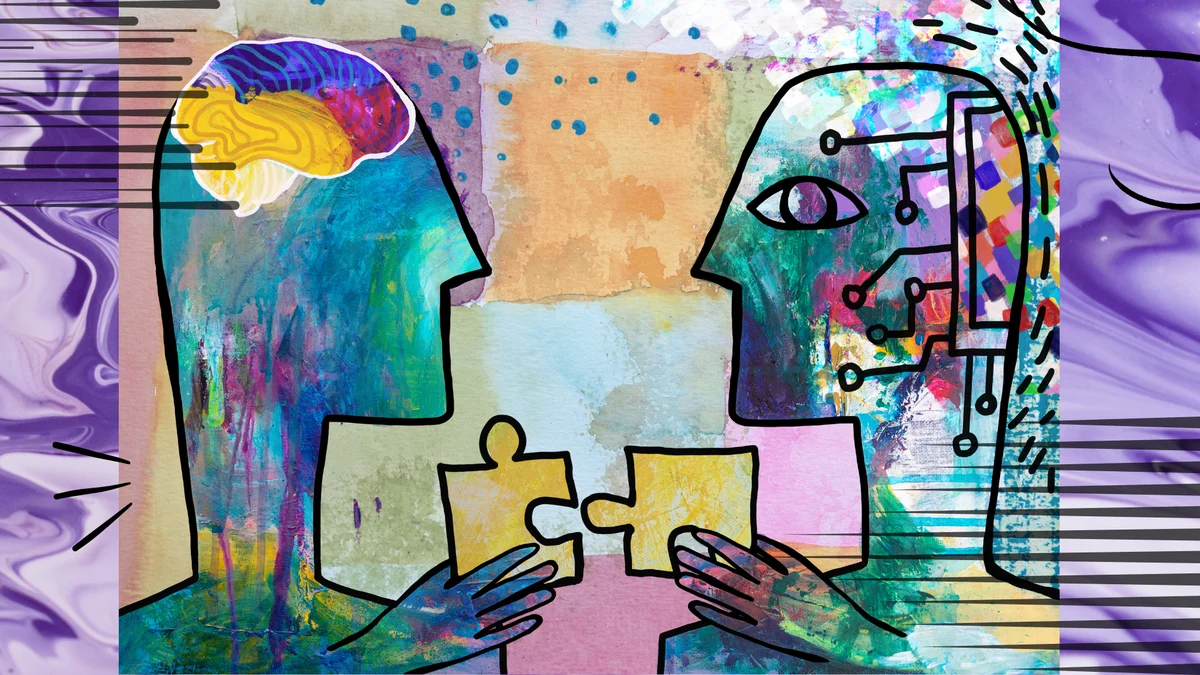
London, UK – In an era increasingly defined by artificial intelligence, professionals across industries are grappling with the delicate balance between leveraging technological advancements and preserving the essence of human creativity, critical thinking, and authentic expression. This challenge is particularly poignant for individuals undergoing career transformations later in life, as exemplified by London-based Indo-Fijian Canadian writer and creative director, Sima Kumar. Her journey from deep skepticism towards AI to its strategic integration in her entrepreneurial venture offers a compelling narrative on how to harness the power of AI while safeguarding the invaluable human element.
Kumar’s experience highlights a growing sentiment: while AI promises unprecedented efficiency and capacity, its unchecked adoption risks eroding the very cognitive processes that foster genuine insight and connection. Through personal anecdotes, expert opinions, and compelling research, this article explores the evolving relationship between humans and AI, emphasizing the critical need for conscious engagement to ensure technology remains a tool for expansion, not replacement.
The Evolving Landscape of Professional Work
The pervasive influence of Artificial Intelligence has fundamentally reshaped professional landscapes, prompting a re-evaluation of traditional workflows and the very nature of human contribution. From automating routine tasks to generating creative content, AI’s capabilities are expanding at an exponential rate, forcing individuals and organizations to adapt.
A Personal Journey: From Scepticism to Strategic Adoption
For decades, Sima Kumar, a seasoned creative director, brand leader, and co-founder of a diversity, equity, and inclusion business, maintained a guarded distance from Artificial Intelligence, particularly in the realm of writing. Her career, spanning 24 years as a stylist and creative director before transitioning into brand leadership, was built upon a foundation of developing nuanced judgment and refined taste. She believed that language, inherently imbued with memory, geographical context, humor, and the unique irregularities that define human identity, was beyond the grasp of machine replication. The prospect of a machine’s "polished approximation" of human expression struck her as both absurd and profoundly depressing.

Kumar’s initial resistance stemmed from a deep-seated belief in the intrinsic value of human struggle and discovery in the creative process. She found solace and clarity in the tactile act of handwriting, a ritual preceding the opening of her laptop. Her black Moleskine notebook served as a non-hierarchical repository for nascent essays, fleeting thoughts, grocery lists, or reminders to call her mother. This physical space allowed for the slow unfolding of ideas, the comfort of inadequacy, and the luxury of letting thoughts rest—a process she felt a machine, poised with a "fluent answer," would prematurely interrupt. This practice became even more precious as AI’s presence grew, fortifying her resolve to protect her unique cognitive space.
However, life’s inevitable shifts often demand new approaches. At 55, Kumar embarked on a significant career pivot, venturing into solo entrepreneurship. Her new business, focused on supporting women through midlife drawing on principles of yoga, Ayurveda, and neuroscience, presented a starkly different operational reality. Unlike her previous roles, where a supportive team absorbed the myriad administrative tasks, Kumar now faced the daunting prospect of managing files, invoices, emails, website maintenance, systems, and a constant proliferation of administrative duties alone. The sheer volume of these "small tasks" threatened to overwhelm her capacity, making the traditional route of hiring assistance for every new layer of work economically unfeasible. This pivotal moment forced a re-evaluation of her stance on AI.
The Pen vs. The Prompt: Preserving Human Cognition
Kumar’s journey into AI adoption was not a surrender of her core principles but a strategic adaptation. Her concern about AI replacing genuine thought is echoed by academic research. A 2025 study of 319 knowledge workers, presented at the Computer-Human Interaction conference in Japan, revealed a worrying correlation: greater confidence in generative AI was linked to a decrease in critical thinking among users. The nature of work itself was observed to shift, moving from direct task execution to a role of "checking, integrating, and supervising" machine-generated responses. This finding resonated deeply with Kumar’s pre-existing anxieties, solidifying her commitment to a hybrid approach that prioritizes human intellectual engagement.
For Kumar, the act of handwriting remains a vital anchor. She describes it as the space where she truly discovers what she thinks, often through imperfect initial drafts that are allowed to evolve. This practice, she argues, strengthens the connection to the brain and fosters deeper cognition. To further cultivate this, she founded the "Scribbling Society," a writing group that encourages members to engage daily with a pen and paper, fostering a space for unadulterated thought. Her "Thinking Stack," separate from her work notes, serves as a personal archive for Substack articles, birthday messages, and even notes penned for friends, underscoring the enduring power of the handwritten word. This conscious effort to maintain traditional cognitive practices serves as a counterweight to the allure of instant digital solutions.

AI as a Tool, Not a Brain: Expert Perspectives and Best Practices
The integration of AI into professional workflows is not a monolithic phenomenon but a spectrum of applications, each demanding a thoughtful and discerning approach. Industry leaders and innovators are increasingly articulating frameworks for responsible AI use, emphasizing augmentation over automation of core intellectual functions.
Industry Leaders Weigh In
The sentiment that AI should serve as an enhancer, rather than a replacement, for human intellect is widely shared among leading creative professionals. Fashion designer Rahul Mishra articulates this philosophy clearly: "The best use of AI is when it expands your thinking and not when it replaces the act of thinking." Mishra strategically employs AI for practical tasks such as verifying facts, conducting quick research, structuring thoughts, and even challenging his own ideas. Notably, he uses it for "pre-mortems," a foresight technique where one imagines a project has failed and works backward to identify potential causes, thereby strengthening planning and risk mitigation—a sophisticated application of AI for strategic thinking.
Filmmaker, writer, and actor Shakun Batra (known for Kapoor & Sons and Gehraiyaan) echoes this view, highlighting AI’s capacity to open new creative avenues. "I use AI to get somewhere faster, or show me a possibility I haven’t considered," Batra explains, while firmly asserting, "But the creative judgment and storytelling are still mine." He cites his 2025 short film, The Getaway Car, made entirely with Google Veo 3 and Google Flow, as a testament to AI’s ability to dramatically reduce production costs and time, enabling him to explore genres like car chases that were previously cost-prohibitive.
V. Sunil, founder of .POTNTIAL and Motherland, and a founding trustee of the Kochi-Muziris Biennale, underscores the increasing premium on original thought in an AI-driven world. "The better technology gets, the more pressure there is on original thinking," he observes, emphasizing that "Everything begins with a great idea, and that’s not something AI can generate." Sunil uses ChatGPT sparingly, primarily for rapid summarization or to quickly visualize complex ideas—tasks that previously demanded extensive storyboarding and sketching.

Similarly, filmmaker, writer, and creator Soumik Sen (Gulaab Gang, Jubilee) attests to AI’s power in overcoming production constraints. He utilized AI to generate "widescapes" for his SonyLIV project Jazz City, set in 1970-71 Calcutta and Bangladesh, a feat that would have been "prohibitively expensive" through traditional means. Sen argues that AI "doesn’t impact creative thinking; it frees the mind from constraints of scalability, allowing us to show period, spectacle or impossible-to-recreate scenarios." These diverse perspectives collectively demonstrate AI’s potential as a powerful assistant, provided human judgment and creative vision remain at the helm.
The Perils of Uncritical Reliance
While the benefits of AI are undeniable, the risks of uncritical reliance are equally significant. The legal sphere has already witnessed severe repercussions stemming from AI’s capacity for confident fabrication. In a landmark 2023 case, a New York federal judge levied a $5,000 fine against two lawyers and their firm after they submitted legal briefs containing fictitious case citations generated by ChatGPT to the court. This incident served as a stark warning about the imperative for human verification and accountability when using AI-generated content.
This legal precedent reinforces the advice imparted by entrepreneur Shan Hanif, one of the founders of Creator College where Sima Kumar undertook her AI training. Hanif’s public admonition against blindly accepting and pasting ChatGPT’s initial responses into client work resonates deeply. He advocates for a methodology where users first research a problem and formulate a hypothesis before engaging AI. "Never let AI do the thinking for you," Hanif advises, "AI is a tool, not a brain." This principle became a cornerstone of Kumar’s own approach, encapsulated in her mantra: "I write (my trusty 0.38 Muji pen always at the ready) before I prompt." This disciplined approach ensures that the human intellect frames the inquiry, and the machine merely assists in refining or expanding upon it, rather than originating the core thought.
Demystifying AI for Diverse Workforces: The Case of Older Women
The narrative surrounding AI adoption often overlooks demographic nuances, particularly how different groups engage with and are impacted by this technology. For older women, the relationship with AI is complex, influenced by factors ranging from occupational exposure to societal perceptions and access to training.

Bridging the Digital Divide: Access, Training, and Confidence
An analysis by the International Labour Organization across 84 countries revealed a significant disparity in AI exposure based on gendered occupations. The study found that 29% of female-dominated professions—such as secretarial, administrative, and accounting support roles—were highly exposed to generative AI, compared to only 16% of male-dominated occupations, which often include construction and manual trades. This suggests that women, particularly those in support and administrative capacities, are more likely to encounter AI in their daily work, making their adaptation crucial for career longevity and efficiency.
Despite this higher exposure, older women often exhibit lower initial engagement with AI. A Google-run U.K. pilot involving 1,700 public and private sector workers last year illustrated this point: only 17% of women aged 55 and over reported using AI weekly. However, the study yielded a remarkable insight: after just a few hours of targeted training, this figure soared to 56% within three months. Google attributed this significant leap to what it termed "permission to prompt"—the reassurance that integrating AI into their work was not only legitimate but encouraged.
Sima Kumar’s interpretation of these findings goes beyond mere proficiency. She posits that the initial "reluctance" observed in older women may not signify a lack of interest or capability, but rather a reflection of limited access to training, a lack of clear guidance on how to begin, and a deficit in confidence regarding its appropriate application. Providing structured learning environments and explicit permission can unlock substantial engagement and competence within this demographic.
Navigating the Social and Professional Stigma
Beyond issues of access and training, older women face unique social and professional stigmas associated with AI adoption. A Harvard Business Review research study, involving 1,026 engineers, highlighted a troubling bias: when reviewers believed Python code had been generated or assisted by AI, they rated the responsible engineer 9% less competent on average. This penalty was even more pronounced for women and older workers, suggesting a subtle yet pervasive bias against those perceived to be using AI, particularly in demographic groups already vulnerable to ageism and sexism in the workplace.

This puts older women in a paradoxical position: avoiding AI risks being left behind in rapidly evolving workplaces, yet embracing it openly can invite professional penalties. This conundrum was brought into sharp focus for Sima Kumar by the intense public backlash directed at American businesswoman Sophia Amoruso. In May, Amoruso published an article arguing that women were "sleeping on AI" and that this oversight would ultimately cost them. The vitriol she received underscored the strong, often emotional, reactions that discussions around AI and gender can provoke, compelling Kumar to delve deeper into the subject.
When Kumar herself shared her internal conflict about AI on Instagram, the responses were varied but deeply insightful. Some readers expressed relief, finding her honest reflection made the "quiet stuff" in their own heads "less frightening." Others voiced anxieties about the potential erosion of the human element in professional and personal connections. A recurring theme emerged from these interactions: a collective concern about how to effectively leverage AI without inadvertently surrendering the unique qualities that make human work and relationships authentically ours. This underlying fear of losing one’s distinctive voice and judgment in the face of machine efficiency remains a central challenge for professionals navigating the AI era.
Strategic Integration: Redefining Productivity and Authenticity
The key to successful AI integration lies not in wholesale adoption or outright rejection, but in a strategic, discerning approach that prioritizes human agency and well-being. This involves understanding AI’s strengths as an assistant and consciously defining its boundaries.
Building an AI Companion: The ‘Arthur’ Model
Sima Kumar’s personal journey took a significant turn when she participated in entrepreneur Alicia Lyttle’s free three-day training on building AI agents. Lyttle’s methodology, which encourages users to assign names, personalities, and specific roles to their agents (her own is named Maximus), resonated with Kumar. Lyttle champions AI agents as tools that "protect time," allowing individuals to focus on "judgment, creativity, relationships, and accountability that only I can own."

This concept transformed AI from an abstract, anonymous box into a more relatable, collaborative entity for Kumar. She named her agent Arthur. Arthur is integrated with her email, tasked with reviewing incoming messages between six and seven each morning to identify those requiring her immediate attention. Kumar communicates with Arthur primarily through WhatsApp voice notes, treating him much like a human colleague: "Can you see whether that email arrived, tell me what needs dealing with this morning." This personalized interaction dissolved the futuristic mystique of AI, making it a tangible, everyday assistant.
Arthur’s utility became particularly evident after an Instagram post Kumar wrote, titled "I’m 55. I don’t want to create content like I’m 25," went viral. The post unexpectedly garnered over 35,000 new followers and triggered an overnight explosion in correspondence. Kumar was inundated with personal stories from women, press enquiries, invitations, collaboration requests, and offers from brands ranging from lotions to leak-proof pads. The challenge shifted from merely answering emails to discerning which messages genuinely warranted her personal engagement. Arthur proved invaluable in making the initial pass, filtering and prioritizing, thereby allowing Kumar to focus her time and energy on what truly mattered. This practical application solidified AI’s role as an indispensable administrative support system, freeing Kumar to engage with the substantive aspects of her growing platform.
Reclaiming Time and Cultivating Creativity
Kumar’s strategic use of AI extends beyond simple task management. She leverages it to organize information she has already produced, identify redundancies across documents (transcribed from her handwritten notes using Notion), and structure processes once she has defined their parameters. Crucially, she maintains a rigorous approach: "I give it a defined piece of work and examine what comes back. I do not treat its confidence as evidence of competence." This disciplined verification process ensures that AI’s output is always subjected to human scrutiny and judgment.
This deliberate approach to AI aligns with the psychological concept of "cognitive offloading"—the externalization of mental burdens. Just as a shopping list, calendar, or map offloads memory and organizational tasks, AI can manage and arrange information on an unprecedented scale. However, Kumar carefully delineates what she is willing to offload. Repetitive tasks are readily surrendered, but she remains profoundly cautious with memory, judgment, and language—the core elements of her creative and intellectual identity.

Ultimately, the time AI saves, for Kumar, holds a deeper significance than merely increasing output. She rejects the notion of simply filling freed hours with more work. Instead, she seeks to reclaim some of that time for life itself: to linger in a gallery, to immerse herself in music without distraction, to savor the aroma of cumin hitting the pan, or to truly listen when a loved one speaks without mentally drafting an email. "I do not want to retreat from my life," she asserts. This philosophy underscores a broader implication of AI: its potential to restore balance, allowing professionals to engage more fully with their personal lives and foster the very conditions that fuel genuine creativity. Creativity, Kumar notes, often thrives in "boredom, failed attempts, and stretches during which the work seems to have abandoned us," frequently arriving during mundane moments like brushing teeth. She is wary of eliminating every "silence" before understanding which silences are truly valuable for incubation and insight.
The Path Forward: A Hybrid Approach to Innovation
The future of work, for Sima Kumar and many professionals, lies not in choosing between human and machine, but in intelligently integrating both. It’s about understanding the unique strengths of each and orchestrating a collaboration that elevates human potential.
Maintaining Authorship in a Machine-Augmented World
Sima Kumar acknowledges the fluid nature of her boundaries with AI, recognizing that technological advancements will necessitate ongoing adjustments. However, her core principles remain steadfast. Her current strategy revolves around three critical tenets: first, to cultivate and formulate her own thoughts before engaging AI; second, to rigorously return to original sources for verification when factual accuracy is paramount; and third, to always retain authorship and ultimate accountability for her work.
This approach is a direct counter to the passive consumption of AI-generated content. It positions the human as the architect of inquiry and the arbiter of truth, leveraging AI’s processing power while preserving intellectual integrity. It is a conscious effort to prevent the subtle erosion of critical faculties that can occur when relying too heavily on automated fluency.

The Indispensable Role of Human Ingenuity
Kumar concludes her reflection with a powerful metaphor that encapsulates her philosophy: "The notebook sits beside the computer. It holds the scratched-out sentence, the change of mind and the thought I did not know I had until my hand moved across the paper. The computer holds more information than I can hold. I need both. I know which one must lead."
This image vividly illustrates the synergistic but hierarchical relationship she advocates. The notebook represents the foundational human processes of introspection, intuition, and the messy, non-linear path of discovery. It is the space where nascent ideas are born, wrestled with, and refined through direct cognitive engagement. The computer, with its boundless capacity for information storage and processing, serves as an invaluable extension of human capability, handling the scale and complexity that the individual brain cannot.
In this hybrid model, human ingenuity, critical judgment, and authentic expression remain paramount. AI is not an autonomous creative force but a powerful instrument, meticulously guided by human intent. Kumar’s journey is a compelling testament to the possibility of embracing technological progress without sacrificing the unique qualities that define our humanity, offering a blueprint for professionals navigating the intricate demands of the AI age. Her work, exploring culture, identity, and the business of being human, continues to bridge traditional wisdom with modern innovation, demonstrating that the most profound insights still emerge from the uniquely human mind.
