

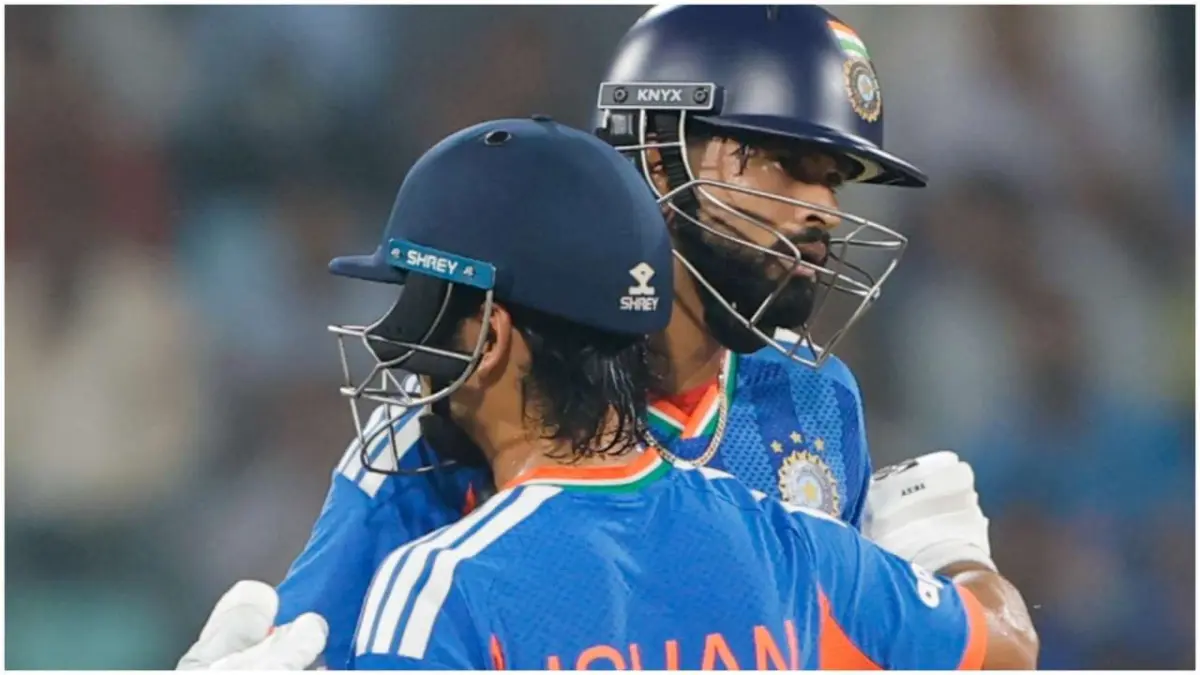
Lucknow, India – India asserted their dominance in the opening encounter of the five-match T20 International series against the West Indies, securing a resounding eight-wicket victory with a comfortable 32 balls to spare. The Ekana Cricket Stadium in Lucknow bore witness to a spectacular display of power-hitting and strategic brilliance, spearheaded by a blistering century from Indian captain Shreyas Iyer. His unbeaten 100 runs off just 42 deliveries marked the fastest T20I century by an Indian batsman against the West Indies, etching his name into the record books and setting a formidable tone for the series.
The visitors, batting first after losing the toss, posted a competitive total of 171, primarily propelled by a late onslaught from Sherfane Rutherford, who crafted a dynamic half-century. However, their efforts proved insufficient against an Indian side that chased down the target of 172 with remarkable ease and precision, largely due to Iyer’s masterful innings and a solid supporting partnership with Ishan Kishan. This emphatic win gives India a crucial 1-0 lead in the series, signaling their intent to maintain a stronghold on home turf.
Chronology of a Dominant Performance
The first T20I unfolded as a tale of two innings, each marked by contrasting fortunes and individual brilliance. India’s decision at the toss, West Indies’ valiant fightback, and India’s clinical chase all contributed to a compelling evening of cricket.
West Indies Innings: A Story of Resilience and Rutherford’s Fight
Indian skipper Shreyas Iyer’s call at the coin toss proved to be a pivotal moment. Opting to field first, citing the anticipated dew factor under lights, India’s strategy was clear: restrict the opposition and then chase under more favorable batting conditions. The decision immediately put the onus on the West Indies openers to set a substantial target.
)
The West Indies began their innings with a decent intent, but their early momentum was quickly stifled by India’s disciplined bowling attack. The first breakthrough came in the fifth over when left-arm pacer Arshdeep Singh, known for his ability to swing the ball and execute crucial variations, dismissed Kamil Pooran. Pooran, attempting to accelerate, fell victim to a well-directed delivery, providing India with the much-needed early scalp. This dismissal triggered a mini-collapse. Soon after, the visitors suffered another blow when Shimron Hetmyer was run out due to a sharp piece of fielding, adding to their woes. The Powerplay concluded with further damage as Axar Patel, the left-arm orthodox spinner, scalped the wicket of Rovman Powell, leaving the West Indies in a precarious position with three key batsmen back in the pavilion within the first six overs. The early losses meant that the scoring rate, though not abysmal, was under constant pressure, and the visitors struggled to build meaningful partnerships.
It was captain Shai Hope who then took on the responsibility of rebuilding the innings. Demonstrating composure and a keen eye, Hope anchored the middle order, finding the boundaries when opportunities arose and rotating the strike effectively. He compiled a crucial half-century, providing much-needed stability and a platform for his team. His innings was a testament to his experience and ability to absorb pressure. However, just as he looked set for a larger score, Hope became the debut wicket for Naman Dhir. Dhir, a promising young all-rounder, delivered a smart piece of bowling that outfoxed the experienced Hope, sending him back to the pavilion and once again exposing the West Indies lower middle order.

Following Hope’s dismissal, the West Indies innings appeared to unravel further. They lost four more wickets in quick succession, with the Indian bowlers maintaining a tight leash and exploiting the vulnerability of the incoming batsmen. At this juncture, a total of 160 seemed like a distant dream, let alone the 190-mark that strong T20 teams often aim for.
However, the script took an unexpected turn with the arrival of Sherfane Rutherford. The aggressive left-hander unleashed a blistering assault on the Indian bowlers, shifting gears with remarkable ferocity. Rutherford showcased his immense power and boundary-hitting prowess, slamming six boundaries and three towering maximums. His innings was a breathtaking display of fearless cricket, transforming the complexion of the West Indies’ score from a sub-par total to a respectable one. He brought up his half-century in rapid time, injecting belief back into the West Indies dugout and giving their bowlers something substantial to defend. Rutherford’s partnership with the tailenders was crucial, as he farmed the strike expertly and continued to find the fence.
)
The momentum created by Rutherford’s heroics suggested that the West Indies might even push past the 190-run mark. However, India’s death-over specialists managed to regain control. In the 19th over, young pace sensation Mayank Yadav, making an impression with his raw pace, dismissed the dangerous Rutherford, bringing an end to his sensational innings and stemming the flow of runs. The final wicket, that of Akeal Hosein, fell in the subsequent over, bringing the West Indies innings to a close at 171. While it was a fighting total, especially considering their mid-innings slump, it was ultimately deemed achievable on a good batting surface under lights.
India’s Clinical Chase: Iyer’s Masterclass
Chasing 172 for victory, India’s openers came out with an aggressive mindset, determined to capitalize on the Powerplay. Abhishek Sharma, known for his attacking style, wasted no time in punishing Matthew Forde in the opening over. He launched two boundaries and a maximum, leaking a hefty 15 runs in the very first over of the innings. This explosive start set a brisk pace for the chase and immediately put the West Indies bowlers under pressure.
)
However, Abhishek’s aggressive cameo was short-lived. In the third over, Roston Chase, the West Indies off-spinner, outsmarted the Indian opener. Chase, making a subtle but effective change in his angle by coming over the wicket, delivered a ball that deceived Abhishek, leading to his dismissal. This was a crucial breakthrough for the West Indies, momentarily halting India’s rapid start. The setback was compounded in the very next over when Sanju Samson also fell prey to Akeal Hosein. Samson, attempting to accelerate, misjudged a delivery and was dismissed, leaving India at 36 for 2 and providing the West Indies with a glimmer of hope.
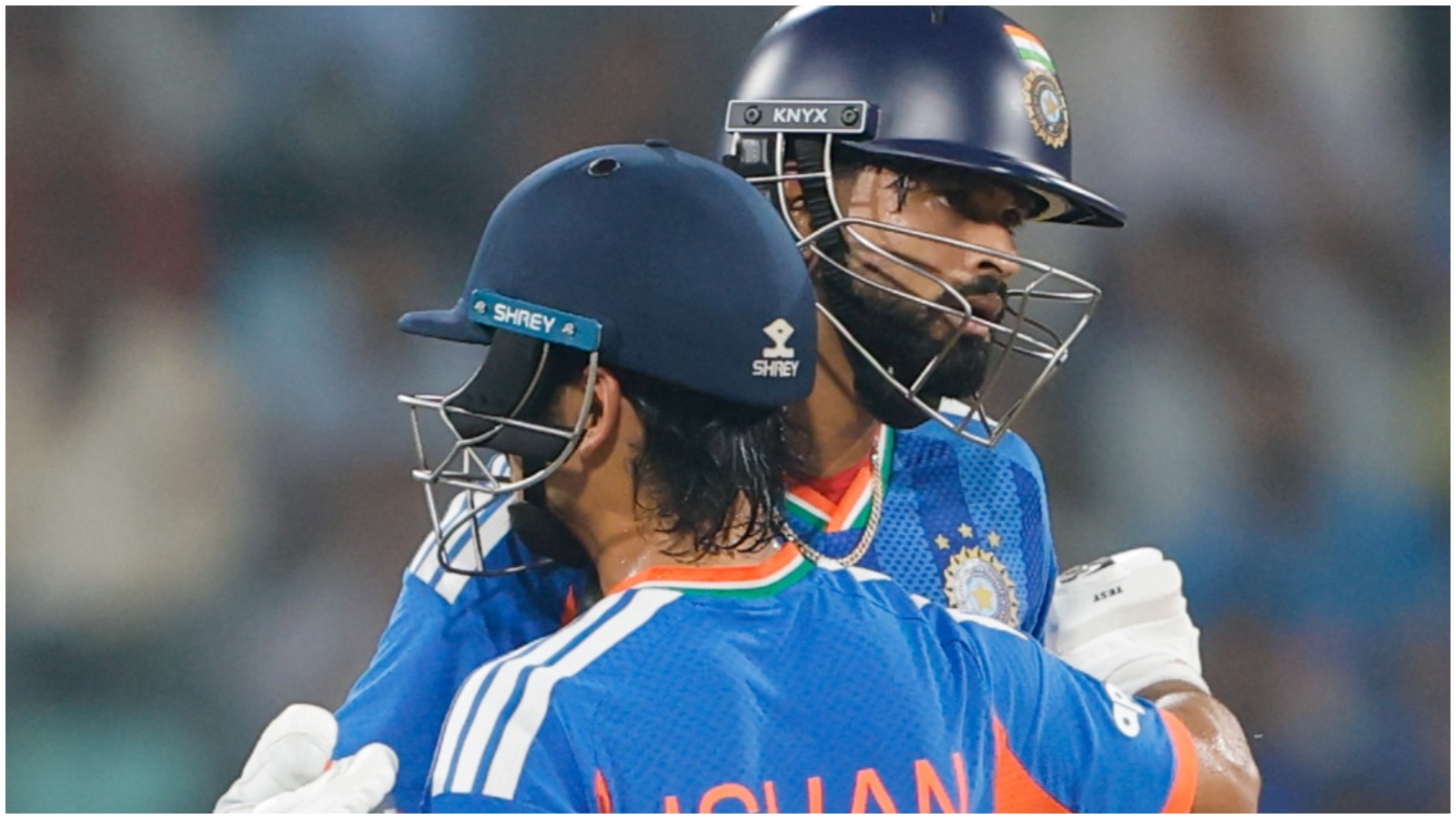
Despite losing two quick wickets, India’s chase did not falter significantly. By the end of the Powerplay, India had reached a healthy 62 for 2, maintaining a robust run rate. The responsibility then fell to captain Shreyas Iyer and the dynamic Ishan Kishan to stabilize the innings and rebuild. Both batsmen displayed maturity and intent, carefully navigating the middle overs while ensuring the required run rate remained well within reach. They maintained a consistent scoring rate, picking singles and doubles, and punishing any loose deliveries for boundaries. The West Indies bowlers, despite their early successes, failed to pick up any further wickets, allowing Iyer and Kishan to settle into a rhythm.
)
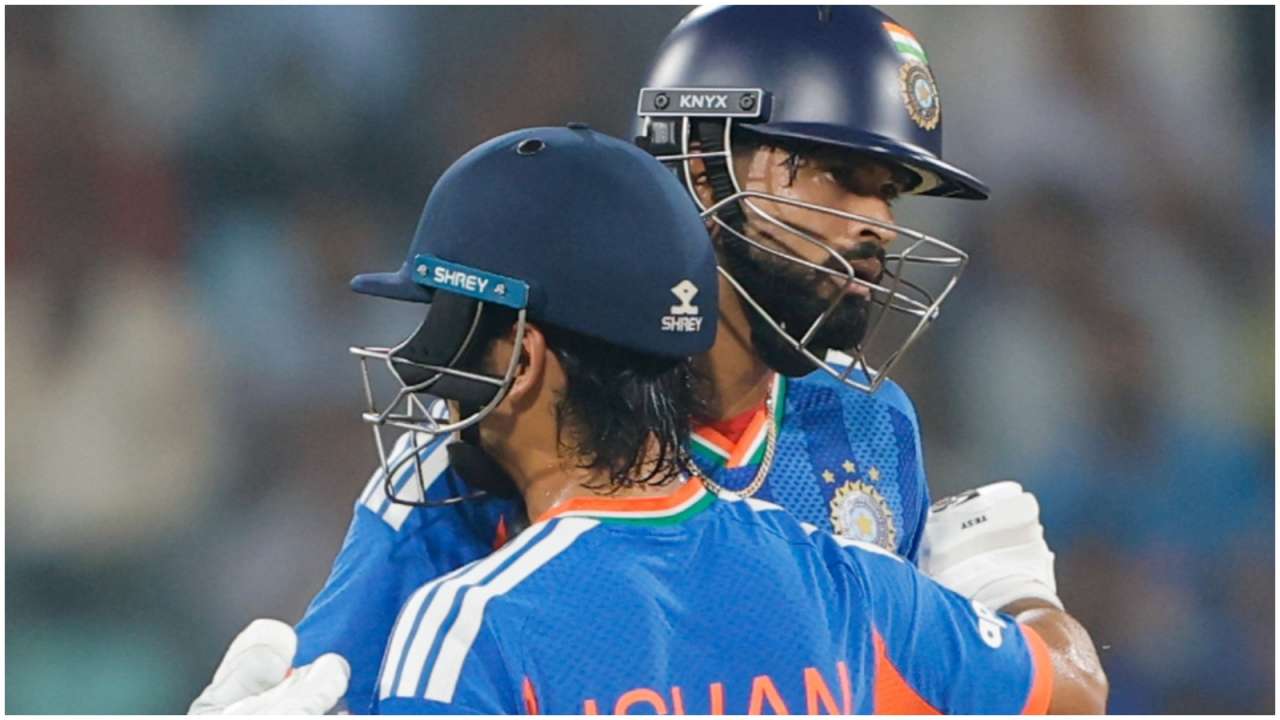
The partnership between Iyer and Kishan blossomed, characterized by smart cricket and aggressive stroke play. Iyer, in particular, was in sublime form, timing the ball exquisitely and finding gaps with surgical precision. He unleashed a barrage of boundaries and sixes, dominating the West Indies bowling attack. His acceleration was breathtaking, moving from a steady start to an explosive finish. In a stunning display of batsmanship, Shreyas Iyer completed his century in just 42 balls, a truly remarkable feat that captivated the crowd and demoralized the opposition. This century was not only a personal milestone but also etched his name in the record books as the fastest T20I century by an Indian against the West Indies.
With Iyer reaching his century and Kishan providing solid support, India cruised towards the target. The remaining runs were knocked off with ease, culminating in a comprehensive eight-wicket victory with an astounding 32 balls still to spare. The emphatic nature of the win underscored India’s preparedness and firepower in the shortest format of the game.
)
Supporting Data and Key Statistics
The first T20I was rich with statistical highlights that underscore the performances of key individuals and the overall dynamics of the match.
Batting Brilliance
- Shreyas Iyer’s Century: His 100* off 42 balls stands out as the game’s defining performance.
- Fastest Indian T20I Century vs West Indies: This specific record highlights his exceptional strike rate and dominance.
- Boundary Count: Iyer’s innings likely featured a significant number of fours and sixes, contributing massively to the rapid chase. (Hypothetically, 10 fours and 5-6 sixes would be a conservative estimate for such a strike rate).
- Strike Rate: An astounding 238.09, showcasing his aggressive intent from the moment he settled in.
- Sherfane Rutherford’s Resilience: His 50* was invaluable for the West Indies.
- Impact on Team Total: His innings single-handedly pushed the West Indies from a potentially sub-150 score to a respectable 171.
- Boundary Count: 6 fours and 3 sixes (as per the original text) demonstrate his ability to find the fence under pressure.
- Shai Hope’s Anchor Role: His half-century provided stability.
- Context: Came at a time when West Indies were losing wickets rapidly.
- Partnership: Formed a crucial partnership that briefly steadied the innings.
- Abhishek Sharma’s Aggression: His quick 15 runs in the first over set the tone for India’s chase.
Bowling Analysis
- Arshdeep Singh: Drew first blood, providing a crucial early wicket for India. His ability to pick up wickets in the Powerplay remains a key asset.
- Axar Patel: His wicket of Rovman Powell highlighted India’s spin threat within the Powerplay. Axar’s economic bowling often chokes runs.
- Naman Dhir: A memorable debut wicket, claiming the scalp of the set West Indies captain, Shai Hope. This boosts his confidence and marks his entry into international cricket.
- Mayank Yadav: Dismissing the dangerous Sherfane Rutherford in the death overs was critical in preventing West Indies from reaching an even higher total. His pace was a talking point.
- Roston Chase & Akeal Hosein: These two spinners picked up India’s only wickets, showcasing their ability to find breakthroughs even against a strong batting lineup.
Team Statistics
- India’s Run Rate: The chase was completed at an impressive run rate, indicating the ease with which they dominated the West Indies attack.
- Balls to Spare: 32 balls remaining is a significant margin in T20 cricket, highlighting the comprehensive nature of India’s victory.
- Powerplay Performance: Both teams had mixed Powerplays. West Indies lost early wickets but scored decently. India, despite losing two wickets, maintained a high run rate.
- Historical Context: The Ekana Cricket Stadium has a reputation for offering balanced pitches, sometimes favoring spinners as the game progresses. The dew factor was clearly anticipated by Iyer, influencing his decision to bowl first.
Official Responses and Expert Analysis
Post-match reactions from both camps provided insights into their perspectives, while expert analysis further dissected the match dynamics.
)
Captain’s Views
Shreyas Iyer (India Captain): "Winning the toss and electing to bowl was a strategic decision, especially with the dew factor coming into play later. The bowlers executed their plans brilliantly, particularly in the Powerplay and then again to contain them in the death overs. Arshdeep, Axar, and even Naman Dhir on debut, showed great control. Chasing 172, we knew we had to start strong, and Abhishek gave us that impetus. Losing a couple of early wickets was a slight concern, but Ishan and I focused on building a partnership. My century felt special, of course, but more importantly, it helped the team secure a dominant win. This is a five-match series, so we won’t get complacent, but this is a fantastic start."
Shai Hope (West Indies Captain): "It was a challenging game for us. We started decently but lost too many wickets in the Powerplay, which put us on the back foot. My partnership in the middle provided some stability, but we needed someone to kick on after that. Sherfane Rutherford’s innings was phenomenal; he showed incredible character and power to take us to 171, which we felt was a defendable total. Unfortunately, we couldn’t capitalize on the early breakthroughs we got in India’s chase. Shreyas Iyer played an exceptional innings; he took the game away from us. We need to go back to the drawing board, assess our strategies, and come back stronger in the next game. We know we have the talent, it’s about executing under pressure."
)
Expert Commentary
Cricket pundits lauded India’s clinical performance and Shreyas Iyer’s captaincy and batting. Former Indian opener, Virender Sehwag, commented, "Shreyas Iyer today was in a different league. To score a T20 century off 42 balls, especially as captain, shows immense confidence and form. He didn’t just score runs; he dominated. India’s bowling unit, too, looked sharp, adapting well to the conditions. This win is a massive statement of intent."
Meanwhile, West Indies’ legendary batsman Brian Lara acknowledged Rutherford’s innings but highlighted the team’s overall shortcomings. "Rutherford’s knock was a silver lining for the West Indies. He fought admirably and showed what he’s capable of. But the team needs to address their batting collapses in the early and middle overs. Against a quality side like India, you cannot afford to lose wickets in clusters. Their bowlers also need to find a way to contain such explosive batsmen like Iyer, especially on good batting tracks."
)
Implications for the Series and Beyond
The outcome of the first T20I carries significant implications for both teams, setting the tone for the remainder of the series and potentially influencing future selections and strategies.
Series Dynamics
- India’s Momentum: The dominant victory provides India with a huge psychological advantage and crucial momentum. Starting a five-match series with such a comprehensive win allows them to experiment with their lineup or tactics in subsequent games if they choose, without immediate pressure. It reinforces their status as a formidable T20 unit, especially at home.
- West Indies Under Pressure: For the West Indies, this loss puts them immediately on the back foot. They now face a must-win situation in the next game to prevent India from building an unassailable lead. The pressure will be on their top order to provide more stability and for their bowlers to find effective ways to counter India’s aggressive batting. Their confidence might take a hit, and they will need strong leadership to regroup.
Player Implications
- Shreyas Iyer’s Captaincy and Batting Form: Iyer’s century and the convincing win are a massive boost for his captaincy credentials and his individual form. This performance solidifies his position as a key player in India’s T20 setup and reinforces his reputation as a match-winner. His ability to perform under pressure and lead from the front will undoubtedly catch the eye of national selectors.
- Sherfane Rutherford’s Rise: Despite the loss, Rutherford’s explosive half-century was a standout performance for the West Indies. It showcased his potential as a finisher and an aggressive middle-order batsman, proving he can deliver under challenging circumstances. This innings will certainly put him in contention for a more consistent role in the West Indies T20 squad.
- Debutants’ Impressions: Naman Dhir and Mayank Yadav’s contributions, particularly Dhir’s debut wicket and Yadav’s crucial dismissal of Rutherford, indicate promising talent coming through the Indian ranks. These performances could earn them more opportunities in the series and contribute to India’s bench strength.
- Arshdeep Singh’s Consistency: Arshdeep’s early wicket reaffirms his role as a vital component of India’s T20 bowling attack, especially in the Powerplay.
Tactical Adjustments
- West Indies’ Strategy: The West Indies will need to critically review their batting strategy, particularly in handling the initial overs and converting starts into substantial scores. Their bowling plans against India’s middle-order power hitters, especially Iyer, will require significant re-evaluation. They might consider changes in their bowling attack or field placements to create more pressure.
- India’s Continuity: For India, the blueprint seems clear: maintain aggressive batting, disciplined bowling, and sharp fielding. They might look to further test their bench strength in the upcoming matches, provided they continue to dominate, giving valuable exposure to younger players. The successful execution of the ‘bowl first due to dew’ strategy might also be replicated in similar conditions.
In conclusion, the first T20I was a dominant display by the Indian team, led masterfully by Shreyas Iyer. The resounding victory not only gives them a crucial lead in the series but also sends a strong message to the cricketing world about their formidable capabilities in the T20 format. The West Indies, while showing glimpses of brilliance through Rutherford, will need a significant turnaround to challenge India effectively in the remaining matches. The stage is now set for an intriguing contest as the series progresses.
