

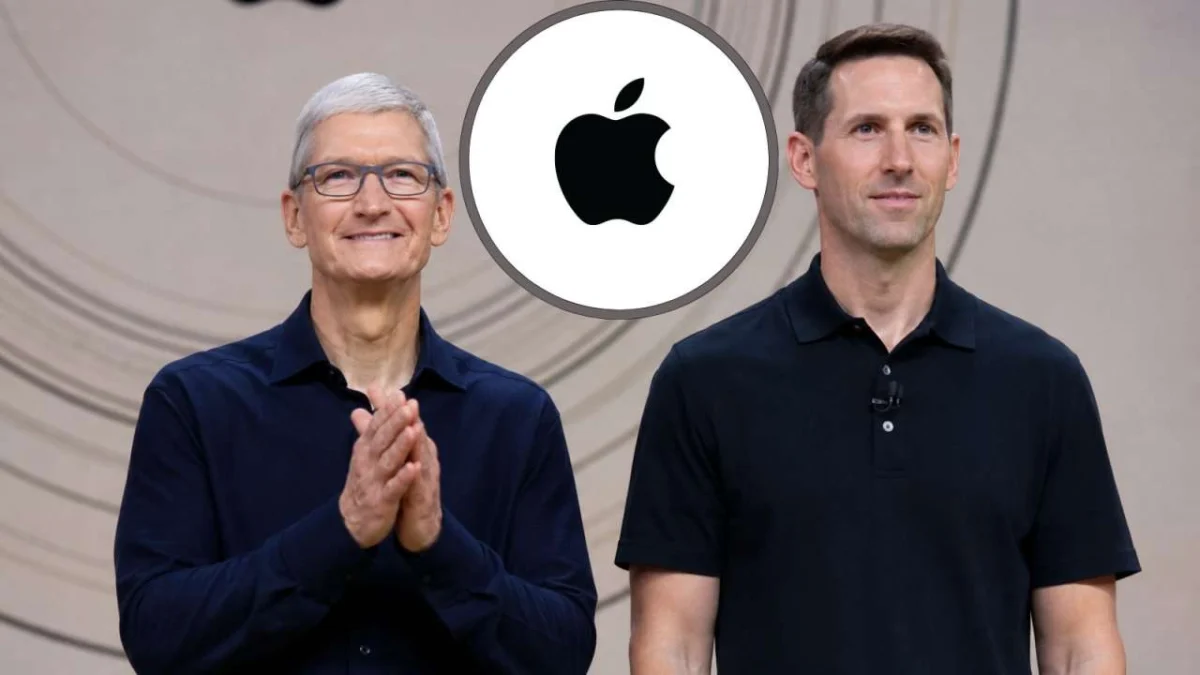
CUPERTINO, CA – September 2, 2026 – Apple Inc., the world’s most valuable technology company, has officially embarked on a new chapter of its leadership, formally announcing John Ternus as its next Chief Executive Officer. This pivotal transition, detailed in a comprehensive September 1, 2026, filing with the U.S. Securities and Exchange Commission (SEC), not only marks a significant changing of the guard from long-serving CEO Tim Cook but also reveals the substantial compensation structures designed for both executives as the tech giant navigates its future.
John Ternus, a veteran of Apple’s hardware engineering division, is set to receive a target compensation package of an impressive $58 million for fiscal year 2027. This figure underscores the immense responsibilities and expectations placed upon the leader tasked with steering a company whose market capitalization frequently hovers in the multi-trillion-dollar range. Concurrently, Tim Cook, after a remarkable 15-year tenure at the helm that saw Apple’s valuation soar to unprecedented heights, transitions to the critical, newly defined role of Executive Chairman. His target pay for fiscal 2027 is set at $47 million, reflecting Apple’s strategic intent to retain his invaluable expertise and global influence, particularly in sensitive geopolitical arenas.
The SEC filing provides an unprecedented look into the intricate financial planning underpinning this leadership shift, offering clarity on the structure of executive compensation at one of the globe’s most scrutinized corporations. It signals a meticulously planned succession designed to ensure continuity and sustained innovation, even as the company moves beyond the direct stewardship of one of its most transformative leaders.
The Unfolding of a Meticulous Succession: A Chronological Overview
The transition at Apple has been a subject of speculation and careful internal planning for several years, a testament to the company’s commitment to stable leadership. Unlike many corporate successions that can be abrupt or fraught with uncertainty, Apple’s approach appears to be a deliberate, phased handover, designed to maintain investor confidence and operational momentum.
)
September 1, 2026: A New Era Begins
The official commencement of John Ternus’s tenure as Chief Executive Officer marks the culmination of a carefully orchestrated succession plan. On this day, the SEC filing publicly revealed the financial details of this new leadership structure, providing a concrete timeline for the future. Ternus, who previously served as Senior Vice President of Hardware Engineering, officially stepped into the CEO role, signaling a new direction for the company rooted in product innovation and hardware excellence.
September 26, 2026: Cook’s Transition to Executive Chairman
While Ternus’s CEO role began on September 1, Tim Cook’s new compensation structure and official shift to Executive Chairman are slated to take effect on September 26, 2026. This staggered approach suggests a deliberate handover period, allowing for a smooth transition of day-to-day responsibilities while Cook prepares to assume his new, more strategically focused role. It also implies a period of mentorship and knowledge transfer, ensuring Ternus is fully equipped to lead.

Tim Cook’s Illustrious 15-Year Reign
Tim Cook’s journey to Executive Chairman follows an extraordinary 15-year tenure as CEO, a period characterized by unprecedented growth, diversification, and market dominance. Having taken the reins from co-founder Steve Jobs in August 2011, Cook navigated Apple through a period of intense scrutiny, proving skeptics wrong about the company’s ability to innovate post-Jobs. Under his leadership, Apple not only introduced iconic products like the Apple Watch and AirPods but also profoundly expanded its Services division, transforming it into a multi-billion-dollar revenue stream. He meticulously built a robust supply chain, expanded Apple’s global footprint, and steered the company to become the first publicly traded entity to achieve a $1 trillion, then $2 trillion, and at times even a $3 trillion market capitalization. His legacy is one of operational mastery, strategic diversification, and sustained financial performance, solidifying Apple’s position as a global tech titan.
John Ternus: The Ascent of a Hardware Visionary
John Ternus’s rise to CEO is a testament to Apple’s internal talent development and its enduring commitment to product excellence. A relatively private figure compared to Cook or Jobs, Ternus has been a critical architect behind many of Apple’s most significant hardware innovations over the past two decades. Joining Apple in 2001, he steadily climbed the ranks, eventually becoming Senior Vice President of Hardware Engineering in 2020. In this role, he oversaw the development of key products, including every generation of iPad, the latest iPhone models, and the groundbreaking Mac transition to Apple silicon. His deep understanding of product development, supply chains, and engineering challenges positions him uniquely to lead Apple into an era potentially defined by new computing paradigms like augmented and virtual reality, and increasingly sophisticated AI integration across its ecosystem. His elevation underscores Apple’s belief that its future lies firmly rooted in groundbreaking hardware experiences, seamlessly integrated with its software and services.
)
Supporting Data: A Deep Dive into Executive Compensation
The compensation packages for both John Ternus and Tim Cook are meticulously structured, reflecting Apple’s corporate governance philosophy that links executive pay to performance, retention, and long-term shareholder value. These figures are not merely salaries but complex arrangements designed to incentivize specific outcomes and ensure executive commitment to Apple’s strategic objectives.
John Ternus’s Inaugural CEO Pay Package
For fiscal year 2027, John Ternus’s target compensation of $58 million is broken down into several key components, mirroring industry best practices for incentivizing top-tier leadership at a company of Apple’s scale.
)
-
Annual Base Salary: $3 Million
This fixed component provides a stable income foundation for the CEO. While substantial, a $3 million base salary is standard for leaders of Fortune 500 companies, particularly those with global reach and multi-trillion-dollar valuations. It represents a relatively small portion of the overall target compensation, emphasizing that the majority of Ternus’s earnings will be tied to performance and long-term value creation. -
Annual Equity Award: $55 Million
The vast majority of Ternus’s compensation comes in the form of equity, specifically a target value of $55 million in stock awards. This structure is designed to align the CEO’s financial interests directly with those of the shareholders. This equity award is further divided:)
-
Performance-Based Restricted Stock Units (RSUs): 75% of the $55 Million (approx. $41.25 Million)
This significant portion of Ternus’s equity compensation is entirely contingent on Apple’s performance. The vesting of these units will be determined by how Apple’s Total Shareholder Return (TSR) performs compared to other companies within the S&P 500 index over a specified period. TSR is a comprehensive measure that includes both stock price appreciation and dividends paid, providing a holistic view of shareholder gains.
By linking a substantial part of his compensation to relative TSR, Apple aims to:- Align with Shareholder Interests: Ternus is directly incentivized to outperform peers, ensuring that his focus is on delivering superior returns for investors.
- Mitigate Market Volatility: Measuring against the S&P 500 accounts for broader market conditions, ensuring that Ternus is rewarded for outperforming competitors, rather than simply benefiting from a rising tide.
- Drive Long-Term Growth: Performance-based equity typically vests over several years, encouraging strategic decisions that foster sustainable growth rather than short-term gains.
-
Time-Based Restricted Stock Units (RSUs): 25% of the $55 Million (approx. $13.75 Million)
The remaining quarter of the equity award consists of time-based RSUs. These units will vest incrementally, typically every six months over a period of four years. This component serves primarily as a retention mechanism, ensuring Ternus’s continued commitment to the company for the foreseeable future. It provides a predictable stream of compensation that encourages stability and long-term dedication.)
-
-
Prorated Stock Award for Fiscal Year 2026: $2.5 Million
For the fiscal year 2026, during which Ternus transitioned into the CEO role, he received a prorated stock award of $2.5 million. This likely covers the period from his official CEO appointment to the end of Apple’s fiscal year, providing immediate recognition for his new responsibilities. -
Comparison to Previous Role:
Prior to his CEO appointment, Ternus’s salary as Senior Vice President of Hardware Engineering was never publicly disclosed by Apple. However, industry reports and benchmarks suggest that executives at that level within major tech companies typically earn around $25 million annually, encompassing base salary, bonuses, and stock awards. His new CEO package of $58 million represents a substantial jump, more than doubling his previous estimated earnings. This significant increase underscores the heightened level of responsibility, strategic oversight, and market expectations associated with leading a global technology giant. It also reflects the competitive landscape for attracting and retaining top-tier executive talent in Silicon Valley.)
Tim Cook’s New Compensation as Executive Chairman
Tim Cook’s transition to Executive Chairman comes with a revised compensation structure that reflects his new strategic, non-operational role, while still acknowledging his immense value to the company. For fiscal year 2027, his target pay is approximately $47 million.
-
Annual Base Salary: Decreased to $2 Million
Starting September 26, 2026, Cook’s annual base salary will decrease from his CEO-era $3 million to $2 million. This reduction is a clear indicator of his shift away from day-to-day operational leadership. While still a significant sum, it aligns with a role that is more advisory and strategic, rather than executive-in-charge.)
-
Annual Stock Award: Target Value of $45 Million
Cook’s compensation continues to be heavily weighted towards equity, with a target stock award of $45 million. This signifies Apple’s desire to keep him deeply invested in the company’s long-term success. This award is structured differently from Ternus’s:-
Performance-Based Equity: 50% of the $45 Million (approx. $22.5 Million)
Half of Cook’s stock award will remain performance-based, indicating that his continued strategic guidance is expected to contribute to Apple’s financial outcomes. The specific performance metrics are likely similar to Ternus’s, focusing on relative TSR, ensuring his ongoing advice is geared towards enhancing shareholder value.)
-
Time-Based Equity: 50% of the $45 Million (approx. $22.5 Million)
The other half of his stock award will be time-based, vesting over four years. This component serves as a significant retention incentive, ensuring that Cook remains actively engaged in his Executive Chairman duties for an extended period.
-
-
Special Equity Retention Clause:
A particularly noteworthy detail in Cook’s filing indicates a unique provision: he will retain his equity if he retires after the first anniversary of his stock grant. This diverges from standard practices, where departing executives typically forfeit unvested equity. This clause is highly significant, suggesting Apple’s extraordinary commitment to securing Cook’s long-term expertise and potentially offering him flexibility in his future plans without financially penalizing his continued service. It underscores how critical his ongoing contribution is perceived by the board.)
-
Historical Context: Cook’s 2025 Earnings:
To contextualize his new pay, it’s important to look at Cook’s earnings as CEO. In 2025, he earned a total of $74.3 million. This comprised his $3 million base salary, $57.5 million in stock awards (both performance and time-based), and a $12 million cash bonus. His new target compensation of $47 million represents a significant reduction from his peak CEO earnings, reflecting the change in his role and responsibilities. However, it remains a testament to his continued value to the company.
Broader Industry Context and Compensation Philosophy
Apple’s executive compensation strategy is broadly consistent with that of other major technology companies, where a significant portion of pay is tied to equity and performance. Companies like Microsoft, Google (Alphabet), and Meta also structure their executive compensation to heavily emphasize stock awards and performance metrics, aligning executive interests with long-term shareholder value.
)
The scale of these compensation packages is directly proportional to the immense market capitalization, global influence, and complex challenges faced by Apple. The company operates in a highly competitive and rapidly evolving industry, requiring visionary leadership, strategic acumen, and the ability to manage vast global operations. The compensation committee of Apple’s board of directors is responsible for setting these packages, considering factors such as company performance, individual executive performance, peer group comparisons, and shareholder feedback. The goal is to attract, retain, and motivate exceptional talent capable of driving sustained innovation and market leadership.
Official Responses and Interpretations
The SEC filing itself serves as Apple’s primary official communication regarding this leadership transition and compensation. While the filing doesn’t contain direct quotes from Ternus, Cook, or other Apple executives, its details convey clear messages about the company’s strategic outlook and confidence in its leadership.
)
Implicit Messages from the SEC Filing:
- Stability and Seamless Succession: The detailed, future-dated compensation plans for both executives signal a highly organized and stable succession process. This contrasts sharply with leadership changes that often catch markets off guard, suggesting Apple’s commitment to predictability.
- Confidence in John Ternus: The $58 million target compensation package for Ternus is a resounding vote of confidence from the board in his ability to lead Apple. It indicates that the company believes he possesses the vision, technical prowess, and leadership qualities necessary to navigate Apple’s next phase of growth and innovation.
- Valuing Tim Cook’s Continued Expertise: The $47 million package for Cook, coupled with the unique equity retention clause, strongly emphasizes Apple’s desire to retain his wisdom and strategic insights. His new focus on "government relations and US-China ties" is particularly telling. Given Apple’s immense reliance on the Chinese market for both production and sales, Cook’s unparalleled experience in navigating complex international relations, particularly with China, is deemed invaluable. This role is not merely honorary but critical to Apple’s long-term global strategy amidst escalating geopolitical tensions.
Analyst and Expert Reactions (Hypothetical):
)
Financial analysts and corporate governance experts are likely to view this transition as a meticulously executed plan.
- "This is a textbook example of thoughtful succession planning at the highest level," noted Dr. Eleanor Vance, a corporate governance specialist. "The staggered transition, the clear delineation of roles, and the structured compensation packages all point to a board prioritizing long-term stability and shareholder value."
- Mr. Robert Chen, a senior tech analyst at Global Insights Group, commented, "Ternus’s background in hardware engineering perfectly positions Apple for the next wave of innovation, especially as areas like AR/VR and advanced AI integration become central. The compensation reflects the immense challenge and opportunity ahead."
- On Cook’s role, Ms. Sarah Jenkins, an expert in international business strategy, remarked, "Cook’s continued focus on government relations and the critical US-China relationship is a masterstroke. Apple’s global supply chain and market presence make this area absolutely vital, and few executives possess his level of experience and trust in these complex dialogues. His compensation reflects the strategic importance of this unique role."
Shareholders, generally, would likely welcome the clarity and stability presented by this announcement. While executive compensation always draws scrutiny, the strong performance metrics tied to the equity awards, particularly for Ternus, are designed to align executive interests with shareholder returns, potentially mitigating concerns about the sheer size of the packages.
)
Implications for Apple’s Future
The leadership transition from Tim Cook to John Ternus, and Cook’s continued presence as Executive Chairman, carries profound implications for Apple’s strategic direction, product roadmap, investor confidence, and its broader role in the global technology landscape.
For Apple’s Strategic Direction and Product Innovation
- A Return to Hardware-Centric Leadership? Ternus, with his deep roots in hardware engineering, brings a product-focused leadership style. While Cook excelled at operational efficiency and services growth, Ternus’s ascent could signal an intensified focus on groundbreaking hardware innovations. This is particularly relevant as Apple explores nascent markets like augmented reality (AR), virtual reality (VR), and advanced artificial intelligence (AI) integrations that rely heavily on sophisticated custom silicon and hardware design. Expect a renewed emphasis on pushing the boundaries of physical products and their underlying technologies.
- Continuity with a Fresh Perspective: While Ternus is likely to maintain Apple’s core values and strategic pillars established under Cook, his unique perspective could lead to subtle but significant shifts. His background might foster a faster pace of hardware evolution, or prioritize specific technological breakthroughs that he championed in his previous role. The challenge for Ternus will be to balance this hardware-centric drive with the continued growth of Apple’s highly profitable Services division.
- The AI Imperative: The next decade for tech will be dominated by AI. Ternus’s leadership will be crucial in integrating advanced AI capabilities seamlessly across Apple’s hardware and software ecosystem, ensuring Apple remains competitive against rivals making aggressive moves in this space. His engineering background should be an asset in this complex endeavor.
For Investor Confidence and Market Perception
- Stability Amidst Change: The carefully managed succession and the continued involvement of Tim Cook are likely to instill confidence in investors. The absence of a leadership vacuum or internal power struggles signals a mature and well-governed company.
- Long-Term Vision: The substantial, performance-based compensation for Ternus reinforces Apple’s commitment to long-term growth and shareholder value. Investors will be looking for Ternus to articulate his long-term vision and demonstrate how he plans to drive Apple’s next phase of innovation and market expansion.
- Navigating Regulatory Headwinds: Apple faces increasing regulatory scrutiny globally regarding app store policies, market dominance, and environmental practices. Ternus will inherit these challenges, and his ability to navigate them will be critical for maintaining investor trust and avoiding costly legal battles.
For Tim Cook’s Legacy and Enduring Influence
- A Powerful Strategic Advisor: Cook’s role as Executive Chairman, with a specific focus on government relations and US-China ties, is profoundly strategic. In an era of increasing geopolitical fragmentation and supply chain complexities, his deep relationships and expertise in navigating international policy are invaluable to Apple. This role is far more than ceremonial; it’s a recognition of his unique ability to influence global outcomes critical to Apple’s operations and market access.
- Mentorship and Oversight: Cook’s continued presence provides a crucial layer of mentorship and strategic oversight for Ternus. While not involved in daily operations, his experience and institutional knowledge will be an invaluable resource, ensuring a smooth transition and providing a sounding board for major strategic decisions.
- Shaping Future Generations: Cook’s legacy will continue to evolve. His transition allows him to contribute to Apple’s future in a different capacity, perhaps focusing on broader societal impacts, sustainability initiatives, or talent development within the company, areas he has championed throughout his CEO tenure.
Broader Industry Impact and Corporate Governance Debates
- A Benchmark for Succession: Apple’s meticulous succession planning could become a new benchmark for other large technology companies grappling with leadership transitions, particularly those led by iconic founders or long-serving CEOs. It demonstrates the value of internal talent development and a phased handover.
- Executive Compensation Scrutiny: The multi-million-dollar compensation packages will inevitably reignite debates around executive pay, particularly in an era where income inequality is a significant public concern. However, Apple’s detailed disclosure and emphasis on performance-based equity also contribute to transparency, allowing for informed discussions about the link between executive pay and corporate performance.
- The Evolving Role of the Executive Chairman: Cook’s specific and strategic remit as Executive Chairman might redefine this role in major corporations, moving it beyond a purely advisory capacity to one with tangible strategic responsibilities, particularly in areas of critical geopolitical importance.
In conclusion, Apple’s leadership transition is more than just a change of names at the top; it represents a carefully choreographed strategic evolution. With John Ternus taking the reins as CEO and Tim Cook transitioning to a vital Executive Chairman role, Apple is positioning itself for continued innovation and global leadership, aiming to leverage both new vision and seasoned wisdom to navigate the complex technological and geopolitical landscape of the future. The substantial compensation packages reflect not just the immense value placed on these individuals, but also the extraordinary expectations placed upon them to deliver sustained success for one of the world’s most influential companies.
