

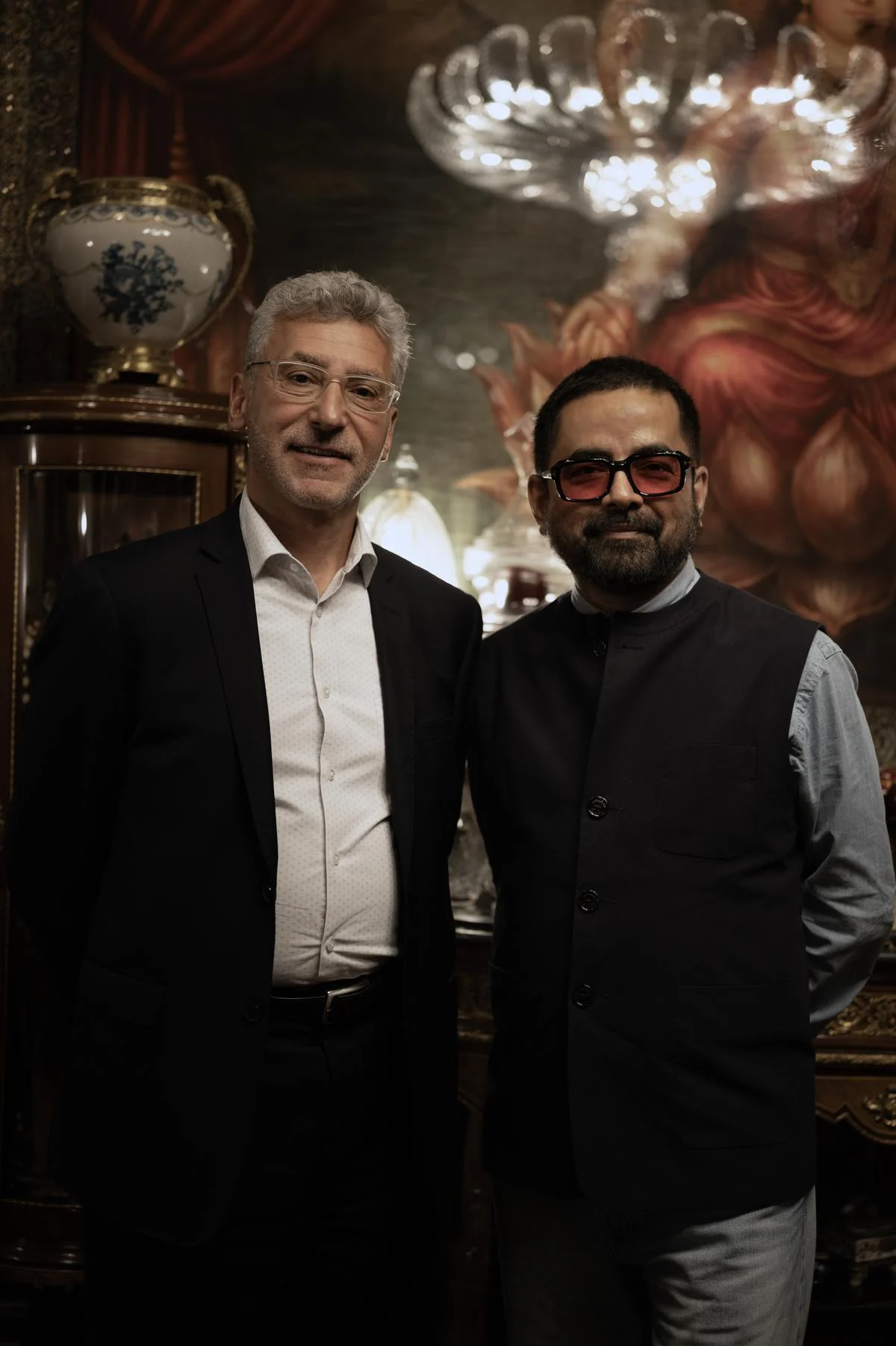
New Delhi, India & New York, USA – In a groundbreaking fusion of ancient artistry and contemporary luxury, celebrated Indian designer Sabyasachi Mukherjee is set to unveil his latest high jewelry collection at New York Fashion Week on September 15th. This collection, a multi-year collaboration with the esteemed Metropolitan Museum of Art (The Met) in New York, draws profound inspiration from the Byzantine Empire and its rich artistic legacy. For Mukherjee, the allure of death, often a morbid fascination for designers, is transmuted into an exquisite adornment for the living, breathing world. His designs, rather than literal interpretations, are nuanced dialogues with history, transforming ancient artifacts into wearable art that tells a compelling story.
From Spam to Smithsonian: The Genesis of a Monumental Collaboration
The genesis of this ambitious collaboration was, by Mukherjee’s own admission, serendipitous and almost dismissed as a digital phantom. "When I initially received the invitation to collaborate with The Met, on email, I dismissed it as spam," he revealed during a recent tour of his sprawling new store in The Citadel, Mehrauli, New Delhi. This initial skepticism underscores the sheer magnitude and unexpected nature of the partnership. What ultimately swayed him, and what he describes as the "irresistible proposition," was The Met’s "modern voice on antiquity." This perspective resonated deeply with Mukherjee’s own design philosophy, which consistently seeks to bridge the gap between India’s storied past and the global luxury market.

Mukherjee immersed himself in The Met’s Byzantine holdings, a collection he laudably describes as "among its most impressive." It was within these hallowed halls, surrounded by millennia of human creativity, that he found his muse not in overt symbols of mortality, but in the very vessels that held the departed. Sarcophagi, the ancient stone coffins designed to house the deceased, became the unexpected wellspring of inspiration for a collection destined to grace the living. This is not a macabre fascination, but a profound appreciation for the artistry, craftsmanship, and stories embedded within these historical objects.
Byzantine Echoes: A Sarcophagus Reimagined in Gold and Gems
The collection’s tangible manifestations are already beginning to surface, offering a tantalizing glimpse into Mukherjee’s creative alchemy. A striking wrist cuff, meticulously crafted from 18-karat and 22-karat gold, is adorned with rich garnet cabochons and studded with earthy brown diamonds. Its inspiration is a 3rd-century Roman sculpture: a marble sarcophagus depicting lions felling antelope. The dynamism of the ancient carving, the raw power of the hunt, is translated into the tactile elegance of precious metal and stone.

Another wrist cuff draws its design from a Roman sculpture dating back to 260-270 CE. Both of these awe-inspiring sarcophagi are part of The Metropolitan Museum of Art’s distinguished collection. This ability to transform monumental historical artifacts into intimate, personal adornments is the hallmark of Mukherjee’s genius. Each jewel in this collection is more than just an ornament; it’s a narrative, a tangible link to a distant past.
The Unveiling: A Century of Craftsmanship at New York Fashion Week
The complete 100-piece jewelry collection will make its grand debut at the Sabyasachi Spring/Summer 2027 showcase later this month. This event marks a significant return to New York Fashion Week for the designer, nearly two decades after his initial impactful debut in 2006. While the specific details of the accompanying garments remain under wraps, Mukherjee has hinted at "modern couture" with a strong emphasis on practicality and wearability, suggesting a collection that seamlessly blends high fashion with everyday elegance.

This collaboration is not merely an aesthetic exercise; it’s a sophisticated approach to intellectual property and historical interpretation. In a move that democratizes access to art history, each jewel will carry a QR code. This scannable code will direct the buyer back to its original source of inspiration within The Met’s archives, allowing them to explore the history and context of the artifact that sparked its creation. "If you buy the jewellery, you can actually go into The Met and find the room where the original product is housed and see it," Mukherjee explained. "The idea is to be able to give people a product that’s inspired by a museum but also connect them to the source of inspiration."
Beyond the Bling: Sabyasachi’s Philosophy on Luxury, Culture, and Craft
During the preview of his new Delhi store, a veritable "mini Calcutta" of curated experiences, Mukherjee engaged in a thoughtful discourse on the importance of good journalism and the imperative to promote Indian culture on a global stage. When asked about his current definition of luxury, his response was refreshingly profound: "sleep and silence." This highlights a man who, despite his global success, finds solace in the quiet moments, observing the world from the unassuming vantage point of a coffee shop, finding joy in the nonsensical melodies of pop music – even referencing Alisha Chinai’s 1985 hit "Tarzan, My Tarzan" as a persistent earworm.

The new store itself is a testament to Mukherjee’s eclectic vision. Spanning a colossal 26,000 square feet, it’s a labyrinth of corridors and rooms, adorned with Indian goddesses, 120 chandeliers, approximately 200 antique carpets, and an array of carefully chosen curiosities that reflect his personal visual archive. The Gaudi-inspired ceramic fruit, hand-painted by artisans in Kolkata, is a particular point of delight for the designer, embodying his appreciation for art in its myriad forms.
The Byzantine Empire: A Crucible of Art and Conflict
Mukherjee’s fascination with the Byzantine Empire is not a fleeting whim. He identifies it as one of the two historical periods that have consistently captivated him, the other being the Spice Route. "The two things that have always excited me in history are the Byzantine Empire and the Spice Route," he stated. "I like the idea of people landing in different ports, in different parts of the world. New things are built with the exchange of the old and the traditional."

The Byzantine world, a confluence of Greek, Roman, Far Eastern, Indian, and Islamic influences, was a dynamic period of artistic innovation, often born from the friction of clashing cultures and beliefs. "The conflict between the Islamic Empire and Christianity led to the genesis of things, which were built with provocation and love and yes, conflict," Mukherjee explained. "That’s why I chose that empire for inspiration, because I thought that was the most dynamic time in art." This historical context provides a rich backdrop for his reinterpretations, imbuing the jewelry with layers of meaning beyond mere aesthetics.
Tales from the Crypt: Unpacking the Design Inspirations
The "Tales from the Crypt" section of the collection offers a deeper dive into the specific artifacts that have fueled Mukherjee’s imagination. One such piece, a cuff, is directly inspired by the "Triumph of Dionysos and the Seasons," a highly ornate and remarkably preserved Roman marble sarcophagus. Originally part of the Dukes of Beaufort’s collection, it found its way to The Met, a testament to its historical and artistic significance. The sarcophagus’s sides and front are adorned with forty human and animal figures carved in high relief, depicting the god Dionysos and the four Seasons as sturdy youths. The contrast between the vibrant imagery and its funerary purpose is precisely what captivates Mukherjee, transforming somber repose into dynamic adornment.

Another piece, a pendant necklace crafted in gold, is studded with a vibrant array of gemstones: tourmaline, garnet, jasper, lapis lazuli, and jade. Its inspiration is a marble funerary relief from the Imperial Roman period, depicting a family from Thrace, Northern Greece, and the Danube province. This artifact, like the sarcophagus, speaks to the enduring human desire to commemorate and honor those who have passed, a sentiment now beautifully translated into a contemporary expression of luxury.
Navigating the Archives: The Met’s Hidden Treasures and Curatorial Insights
The sheer scale of The Met’s collection, spanning over 5,000 years of human history, can be daunting. However, Mukherjee found a guiding hand in the museum’s curators. "The beautiful thing was that every curator took me under their wing and also showed me the unseen archives," he shared. "Even if The Met has so much that the public can see, it’s like the tip of the iceberg. When you speak to curators in a museum, you really learn about stories that you can’t really understand when you are there as a bystander." This collaborative approach allowed him to access not just the objects themselves, but the intricate narratives and historical significance that breathe life into them.

An Indian Thread in a Global Tapestry
While the collection draws heavily from Western antiquity, an intrinsic Indian connection subtly weaves through. Mukherjee revealed a necklace inspired by Zodiac coins from the Islamic wing, dating back to the reign of Emperor Jahangir in Agra. These coins, a testament to Jahangir’s fascination with astrology, represent an early instance of blending celestial observation with numismatic art. This inclusion highlights Mukherjee’s ability to find threads of connection across disparate cultures and historical periods, always bringing a distinctly Indian sensibility to his global inspirations.
Redefining Luxury: The Power of Indian Craftsmanship
When questioned about the significance of an Indian designer reinterpreting the collection of an American museum, Mukherjee articulated a powerful perspective on India’s soft power. "The museum happens to be American but the product is global," he stated. "India has such remarkable soft power, of craft, that it is probably one of the few countries that can take an object from a museum and reinterpret it and create it to the highest standards of craftsmanship. Because in many parts of the world that kind of craftsmanship doesn’t exist anymore." This assertion underscores the unique value proposition of Indian artisans and their invaluable role in preserving and evolving ancient techniques.

Evolving Beyond Weddings: A Strategic Pivot Towards Ready-to-Wear
Reflecting on his earlier pronouncements about stepping back from the wedding industry, Mukherjee confirmed his continued commitment to this strategic shift. "100%," he affirmed. "I didn’t start off as a wedding wear designer. I started off as a ready-to-wear designer. I’m probably going back to that." He believes that building a business solely on occasion wear can be precarious, as social rituals are inherently tied to the ever-shifting zeitgeist. The current global landscape demands a more agile and adaptable approach, and Mukherjee is embracing this evolution.
"Also, I think the country is becoming younger," he observed. "It’s important to be able to move into a non-occasion wear business because you can catch the depth and the width of it." This move towards ready-to-wear signifies a broader understanding of contemporary consumption patterns and a desire to cater to a wider, evolving demographic.

The Artisan’s Journey: Revitalizing Bengal’s Craft Heritage
Mukherjee’s commitment extends beyond design to the very ecosystem of craftsmanship. He expressed a deep-seated desire to foster a "reverse migration" of skilled artisans back to Bengal. "I’m a Bengali and have grown up seeing good jewellery," he shared. "The funny thing is that if you go into the ecosystem of films most of the technicians in films are either from Chennai or from Calcutta… As for the ecosystem of jewellery, 99% of all the craftsmen, whether they’re based in Chennai or Jaipur or Bombay, are all from Calcutta."
He lamented the conditions under which many of these artisans work, often far from home, unable to practice their traditions freely. "Crafts people need to be emotionally happy to do better craft," he emphasized. His atelier aims to provide a nurturing environment where these artisans can not only hone their skills but also earn a sustainable livelihood, reconnect with their roots, and contribute to the revitalization of Bengal’s renowned jewelry-making heritage. "I want to create this reverse migration where I bring all the best craftsmen from the jewellery houses all over India back to Bengal," he stated with conviction.

The Art of Letting Go: Ego, Complacency, and the Pursuit of Innovation
The ability to evolve and adapt requires a significant degree of self-awareness and the courage to shed past perceptions. Mukherjee acknowledges the role of ego in clinging to past successes. "And also to let go of your ego," he advised. "Sometimes, the biggest mistake is that we don’t change our verticals because we are constantly living on past glory. Sometimes it is because of laziness and a lack of courage." He subscribes to the philosophy that "when I become very successful in a particular vertical, it’s time for change because then you also become complacent and you miss out on the bigger picture." This proactive approach to innovation ensures that the Sabyasachi brand remains dynamic and relevant in a rapidly changing world.
The Shifting Tides of Fashion: Jewellery as the New Powerhouse
Mukherjee’s strategic pivot is reflected in his brand’s financial trajectory. Jewellery now accounts for approximately 33% of the brand’s turnover. "Very soon jewellery will become the bread and butter and jam and everything else will become salt and pepper," he predicted. "In the next few years, jewellery will far outperform any category that we are doing." This significant growth also extends to his accessories business, which is experiencing its fastest expansion and is projected to exceed ₹100 crore this year.

This surge in accessories highlights a fundamental shift in Indian consumer behavior. "India was never an accessory first country, it was a clothing and jewellery first country," he noted. "New people, new change." The appeal of designer accessories lies in their versatility and ability to elevate any ensemble, offering a more accessible yet equally impactful way for consumers to express their style and status.
Preserving Legacy: The Sabyasachi Brand as a Cultural Repository
Mukherjee’s vision extends beyond commercial success to the preservation of India’s cultural heritage. He believes that his creations, by their very nature and the stories they embody, have the potential to find a place in museums of the future. "Museums protect and preserve what’s rare and what stands for a particular era of time that by nature of rarity becomes an antiquity," he explained. "In years to come if we don’t learn to preserve India’s soft power… a lot of our soft power will just disappear. Because there is no patronage."

He sees his brand as a conduit for preserving "human wisdom" and ensuring that India’s rich craft traditions endure for generations to come. His advocacy for supporting and promoting artisans, and his commitment to creating profitable businesses that can offer fair compensation and opportunities, are all part of this larger mission to safeguard and celebrate India’s invaluable cultural legacy. The Sabyasachi brand, therefore, is not just a fashion house; it is becoming a custodian of stories, a patron of craft, and a testament to the enduring power of human creativity.
