

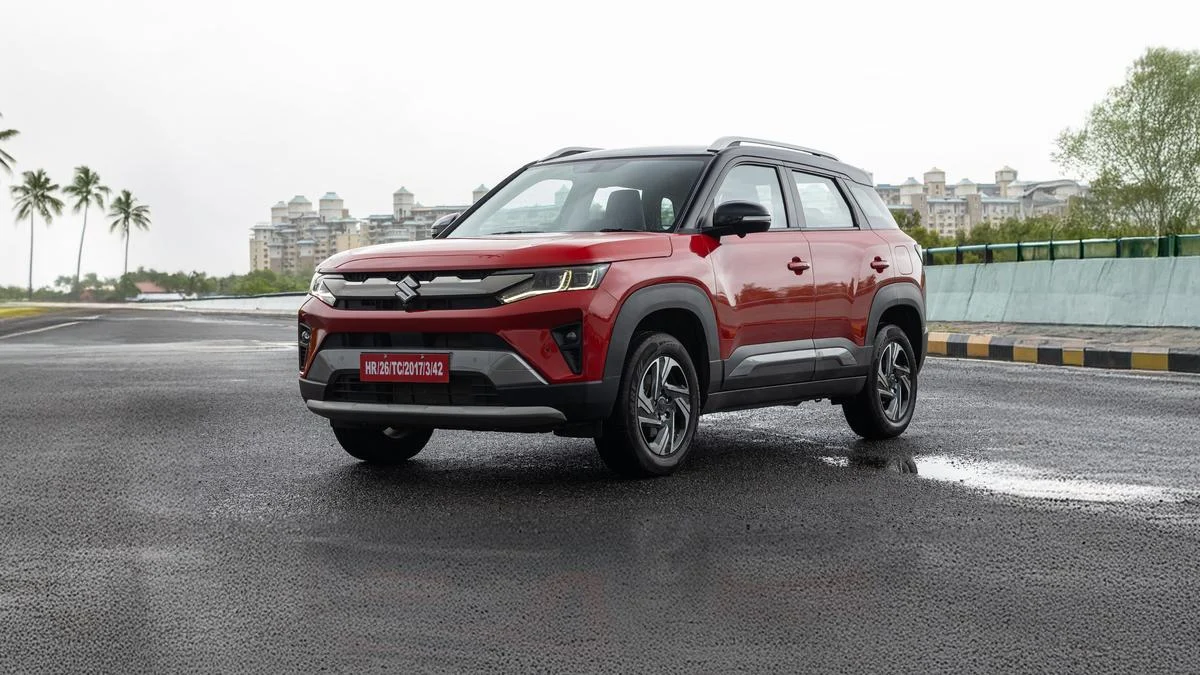
The Indian automotive landscape has witnessed a seismic shift over the last decade, transitioning from a market dominated by small hatchbacks to one driven by the aspiration and utility of compact SUVs. At the heart of this transformation has been the Maruti Suzuki Brezza. Originally launched to establish the brand as a formidable player in the sub-four-meter segment, the Brezza has long been the "safe bet" for the Indian middle class—a vehicle synonymous with reliability, fuel efficiency, and high resale value.
However, as the segment matured, the competition intensified. Rivals began offering turbocharged performance, sophisticated interiors, and cutting-edge safety tech. In a strategic move to reclaim its technological edge while maintaining its utilitarian roots, Maruti Suzuki has introduced the 1.0-litre Boosterjet turbo-petrol engine to the Brezza lineup. This enrichment of the portfolio represents more than just a mechanical update; it is a calculated response to a more discerning, performance-oriented consumer base.
Main Facts: The Boosterjet Heart and Technical Specifications
The headline of the new Brezza is undoubtedly the 1.0-litre Boosterjet turbo-petrol engine. While Maruti Suzuki has previously experimented with this engine in the Baleno RS, its integration into the Brezza is a far more significant volume play.
Performance Metrics
The new powertrain delivers a respectable 110.12 PS of power and a peak torque of 170 Nm. On paper, these figures might not seem to eclipse the competition, but the delivery of that torque is what defines the driving experience. Unlike the older, naturally aspirated 1.5-litre K15C engine, which favored a linear and relaxed power delivery, the Boosterjet provides a surge of energy through the mid-range. This "urgency" allows for more confident overtaking on highways and a more effortless climb on gradients.

Transmission and Drivability
Currently, the 1.0-litre Turbo is paired exclusively with a six-speed manual gearbox. This unit is calibrated to exploit the engine’s broader torque spread, offering a more engaging experience for those who enjoy the "man-to-machine" connection. Meanwhile, the 1.5-litre naturally aspirated petrol engine remains in the lineup, continuing to offer the choice of a six-speed torque converter automatic. This dual-engine strategy ensures that Maruti caters to two distinct audiences: the enthusiast seeking performance and the urban commuter prioritizing the convenience of an automatic in stop-and-go traffic.
Chronology: The Journey from Diesel Dominance to Turbocharged Ambition
To understand the significance of the 1.0 Turbo, one must look at the Brezza’s evolutionary timeline.
- 2016 – The Inception: The Vitara Brezza was launched as a diesel-only model. Its 1.3-litre DDiS engine became the darling of the masses, offering incredible fuel economy and rugged reliability.
- 2020 – The Petrol Pivot: With the implementation of BS6 emission norms, Maruti Suzuki made the bold decision to exit the diesel segment entirely. The Brezza transitioned to a 1.5-litre K-Series petrol engine. While smooth, it lacked the "punch" many SUV buyers desired.
- 2022 – The Modern Facelift: Maruti dropped the "Vitara" prefix and introduced a heavily updated Brezza with a more premium interior, a sunroof (a first for Maruti), and enhanced safety features.
- The Present – The Turbo Correction: Recognizing that rivals like the Tata Nexon and Hyundai Venue were winning over younger buyers with turbocharged engines, Maruti finally introduced the 1.0-litre Boosterjet. This move effectively bridges the gap between Maruti’s traditional "sensible" image and the modern demand for "spirited" driving.
Supporting Data: Safety, Features, and Market Context
The new Brezza isn’t just about the engine; it’s a comprehensive upgrade aimed at meeting global standards.
The Five-Star Safety Milestone
Perhaps the most significant data point for the new Brezza is its safety certification. The SUV recently earned a five-star rating from Bharat NCAP. This rating was based on the 1.5-litre automatic variant, but the certification extends to the 1.0 Turbo models. In a market where safety has become a primary "deal-breaker," this achievement puts the Brezza on equal footing with the Tata Nexon and Mahindra XUV 3XO, traditionally the safety leaders in this class.

Cabin and Technology Upgrades
The interior has seen a substantial leap in quality and equipment. Key features now include:
- Infotainment: A larger 10.1-inch SmartPlay Pro+ touchscreen system with wireless Android Auto and Apple CarPlay.
- Comfort: Ventilated front seats—a necessity in the Indian climate—and ambient lighting.
- Convenience: Wireless charging, a 360-degree camera, and a Head-Up Display (HUD) that provides vital information without requiring the driver to take their eyes off the road.
Dimensions and Ergonomics
The Brezza retains its hallmark "upright" SUV stance. With a length of 3995mm and a height that provides a commanding view of the road, it offers the "big car" feel within a footprint that is easy to park in congested cities. The suspension has been tuned to balance low-speed ride quality over broken Indian roads with high-speed stability on the growing network of national expressways.
Official Responses: Maruti Suzuki’s Strategic Stance
While official press releases often focus on technical specifications, the underlying strategy from Maruti Suzuki’s leadership is clear: Adaptation without Alienation.
Company spokespeople have frequently emphasized that the Brezza remains a "family-first" vehicle. The introduction of the Turbo engine is viewed not as a shift toward becoming a niche performance brand, but as a "course correction" to ensure the Arena portfolio remains relevant to the evolving Indian buyer.

Maruti’s strategy is built on three pillars:
- Democratizing Technology: Bringing features like the Boosterjet and 360-degree cameras to a price point that remains accessible to the middle class.
- Network Leverage: Utilizing its 4,000+ service touchpoints to ensure that even a sophisticated turbo engine can be serviced in the remotest parts of the country.
- Value Engineering: Managing to offer these upgrades without the "price shock" often associated with new technology.
Implications: A Crowded Segment and the Battle for Supremacy
The arrival of the Brezza 1.0 Turbo changes the dynamics of the compact SUV segment, which is currently the most contested space in the Indian automotive industry.
The Competitive Field
- Tata Nexon: The long-standing rival that forced Maruti to prioritize safety and turbocharging.
- Hyundai Venue & Kia Sonet: The "feature kings" that set the benchmark for cabin tech and multiple transmission options (iMT, DCT, Torque Converter).
- Mahindra XUV 3XO: The disruptor offering the most powerful engines and a segment-first panoramic sunroof.
- Skoda Kylaq: The newest entrant bringing European driving dynamics to the sub-four-meter class.
Market Implications
For Maruti, the 1.0 Turbo is a defensive and offensive tool. Defensively, it prevents "customer churn"—stopping loyal Maruti buyers from moving to rivals simply because they wanted a more powerful engine. Offensively, it attracts a younger demographic that previously viewed Maruti as "too conservative."
The broader implication for the industry is that the "basic" compact SUV is dead. To survive, manufacturers must now offer a "complete" package: five-star safety, turbocharged performance, and a cabin that feels like a tech hub.

Pricing and Value Proposition: The Final Verdict
The Maruti Suzuki Brezza 1.0 Turbo is competitively priced, starting from ₹7.40 lakh for the LXi Turbo and topping out at ₹11.31 lakh for the ZXi+ dual-tone Turbo (ex-showroom, Delhi). The wider Brezza range, including the 1.5L variants and S-CNG options, extends up to ₹13.55 lakh.
By keeping the Turbo pricing within this bracket, Maruti has ensured that the "cost of ownership" remains its biggest advantage. When you factor in the fuel efficiency of the Boosterjet, the lower insurance premiums compared to larger-displacement engines, and the unmatched resale value of the Maruti badge, the Brezza 1.0 Turbo emerges as one of the most sensible financial decisions in the segment.
Conclusion
The new Brezza 1.0 Turbo is not a reinvention; it is a refinement. It retains the honesty and practicality that made it a bestseller while adding the "aura" and performance required to compete in a sophisticated modern market. For the Indian consumer, it represents the best of both worlds: the thrill of a modern turbo-petrol engine backed by the peace of mind that only India’s largest automaker can provide. As the competition continues to raise the bar, Maruti Suzuki has shown that it is more than capable of keeping pace, one "Boosterjet" at a time.
This report was compiled with insights from Motorscribes, in association with The Hindu. For more automotive updates and in-depth reviews, follow @motorscribes on social media.
