

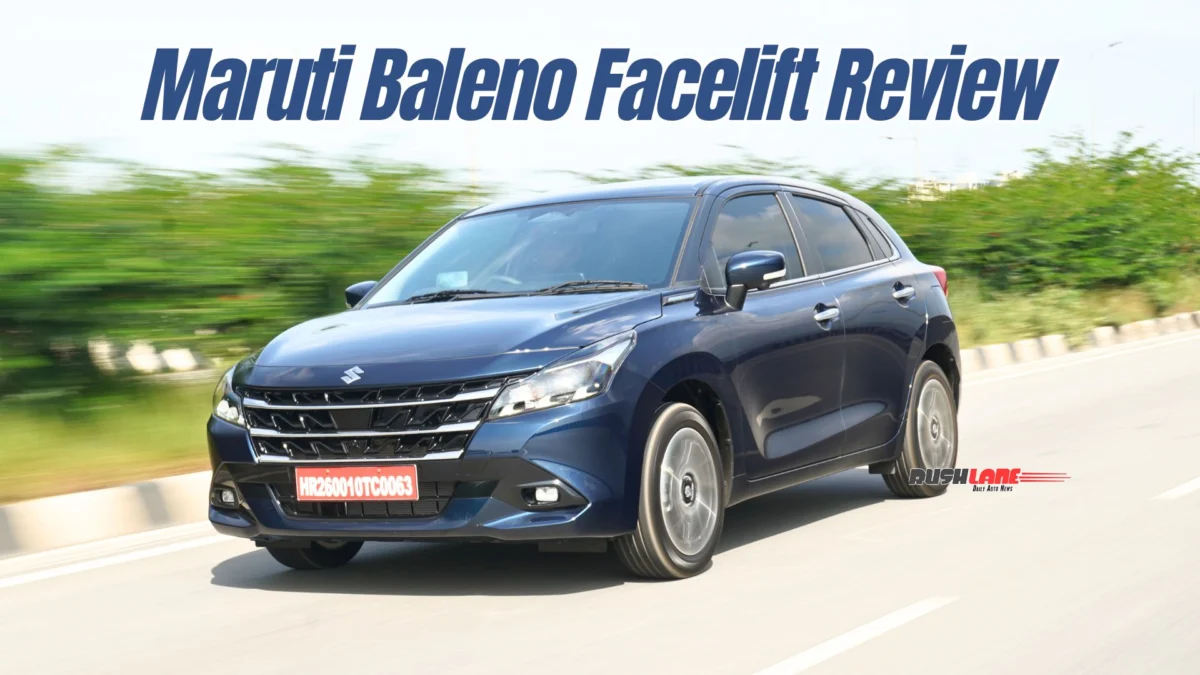
The Indian automotive landscape has long been dominated by Maruti Suzuki, a brand that has mastered the art of balancing consumer expectations with engineering pragmatism. As the "premium hatchback" segment faces increasing pressure from the burgeoning compact SUV market, Maruti Suzuki has unleashed its latest offensive: the 2026 Baleno Facelift. This update is not merely a cosmetic exercise; it represents a fundamental shift in the vehicle’s DNA, introducing a new powertrain philosophy and segment-first technologies.
Following the recent updates to the Brezza, the Baleno now steps into the spotlight with a controversial new face, a three-cylinder heart, and a suite of electronic aids that were once the exclusive domain of luxury sedans.
1. Main Facts: The Core Updates
The 2026 Maruti Suzuki Baleno Facelift arrives with several high-impact changes designed to retain its crown as India’s best-selling premium hatchback.

- Powertrain Transition: The most significant mechanical change is the replacement of the acclaimed 1.2L K12N four-cylinder engine with the new 1.2L Z12E three-cylinder unit.
- Segment-First Technology: The Baleno becomes the first hatchback in its class in India to offer Level 2 Advanced Driver Assistance Systems (ADAS) and ventilated front seats.
- Design Language: A radical redesign of the front fascia, featuring a new horizontal grille and repositioned Suzuki logo, aimed at giving the car a wider, more modern stance.
- Pricing Strategy: Maruti Suzuki has announced an aggressive festive starting price of Rs 6.10 lakh (ex-showroom). However, the full variant-wise price list remains under wraps, creating a sense of anticipation and strategic ambiguity in the market.
- Enhanced Comfort: The interior now features a Black and Blue theme, complemented by functional upgrades like a cooled wireless charging pad and Clarion-tuned audio.
2. Chronology: From Leak to Launch
The journey of the 2026 Baleno Facelift has been one of intrigue and intense speculation.
- Early 2026: The Leaks: The first images of the Baleno facelift surfaced via social media leaks. The design was so departure from the "Liquid Flow" philosophy of the previous generation that many enthusiasts initially dismissed them as AI-generated renders or third-party modifications.
- Mid-2026: The Engine Speculation: Rumors began to circulate regarding the "Z-Series" engine. Having seen successful implementation in the Swift and Dzire, the transition of the premium Baleno to a three-cylinder setup sparked debates regarding refinement versus efficiency.
- Festive Season 2026: The Unveiling: Maruti Suzuki officially unveiled the car, confirming the radical new front-end design and the inclusion of Level 2 ADAS, a move that caught many competitors off-guard.
- Late 2026: The Media Drive: The national media drive was conducted in Bengaluru, providing journalists and experts the first opportunity to test the Z12E engine in the Baleno’s chassis and evaluate the real-world efficacy of its new tech suite.
3. Supporting Data: Specifications and Performance Metrics
To understand the 2026 Baleno’s position, one must look at the hard numbers. The transition to the Z-Series engine reveals a clear priority: fuel economy over raw output.
Engine Comparison: Old vs. New
| Feature | 1.2L K12N (Previous) | 1.2L Z12E (New Facelift) |
|---|---|---|
| Cylinders | 4 | 3 |
| Max Power | 88.5 bhp | 81 bhp |
| Max Torque | 113 Nm | 111.7 Nm |
| MT Mileage | 22.35 km/l | 23.80 km/l |
| AMT Mileage | 22.94 km/l | 24.77 km/l |
The data indicates a drop of approximately 8.5% in power, but a significant 7-8% increase in fuel efficiency. For the average Indian commuter, this trade-off is often viewed favorably.

Feature Breakdown by Segment
While the Baleno maintains its dimensions, its "feature density" has increased.
- Safety: 6 Airbags (on higher trims), Level 2 ADAS (including Lane Keep Assist and Adaptive Cruise Control), and Electronic Stability Program (ESP).
- Convenience: 360-degree camera, 9-inch SmartPlay Pro+ infotainment, and a Heads-Up Display (HUD).
- Climate Control: Automatic climate control with rear AC vents and the new addition of three-speed ventilated front seats.
4. In-Depth Analysis: The Drive and Design
Exterior: A Polarizing New Identity
Maruti Suzuki has taken a calculated risk with the styling. The new horizontal grille pushes the Suzuki "S" logo toward the hood line, creating a flatter, more aggressive nose. During the media drive, feedback was mixed; out of a sample of ten observers, only a small minority immediately embraced the new look. However, the introduction of the "Enigmatic Teal" color adds a layer of sophistication that complements the Nexa Blue flagship shade. The side profile and rear remains largely untouched, preserving the Baleno’s familiar, spacious silhouette.
Interior: Comfort Meets Tech
Inside, the cabin remains a spacious sanctuary, but the new Black and Blue theme provides a fresher ambiance. The standout feature is undoubtedly the ventilated seats. In the sweltering heat of Bengaluru’s traffic, the seats proved highly effective, though the ventilation fans are noticeably loud at their highest setting.

The Clarion-tuned audio system, unfortunately, fails to live up to the "premium" branding. Despite various equalization attempts, the system lacks the depth and bass response found in rivals like the Hyundai i20’s Bose setup or the Tata Altroz’s Harman system. Conversely, the Qi-standard wireless charger with integrated cooling is a thoughtful addition, preventing smartphones from overheating during navigation-heavy drives.
Performance: The Z-Series Experience
The shift to a three-cylinder engine is the Baleno’s most controversial update. The Z12E engine lacks the "creamy" smoothness of the outgoing K-Series. There is an inherent thrum at idle and a sporty, albeit louder, exhaust note under acceleration.
In terms of dynamics, the Baleno remains a comfort-oriented cruiser. The suspension is soft, soaking up road imperfections with ease, but this comes at the cost of high-speed cornering prowess. The car exhibits noticeable understeer when pushed. The 5-speed manual gearbox, while functional, felt slightly notchy during the 1st-to-2nd gear transition, with throws that remain longer than enthusiasts might prefer.

5. Official Responses and Strategic Positioning
While Maruti Suzuki executives have been tight-lipped about the specific pricing of the Alpha and Zeta trims, their strategic intent is clear.
The Efficiency Mandate: Maruti Suzuki’s official positioning emphasizes "meaningful technology." The company argues that the Z-Series engine is a response to tightening emission norms and the Indian consumer’s unwavering demand for high mileage. By optimizing the torque delivery for city speeds, they claim the 3-cylinder unit offers better "usable" performance than the 4-cylinder it replaces.
The Nexa Philosophy: Through the Nexa retail channel, Maruti is positioning the Baleno not just as a car, but as a tech-forward lifestyle choice. The inclusion of Level 2 ADAS—a feature missing even from the more expensive Brezza facelift—is a clear signal that Maruti intends to democratize advanced safety tech.

6. Implications: What This Means for the Market
The launch of the 2026 Baleno Facelift has several long-term implications for the Indian automotive sector:
A New Benchmark for Hatchbacks
By introducing Level 2 ADAS and ventilated seats, Maruti Suzuki has effectively raised the ceiling for the premium hatchback segment. Competitors like Hyundai and Tata will now be under immense pressure to update
the i20 and Altroz with similar features to remain relevant in the feature-war.

The Acceptance of the Three-Cylinder Engine
Maruti’s move to standardize three-cylinder engines across its core portfolio (Swift, Dzire, Baleno) signals the end of the four-cylinder era for small displacement naturally aspirated engines in India. If the market leader can successfully sell a three-cylinder Baleno as a "premium" product, it paves the way for other manufacturers to follow suit without fear of consumer backlash regarding refinement.
Resale and Brand Loyalty
Despite the polarizing design and the cylinder count reduction, the Baleno is likely to remain a dominant force. The "Maruti Factor"—encompassing an unparalleled service network, low cost of ownership, and high resale value—acts as a safety net that few rivals can penetrate.
Conclusion: The Verdict
The 2026 Maruti Suzuki Baleno Facelift is a study in contradictions. It is a car that has seen a "downgrade" in engine cylinders but an "upgrade" in technology and efficiency. It has a design that challenges the eyes but an equipment list that pampers the occupants.

While the audio quality and engine refinement leave room for improvement, the addition of Level 2 ADAS and ventilated seats makes the Baleno a formidable package. It remains the most sensible choice for the pragmatic buyer, now wrapped in a more tech-heavy, albeit controversial, skin. Whether it can maintain its massive sales lead will depend on the final variant-wise pricing, but for now, the Baleno remains the one to beat in the premium hatchback arena.
