

New Delhi, September 8, 2026 – The past week has seen India’s political and economic landscape dominated by a confluence of significant events, sparking fervent debate across the nation and particularly echoing through the pages of Urdu dailies. From the official announcement of a robust 7.8% GDP growth figure for the first quarter of Fiscal Year 2027 to Prime Minister Narendra Modi’s return to Shri Ram College of Commerce (SRCC) after a 13-year hiatus, and the arrest of a controversial Hindutva influencer, the discourse has been rich with both optimism and sharp critique. These developments have not only highlighted the government’s narrative of progress but also underscored deep-seated concerns regarding economic inclusivity, political polarization, and the sanctity of the rule of law.
Main Facts Unfolding Across the Nation
The week commenced with the eagerly anticipated release of India’s Gross Domestic Product (GDP) figures for the first quarter (April-June) of FY2027, which clocked in at a robust 7.8% in real terms. This figure, presented by the government as a testament to the nation’s economic resilience amidst global challenges, immediately ignited a fierce debate. While the administration lauded the growth as an indicator of a thriving economy, former finance secretary Subhash Chandra Garg and Opposition parties swiftly questioned its credibility, prompting a government rebuttal.
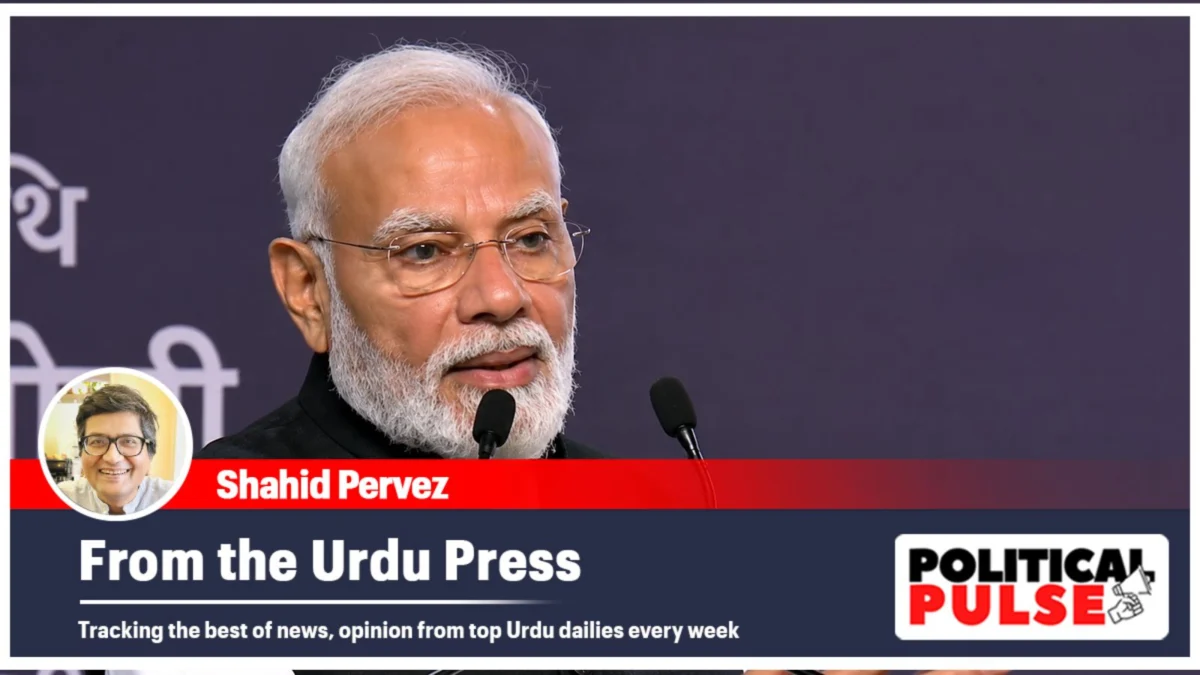
Simultaneously, the national spotlight turned to Delhi University’s prestigious Shri Ram College of Commerce (SRCC) where Prime Minister Narendra Modi made a significant visit on September 5, participating in the college’s centenary celebrations. This visit marked his return to the institution after nearly 13 years, his last address having been in 2013 as the then Gujarat Chief Minister and a prospective Prime Ministerial candidate. His speech, however, quickly became a point of contention as the Prime Minister utilized the platform to launch a sharp offensive against the Opposition and his critics, labeling them "naaraaz fufa" (angry uncle) and "Dimaagi Naxals" (intellectual Naxals).
Adding another layer to the week’s complex narrative was the arrest of Hindutva influencer Swatantra Bhardwaj. Bhardwaj, who had allegedly attacked the father of a minor student protester at Jantar Mantar in July and whose purported claims about the incident in a viral video had caused widespread outrage, became a focal point for discussions on justice, political influence, and the rule of law. His arrest, which followed sustained protests from various civil society groups and Opposition figures, raised serious questions about the impartiality of the justice system and the government’s stance on hate speech.
A Chronology of Critical Events
The week’s significant developments unfolded as follows, painting a vivid picture of India’s dynamic political and social landscape:
Early September 2026: GDP Data Release and Initial Reactions
The first quarter (April-June) GDP figures for FY2027 were officially released, indicating a 7.8% growth rate. This announcement was met with immediate commendation from government circles, which highlighted India’s performance against a backdrop of global economic uncertainties, including ongoing geopolitical conflicts and widespread economic disruptions. However, this positive assessment was swiftly challenged by former finance secretary Subhash Chandra Garg and Opposition parties, who voiced skepticism regarding the data’s credibility, thereby setting the stage for an economic debate that would continue throughout the week.
September 3, 2026: Siasat’s Initial Economic Critique
Even before the full scope of the week’s events became clear, the Hyderabad-based daily Siasat published an editorial on September 3, reflecting on the then-emerging GDP growth narrative. While acknowledging the government’s positive spin, the editorial immediately questioned the real-world impact of such growth, drawing attention to a perceived contradiction between the robust figures and the Prime Minister’s repeated appeals for citizens to curtail spending on items like gold, foreign travel, and destination weddings. The daily also raised concerns about the "Viksit Bharat" vision, questioning if it might become another unfulfilled promise given the prevailing economic realities for the common person.
September 5, 2026: Prime Minister Modi’s Return to SRCC
A pivotal event of the week was Prime Minister Narendra Modi’s visit to Shri Ram College of Commerce (SRCC) in Delhi. This marked his first address at the institution in 13 years, a significant return for the leader who had previously engaged with SRCC students in 2013 as the then Gujarat Chief Minister and a frontrunner for the Prime Ministerial post. During the centenary event, the Prime Minister’s speech notably pivoted from collegiate discourse to a sharp political attack. He reiterated his controversial labels for critics, referring to them as "Dimagi Naxals" and "naaraaz fufa," accusing them of a "negative mindset" and of questioning every government initiative. He even employed a homeopathic analogy, stating he had given a "Dimagi Naxal" dose to such individuals.
July 2026 (Background) and September 7, 2026: The Swatantra Bhardwaj Case and Salar’s Editorial
In July, the Jantar Mantar area in Delhi had been the site of a protest where Hindutva influencer Swatantra Bhardwaj was allegedly involved in an attack on the father of a minor student protester. A viral video, in which Bhardwaj purportedly claimed to have "cracked the skull" of the protester’s father and boasted about avoiding arrest due to political connections, sparked widespread outrage. The incident gained renewed national attention leading to his arrest. On September 7, the Bengaluru-based daily Salar published a scathing editorial on the matter, posing the critical question of whether individuals with political links operate "above the law." The daily vehemently criticized Bhardwaj’s anti-Muslim remarks and his claims of political immunity, arguing that such instances undermine the rule of law and public confidence in the justice system. The editorial also highlighted that Bhardwaj’s arrest only materialized after significant public pressure and protests from groups like the Cockroach Janta Party (CJP), Youth Congress, and Opposition MPs Chandra Shekhar Azad and Pappu Yadav, questioning the government’s proactive measures against hate speech.
September 7, 2026: Siasat’s Post-SRCC Critique
Following the Prime Minister’s SRCC address, Siasat, in another editorial on September 7, expressed disappointment. It argued that PM Modi had squandered a "golden opportunity" to connect with the nation’s youth. Instead of engaging with students on crucial issues like education and employment, or outlining a roadmap for the "broken education system," the Prime Minister chose to stick to his "political playback" of targeting the Opposition. The editorial starkly contrasted this approach with Leader of Opposition Rahul Gandhi’s ongoing "Chhatron ki Goonj" (Echo of Students) campaign, which involves direct, interactive discussions with students across various cities, aiming to understand and address their grievances.
Supporting Data and Contextual Details
The narratives unfolding throughout the week are underpinned by specific data points and contextual factors that shape their interpretation.
Economic Growth and its Discontents: The 7.8% GDP growth for Q1 FY2027 represents a significant increase, especially when presented against the backdrop of a global economy grappling with inflation, supply chain disruptions, and geopolitical tensions. The government’s argument is that this figure demonstrates India’s resilience and its potential to become a leading economic power. However, critics like former finance secretary Subhash Chandra Garg and the Opposition argue that high-level aggregate data may not fully reflect the granular economic realities. Questions often arise regarding the methodology of calculation, the base effect from previous years, and whether the growth is broad-based or concentrated in specific sectors, potentially leading to a K-shaped recovery where some segments thrive while others lag. Siasat’s critique particularly focused on the practical disconnect: if the economy is truly soaring, why are common people advised to restrict spending, and why do they continue to face severe challenges from inflation in essential commodities—ranging from cooking gas and fuel to food and medicines—and pervasive unemployment? The daily pointed out that while urban middle-class struggles, rural belts are in distress, questioning why the fruits of growth appear to be reaching only corporates and not the broader populace.
Political Rhetoric and Youth Engagement: Prime Minister Modi’s decision to use the SRCC platform to criticize his opponents with terms like "Dimagi Naxals" and "naaraaz fufa" reflects a consistent rhetorical strategy seen in Indian politics, often aimed at delegitimizing dissent and consolidating support among his base. The term "Dimaagi Naxals" suggests a critique of perceived intellectual opposition, accusing them of obstructionism rather than constructive criticism. The "naaraaz fufa" analogy, referring to an angry paternal uncle who is perennially displeased, attempts to paint the Opposition as petulant and irrational. Siasat’s editorial highlighted the missed opportunity for the Prime Minister to engage meaningfully with the youth, particularly on pressing issues like the "broken education system" and the scarcity of employment opportunities. This critique gains traction when contrasted with Rahul Gandhi’s "Chhatron ki Goonj" campaign, which actively seeks direct dialogue with students, inviting them to share their perspectives and grievances, thereby fostering a different model of political engagement with the younger generation.
Rule of Law and Political Patronage: The case of Hindutva influencer Swatantra Bhardwaj brings to the fore critical questions about the application of law in a democracy. The alleged attack at Jantar Mantar in July, followed by Bhardwaj’s purported claims in a viral video about his actions and his alleged immunity due to political connections, directly challenged the principle of equality before the law. Such claims, whether true or not, foster public perception that political affiliation can shield individuals from justice, eroding faith in democratic institutions. The editorial in Salar specifically pointed out that the delay in his arrest until after significant public protests by groups like the Cockroach Janta Party (CJP), Youth Congress, and Opposition MPs Chandra Shekhar Azad and Pappu Yadav, reinforces concerns about selective enforcement. The daily emphasized that the Constitution, crafted by Dr. B.R. Ambedkar, guarantees equal rights and protection for all citizens, and any belief that political ties can circumvent punitive action is "detrimental to democracy."
Official Responses and Government Stances
The week saw the government and its spokespersons actively defend their positions across the spectrum of these debates.
On Economic Growth: The government vehemently rejected the Opposition’s questioning of the 7.8% GDP growth figures. Officials emphasized that the data was compiled using established methodologies and reflected a genuine economic recovery and strong performance, particularly when benchmarked against global peers. Prime Minister Modi himself, in a video message, hailed this growth, attributing it to the nation’s resilience in the face of international challenges. He underscored his vision for "Viksit Bharat" (Developed India), reiterating appeals for self-reliance and discouraging non-essential foreign expenditures like gold purchases, overseas travel, and destination weddings. This stance aimed to portray a government confidently steering the economy towards prosperity despite external headwinds, while also urging citizens to contribute to national economic strength through responsible consumption.
On Political Rhetoric and Dissent: At the SRCC event, Prime Minister Modi’s use of terms like "Dimagi Naxals" and "naaraaz fufa" was presented by his supporters as a firm response to what they perceive as persistent and often baseless criticism from the Opposition. The government narrative often frames such dissent as negativity that hinders national progress and undermines public morale. The Prime Minister’s analogies were seemingly designed to dismiss critics as being perpetually discontented or ideologically opposed to the nation’s growth trajectory, rather than offering constructive feedback. This approach implicitly suggests that the government views the Opposition’s questioning of policies and data as an impediment to national development, rather than a legitimate function of democratic scrutiny.
On the Swatantra Bhardwaj Case and Rule of Law: While the original article does not provide a direct official statement from the government regarding Swatantra Bhardwaj’s arrest, the fact of his custody following widespread protests implies that law enforcement agencies ultimately acted in response to public pressure and the legal merits of the case. The Salar editorial, however, implicitly criticized the government’s perceived lack of proactive action, asking, "Will action against hatemongers be taken only after such street protests? Should not the government crack down on such divisive elements beforehand on its own?" This highlights a gap between public expectations for proactive enforcement against hate speech and the observed timeline of action, suggesting that official responses, in this instance, were reactive rather than preemptive. The arrest itself, however, serves as an official acknowledgment that the allegations against Bhardwaj warranted legal proceedings, reinforcing the nominal commitment to the rule of law.
Implications for India’s Future
The debates and events of the past week carry significant implications for India’s economic trajectory, political discourse, and social cohesion.
Economic Implications: The contention surrounding the 7.8% GDP growth rate highlights a fundamental challenge: bridging the gap between macro-economic indicators and the lived realities of ordinary citizens. If high growth figures do not translate into tangible improvements in employment, control over inflation, and equitable distribution of wealth, public confidence in official data and government promises like "Viksit Bharat" could wane. The Siasat editorial’s concern about the "unfulfilled promise" of job creation and direct financial benefits resonates with a significant segment of the population struggling with rising costs and dwindling opportunities. Sustained economic progress, particularly in a diverse nation like India, necessitates inclusive growth that genuinely uplifts all sections of society, rather than just benefiting a select few or specific sectors.
Political Implications: The Prime Minister’s robust rhetoric at SRCC, dismissing critics as "Dimagi Naxals" and "naaraaz fufa," signals an intensifying polarization in Indian politics. While such language might energize a loyal base, it risks alienating those seeking constructive dialogue and deepening the chasm between the government and the Opposition. The contrast drawn by Siasat between PM Modi’s approach and Rahul Gandhi’s "Chhatron ki Goonj" campaign underscores differing philosophies of leadership and engagement, especially with the crucial youth demographic. How political leaders choose to engage with dissent—whether through direct confrontation or inclusive dialogue—will significantly shape the health of India’s democratic discourse and the quality of its policy-making in the years to come.
Social and Legal Implications: The Swatantra Bhardwaj case serves as a stark reminder of the fragile balance between freedom of expression and the imperative to maintain social harmony and uphold the rule of law. The perception that political connections can offer impunity to individuals propagating hate speech or engaging in violence poses a grave threat to the constitutional principle of equality. As Salar aptly points out, "Law must be equal for everyone, which cannot be subject to anyone’s identity or political clout." Any erosion of public confidence in the justice delivery system can have disastrous consequences, leading to social unrest and a breakdown of societal norms. The daily’s emphasis on India’s "unity, diversity and Ganga-Jamuni culture" highlights the critical importance of proactive government action against divisive elements to protect the nation’s pluralistic fabric from being damaged for political gains.
In conclusion, the events of the past week have illuminated the multifaceted challenges facing India. From economic aspirations and the quest for inclusive growth to the nature of political discourse and the unwavering commitment to the rule of law, the nation is navigating a complex landscape. The commentaries from Urdu dailies provide a crucial lens into these ongoing debates, reflecting a vibrant, albeit often contentious, democratic dialogue that continues to shape India’s future.
