

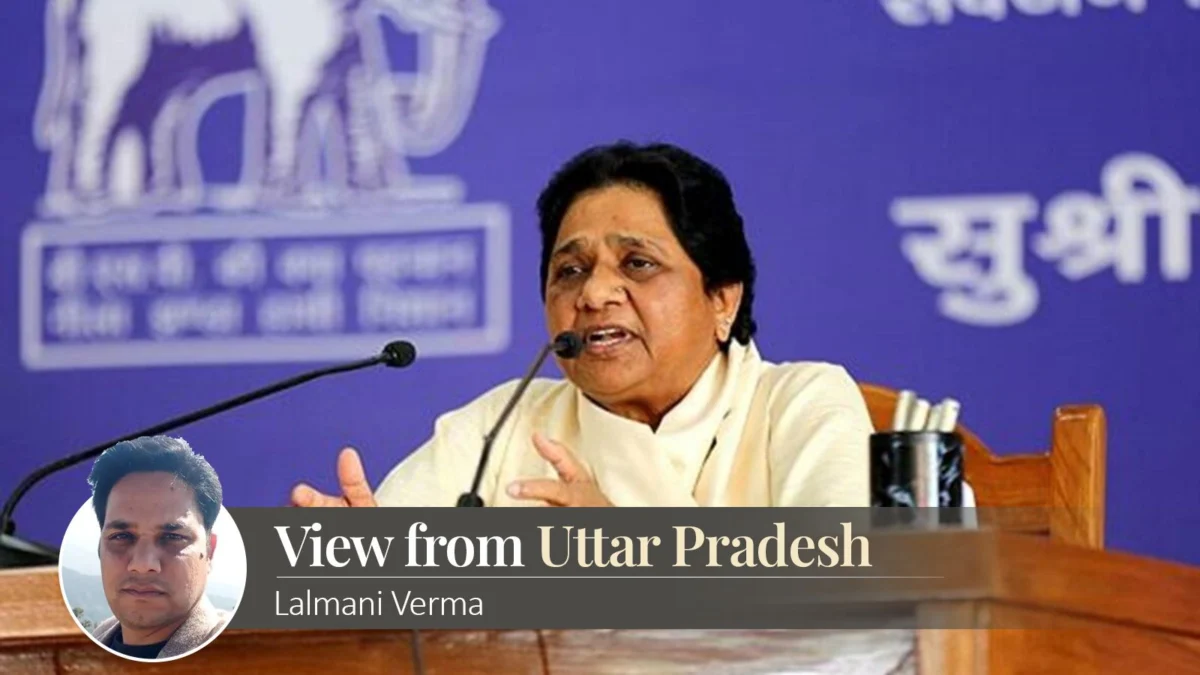
Lucknow, [Date] – The Bahujan Samaj Party (BSP), once a formidable political force and the sole national party with Dalits as its bedrock electoral base, is grappling with profound internal turmoil. A pervasive sense of anxiety has taken root among its dedicated cadre, triggered by a relentless and often inexplicable cycle of leadership changes orchestrated by party supremo Mayawati. This organisational instability comes at a critical juncture, as the BSP strives to recover from successive and crushing defeats in both Assembly and Lok Sabha elections, raising serious questions about its future viability and its ability to regain its lost political ground, especially with the crucial Uttar Pradesh Assembly elections looming in early 2027.
Over the past two years, the BSP has become a theatre of bewildering political drama, characterized by Mayawati’s repeated decisions to remove, reinduct, and, in some cases, re-expel senior leaders. This week, the spotlight fell once again on her nephew, Akash Anand, who was widely regarded as the party’s "No. 2" and served as its national convenor. Mayawati abruptly sidelined him, publicly stating that he needed to "become more mature." In a move that further underscored the unpredictable nature of the party’s internal dynamics, Akash’s younger brother, Ishaan, was subsequently introduced into a high-level meeting of office-bearers in Lucknow on Thursday. This latest manoeuvre has reignited internal discussions about the party’s opaque leadership structure and the conspicuous absence of a stable second rung, critical for any political outfit aiming for long-term electoral success.
While the BSP’s electoral performance has been in a consistent downward spiral, its recent public profile has been dominated less by policy pronouncements or political campaigns and more by news of disciplinary actions against its senior functionaries. This pattern of internal volatility has left many within and outside the party questioning the strategic direction and leadership stability of a party that once held the reins of power in Uttar Pradesh.
A Pattern of Volatility: The Leadership Carousel
The recent history of the Bahujan Samaj Party is replete with instances of swift, decisive, and often bewildering changes in its senior leadership. This consistent pattern of expulsions and reinductions, largely attributed to Mayawati’s singular authority, has created an environment of uncertainty and apprehension among party workers.
The Akash Anand Saga: A Repeated Ascent and Descent
Akash Anand’s journey within the BSP epitomizes the party’s current state of flux. Projected as Mayawati’s political heir and the future face of the party ahead of the 2024 Lok Sabha polls, Akash spearheaded the BSP’s campaign in Uttar Pradesh, signaling a generational shift and an attempt to appeal to younger voters. However, his rise was abruptly halted in May 2024. Following an incident where he was booked for allegedly promoting enmity during a public rally in Sitapur, Mayawati swiftly removed him as the BSP’s national coordinator and unequivocally withdrew her earlier declaration naming him as her political heir. Her public reasoning cited his need to "attain maturity."
Remarkably, this political exile was short-lived. Just 47 days later, in June 2024, Mayawati granted him a second chance, reinstating him as national coordinator and once again naming him her successor. This swift reversal, while demonstrating Mayawati’s ultimate control, also highlighted the arbitrary nature of such decisions. The pendulum swung again in March 2025, when Akash was removed as national coordinator for the second time and, more drastically, expelled from the party altogether. Yet, two months later, in May 2025, the decision was reversed again. The party not only revoked his expulsion but appointed him chief national coordinator, further elevating him to the position of national convenor in August 2025. This rapid series of promotions and demotions, all within a span of just over a year, created a sense of bewilderment.
The latest episode, occurring earlier this week, saw Akash Anand sidelined once more, with Mayawati reiterating her concerns about his "maturity." This repeated public questioning of his readiness for leadership, juxtaposed with his consistent re-elevation, has become a defining characteristic of BSP’s internal dynamics.
Other Prominent Figures Caught in the Vortex
The unpredictable nature of Mayawati’s decisions extends far beyond Akash Anand, affecting a host of other prominent figures within the party, further contributing to the cadre’s growing disquiet.
Akash Anand’s father-in-law, Ashok Siddharth, a former Rajya Sabha MP, has also experienced a similar roller coaster. Siddharth was expelled from the party in February 2025 on charges of "anti-party activities." However, following Akash’s elevation in August 2025, Mayawati revoked Siddharth’s expulsion and reinducted him into the party after he publicly apologized for his "mistakes." He was subsequently appointed a central coordinator. This reconciliation, however, proved temporary. Just last month, Siddharth was expelled yet again, this time over reports of alleged indiscipline, illustrating the precariousness of positions within the BSP.
On the same day as Siddharth’s most recent expulsion, national coordinator Randhir Singh Beniwal also faced the axe for alleged indiscipline. However, according to party sources, Mayawati has since revoked Beniwal’s expulsion, adding another layer to the narrative of unpredictable reversals.
A striking example of this pattern involves former BSP national vice-president Jai Prakash Singh. He was reinducted into the party in October 2025, seven years after his initial expulsion in 2018. His original expulsion was reportedly due to his controversial remarks suggesting that Congress leader Rahul Gandhi could never aspire to become Prime Minister because of his mother’s foreign origin. After his reinduction, Singh was appointed a central coordinator and entrusted with significant responsibilities, including charge of Odisha, West Bengal, and Kerala. But in April this year, his political fortunes reversed once more. He was expelled again, alongside another central coordinator, Dharamveer Ashok, reportedly for visiting Punjab without obtaining prior permission from the party leadership. While Singh remains expelled, the BSP later revoked Ashok’s expulsion and appointed him in-charge of Jharkhand, according to party sources, highlighting the selective application of disciplinary measures.
Most recently, on August 13, Mayawati expelled former health minister Anant Kumar Mishra, also known as Antu Mishra, from the party, citing charges of anti-party activities. Mishra had served in the BSP government in Uttar Pradesh from 2007 to 2012, making his expulsion yet another instance of a seasoned leader falling out of favour.
This consistent, almost cyclical, pattern of expulsions, reinductions, and public rebukes has fostered an environment of uncertainty and fear within the party, where no position, regardless of seniority or proximity to the supremo, appears secure.
Supporting Data and Context
The internal turmoil within the BSP is not an isolated phenomenon; it is deeply intertwined with the party’s broader electoral decline and its struggle to adapt to a rapidly evolving political landscape.
Electoral Decline and Organizational Challenges
The Bahujan Samaj Party, which once commanded a significant vote share and formed governments in Uttar Pradesh, has witnessed a precipitous decline in its electoral performance. The 2024 Lok Sabha elections were particularly devastating, with the BSP failing to win a single seat from Uttar Pradesh, its traditional stronghold. This outcome marked a historic low and served as a stark indicator of the erosion of its support base.
Historically, the BSP’s strength lay in its highly disciplined cadre and a clearly defined leadership hierarchy, meticulously built around Mayawati’s authoritative figure. This robust organizational structure, capable of mobilizing voters at the grassroots level, was the party’s backbone. However, the current instability at the top, characterized by the arbitrary "hire and fire" policy, directly undermines these traditional strengths. Party functionaries, from district presidents to central coordinators, are increasingly questioning the rationale behind these frequent changes, leading to a palpable decline in morale and focus. The anxiety among the cadre is particularly significant because the BSP’s electoral machinery relies heavily on their unwavering loyalty and disciplined execution of directives. Without a stable and clear chain of command, the party’s ability to effectively mobilize its base and launch a cohesive campaign for the upcoming 2027 Assembly elections is severely compromised.
Beyond its core Dalit vote bank, the BSP’s past successes were also predicated on its ability to forge alliances with other social groups, particularly Brahmins and certain segments of Other Backward Classes (OBCs). The current internal disarray makes it difficult for the party to project an image of stability and inclusive leadership necessary to attract and retain these diverse electoral coalitions.
The Youth Leadership Conundrum
One of the most significant challenges facing the BSP is its struggle to cultivate and project a stable youth face, a crucial element for any party aiming to connect with India’s vast and increasingly influential young electorate. The repeated sidelining of Akash Anand, who was positioned as the party’s youthful representative, has left a void in this critical area.
In contrast, rival parties in Uttar Pradesh, such as the Bharatiya Janata Party (BJP) under Chief Minister Yogi Adityanath and the Samajwadi Party (SP) led by Akhilesh Yadav, are actively engaging with younger voters and cultivating prominent youth leaders. Both Adityanath and Yadav are seen crisscrossing the state, interacting with various demographics, and attempting to woo the Gen-Z electorate. The BSP, by contrast, appears to be "struggling to set its house in order," as one party leader lamented, lacking a consistent and recognizable youth icon. The sudden introduction of Ishaan, Akash’s younger brother, into a high-level meeting, without a clear political trajectory or public profile, further highlights the party’s ad-hoc approach to leadership succession and youth engagement. This absence of a stable, charismatic youth leader capable of connecting with the aspirations of a new generation of voters is a significant handicap for the BSP as it prepares for future electoral battles.
Official Responses and Party Dynamics
The growing anxiety among the BSP cadre is not going unnoticed, prompting various responses and interpretations from within the party’s ranks.
Explanations from Within: Faith in Behanji
When confronted with the cadre’s apprehensions, senior party leaders often resort to emphasizing unwavering faith in Mayawati’s leadership. A senior party functionary, responding to questions about the frequent changes, stated, "I urge them to maintain faith in the decisions and leadership of Behanji (Mayawati). She herself is monitoring the poll preparations and organisational activities. Action against Akash shows that the party and its movement are paramount for Behanji. She is finalising the candidates and their announcements have started in the constituencies. The cadre is ready for elections. Meetings in villages with Dalits, Muslims, OBCs and Brahmins are continuing on the ground."
This official narrative aims to reassure the cadre that Mayawati’s decisions, however seemingly abrupt, are ultimately in the best interest of the party and its foundational movement. It attempts to frame the disciplinary actions, particularly against Akash Anand, as a testament to Mayawati’s commitment to principle over personal ties, suggesting that no individual is above the party’s ideology and objectives. Furthermore, the emphasis on ongoing grassroots activities and candidate selection seeks to project an image of active preparation for the upcoming elections, despite the internal turbulence.
Cadre Anxiety and Dissent: The Message of Absolute Authority
Despite official reassurances, the repeated actions against senior leaders, particularly the oscillating fate of Akash Anand, have begun to raise significant questions among party workers, including coordinators and district presidents. "The BSP is a cadre-based party. But now the same cadre is questioning the top leadership’s decisions over frequent changes at the top – especially expulsions and reinductions. They are feeling that the BSP’s house is still not in order when the Assembly elections are only a few months away," remarked a senior party leader, highlighting the erosion of blind faith that once characterized the BSP’s disciplined ranks.
The overarching sentiment among many within the party is that these actions serve a singular purpose: to reinforce Mayawati’s absolute and unchallenged authority. "The ultimate message we see behind these actions is that Behanji is the only authority in the party and all decisions will be taken single-handedly by her," another leader candidly observed. This perception of highly centralized decision-making, where dissent or even independent initiative is swiftly curtailed, contributes to a climate of fear and stifles the emergence of strong, independent leadership within the party.
The ‘Maturity’ Clause and Unsanctioned Remarks
The specific reasons cited for Akash Anand’s most recent sidelining offer a glimpse into Mayawati’s meticulous control over the party’s narrative and messaging. Information circulating within the party suggests that action was taken against Akash because, during his recent speeches in Hathras and Jewar last month, he made statements that deviated from Mayawati’s official message for the gatherings.
"He was supposed to only communicate the message of Behanji but he added some statements on his own," a leader disclosed, referring to Akash’s remarks in which he reportedly referred to Congress leader Rahul Gandhi and Samajwadi Party president Akhilesh Yadav as "uncle." While seemingly innocuous, such unsanctioned remarks, especially from a designated "political heir," are viewed within the BSP as a breach of discipline and an affront to Mayawati’s singular command over the party’s public discourse. This incident underscores Mayawati’s expectation of strict adherence to pre-approved talking points and her intolerance for any independent political posturing, even from her closest relatives.
Implications and Future Outlook
The current state of internal disarray within the Bahujan Samaj Party carries significant implications for its political future, particularly with the 2027 Uttar Pradesh Assembly elections on the horizon.
Impact on 2027 Uttar Pradesh Assembly Elections
The timing of this leadership instability could not be worse for the BSP. With the Uttar Pradesh Assembly elections just months away, the party is in dire need of a cohesive strategy, a stable leadership team, and a motivated cadre. The repeated disruptions, particularly the sidelining of Akash Anand, have directly impacted the party’s pre-election mobilization plans. Akash had reportedly been planning to address more workers’ meetings and announce Assembly candidates across Uttar Pradesh in October-November, a crucial period for energizing the party cadre ahead of the polls. With his removal, these responsibilities are now expected to fall upon local party coordinators and district presidents, who may lack the same level of authority or charisma to galvanize support.
The absence of a clear and consistent leadership structure makes the crucial task of candidate selection, campaign strategy formulation, and grassroots mobilization immensely challenging. The party’s ability to effectively counter the well-oiled machinery of the BJP and the rejuvenated campaign of the SP will be severely hampered by its own internal divisions and uncertainties.
Erosion of Trust and Credibility
The frequent, often bewildering, leadership changes and disciplinary actions are likely to have a corrosive effect on the BSP’s public image. Such erratic decision-making can erode public trust and diminish the party’s credibility as a serious political contender. It may deter potential new leaders from joining the party, fearing arbitrary expulsions, and could also lead to a further exodus of existing talent. The perception of a party governed by arbitrary fiat, rather than institutional processes, makes it difficult to project an image of stability and foresight, essential for attracting a broader electorate.
Mayawati’s Unchallenged Authority: A Double-Edged Sword
These actions unequivocally reinforce Mayawati’s absolute control over the Bahujan Samaj Party. In a political landscape increasingly demanding internal democracy and collective leadership, the BSP stands out for its highly centralized, personality-driven structure. While Mayawati’s strong leadership was historically a source of strength, enabling decisive action and maintaining party discipline, in the long run, this singular authority, unchecked by a stable second rung or robust internal mechanisms, risks rendering the party vulnerable. The absence of a clear line of succession or a distributed leadership model could prove detrimental, especially in the context of an aging leadership and the imperative to groom new leaders.
The Dalit Question and Political Vacuum
Perhaps the most profound implication of the BSP’s ongoing crisis concerns its core constituency: the Dalits. For decades, the BSP has been the primary political voice and vehicle for the aspirations of the Dalit community, particularly in Uttar Pradesh. A sustained weakening of the BSP, coupled with internal instability, risks creating a significant political vacuum for this crucial demographic. If the party continues its electoral decline and internal disarray, questions will inevitably arise about who will effectively represent and champion the interests of Dalits in the evolving political landscape. Other parties may attempt to co-opt this vote bank, but the unique identity and political empowerment narrative offered by the BSP would be difficult to replicate.
As the Bahujan Samaj Party navigates these turbulent waters, its ability to address its internal strife, project a stable leadership, and adapt to the changing political dynamics will determine its relevance and survival in the fiercely contested arena of Indian politics. The coming months, leading up to the 2027 Uttar Pradesh Assembly elections, will be crucial in revealing whether Mayawati can steady the ship or if the BSP is destined for further decline.
