

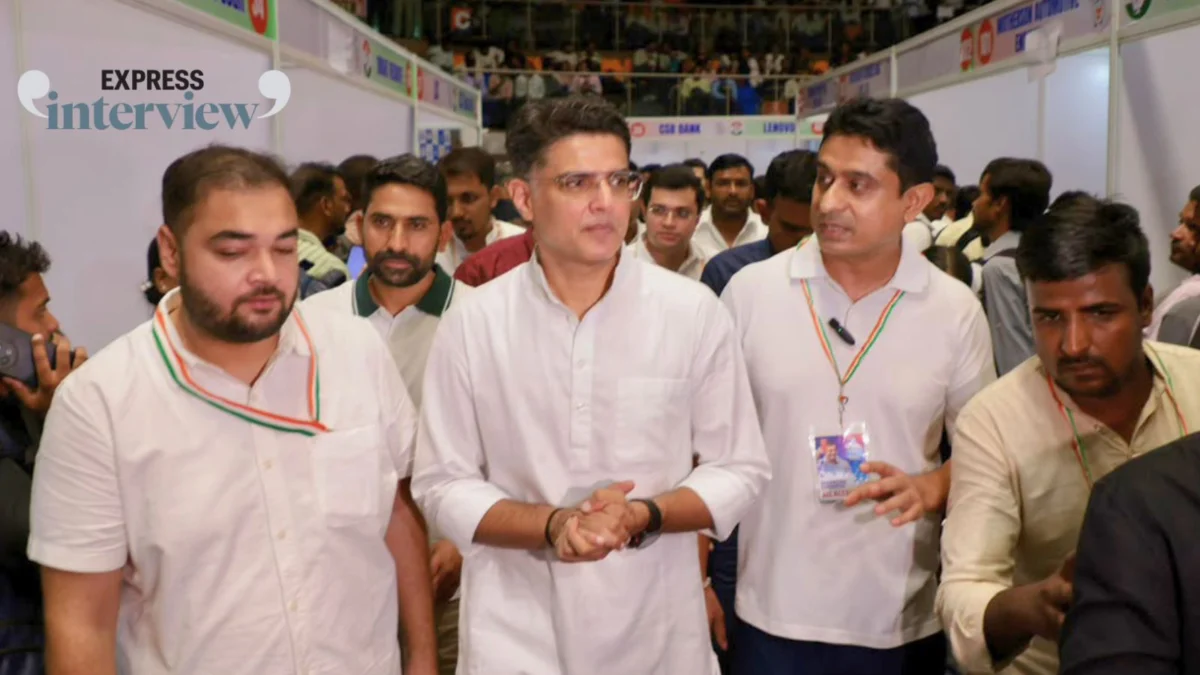
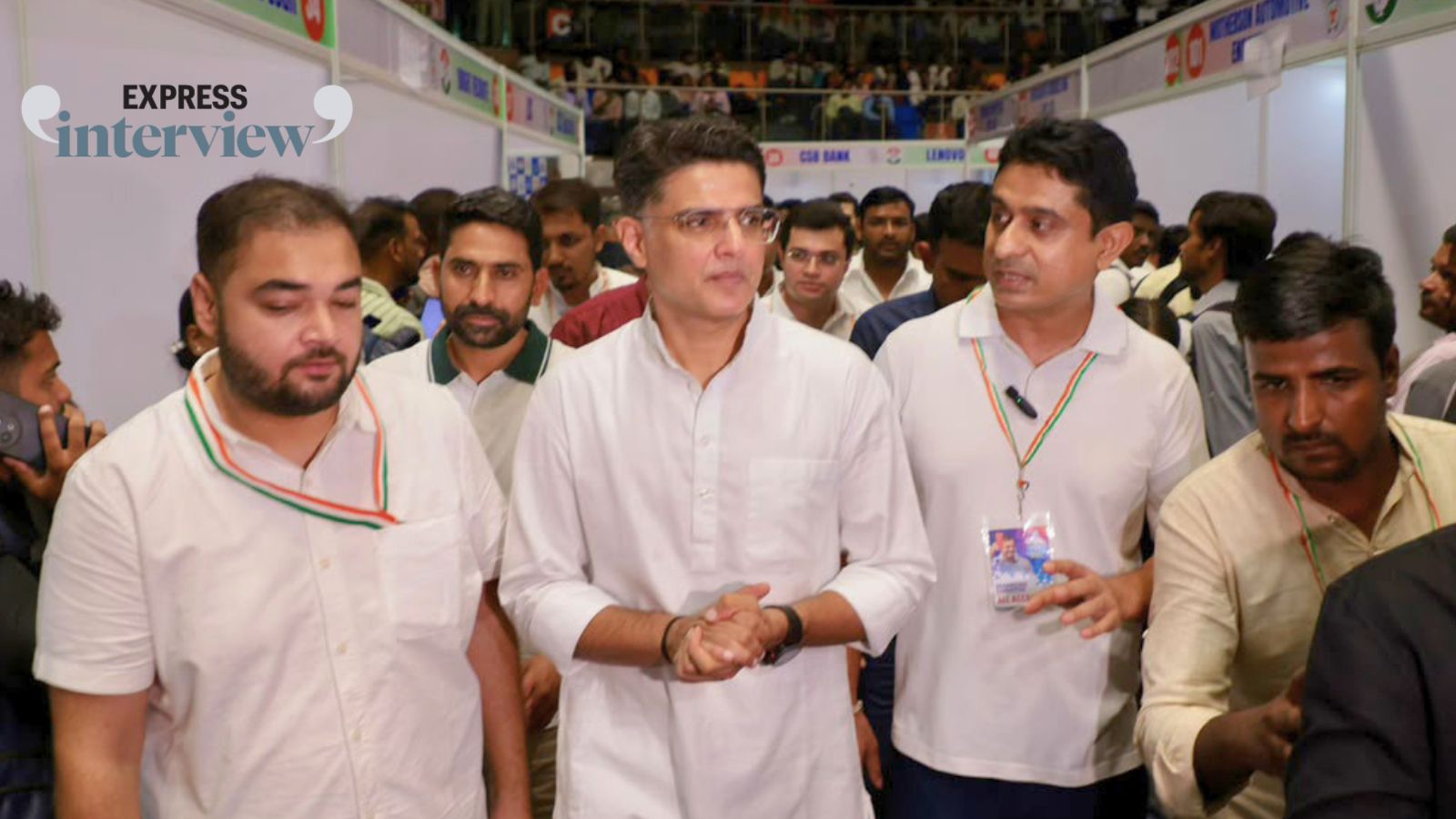
New Delhi/Chandigarh: In a significant shake-up signalling the All India Congress Committee’s (AICC) intensified focus on the upcoming Assembly elections, former Rajasthan Deputy Chief Minister Sachin Pilot has been appointed as the new in-charge for the faction-ridden Punjab Congress. The 49-year-old AICC General Secretary steps into a challenging role, replacing Bhupesh Baghel, with the mandate to unite the state unit and forge a winning strategy as polls loom just months away.
Pilot’s appointment comes at a critical juncture for the Congress in Punjab, a state grappling with internal dissensions and facing a formidable challenge from the incumbent Aam Aadmi Party (AAP). His immediate task is to quell infighting, invigorate the party cadre, and articulate a compelling vision for Punjabis, a responsibility he acknowledges as demanding but surmountable.
A New Helmsman for a Divided Ship: Sachin Pilot Takes Charge
The decision by the AICC leadership to entrust Sachin Pilot with the reins of the Punjab unit underscores a strategic recalibration in its approach to key electoral battles. Pilot, known for his youthful appeal, organizational acumen, and experience in handling complex political landscapes, arrives in Punjab with a clear directive: to bring cohesion and prepare the party for a decisive electoral contest.
In an exclusive interview with The Indian Express, Pilot articulated his immediate priorities and vision for the state. He emphasized the profound significance of Punjab, not merely for the Congress party but for the nation’s historical, cultural, and social fabric. "Punjab is a very important state, not just for my party, but also for the country. Punjab has contributed historically, culturally, socially. It’s not hidden from anyone," he stated, highlighting the weighty responsibility he now bears.
The Mandate: Revitalizing a Faction-Ridden Unit
The Congress in Punjab has been plagued by deep-seated factionalism, a persistent issue that has often overshadowed its governance and electoral prospects. This internal strife has been a recurring concern for the AICC, necessitating interventions such as the formation of the Ajay Maken committee to address grievances and mediate disputes. Pilot’s primary challenge will be to rise above these divisions and foster a sense of collective purpose among disparate groups within the party.
He expressed confidence in his ability to unite the ranks, stating, "I have been in touch with almost all the leaders in Punjab. I have, in fact, met quite a few of them in Delhi. And I have been assured by everyone I met that they will work unitedly, collectively and with the single focus of bringing the Congress back to power." This assertion reflects an initial optimism, though the true test of unity will unfold as the election campaign intensifies.
Pilot’s Vision: A "Positive Narrative" Against AAP
Pilot wasted no time in launching a sharp critique of the ruling Aam Aadmi Party (AAP) government, accusing it of prioritizing self-interest over public service. "In the last four and a half years, what the Punjab government has done is that it has basically protected, patronised and promoted Aam Aadmi Party (AAP) leadership in Delhi and Punjab, as opposed to working to serve the people of Punjab. That’s a very known fact in Punjab and in the country," he asserted.
He further elaborated on the perceived failures of the AAP administration, citing widespread allegations of corruption, mismanagement, and "fiscal bankruptcy." Pilot contended that the government has been "spending resources in image building rather than governance and delivery on the ground." Against this backdrop, he envisions the Congress presenting a "very positive agenda" focused on core issues affecting Punjabis, particularly the agrarian crisis, industrial revival, and job creation.
His strategic approach involves building a robust "positive narrative" for the upcoming elections. To this end, Pilot revealed that he has already engaged with top Congress leadership, including Leader of Opposition in Lok Sabha Rahul Gandhi and Priyanka Gandhi Vadra. "We are now working towards building up a very positive narrative for the upcoming Assembly elections," he confirmed, signalling a coordinated effort from the party high command.
Chronology of Transition and Political Dynamics
The change in Punjab leadership is not an isolated event but part of a broader organizational restructuring within the AICC. Bhupesh Baghel, who served as the Punjab in-charge for a year and a half, is now tasked with Assam, while other states have also seen portfolio reassignments.
Bhupesh Baghel’s Tenure and the Rationale for Change
Bhupesh Baghel’s term, though diligent, coincided with a period of heightened internal turbulence within the Punjab Congress. Despite his extensive travels across the state and efforts to streamline party committees, the persistent factional feuds proved challenging. Pilot, however, downplayed any notion of a punitive removal, describing the change as "routine." "Mr Baghel was in charge for a year and a half. And he did a splendid job. I think he worked really hard, travelling the length and breadth of Punjab and holding meetings at all levels… It is a routine change," Pilot stated, emphasizing continuity in the party’s core agenda and policies.
However, political observers note that such "routine" changes often occur when a fresh approach is deemed necessary, especially in states heading to polls. The AICC’s decision likely reflects a desire for a new face to address the deep-seated issues and galvanize the party ahead of a high-stakes election.
Pre-existing Factionalism and Pilot’s Initial Engagements
The Punjab Congress’s internal divisions have been a public spectacle for months, with the AICC even deploying the Ajay Maken committee to gather feedback from state leaders. Reports of posters against the outgoing in-charge, Baghel, alleging favouritism, further highlighted the acrimony. Pilot acknowledged the commonality of "difference in how to approach certain situations" in a large party but reiterated the commitment of leaders to work together.
Following his appointment, Pilot’s immediate actions included meetings with Rahul Gandhi and Priyanka Gandhi Vadra, where strategic discussions for the Punjab campaign took place. He has also initiated contact with various Punjab leaders in Delhi, aiming to build rapport and assess the ground reality. This rapid engagement underscores the urgency of his mission to unify the party and project a cohesive front.
Supporting Data and Contextual Analysis
Understanding the electoral landscape in Punjab requires a look at recent political history and the performance of various parties. While the Congress won a sweeping victory in the 2017 Assembly elections under Capt. Amarinder Singh, the subsequent years have seen its fortunes fluctuate.
Electoral Swings: From Assembly Victory to Local Body Setbacks
In 2017, the Congress secured a decisive mandate, largely riding on anti-incumbency against the Akali Dal-BJP alliance and the popularity of its then-CM face. However, the 2022 Assembly polls witnessed a stunning defeat, with the Aam Aadmi Party sweeping to power with an unprecedented majority. This shift highlighted the electorate’s desire for change and the AAP’s effective projection as a viable alternative.
More recently, the AAP’s strong performance in local body elections further solidified its presence at the grassroots. Pilot acknowledged these challenges but offered a counter-narrative, pointing to the Lok Sabha elections. "In civic elections, the local administration always has a role. Despite having so many options — Akali Dal, BJP, AAP — in the Lok Sabha elections in Punjab, the majority of the people voted for the Congress. We won 7 of the 13 seats in Punjab," he argued, suggesting that national elections reveal a different sentiment among the populace. He believes this sentiment, favouring Congress, needs to be "further carried" into the Assembly polls.
The Diminished Role of Traditional Rivals
The Shiromani Akali Dal (SAD), once a dominant force in Punjab politics, has seen its influence wane significantly since the 2017 and 2022 Assembly polls, and even in the recent Lok Sabha elections. Similarly, the Bharatiya Janata Party (BJP) has struggled to establish a strong independent foothold in the state, having historically relied on its alliance with the SAD.
Pilot dismissed the potential threat of a revived BJP-Akali Dal alliance, stating, "The Akali Dal is a very depleted force now… It is immaterial whether they join hands with the BJP or fight independently. Our fight will be with the AAP." He characterized the desperation of these parties as they seek to "gain a foothold" or "a way out after getting routed," asserting that the electorate would not accept them as a credible alternative. This suggests a strategic focus on a direct confrontation with the AAP, positioning Congress as the primary opposition.
Countering the AAP Narrative: A Deeper Dive
Pilot’s criticism of the AAP goes beyond governance, touching upon its national political alignment. He highlighted instances of AAP MPs defecting to the BJP, inferring a strategic nexus. "What about the AAP? Its MPs have abandoned the party and gone to the BJP. The entire party was split… That means you are in cahoots with the BJP. The fight in Delhi that the AAP does with the BJP is only for Delhi elections. In the rest of the country, they do things that suit the BJP. Because outside Delhi, every action of the AAP is directly helping the BJP," Pilot contended. This narrative aims to challenge the AAP’s anti-BJP credentials and present it as a covert ally, a common tactic employed by Congress in various states to consolidate opposition votes.
Official Responses and Strategic Outlook
Pilot’s interview laid bare the Congress’s strategic framework for the upcoming Punjab elections, emphasizing unity, strong leadership, and a focus on substantive issues.
Leadership and Campaign Strategy
A key aspect of the Congress’s strategy, as outlined by Pilot, is the prominent role of the Gandhi family in the campaign. "Rahul Gandhi ji is planning to come to Punjab quite soon… He will obviously be the face of the campaign. He will launch the campaign. He’ll start and be there from now until election day," Pilot revealed. He also confirmed that Priyanka Gandhi Vadra and Mallikarjun Kharge would be integral to the campaign efforts, underscoring a unified national leadership push.
In a departure from its 2017 strategy, the Congress will not project a Chief Ministerial face ahead of the elections. Pilot explained, "The normal practice for the Congress has been very, very rarely, if at all, has there been ever a (CM face) projection. And I think that is something that is in the past… It will be a joint campaign… The entire team will fight the election." This decision reflects a cautious approach, perhaps to avoid internal friction over leadership aspirations and to allow the party to fight unitedly, with the choice of CM to be made by the elected MLAs post-victory.
When asked about the continuity of Amrinder Singh Raja Warring as the state Congress president, Pilot stated that such changes were not discussed in his initial meetings with the high command, indicating a desire to maintain stability in the immediate term. "As of now, we have all the committees formed, the manifesto committee, the campaign committee. We have working presidents and the team is working in full force," he affirmed.
Focus on Agrarian Crisis and Economic Revival
Pilot clearly articulated the Congress’s intended focus on critical economic and social issues facing Punjab. Beyond criticizing the AAP, the party aims to offer tangible solutions. "We want to focus on the agrarian crisis, how to reindustrialise Punjab and bring back that glory. Punjabis are so entrepreneurial all over the world. But why should Punjab not get the best in terms of investments and job creation? I think Punjabis and people of Punjab deserve that," he emphasized. This signals a campaign that will likely delve into specific policy proposals for agricultural reforms, industrial incentives, and employment generation, aiming to resonate with a broad cross-section of the electorate.
Reaching Out to Former Leaders: A Measured Approach
The Congress experienced a significant exodus of leaders after its defeat in the 2022 Assembly polls, with many defecting to other parties. When questioned about efforts to bring these leaders back into the fold, Pilot adopted a cautious stance. "It is too early for me to comment on that. Let me assess the situation on the ground and talk to the leadership. I will be able to comment only after I do that," he stated. This measured response indicates that while reconciliation might be on the table, it will only be pursued after a thorough evaluation of the political landscape and internal consultations.
Implications and Road Ahead
Sachin Pilot’s appointment as the AICC in-charge for Punjab carries significant implications for the state’s political future and the Congress party’s national ambitions. His success or failure in Punjab could serve as a crucial indicator of the party’s ability to revitalize itself in key states.
The immediate impact of this leadership change is expected to be a renewed push for organizational discipline and a more centralized campaign strategy. Pilot’s reputation as a dynamic leader, coupled with his proximity to the Gandhi family, could inject much-needed energy into the state unit. His emphasis on unity, despite the historical divisions, will be closely watched, as the ability to present a united front is often a prerequisite for electoral success.
The upcoming Assembly elections in Punjab are not just a battle for state power but also a test of the Congress’s resilience against a strong regional force like AAP. Pilot’s strategy of focusing on governance failures, economic issues, and highlighting the Congress’s national leadership will be critical. The decision not to project a CM face, while aiming for unity, also carries the risk of lacking a singular, charismatic state-level figure to rally around, a factor that worked in 2017 with Capt. Amarinder Singh.
The high stakes involved mean that Pilot will have to navigate a complex political terrain, managing internal expectations while simultaneously building a compelling narrative against the incumbent. His ability to connect with diverse sections of Punjab’s electorate – farmers, youth, urban, and rural voters – and translate the Congress’s Lok Sabha success into an Assembly victory will define his tenure and potentially influence his standing within the national party hierarchy. The road ahead for Sachin Pilot and the Punjab Congress is undoubtedly arduous, but the new leadership signals a determined effort to reclaim the state.
