

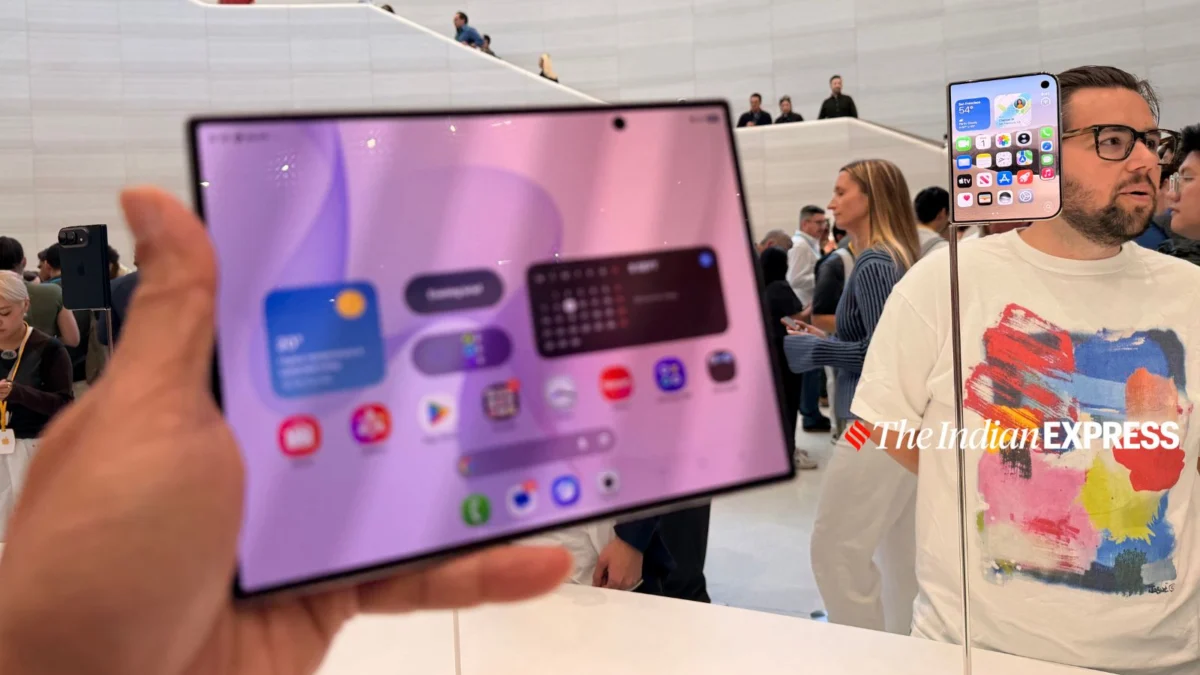
Cupertino, CA – September 10, 2026 – After years of speculation and patient observation, Apple has finally made its highly anticipated foray into the foldable smartphone market with the unveiling of the iPhone Duo. Launched this week, the Duo represents not just a new product category for the tech giant, but a calculated strategic maneuver poised to redefine the premium segment and capture significant revenue from a maturing, yet still niche, market. Far from a tentative first step, the iPhone Duo arrives with a polish and sophistication that suggests years of meticulous development, drawing on lessons learned from its Android predecessors while charting its own distinct course.
The iPhone Duo, immediately identifiable by its unique form factor and Apple’s signature design language, is priced at $1,999 in the US, a figure significantly below what many analysts had projected. This aggressive pricing, coupled with Apple’s renowned ecosystem and brand loyalty, positions the company to quickly dominate the foldable space. Industry forecasts are already projecting Apple to become the world’s largest foldable vendor by 2027, a testament to the company’s powerful market entry and the underlying economic strategy driving its decision to embrace the foldable future now.
Main Facts: A Polished Entry into a Maturing Market
The iPhone Duo’s debut marks a pivotal moment for both Apple and the broader smartphone industry. For years, Apple watched from the sidelines as competitors, primarily Samsung, iterated through multiple generations of foldable devices, absorbing the initial challenges and costs of pioneering a new form factor. The Duo’s refined appearance and seamless functionality indicate that Apple has meticulously studied these evolutions, entering the market with a device that feels remarkably mature, not experimental.
One of the most significant design breakthroughs highlighted by early reviews is Apple’s innovative approach to the perennial foldable challenge: the display crease. Rather than attempting to eliminate it entirely, Apple has opted for a clever disguise, employing a nano-texture display finish. This proprietary technology effectively reduces glare and visibility at the fold line, creating an illusion of a more uniform surface. The result is a screen that, when unfolded, presents an experience closer to a fluid, uninterrupted iPad-like display than two separate panels crudely joined. This elegant solution speaks volumes about Apple’s design philosophy, suggesting that the company believes the "crease" was largely an optical problem that could be intelligently managed, rather than a fundamental flaw requiring complete eradication.
Intriguingly, the Duo’s design language eschews direct imitation of the dominant clamshell or book-style foldables popularised by Samsung. Instead, it evokes a form factor largely forgotten by the industry: the dual-screen aesthetic pioneered by the Microsoft Surface Duo. This apparent inspiration, coupled with the name "Duo," suggests that Apple’s internal development on this specific configuration may have commenced around the time Microsoft first unveiled its own foldable vision six years prior. This provides a fascinating glimpse into Apple’s long-term product planning and its willingness to explore diverse form factors.
Beyond its physical attributes, the timing of the iPhone Duo’s release is intrinsically linked to compelling economic drivers. As the global smartphone market matures and upgrade cycles lengthen, Apple is strategically targeting high-value segments that promise sustained revenue growth. The foldable market, while still a small percentage of overall unit sales, is projected to command a disproportionately large share of industry revenue, making it an irresistible opportunity for a company synonymous with premium pricing and profitability.
Chronology: Apple’s Patient Path to Foldable Dominance
The journey to the iPhone Duo has been a long and winding one, not just for Apple, but for the entire smartphone industry.
The Dawn of Foldables: Early Pioneers and Their Pains
The concept of a folding phone has captivated tech enthusiasts for decades, but it was in 2019 that the vision truly began to materialize with the commercial launch of Samsung’s Galaxy Fold. This marked a bold, albeit bumpy, entry into a completely new category. Early foldable devices were plagued by significant challenges: fragile displays susceptible to damage, prominent and distracting creases, stiff and sometimes unreliable hinge mechanisms, and software that struggled to seamlessly adapt to the shifting screen real estate. Prices were exorbitant, and consumer skepticism was high.
Despite these hurdles, Android manufacturers like Samsung, Huawei, Motorola, and later Google, pressed ahead, investing heavily in R&D and iterating rapidly. They absorbed the "early pain" of product recalls, public scrutiny, and slow adoption, gradually improving durability, refining hinges, and enhancing software experiences. Over seven years, these companies effectively "primed" the premium buyer segment, gradually educating the market about the potential and practicalities of a transforming device.
Apple’s Strategic Vigilance: A Familiar Playbook
Throughout this period, Apple remained conspicuously absent from the foldable fray. While patents for foldable display technologies filed by Apple surfaced periodically, the company maintained its characteristic silence, neither confirming nor denying its intentions. This patient observation is a familiar Apple playbook: allow competitors to take the initial risks, bear the R&D costs of establishing a nascent category, and then enter with a highly refined, user-friendly product that capitalizes on accumulated market knowledge and pent-up demand. This strategy has been successfully deployed with products ranging from MP3 players (iPod) to smartphones (iPhone) and smartwatches (Apple Watch), none of which were first-to-market but all became category leaders.
However, industry observers note a subtle distinction in this instance. While earlier Apple entries often refined existing concepts into mass-market phenomena, the foldable market, even by 2026, remains a premium niche. This suggests Apple’s strategy here is less about defining a category outright – a hallmark of the Steve Jobs era – and more about capturing the most profitable slice of an already defined, albeit evolving, market.
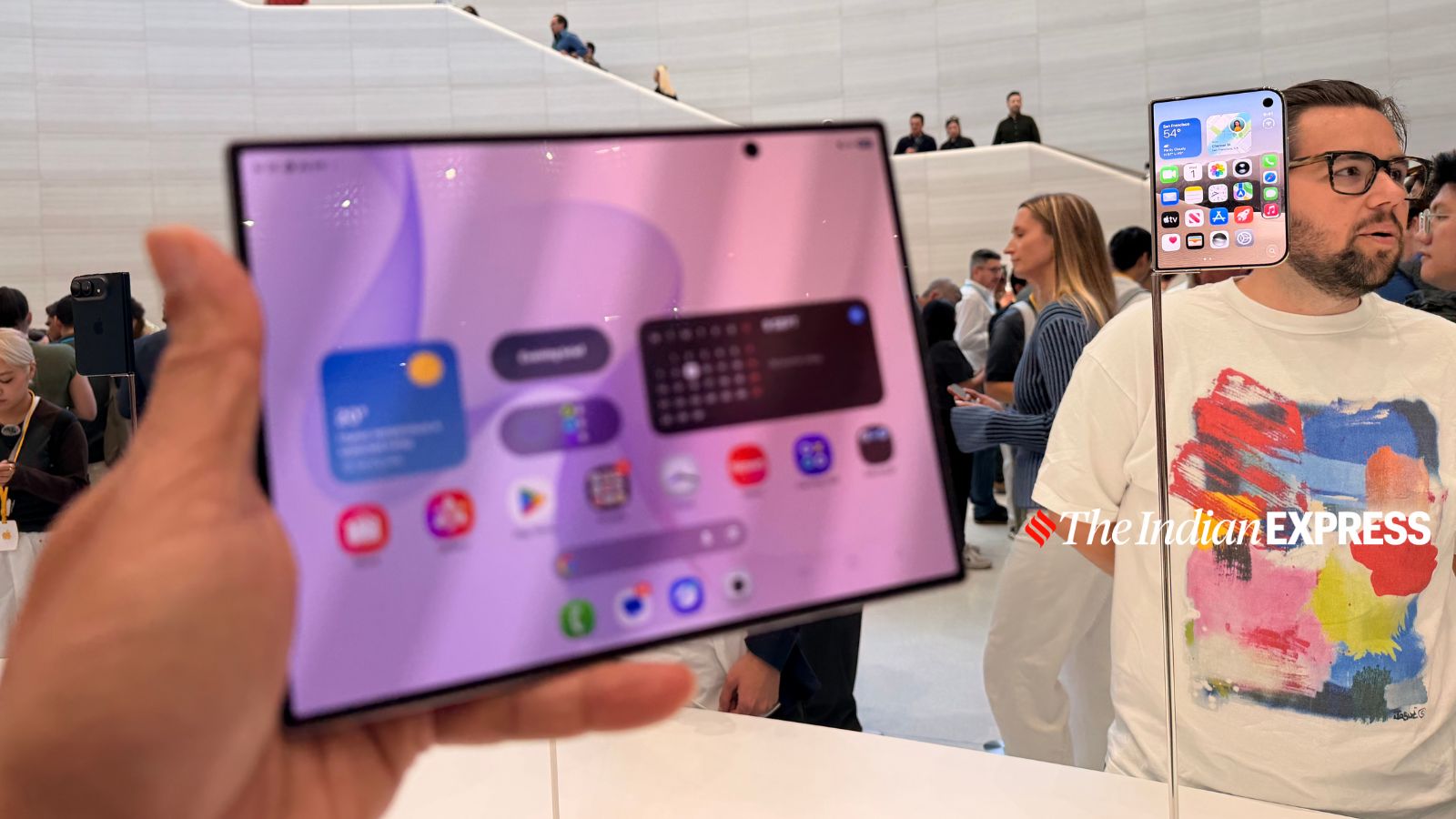
The Genesis of the Duo: An Unconventional Inspiration
Rumors of an Apple foldable device intensified in the mid-2020s, with various patents depicting different folding mechanisms and display types. The eventual reveal of the iPhone Duo, with its distinct dual-screen architecture, surprised many who had anticipated a more conventional book-style or clamshell design akin to Samsung’s popular offerings.
The apparent inspiration from Microsoft’s Surface Duo, first announced in 2019, is particularly noteworthy. While the Surface Duo struggled to gain significant market traction, its emphasis on productivity and a seamlessly integrated dual-screen experience clearly resonated within Apple’s design labs. This suggests that Apple began exploring this particular form factor around the time Microsoft introduced its concept, patiently refining the vision over half a decade. The very name "Duo" serves as an implicit nod to that original attempt, hinting at a shared conceptual lineage.
The Unveiling: A Statement of Intent
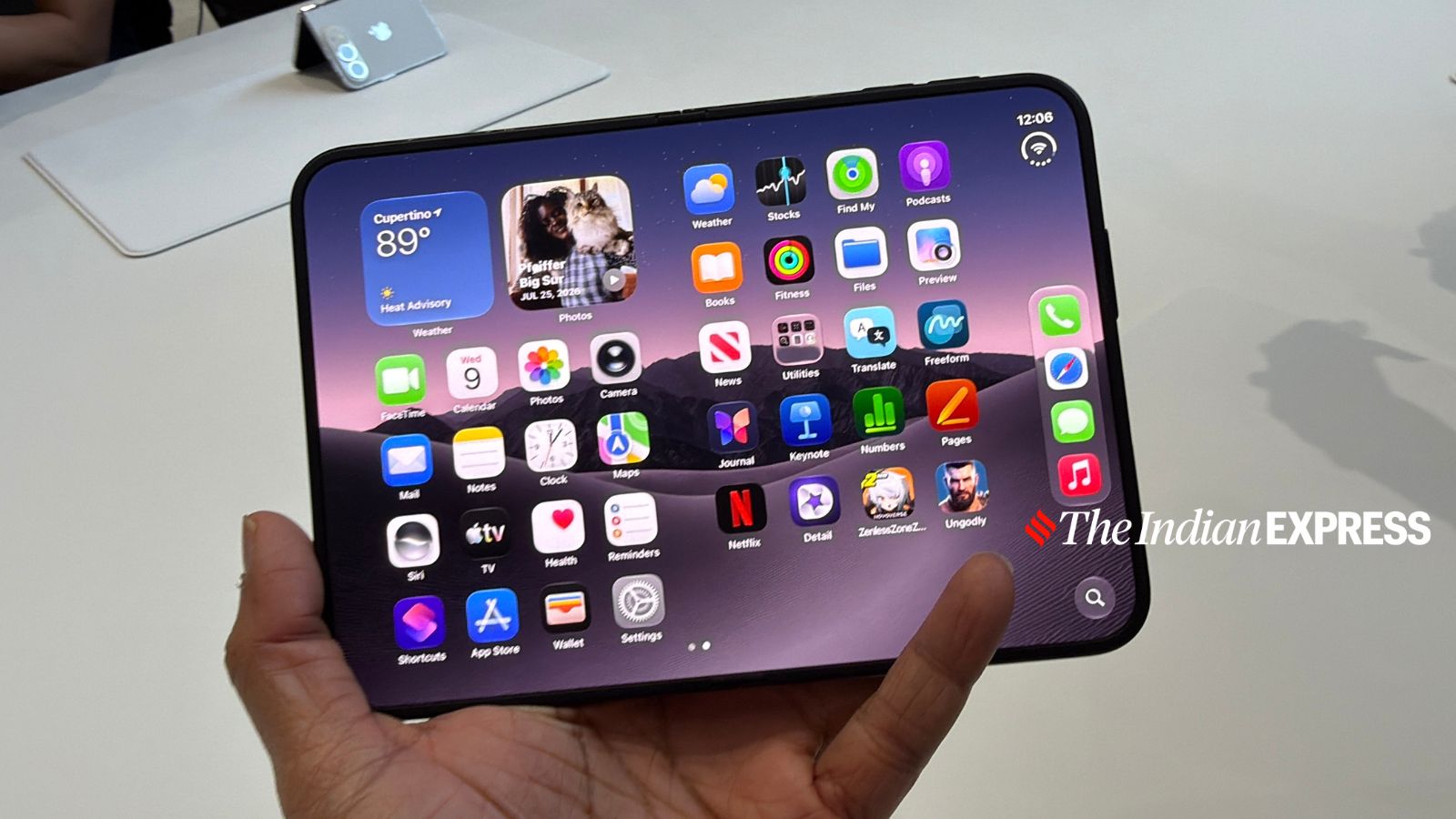
The iPhone Duo was unveiled during a highly anticipated Apple event, where executives meticulously detailed its engineering prowess, software innovations, and strategic market positioning. The presentation emphasized the device’s premium build, the innovative crease-management technology, and the enhanced productivity afforded by its dual-screen layout. The initial hands-on impressions corroborated Apple’s claims, noting the device’s solidity, the impressively subdued crease, and the intuitive adaptation of iOS to the new form factor. The unveiling was not just about a new product; it was a clear statement of Apple’s intent to dominate the premium foldable segment, leveraging its brand, ecosystem, and unparalleled engineering capabilities.
Supporting Data: Engineering, Economics, and Ecosystem Advantage
The iPhone Duo is a product of meticulous engineering and shrewd economic planning, designed not just to compete, but to lead.
Engineering Excellence: Beyond the Crease
Apple’s renowned attention to detail is evident throughout the iPhone Duo. The nano-texture display finish, a technological marvel, goes beyond mere aesthetics. By subtly diffusing light, it actively minimizes the visual impact of the fold, creating a viewing experience that approaches the uniformity of a single, rigid display. This is a significant leap from earlier foldable iterations where the crease was often a glaring distraction, impacting both visual quality and touch interaction. The display technology itself is likely a custom OLED panel, optimized for flexibility, durability, and Apple’s signature color accuracy and brightness.
The hinge mechanism, while not overtly detailed, is crucial to the Duo’s perceived maturity. Given Apple’s reputation, it can be inferred that the hinge is engineered for robust durability, smooth operation, and precise alignment when open or closed. The choice of a dual-screen design, rather than a single folding panel, simplifies the hinge’s mechanical complexity to some extent while still presenting unique challenges for integration and rigidity.
Software optimization is another critical pillar of the Duo’s engineering success. iOS has been meticulously adapted to leverage the dual-screen layout, offering enhanced multitasking capabilities, seamless app continuity as the device transitions between modes, and intuitive split-screen functionality. This includes optimizations for Apple’s own suite of productivity apps, as well as a robust API for third-party developers to create distinct foldable experiences, a significant advantage highlighted by analysts.
Economic Imperatives: Revenue Over Volume
The decision to launch the iPhone Duo now is primarily driven by compelling economic factors. The $1,999 US price point, while premium, is notably lower than the initial launch prices of many competing foldables and roughly $500 below what analysts had anticipated for an Apple-branded device. This strategic pricing aims to make the Duo more accessible to Apple’s affluent user base, particularly those who have been observing the foldable market from the iOS ecosystem. In India, the Rs 2,99,900 price reflects a significant regional markup, a common practice for premium electronics in the market, yet it still targets the ultra-premium segment.
IDC’s projections underscore the financial significance of this launch. The market research firm forecasts Apple to sell over 10 million iPhone Duo units in its first 12 months, generating an estimated $27 billion in revenue. This aggressive forecast is expected to propel Apple to become the largest foldable vendor globally by 2027, surpassing established players like Huawei. This rapid ascent comes at a time when Android foldable unit sales are paradoxically forecast to decline by double digits in 2026, suggesting Apple’s entry is not merely gaining market share, but potentially cannibalizing existing demand and shifting the market landscape dramatically.
The broader foldable market dynamics further illuminate Apple’s strategy. While foldables are projected to remain a relatively small slice of the overall smartphone market – growing from 2.2% of global smartphone units in 2026 to just 3.1% by 2030 – their share of industry revenue is set to climb significantly, reaching as high as 10% in the same period. This stark divergence between unit growth and revenue growth is, as Francisco Jeronimo, Vice-President, Devices at IDC, describes, the category’s "core strategic point." It confirms that foldables represent a "premium-value opportunity rather than a volume-led smartphone category," perfectly aligning with Apple’s business model which prioritizes profitability and high average selling prices over sheer unit volume.
Official Responses and Expert Analysis: A Consensus on Strategic Success
While Apple itself rarely offers explicit strategic commentary beyond product launches, the industry’s leading analysts have coalesced around a clear understanding of the iPhone Duo’s significance and Apple’s underlying motivations.
Apple’s implied strategy, as interpreted by market observers, is one of calculated patience and precision. By allowing Android manufacturers to pioneer and mature the foldable category, Apple has effectively externalized much of the early R&D risk and market education costs. Now, with a refined product, a loyal user base, and a market ready for a premium foldable experience, Apple is perfectly positioned to capture "pent-up demand from iOS users who have watched the category from the sidelines for years." This approach, while commercially astute, represents a notable contrast to the more audacious, category-defining instincts of the Steve Jobs era.
Neil Shah, Vice President of Research at Counterpoint Research, provided insights into the Duo’s impact, particularly in emerging markets. For India, Shah expects the device to "expand India’s foldable segment in terms of value but not volume," at least initially. This highlights the Duo’s role as a status symbol and a premium offering that elevates the entire segment’s perceived value, even if its high price limits mass adoption. Shah also lauded the device’s engineering, stating that despite being a first-generation product, the Duo "has hit all the right notes with respect to differentiation on both hardware and software engineering." He further emphasized Apple’s distinct advantage in its developer ecosystem, which he believes is "fully aligned on delivering distinct foldable experiences" – a critical factor for long-term platform differentiation against Android rivals.
Francisco Jeronimo, Vice-President, Devices at IDC, echoed the sentiment regarding the strategic importance of revenue over units. He argued that the Duo’s success isn’t contingent on it becoming an "aspirational Day 1 purchase for most buyers." Instead, what truly matters is its ability to "capture a disproportionate share of category revenue by setting the premium reference point." In an era of slowing overall smartphone sales and lengthening upgrade cycles, Apple’s bet with the Duo is that it can significantly boost its revenue and profit lines, even without achieving massive unit volumes. Jeronimo’s concluding remark succinctly captures this dynamic: "Apple is on course to capture most of the foldable revenues. It has found the rare product where scarcity and profit rise together."
Implications: Reshaping the Future of Mobile Computing
The launch of the iPhone Duo carries profound implications for the smartphone industry, Apple’s strategic direction, and the future of mobile computing.
Validation and Acceleration of the Foldable Market
Apple’s entry unequivocally validates the foldable form factor as a viable and desirable segment of the premium smartphone market. This endorsement from a company renowned for its influence will likely spur further innovation from existing players and potentially encourage new entrants. Competitors will now be compelled to redouble their efforts in design, engineering, and software optimization to compete with Apple’s polished offering. The long-term effect could be an acceleration in foldable technology, leading to more durable, affordable, and feature-rich devices across the industry.
Reinforcing Apple’s Ecosystem Dominance
For Apple, the Duo is a powerful tool for ecosystem retention and expansion. iOS users who have long admired the innovation of foldables but were reluctant to switch to Android now have a compelling option within their preferred ecosystem. This prevents churn and reinforces the stickiness of Apple’s walled garden. Furthermore, the Duo’s advanced capabilities and premium positioning could attract new users to the Apple ecosystem, drawn by the allure of cutting-edge technology and seamless integration with other Apple devices.
Redefining the Premium Segment and Pricing Power
Apple’s ability to set a "premium reference point" is crucial. The $1,999 price, while substantial, establishes a new benchmark for high-end foldables. Apple’s brand power allows it to command such a price, and its expected sales success will likely embolden other manufacturers to maintain or even increase their premium pricing for foldable devices, further cementing the category’s status as a high-margin segment.
A Shift in Apple’s Product Strategy?
The Duo’s launch could signal a nuanced shift in Apple’s product development philosophy. While the company still prioritizes refinement, this entry into an established, albeit evolving, category suggests a more pragmatic approach to market timing. It demonstrates Apple’s willingness to wait for market maturity, rather than always being the trailblazer, particularly in segments where the initial risks are high. This could be a template for future Apple entries into emerging tech categories.
Impact on Developers and Software Innovation
The robust and aligned developer ecosystem, as noted by Neil Shah, is a significant differentiator. With Apple’s clear direction and powerful developer tools, the iPhone Duo is poised to offer a truly optimized software experience, unlocking new possibilities for productivity, entertainment, and creativity. This contrasts with the sometimes fragmented and inconsistent software support seen on some Android foldables, where developers have had to contend with a wider variety of form factors and operating system versions.
Potential Challenges Ahead
Despite the overwhelmingly positive outlook, Apple will face challenges. Maintaining supply to meet the anticipated 10 million unit demand in the first year will be critical. Software optimization, while praised, will need continuous refinement as new use cases emerge. Moreover, the high price point, particularly in markets like India, means the Duo will remain an aspirational device for many, limiting its immediate volume impact outside of the most affluent demographics. However, if Apple’s history is any guide, the iPhone Duo is less about initial volume and more about setting the standard for what a premium, foldable smartphone can and should be.
The iPhone Duo is more than just a new phone; it is Apple’s strategic declaration of intent in the future of mobile technology, a meticulously crafted response to years of market evolution, and a powerful statement that in the premium segment, scarcity and profit can indeed rise together.
The author was in California at the invitation of Apple.
