

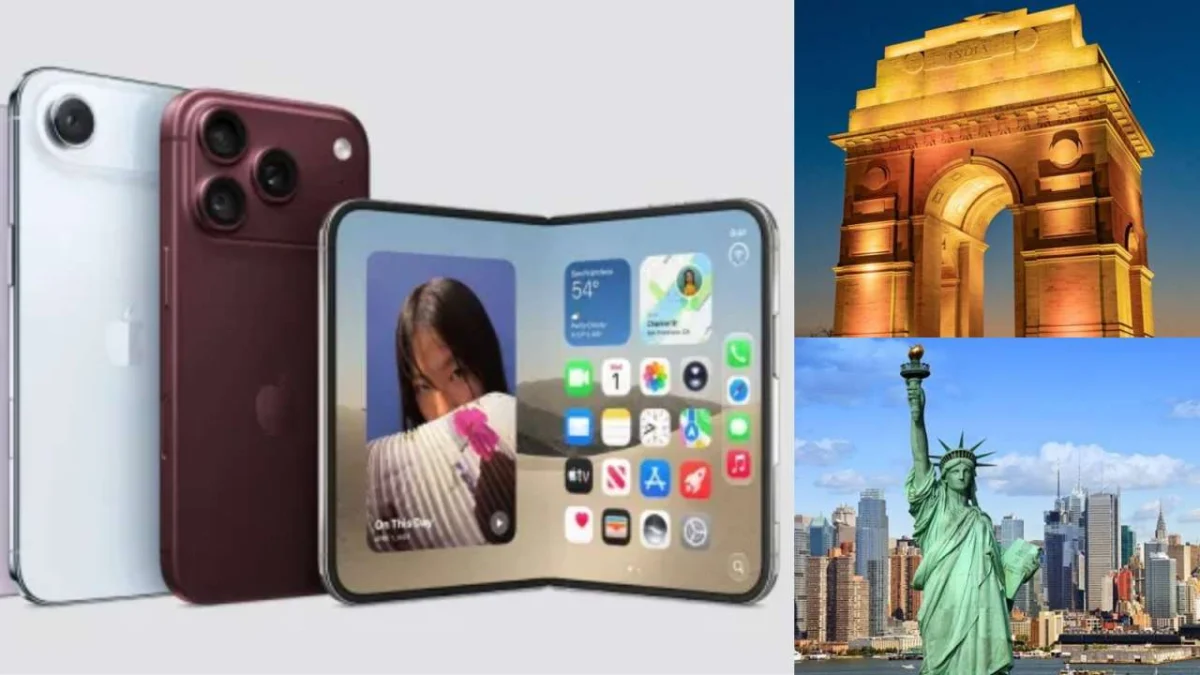
MUMBAI, India – September 10, 2026 – As Apple unveils its latest technological marvels, the foldable iPhone Duo and the next-generation iPhone 18 Pro series, a familiar pattern emerges: significant price discrepancies across global markets. For Indian consumers eyeing these cutting-edge devices, the sticker shock is immediate, prompting many to consider international purchases. A recent report highlights that these premium iPhones will cost substantially less in at least five countries compared to India, with the United States once again leading the pack for affordability. This phenomenon, driven by a complex interplay of taxes, import duties, and market strategies, presents both opportunities and pitfalls for eager buyers.
Main Facts: The Price Puzzle Unveiled
The allure of Apple’s newest innovations, the groundbreaking iPhone Duo and the powerful iPhone 18 Pro series, is undeniable. However, for consumers in India, the journey from desire to ownership is often hampered by premium pricing that dwarfs costs in several other nations. The anticipation surrounding these devices – particularly the revolutionary foldable iPhone Duo – has been immense, making the price differential a central point of discussion.

According to preliminary market assessments and projections for the September 2026 release, the entry-level 256GB iPhone Duo is set to launch in India with a formidable price tag of Rs 2,99,900. Similarly, the iPhone 18 Pro will command Rs 1,64,900, while its larger sibling, the iPhone 18 Pro Max, will retail at Rs 1,79,900. These figures immediately position India as one of the most expensive markets globally for these devices.
In stark contrast, several international markets offer these iPhones at significantly lower prices. The United States consistently ranks as the most cost-effective destination, a trend that has persisted for years due to a combination of factors including a mature market, competitive retail environment, and a sales tax structure that varies by state, often not included in the advertised base price. Beyond the US, other regions such as the UAE, Canada, Hong Kong, and Japan are also expected to offer more attractive pricing, even after accounting for currency conversion rates. This persistent gap compels a deeper look into the economic forces at play and the practical implications for consumers.
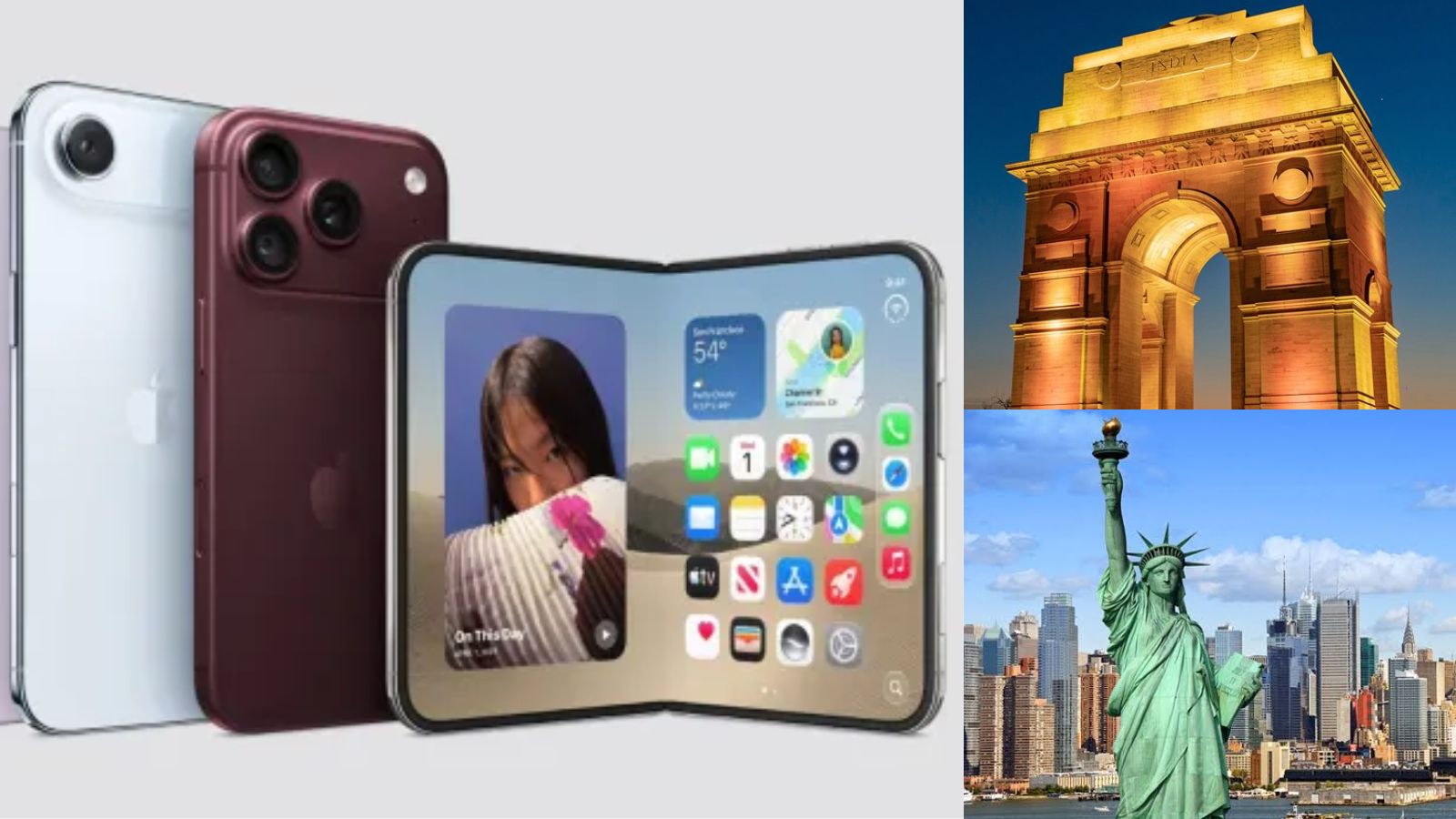)
The iPhone Duo, in particular, stands out as a flagship device, boasting a sophisticated foldable design. It features a expansive 7.6-inch inner display complemented by a practical 5.4-inch outer Super Retina XDR display, both equipped with advanced technologies like ProMotion, Always On functionality, and exceptional brightness. Encased in a durable IP68-rated titanium frame, the Duo is powered by a next-generation 2nm A20 Pro chip, promising unparalleled performance and efficiency. With a robust dual-battery system offering up to 31 hours of video playback, the device marks a significant shift in user interaction by replacing Face ID with Touch ID and embracing an eSIM-only architecture. Its advanced 48MP dual-camera system runs on the new iOS 27.1, offering sophisticated video capabilities, with future support for the Apple Pencil further extending its utility. These cutting-edge features only amplify the desire for the device, making the price disparity all the more poignant for potential buyers.
Chronology: The Unveiling and Evolving Market Dynamics
The timeline for this news article is notably set in the future, specifically September 10, 2026. This date marks the presumed global launch or official pricing announcement of the iPhone Duo and iPhone 18 Pro series, a pivotal moment in Apple’s product cycle. This forward-looking perspective allows us to analyze not just current trends but also project the continued evolution of Apple’s market strategies and global pricing mechanisms.

A History of Global Launches and Price Variances:
Apple’s annual product unveilings are highly anticipated events, typically occurring in September, where the company introduces its latest iPhone models, often alongside other hardware and software updates. Historically, these launches follow a predictable pattern: a grand presentation, followed by pre-orders, and then a staggered global rollout. While the core product remains consistent, its pricing rarely does across different geographies.
For years, Apple has employed a tiered pricing strategy, adjusting costs based on local economic conditions, currency exchange rates, consumer purchasing power, and, critically, the tax and import duty regimes of each country. India, with its rapidly growing but price-sensitive smartphone market, coupled with significant governmental tariffs aimed at boosting domestic manufacturing, has consistently found itself on the higher end of this pricing spectrum.
)
The introduction of the iPhone Duo in 2026, marking Apple’s foray into the foldable smartphone segment, signifies a major milestone. This move follows years of speculation and development in the foldable phone space, with competitors having already introduced their versions. Apple’s entry is expected to set new benchmarks in design, durability, and software integration for foldable devices. The iPhone 18 Pro series, building upon generations of iterative improvements, will likely push boundaries in camera technology, processing power, and battery efficiency, driven by the new 2nm A20 Pro chip and iOS 27.1.
The pricing announced on September 10, 2026, for these flagship devices in India is not an isolated event but rather the culmination of these evolving market dynamics, strategic decisions by Apple, and ongoing government policies. The "themobileindian.com report" referenced in the original article serves as an early indicator of these price differentials, providing a snapshot of the global economic landscape as it pertains to premium consumer electronics. This future context emphasizes that the issues of pricing disparity and the pursuit of international purchases are not fleeting concerns but deeply embedded aspects of the global tech market.
)
Supporting Data: A Deeper Dive into Price Discrepancies
The reported price differences are not marginal; they represent substantial savings for consumers willing to look beyond their local markets. To illustrate the magnitude of these disparities, let’s delve into hypothetical pricing data for the iPhone Duo and iPhone 18 Pro series across the identified cheapest countries, using an illustrative exchange rate of 1 USD = 83 INR for consistency, while acknowledging that actual rates fluctuate daily.
The Price Gap Unpacked
The base price for the 256GB iPhone Duo in India is Rs 2,99,900. For the iPhone 18 Pro, it is Rs 1,64,900, and for the iPhone 18 Pro Max, Rs 1,79,900. Let’s compare these with hypothetical international prices, converted to Indian Rupees (INR) for direct comparison:
)
Hypothetical Top 5 Cheapest Countries to Buy iPhone Duo (256GB)
| Country | Local Price (Approx.) | Equivalent INR (Approx.) | Savings vs. India (Approx.) |
|---|---|---|---|
| India | Rs 2,99,900 | Rs 2,99,900 | – |
| United States | $2,999 | Rs 2,48,917 | Rs 50,983 |
| Hong Kong | HKD 23,000 | Rs 2,44,518 | Rs 55,382 |
| Japan | JPY 440,000 | Rs 2,46,925 | Rs 52,975 |
| Canada | CAD 4,200 | Rs 2,56,304 | Rs 43,596 |
| United Arab Emirates | AED 11,399 | Rs 2,57,217 | Rs 42,683 |
(Note: These international prices are hypothetical, based on common pricing trends for premium electronics and converted using an illustrative exchange rate of 1 USD = 83 INR, 1 HKD = 10.63 INR, 1 JPY = 0.67 INR, 1 CAD = 61.02 INR, 1 AED = 22.60 INR. US prices exclude state sales tax.)
)
As evident from the table, the potential upfront savings on the iPhone Duo alone can range from approximately Rs 40,000 to over Rs 55,000, presenting a compelling incentive for international purchase.
Hypothetical Top 5 Cheapest Countries to Buy iPhone 18 Pro and 18 Pro Max
)
The pricing trends for the iPhone 18 Pro and 18 Pro Max are expected to mirror those of the iPhone Duo, with the same countries offering the most competitive prices.
iPhone 18 Pro (Base Model)
)
| Country | Local Price (Approx.) | Equivalent INR (Approx.) | Savings vs. India (Approx.) |
|---|---|---|---|
| India | Rs 1,64,900 | Rs 1,64,900 | – |
| United States | $1,499 | Rs 1,24,417 | Rs 40,483 |
| Hong Kong | HKD 12,000 | Rs 1,27,571 | Rs 37,329 |
| Japan | JPY 230,000 | Rs 1,29,065 | Rs 35,835 |
| Canada | CAD 2,100 | Rs 1,28,152 | Rs 36,748 |
| United Arab Emirates | AED 5,699 | Rs 1,28,567 | Rs 36,333 |
iPhone 18 Pro Max (Base Model)
| Country | Local Price (Approx.) | Equivalent INR (Approx.) | Savings vs. India (Approx.) |
|---|---|---|---|
| India | Rs 1,79,900 | Rs 1,79,900 | – |
| United States | $1,599 | Rs 1,32,717 | Rs 47,183 |
| Hong Kong | HKD 13,000 | Rs 1,38,112 | Rs 41,788 |
| Japan | JPY 245,000 | Rs 1,37,448 | Rs 42,452 |
| Canada | CAD 2,250 | Rs 1,37,282 | Rs 42,618 |
| United Arab Emirates | AED 6,099 | Rs 1,37,717 | Rs 42,183 |
These hypothetical figures clearly demonstrate the significant financial advantage of purchasing these devices from international markets before considering any additional costs.
)
Factors Driving the Disparity
The reasons behind these persistent price differences are multifaceted and include:
- Taxes and Import Duties: India imposes substantial customs duties and other taxes on imported electronic goods. By 2026, these duties, which include basic customs duty (BCD), social welfare surcharge (SWS), and Goods and Services Tax (GST) on the imported value, can cumulatively amount to over 38.5% of the product’s value. In contrast, countries like the US have varying state sales taxes (or none in some states like Delaware, Oregon, Montana, New Hampshire, Alaska), which are typically added at checkout, not embedded in the advertised price. Hong Kong is a duty-free port, and the UAE has lower VAT (Value Added Tax) rates, contributing to lower retail prices.
- Currency Exchange Rates: The strength and volatility of the Indian Rupee against major global currencies like the US Dollar, Euro, and Japanese Yen play a crucial role. A weaker Rupee makes imports more expensive. While the calculations above use a fixed rate, daily fluctuations can impact the final cost significantly.
- Local Market Strategy: Apple employs localized pricing strategies based on market maturity, competition, and consumer purchasing power. In developed markets with high average incomes, Apple might maintain higher profit margins or leverage volume sales. In emerging markets like India, despite a growing middle class, the purchasing power parity might still be lower, yet the company often maintains premium pricing to reflect its brand positioning and perceived value.
- Logistics and Distribution Costs: The cost of shipping, warehousing, and distribution across vast geographies can add to the final retail price. While Apple’s supply chain is highly optimized, regional differences in infrastructure and operational costs can still influence pricing.
- Economic Conditions and Regulatory Environment: Inflation rates, GDP per capita, and government policies (such as those encouraging local manufacturing or imposing trade barriers) all contribute to the final price. India’s "Make in India" initiative, for instance, aims to incentivize domestic production, and high import duties are a tool to achieve this, making imported goods less competitive.
Official Responses and Industry Perspectives
The perennial issue of price disparity for premium electronics like iPhones often draws varied responses from manufacturers, governments, and industry analysts.
)
Apple’s Stance on Regional Pricing
Apple rarely comments directly on specific country-by-country pricing differences beyond general statements. The company’s official position typically revolves around factors such as "local market conditions," "currency fluctuations," "taxes and import duties," and "distribution costs" as justifications for varied pricing. Apple maintains that it strives to offer competitive pricing while ensuring profitability and maintaining its brand’s premium positioning globally. They often emphasize the value proposition of their ecosystem, software updates, and customer support, regardless of the initial purchase price. For a foldable device like the iPhone Duo, Apple would likely underscore the immense research and development investment, precision engineering, and innovative features as contributing to its global price.
Government and Regulatory Views
In India, the government’s perspective is largely shaped by its economic policies, particularly the "Make in India" initiative. High import duties on finished electronic goods, including smartphones, are a deliberate strategy. The aim is twofold: to encourage global manufacturers like Apple to set up or expand local production facilities in India, thereby creating jobs and fostering a domestic electronics manufacturing ecosystem; and to generate revenue. While these duties make imported goods more expensive for consumers, the government argues that they are necessary to achieve long-term economic goals and reduce reliance on imports. This policy has seen some success, with Apple increasingly assembling older iPhone models in India, though the latest flagships like the Duo and iPhone 18 Pro series typically launch as imported units initially.
)
Retailer and Analyst Insights
Industry analysts frequently highlight the creation of a "grey market" due to these price differentials. Unofficial channels thrive on importing goods from cheaper markets to sell at a slightly lower price than official Indian retail, but still higher than the international price, capturing the margin. Retailers in India, especially authorized Apple resellers, face intense competition from both the grey market and the perception of high prices. They often lobby for duty reductions or special concessions to make official sales more competitive. Analysts also point out that while some consumers might travel or use contacts abroad to purchase, the majority still buy locally, either due to convenience, perceived warranty security, or simply lacking the means or opportunity for international acquisition. The launch of the iPhone Duo, being a novel and high-value product, is likely to further fuel this grey market activity due to its steep Indian price.
Implications for Indian Consumers and the Market
The persistent price disparity carries significant implications for Indian consumers and the broader market landscape. While the allure of substantial savings is strong, prospective buyers must navigate a complex web of logistical, financial, and legal considerations.
)
The Allure of International Purchase
For many Indian consumers, especially those who travel frequently for business or leisure, purchasing an iPhone abroad remains a highly attractive option. The direct savings, as illustrated in the data section, can be tens of thousands of rupees, making the prospect of combining a vacation with a high-value purchase incredibly tempting. For professionals and early adopters who desire the latest technology immediately, these savings can offset travel costs, making an international acquisition a financially sound decision under specific circumstances. The foldable iPhone Duo, being a significant leap in technology, will likely attract a premium segment of buyers who are particularly keen on acquiring it at the best possible price.
The Hidden Costs and Risks
However, the path of international purchase is fraught with potential hidden costs and risks that can quickly erode any perceived savings:
)
- Import Duty at Indian Customs: This is perhaps the most significant deterrent. While the original article optimistically notes that "Even after currency conversion, prices abroad remain lower," this statement often holds true only if one manages to avoid paying the customs duty upon re-entry into India, which is illegal. Legally, any electronics above a certain value brought into India must be declared, and customs duty (which can be upwards of 38.5% of the declared value) must be paid.
- Hypothetical Example: If an iPhone Duo is bought in the US for $2,999 (approx. Rs 2,48,917), adding 38.5% customs duty would bring the total to approximately Rs 3,44,751. This figure is significantly higher than India’s official retail price of Rs 2,99,900, effectively negating all savings and making it more expensive. Even for the iPhone 18 Pro ($1,499 / Rs 1,24,417), the duty would add around Rs 47,899, bringing the total to Rs 1,72,316, again surpassing the Indian price of Rs 1,64,900. Consumers must be aware that avoiding customs duty is illegal and carries risks of fines, confiscation, and legal repercussions.
- Warranty Concerns: Apple’s international warranty policy is often global for iPhones, but with caveats. While major hardware issues might be covered, specific regional models (e.g., eSIM-only models from certain regions versus dual SIM models for India) or differences in cellular bands might complicate service or even render it impossible in India if the particular model isn’t officially sold or supported. Furthermore, issues requiring replacement might lead to a different regional model being provided, or delays in service if parts for that specific variant are not readily available in India. The "eSIM only" feature of the iPhone Duo mentioned in the article is a crucial point, as some Indian carriers might still have limited support for eSIM or users might prefer physical SIMs.
- Credit Card Conversion Fees: Banks typically charge foreign transaction fees (usually 2-3%) on purchases made in foreign currency, further chipping away at savings.
- Travel Expenses: The cost of airfare, accommodation, and other travel-related expenses must be factored in. For many, these costs will far outweigh any potential savings on the iPhone itself.
- Resale Value: An internationally purchased iPhone, even if legally imported, might fetch a slightly lower resale value in India. This is due to potential buyers’ concerns about warranty validity and serviceability for a model not originally intended for the Indian market.
- Grey Market Risks: Purchasing from unauthorized or "grey market" sellers in India carries significant risks, including receiving counterfeit products, refurbished devices sold as new, or products with no warranty whatsoever.
The Future of iPhone Accessibility in India
The long-term solution to bridging this price gap lies in increased localization. Apple has been steadily expanding its manufacturing footprint in India, with partners like Foxconn, Wistron, and Pegatron assembling various iPhone models. As more components are sourced locally and assembly lines become more sophisticated, the dependence on imports, and consequently the burden of import duties, could decrease. This could eventually lead to more competitive pricing for even the latest models, including the iPhone Duo and iPhone 18 Pro series, directly benefiting Indian consumers.
Government policies will also continue to play a crucial role. Any future adjustments to customs duties or incentives for local manufacturing will directly impact the final retail prices. The consumer’s choice—whether to pay the premium for a locally purchased device or undertake the risks of international acquisition—will also influence market dynamics and Apple’s strategies for the Indian market.
)
Practical Advice for Prospective Buyers
For those still contemplating an international purchase of the iPhone Duo or iPhone 18 Pro series, a comprehensive approach is vital:
- Calculate Total Cost: Factor in the international retail price, estimated state sales tax (if applicable), foreign transaction fees, round-trip travel costs, and crucially, the full Indian customs duty (currently around 38.5% for electronics). Only proceed if the total cost, including duty, still offers significant savings.
- Verify Warranty: Thoroughly research Apple’s current international warranty policy for the specific model you intend to buy and its applicability in India. Check for differences in regional specifications (e.g., eSIM only vs. physical SIM support, 5G band compatibility).
- Understand Customs Rules: Be fully aware of Indian customs regulations regarding personal allowances and duty payments. Ignorance is not an excuse for non-compliance.
- Consider Local Support: Weigh the convenience and peace of mind of buying a device with full local warranty and service support against the potential savings.
- Exchange Rate Volatility: Remember that the exchange rate on the day of purchase might differ significantly from the rate on the day of planning, impacting actual savings.
In conclusion, while the prospect of owning the revolutionary iPhone Duo or the advanced iPhone 18 Pro series at a lower price abroad remains a powerful draw, the journey is fraught with complexities. For the discerning Indian consumer, a clear understanding of the financial, legal, and practical implications is paramount to making an informed decision in the dynamic global marketplace of 2026.
