

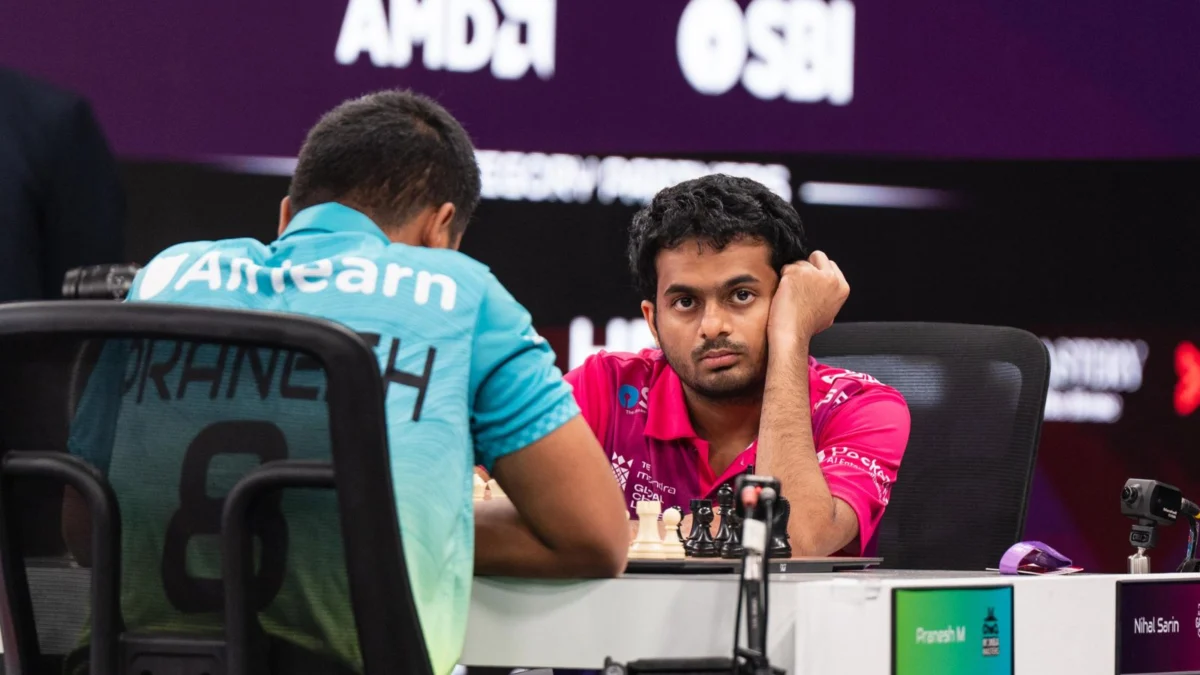
Bengaluru, India – September 12, 2026 – The final round-robin day of the 2026 Global Chess League (GCL) delivered an electrifying cascade of upsets and dramatic turnarounds, irrevocably reshaping the championship narrative. At the heart of this tumultuous day was a 20-year-old prodigy, Pranesh M, who, in a stunning display of composure and strategic acumen, vanquished the formidable Nihal Sarin, widely known as the "speed demon" for his exceptional prowess in rapid chess. This singular victory by Pranesh M not only denied FYERS American Gambits a coveted spot in the GCL final but also propelled CheQ Mumba Masters into the third-place playoff, setting the stage for a dramatic rematch.
The chess world watched with bated breath as the aspirations of several teams hinged on the outcomes of these pivotal matches. What unfolded was a testament to the unpredictable nature of rapid chess, where seasoned champions faced unexpected challenges and emerging talents seized their moment in the spotlight, ultimately crafting a narrative of resilience, heartbreak, and unexpected glory.
The Crucible of the Round-Robin: A Day of High Stakes
The GCL 2026, a spectacle designed to blend the strategic depth of classical chess with the pulsating excitement of shorter time controls, reached its boiling point on September 12th. Teams had battled through a rigorous round-robin phase, each game contributing to their cumulative match and game points. As the final fixtures loomed, the standings were tight, and the path to the summit clash was fraught with peril and opportunity.
Gambits’ Final Bid and Masters’ Spoiler Role
FYERS American Gambits, led by their strategic captain Srinath Narayan, entered the final round-robin match against CheQ Mumba Masters with a clear objective: secure a victory to leapfrog Alpine APL Pipers and clinch a spot in the grand final against the Ganges Grandmasters. Their mission seemed plausible, even within the unfolding drama of the match. Despite an early deficit, the Gambits held a critical advantage on their top boards. With the overall score trailing at 2.0-8.0 in favor of the Masters, their hopes rested squarely on the shoulders of Nihal Sarin and Javokhir Sindarov. Both players were in seemingly winning positions with the black pieces, which, according to GCL rules, would yield four points each upon victory. Had both Nihal and Sindarov converted their advantages, the score would have flipped dramatically to 10.0-8.0 in Gambits’ favor, securing their place in the final.
However, CheQ Mumba Masters, though already out of contention for the final themselves, were not merely passive participants. Their role morphed into that of the ultimate spoiler, determined to conclude their round-robin campaign with a statement. This added an extra layer of psychological pressure and competitive intensity to an already high-stakes encounter.
The Boards Ignite: Early Engagements and Rising Tension
The match commenced with a series of tense exchanges across all six boards. The Masters quickly asserted an early lead, signaling their intent to disrupt Gambits’ ambitions. Iranian prodigy Daneshvar Bardiya ignited the scoring for the Masters on the Prodigy board, skillfully navigating his white pieces to defeat Marc’Andria Maurizzi, granting his team a crucial 3.0-0.0 advantage. This early strike set a daunting tone for the Gambits, who knew every point mattered.
The pressure continued to mount as other crucial games unfolded. Veteran Indian Grandmaster Harika Dronavalli, known for her solid play, managed to hold Bibisara Assaubayeva to a draw, denying an easy point. Similarly, Azerbaijani powerhouse Shakhriyar Mamedyarov, a formidable presence on any board, also forced a draw against Daniil Dubov. While these draws prevented the Masters from extending their lead significantly, they were equally crucial in preventing the Gambits from narrowing the gap.
The turning point that intensified the must-win scenario for Nihal and Sindarov came when American Grandmaster Carissa Yip delivered a decisive blow, defeating Sara Khadem. This victory solidified the Masters’ advantage and unequivocally transformed the games of Nihal Sarin and Javokhir Sindarov into absolute must-win clashes. The mathematics were clear: without victories from both their top players, the Gambits’ final aspirations would be extinguished.
The Decisive Duel: Pranesh M vs. Nihal Sarin
The spotlight inevitably fell on the board where Nihal Sarin, the "speed demon" of Indian chess, faced Pranesh M. Nihal, renowned for his lightning-fast calculations and tactical brilliance in shorter time controls, was expected to deliver under pressure. He had consistently proven his mettle in high-stress situations, making him a cornerstone of the Gambits’ strategy.
However, standing in his way was Pranesh M, a player whose presence in the GCL was, in itself, a testament to serendipity and opportunity. Pranesh had joined the CheQ Mumba Masters as a last-minute replacement for the formidable Vladimir Fedoseev. Little did anyone know that this unexpected inclusion would lead to one of the most significant upsets of the tournament.
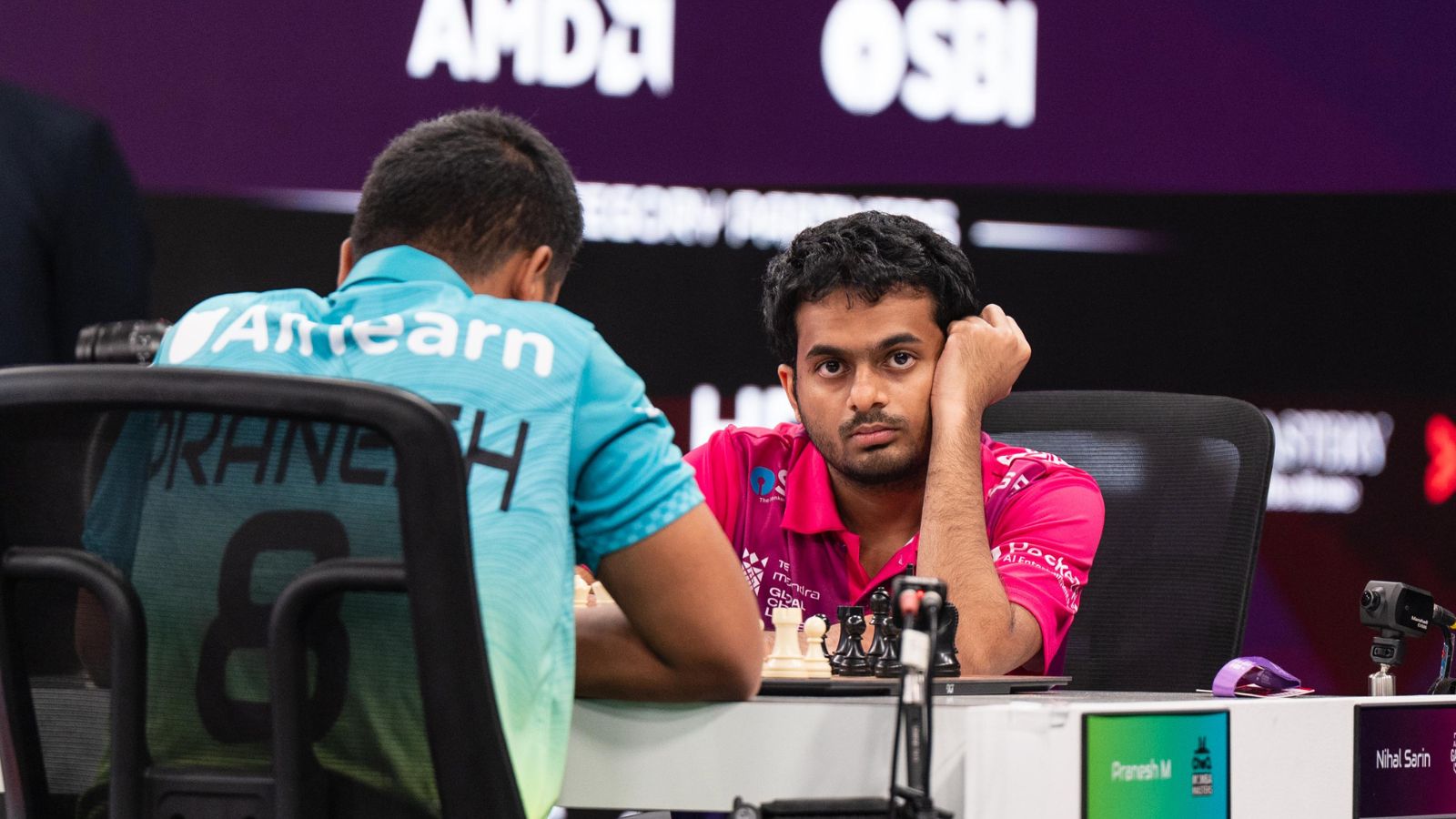
The game between Sarin and Pranesh was a masterclass in nerve-wracking rapid chess. Both players navigated complex positions with precision, the clock ticking relentlessly. As the game progressed into its critical phases, the tension became palpable. Spectators and commentators alike held their breath, understanding the immense implications of this single board. In a dramatic twist, under immense time pressure, Nihal Sarin, known for his clock management, faltered. Pranesh M, maintaining his focus amidst the chaos, delivered the final blow not with a checkmate, but by patiently outlasting his opponent, who ultimately lost on time.
The moment the clock fell for Nihal Sarin sent shockwaves through the playing arena. It was an outcome few had predicted, a stunning upset that instantly altered the GCL landscape. Pranesh M, the unexpected hero, had single-handedly derailed the Gambits’ meticulously planned path to the final. His victory was not just a point for his team; it was a psychological triumph, marking his arrival as a significant force in the international chess circuit and earning him the moniker of the "new king of the jungle" for his fearless play.
Aftermath and Missed Opportunity
Immediately after Pranesh’s victory, Javokhir Sindarov did manage to secure a win against Maxime Vachier-Lagrave, who resigned, giving the Gambits their four points. However, the damage was already irrevocably done. With Nihal’s loss, the Gambits could no longer achieve the aggregate score required to surpass the Alpine APL Pipers. Their dreams of reaching the GCL final were shattered in the most dramatic fashion.
For the CheQ Mumba Masters, Pranesh’s heroics, coupled with their earlier points, meant they had not only played the role of spoilers to perfection but had also secured a top-four finish, earning them a place in the third-place match. The irony was not lost on anyone: the two teams, American Gambits and Mumba Masters, would now face each other once more, this time with the third-place trophy on the line.
A Tournament of Tumults: Upsets Across the Arena
The final round-robin day was a carnival of upsets, extending beyond the Pranesh-Nihal clash. The GCL 2026 had already been marked by its share of surprises, but this particular day cemented its reputation as a tournament where no lead was safe and no champion invincible.
Carlsen Conquered: Firouzja’s Moment of Redemption
Perhaps the most astonishing upset of the day occurred in the match between defending champions Alpine APL Pipers and Triveni Continental Kings. The Kings, despite reaching the final in every previous GCL season, had endured a winless campaign in 2026 and were already out of contention. However, they were determined to finish on a high note, and their star player, Alireza Firouzja, delivered a performance for the ages.
Firouzja, a prodigious talent who had struggled to find his form throughout the tournament, faced none other than Magnus Carlsen, the reigning World Champion and arguably the greatest chess player of all time. Carlsen, known for his near-impeccable record, had remained undefeated throughout the GCL 2026. In a stunning display of aggressive and precise play, Firouzja, with the black pieces, handed Magnus Carlsen his first loss of the tournament. This victory was not just a personal triumph for Firouzja, ending his GCL campaign on the most memorable note possible, but it also sent shockwaves through the Pipers’ camp.
Further compounding the Pipers’ woes, Indian Grandmaster Aravindh Chithambaram also secured a vital win for the Kings, defeating Vidit Gujrathi. These decisive victories contributed to a comprehensive 11.0-6.0 win for the Triveni Continental Kings, who, despite their overall performance, finished their season with an emphatic statement. The stunning loss for both Carlsen and the Pipers left the defending champions in a precarious position, opening the door wider for other contenders and adding further suspense to the final qualification race.
Alaskan Knights End on a High
In another significant match of the day, the Viswanathan Anand-led PBG Alaskan Knights, who finished last in the league standings, ended their campaign with a spirited victory against the table-topping Ganges Grandmasters. Despite Ganges having already secured their spot in the final, the Knights played with remarkable determination, showcasing the depth of talent within their ranks.
Fifteen-year-old Turkish prodigy Yagız Kaan Erdogmus flagged Leinier Dominguez, demonstrating composure beyond his years. Abhimanyu Mishra, another young talent, also delivered a strong performance, defeating Leon Luke Mendonça. These victories for the Alaskan Knights offset the win by Ganges’ Stavroula Tsolakidou with the black pieces, allowing the Knights to conclude their tournament with a much-needed morale boost and proving that even out-of-contention teams can deliver compelling chess.
The Final Standings: A Tight Race to the Finish
The dust settled on a day of unparalleled drama, revealing the final configuration of the GCL 2026 league table. The margins were incredibly tight, underscoring the fierce competition that characterized the entire season.
- Ganges Grandmasters topped the group with a commanding 18 match points and an impressive 95 game points. Despite not being considered the strongest team on paper at the outset, their consistent performance and strategic prowess earned them the pole position heading into the final.
- Alpine APL Pipers finished second with 15 match points and a respectable 88 game points. Their shock loss to the Kings made their qualification nail-biting, but their earlier strong performances ensured their place in the final.
- FYERS American Gambits ended their round-robin campaign in third place with 15 match points and a total of 86 game points. The heartbreak of missing the final by the narrowest of margins, despite having the same match points as the Pipers, was a bitter pill to swallow.
- CheQ Mumba Masters secured fourth place with 15 match points and 85 game points. Their late surge and Pranesh M’s heroic performance were pivotal in this achievement, turning a potential also-ran status into a fight for a podium finish.
- Triveni Continental Kings finished fifth, also with 12 match points, but with 81 game points, one more than the Alaskan Knights. Their final round victory against the Pipers served as a powerful reminder of their capabilities.
- PBG Alaskan Knights finished last with 12 match points and 80 game points, but their final round victory provided a glimmer of hope and showcased the potential of their young stars.
The razor-thin differences in game points among the middle-ranked teams highlighted the importance of every individual game, making the GCL a true test of collective strength and individual brilliance.
Reflections and Reactions: The Chess World Reacts
The dramatic conclusion of the GCL round-robin stage sparked widespread discussion and analysis within the global chess community. Commentators, analysts, and fans alike dissected the pivotal moments, celebrating the heroes and empathizing with those who faced heartbreak.
The Rise of a New Challenger
Pranesh M’s victory over Nihal Sarin was undoubtedly the talking point of the day. His unexpected emergence as a tournament-deciding player, especially given his status as a last-minute replacement, captivated audiences. His calm demeanor under pressure and his ability to capitalize on his opponent’s time troubles showcased a maturity beyond his 20 years. Analysts widely noted that this performance could be a significant turning point in Pranesh’s career, elevating his profile and marking him as a talent to watch in future international events. This was not just a win; it was a statement of intent from a rising star.
Nihal Sarin’s Setback and Future Prospects
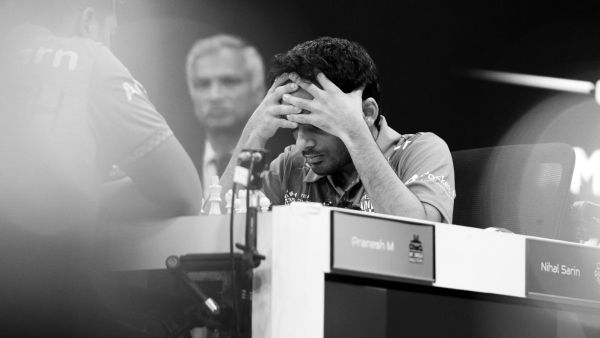
For Nihal Sarin, the loss was undoubtedly a bitter pill. Known for his resilience and fierce competitive spirit, this setback, particularly a loss on time in such a critical match, would be a tough experience. However, the chess world recognized that even the greatest players face such moments. Nihal’s "speed demon" reputation remains intact, and this experience, while painful, is likely to serve as a valuable learning opportunity. His ability to bounce back from such defeats has been a hallmark of his career, and his fans anticipate his strong return in future tournaments. Team management for the Gambits would undoubtedly be analyzing the psychological impact of this loss, not just on Nihal but on the entire squad, as they prepare for the third-place playoff.
Team Dynamics and Strategic Aftermath
The final round’s results forced an immediate re-evaluation of strategies for all teams. For the American Gambits, the disappointment of missing the final would be immense, requiring a rapid shift in mindset for the third-place match. Srinath Narayan, their captain, would be tasked with galvanizing his players for a shot at redemption against the very team that denied them the ultimate prize.
The CheQ Mumba Masters, on the other hand, found themselves in an unexpected position. Having played the spoiler, they now had a genuine chance at a podium finish. Their team morale would likely be high, fueled by Pranesh’s heroics, and they would approach the third-place match with renewed confidence.
The Alpine APL Pipers, despite their loss to the Kings, managed to secure a final spot. Their encounter with the Ganges Grandmasters promises to be a clash of contrasting styles and narratives, with the Pipers seeking to defend their title and the Ganges aiming to cap off a surprisingly dominant season.
Implications: The Road Ahead to the GCL Finals
The stage is now set for a thrilling conclusion to the 2026 Global Chess League, with two highly anticipated clashes scheduled for Sunday.
The Grand Finale: Ganges Grandmasters vs. Alpine APL Pipers
The grand final will feature the Ganges Grandmasters, who surprised many by topping the group, against the defending champions, Alpine APL Pipers. Ganges, despite not having the most illustrious roster on paper, demonstrated remarkable consistency, team cohesion, and strategic depth throughout the round-robin. Their journey to the final has been a testament to collective effort and effective leadership.
The Pipers, while showing moments of brilliance, also experienced vulnerabilities, most notably Carlsen’s unprecedented loss. However, their championship pedigree and the individual brilliance of their players, including Carlsen, make them formidable opponents. This final promises to be a strategic battle, a clash between the collective strength of Ganges and the individual firepower of the Pipers, with the GCL 2026 trophy hanging in the balance.
The Third-Place Showdown: A Rematch of Rivals
Adding a compelling layer of narrative, CheQ Mumba Masters and FYERS American Gambits will meet again in the third-place match. This is not merely a contest for a bronze medal; it is a battle for pride, redemption, and psychological supremacy. For the Gambits, it’s an opportunity to exact a measure of revenge and prove their mettle against the team that crushed their final dreams. For the Masters, it’s a chance to solidify their unexpected success and validate Pranesh M’s heroic performance. The emotional stakes will be exceptionally high, promising another gripping encounter between these two fiercely competitive teams.
The Legacy of GCL 2026
The 2026 Global Chess League has firmly established itself as a tournament defined by its unpredictability and dramatic flair. The rise of young talents like Pranesh M, Yagız Kaan Erdogmus, and Abhimanyu Mishra, coupled with the rare vulnerabilities shown by chess titans like Magnus Carlsen and Nihal Sarin, has created a compelling narrative. The league’s format, emphasizing shorter time controls and team dynamics, continues to attract a wider audience, showcasing the sport’s excitement and accessibility.
As the GCL heads into its final day, it leaves behind a trail of memorable games, stunning upsets, and compelling human stories. The league’s ability to blend strategic depth with high-octane action ensures its place as a premier event in the global chess calendar, continuing to inspire new generations of players and fans alike. The echoes of Pranesh M’s decisive victory and Firouzja’s redemption will undoubtedly resonate long after the final moves are made, cementing GCL 2026 as a landmark season in competitive chess.
