

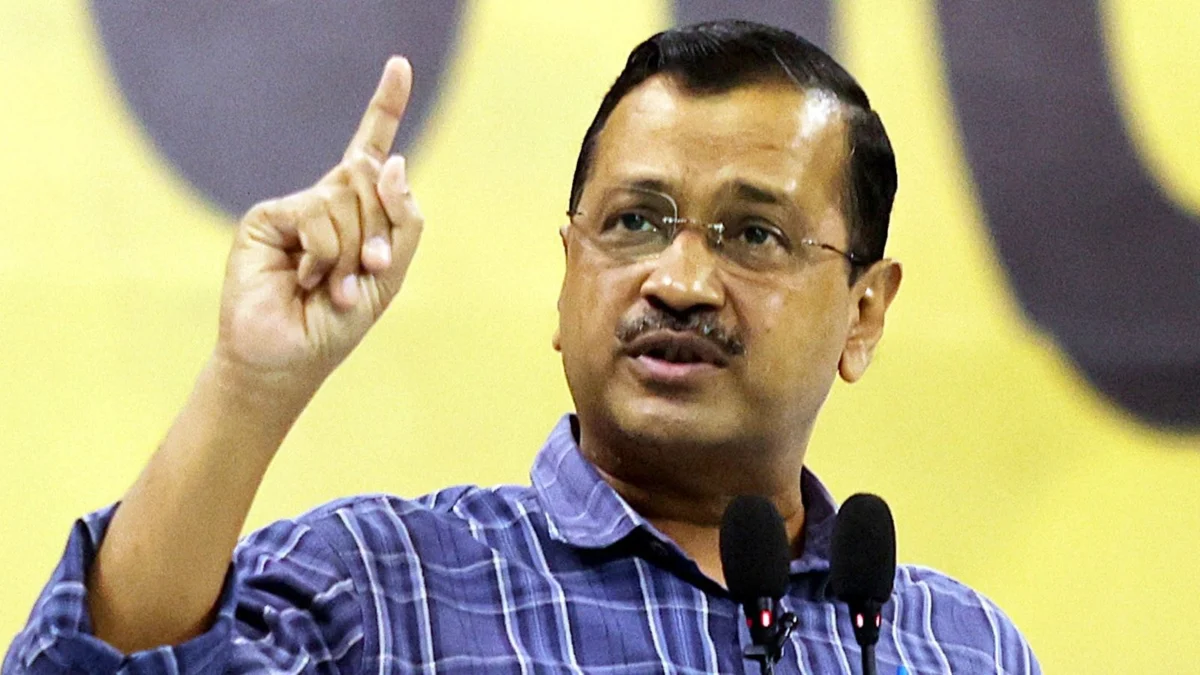
PANAJI, Goa – September 12, 2026 – In a significant political realignment poised to reshape the electoral battleground of Goa, the Aam Aadmi Party (AAP) and the Goa Forward Party (GFP) have officially announced their intent to form an alliance for the state’s Assembly elections, slated for early next year. This strategic partnership, provisionally dubbed the "Goa First Alliance," signals a concerted effort by these two parties to present a united front against the ruling Bharatiya Janata Party (BJP) and a clear departure from the traditional political dynamics dominated by national parties. The formal unveiling of this alliance is anticipated at a joint press conference scheduled for Sunday afternoon, marking a pivotal moment in the run-up to the 2027 polls.
Notably absent from this nascent coalition is the Indian National Congress, which currently holds a mere three seats in the 40-member legislative assembly. Sources close to the developing alliance indicate that despite overtures, the Congress has not yet committed to joining, a decision that has drawn sharp criticism from both AAP and GFP leadership who accuse the grand old party of inaction and internal disarray. This exclusion underscores a growing frustration among regional and emerging national parties with the Congress’s perceived inability to effectively consolidate opposition forces in the state.
The formation of the "Goa First Alliance" comes amidst a palpable shift in voter sentiment, largely fueled by a series of high-profile political defections that have plagued Goan politics over the past decade. With a message directly targeting voter disillusionment, new hoardings and posters featuring the symbols of both AAP and GFP have sprung up across key areas, bearing the stark message: "Congress and BJP cheated you twice. Don’t let them cheat you the third time." This pointed slogan encapsulates the core narrative the new alliance aims to project – a credible, stable alternative committed to the welfare of Goa, distinct from what they portray as opportunistic politics.
The announcement was preceded by a cryptic but highly anticipated post on X (formerly Twitter) by AAP convenor and Delhi Chief Minister Arvind Kejriwal on Saturday morning, stating, "Am going to Goa today to make a very big announcement." This generated immediate speculation, which was further fueled by the appearance of the joint hoardings, setting the stage for what promises to be a fiercely contested election season.
Chronology of a Shifting Landscape: From 2022 Defections to a New Alliance
The political landscape of Goa has been characterized by volatility and dramatic shifts, particularly since the 2017 Assembly elections. Understanding the current alliance requires a look back at the events that have shaped the state’s political consciousness.
2022 Assembly Elections and Their Aftermath:
The last Assembly elections in 2022 saw a fragmented mandate, with the BJP emerging as the single-largest party, securing 20 out of the 40 seats – just one short of a clear majority. The Congress, despite high hopes, managed to win 11 seats. The Aam Aadmi Party, contesting independently, made significant inroads, winning two seats in South Goa – Velim and Benaulim – demonstrating its growing appeal in the coastal state. The Goa Forward Party, led by the influential MLA Vijai Sardesai, contested in alliance with the Congress in 2022, but only managed to secure one seat, Fatorda, which Sardesai himself represents. This result was a significant blow to the GFP, which had previously played a kingmaker role in 2017.
The Shadow of Defections:
The most enduring and arguably damaging aspect of Goan politics in recent years has been the frequent defection of elected representatives. This phenomenon has not only eroded public trust but has also consistently undermined the mandate given by the electorate.
- 2019 Defections: In a major blow to the Congress, ten of its MLAs defected to the BJP, significantly bolstering the ruling party’s strength and effectively crippling the opposition.
- 2022 Post-Election Defections: The pattern tragically repeated itself. Just months after the 2022 elections, in September 2022, eight Congress MLAs, including former Chief Minister Digambar Kamat, switched allegiance to the BJP. This mass defection reduced the Congress’s tally from 11 to a mere three, effectively decimating its legislative presence and leaving it struggling to maintain its position as the primary opposition force. These repeated defections have created a strong public perception of instability and a lack of ideological commitment among politicians, a sentiment that the "Goa First Alliance" explicitly aims to capitalize on.
Failed Opposition Unity Talks:
In the lead-up to the 2027 elections, there have been numerous calls and attempts to forge a united opposition to challenge the BJP’s dominance. However, these efforts have largely been stymied by internal squabbles and a lack of decisive leadership from the Congress.
- GFP-Congress Talks: The Goa Forward Party had engaged in discussions with Congress leaders as recently as last month, exploring the possibility of a renewed alliance. However, these talks reportedly failed to yield any concrete results, with sources suggesting that the Congress leadership was either unwilling or unable to commit to a pre-poll pact.
- AAP’s Consistent Stance: The Aam Aadmi Party, while open to broader opposition unity, has consistently advocated for proactive alliance building, emphasizing that electoral preparations cannot be left to the last minute. Their frustration with the Congress’s perceived lethargy has been a recurring theme in their public statements.
This historical context of electoral underperformance, debilitating defections, and stalled unity talks forms the backdrop against which the "Goa First Alliance" has emerged, positioning itself as a pragmatic and timely response to the state’s political challenges.
Supporting Data and Strategic Rationale
The "Goa First Alliance" is not merely an opportunistic tie-up but a strategically calculated move aimed at leveraging the unique strengths of both parties while addressing the widespread anti-incumbency sentiment and voter fatigue with traditional political practices.
Electoral Mathematics and Combined Strengths:
- AAP’s Foothold: In 2022, AAP garnered a respectable vote share and secured two seats, primarily in the critical South Goa belt. This established a credible presence for the party beyond its traditional strongholds in Delhi and Punjab, proving its ability to connect with Goan voters on local issues. Their focus on governance, education, and healthcare resonates with a segment of the electorate seeking tangible development.
- GFP’s Regional Influence: Vijai Sardesai, as the leader of GFP, commands significant influence, particularly in the Salcete taluka, encompassing constituencies like Fatorda. While GFP’s overall seat count diminished in 2022, Sardesai’s individual victory in Fatorda, despite a Congress alliance that largely underperformed, underscores his personal appeal and the party’s localized strength. The GFP champions Goan identity, culture, and environmental protection, issues that are deeply rooted in the state’s ethos.
- Synergistic Combination: By combining AAP’s emerging urban and semi-urban base with GFP’s strong regional, Goan-centric appeal, the alliance aims to create a more formidable electoral machine. The alliance could potentially pool resources, cadres, and voter bases, making them a more potent challenger than either party could be individually. The strategy is to consolidate the anti-BJP vote, which was previously fragmented across multiple opposition parties.
Addressing the "Defection Burden":
The most significant aspect of the alliance’s messaging is its direct attack on the phenomenon of defections. As highlighted by GFP leaders, the Congress has "supplied" 18 MLAs to the BJP in the last seven years (10 in 2019 and 8 in 2022). This narrative positions the Congress not just as an ineffective opposition but as an enabler of BJP’s political stability, despite the latter often failing to secure a full mandate. The alliance seeks to reassure voters that their mandate will be respected and that their elected representatives will not switch sides, a crucial promise in a state that has witnessed political betrayal repeatedly. The "Goa First" nomenclature itself implies a commitment to the state’s interests above individual political gain or party high command directives.
Capitalizing on Anti-Incumbency:
Despite the BJP’s current strength, there is a simmering undercurrent of anti-incumbency in Goa. Issues ranging from environmental concerns, tourism management, infrastructure development, and unemployment often surface in public discourse. The alliance intends to channel this discontent into electoral support by projecting itself as a fresh, principled alternative. The joint posters explicitly stating "Congress and BJP cheated you twice" aim to tap into the public’s desire for a third, more reliable option.
The Vacuum of a Strong Opposition:
With the Congress significantly weakened by defections and seemingly unable to unite other opposition parties, a vacuum has been created for a credible alternative. The AAP-GFP alliance steps into this void, aiming to project itself as the primary vehicle for change. This move also reflects a broader trend in Indian politics where regional parties and newer national players are increasingly challenging the duopoly of the BJP and Congress, especially in smaller states where local issues and identity politics play a crucial role.
Official Responses and Counter-Narratives
The formation of the "Goa First Alliance" has elicited strong reactions from all involved parties, each attempting to frame the narrative in their favor.
AAP and GFP: A Unified Front of Frustration and Pragmatism:
Senior functionaries from both AAP and GFP have been vocal about the necessity of this alliance, attributing its formation to the Congress’s perceived failures.
A senior AAP leader, speaking on condition of anonymity, articulated the core sentiment: "There is a strong sentiment against the BJP. The fact is that Goa needs an alliance to defeat the BJP. Both the parties that are coming together are interested in an alliance with the Congress. But the Congress is perhaps not going to have that alliance until, say, three weeks before the election. So, this alliance, at this juncture, reflects a failure of the Congress." The leader further emphasized the need for proactive engagement: "Congress, being the most prominent party in the Opposition, should have taken the lead in forming an alliance, which they have not done. We cannot keep waiting. You do not get an alliance by giving statements in the media. Elections are not fought in the last three months. People need to prepare in advance." This statement clearly positions the alliance as a pragmatic response to the Congress’s perceived inaction.
A senior GFP leader echoed this sentiment, focusing heavily on the issue of defections: "The public sentiment is that there should be unity before the polls to defeat the BJP. The Congress has ‘supplied’ (defections) 18 MLAs to the BJP in the last seven years. This fact cannot be denied. These defections gave political stability to the BJP. People had not given them a complete mandate. The mandate was stolen by breaking the Congress." The GFP leader stressed the alliance’s commitment to offering a stable alternative: "So, we are first off the block, and are going ahead with an alliance (with AAP), which is what the people of Goa want. We are telling people that don’t give them (BJP and Congress) a chance to do a hat-trick. If you want to give an alternative to the people, it cannot be those who will defect. The Congress is on the wrong side of history here." This highlights the alliance’s determination to differentiate itself from the ‘defection politics’ that has alienated many voters.
Crucially, both parties have left "the door open" for "like-minded secular forces" to join the alliance in the future, signaling their willingness to expand the coalition should the Congress or other smaller parties have a change of heart. This strategic ambiguity allows them to proceed with their plans while maintaining a veneer of inclusivity.
Congress: Dismissal and Claims of Ongoing Talks:
The Indian National Congress, while acknowledging the discussions, has largely dismissed the immediate significance of the AAP-GFP alliance. State Congress president Girish Chodankar claimed that the hoardings featuring the AAP and GFP symbols were a ploy by the BJP to "confuse" the people. He maintained that the Congress was indeed in talks with the GFP and that discussions about an alliance were ongoing with the party’s high command.
However, Chodankar’s statement appears to be an attempt to downplay the new alliance and project an image of continued relevance. Given the public statements from AAP and GFP leaders about the failure of talks and the Congress’s inaction, Chodankar’s counter-narrative faces an uphill battle for credibility. The Congress’s internal challenges and the shadow of past defections make it difficult for the party to present a unified and decisive front.
Bharatiya Janata Party (BJP): A Watchful Silence (for now):
As of the initial reports, the ruling BJP has largely maintained a watchful silence, refraining from direct commentary on the nascent "Goa First Alliance." This is a characteristic strategy for the dominant party, often choosing to let opposition realignments play out before offering a definitive response. However, political observers anticipate that the BJP will eventually dismiss the alliance as an opportunistic grouping lacking a coherent agenda, or attempt to highlight internal contradictions within the new partnership. Historically, the BJP has benefited from a fragmented opposition in Goa, and any consolidation poses a direct challenge to its electoral dominance.
Implications for the 2027 Goa Assembly Elections
The formation of the "Goa First Alliance" carries profound implications for the political future of Goa, potentially altering the dynamics of the upcoming 2027 Assembly elections in several critical ways.
Reshaping the Electoral Battlefield:
The most immediate impact will be the creation of a more credible third front in Goan politics. Traditionally, Goa has witnessed a bipolar contest between the BJP and the Congress, with regional parties often playing spoiler or kingmaker roles. This alliance, however, aims to transcend that, positioning itself as a direct alternative to both established national parties. By consolidating anti-BJP and anti-defection votes, the alliance could significantly challenge the BJP’s path to a simple majority and could potentially push the Congress further to the periphery.
Challenges for the Alliance:
Despite the initial enthusiasm, the "Goa First Alliance" will face its own set of challenges.
- Seat Sharing: The most immediate hurdle will be the equitable and acceptable distribution of seats between AAP and GFP. Both parties will naturally seek to contest seats where they perceive a strong chance of victory, potentially leading to internal disagreements. Successful seat-sharing will require significant compromise and a focus on the larger goal of defeating the BJP.
- Ideological Cohesion: While both parties aim to challenge the status quo, their core ideologies and voter bases differ. AAP’s emphasis on urban governance and anti-corruption contrasts with GFP’s regional identity politics and focus on Goan heritage. Bridging these differences to present a unified narrative to the electorate will be crucial.
- Voter Acceptance: While the anti-defection sentiment is strong, convincing voters that this new alliance offers a stable and effective governance model will be paramount. Voters in Goa, having witnessed political instability, might be wary of new formations. The alliance needs to demonstrate a long-term commitment and a clear vision for the state.
Impact on Congress’s Future:
The exclusion from the "Goa First Alliance" is a major setback for the Congress. It further marginalizes a party already reeling from repeated defections and electoral defeats. The Congress now faces the difficult choice of either trying to join the alliance from a weaker bargaining position, attempting to form a separate front with other smaller parties, or contesting independently, which could further split the opposition vote and indirectly benefit the BJP. This development might also intensify internal calls within the Congress for decisive leadership and a clear strategy for revival in the state.
BJP’s Counter-Strategy:
The BJP, a seasoned electoral machine, will undoubtedly devise strategies to counter this new alliance. They might attempt to highlight any internal fissures, question the alliance’s stability, or intensify their focus on governance and development initiatives. The BJP’s strong organizational structure and the charisma of its national leadership will be key assets. They might also try to attract disgruntled elements from the opposition or further consolidate their existing vote base.
The "Goa First" Narrative:
The alliance’s chosen name and slogan, "Goa First Alliance" and "Congress and BJP cheated you twice. Don’t let them cheat you the third time," are powerful. They tap into a deep-seated desire among Goans for politics that prioritize the state’s interests over partisan games. If the alliance can successfully embody this spirit and present a clean, credible slate of candidates, it could genuinely resonate with voters tired of the political merry-go-round.
In conclusion, the AAP-GFP alliance marks a significant turning point in Goan politics. It represents a bold attempt by emerging and regional forces to challenge the established order and offer a fresh alternative to a disillusioned electorate. While challenges abound, the "Goa First Alliance" has undeniably injected a new level of dynamism and uncertainty into the political landscape, promising a fascinating and fiercely fought electoral battle in early 2027. The coming months will reveal whether this alliance can truly deliver on its promise of a stable and principled government for Goa.
