

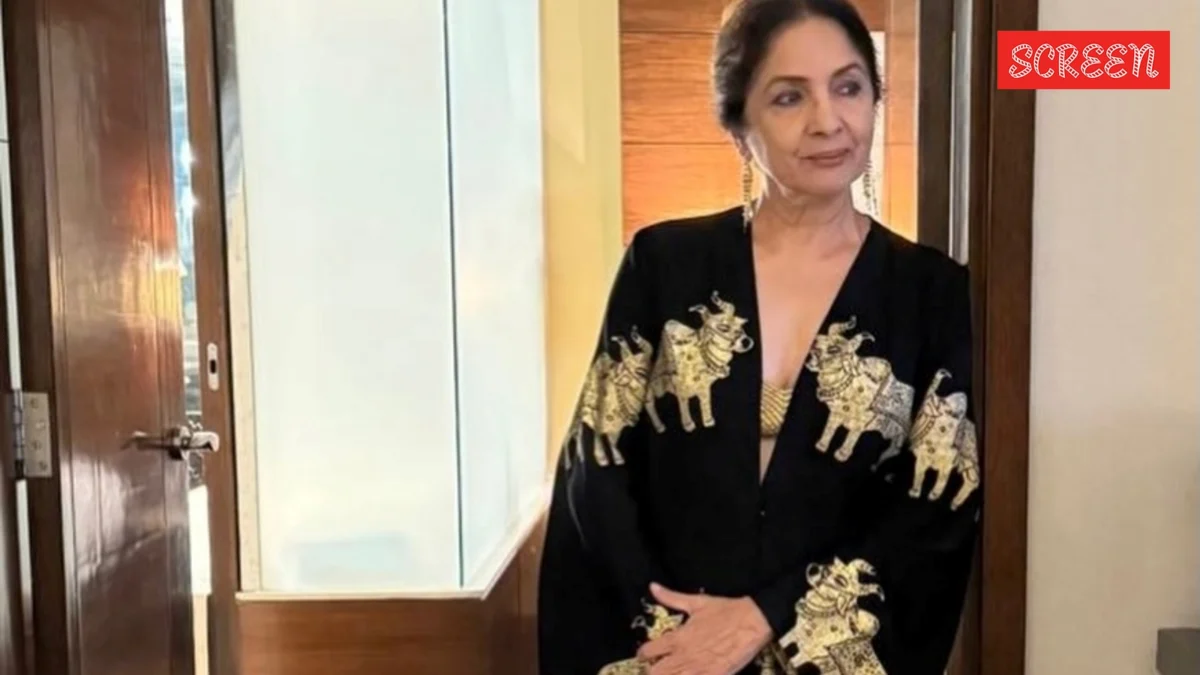
Veteran Indian actor Neena Gupta, a household name synonymous with grace and resilience, has once again opened a window into her deeply personal journey of raising her celebrated fashion designer and actor daughter, Masaba Gupta. In a recent candid conversation, Gupta has articulated her perspective on single motherhood, emphasizing the profound challenges it entails and her personal conviction that it is not a path she would actively advocate for others, unless it stems from a deeply personal and unyielding desire. Her reflections offer a nuanced understanding of the complexities of life choices, societal pressures, and the unwavering strength required to navigate unconventional paths.
Gupta’s relationship with former West Indies cricket legend Vivian Richards in the late 1980s led to the birth of their daughter, Masaba. At the time, Richards was married, and while their relationship was significant, it did not culminate in marriage. Gupta made the conscious decision to raise Masaba in India as a single mother, a choice that has shaped her life and career in profound ways. She has spoken previously about the arduous nature of this journey, particularly her commitment to raising Masaba without seeking financial or emotional support from external sources.
The Demands of Single Parenthood: A Personal Stance
In a recent interview with Zoom, Neena Gupta was unequivocal in her stance regarding the propagation of single motherhood. "I would not propagate it," she stated, her voice carrying the weight of experience. "I have always said, ‘Don’t do it because I did it.’ It is very difficult, and it is not fair on the child. I will still say that."
Her perspective, she clarified, is not born from a place of fear of societal judgment, a concern she has long since transcended. Instead, it is rooted in a deeply felt understanding of the multifaceted demands of single parenthood. "It is not because of judgement. It is very tough on your body, your soul and your finances, and it is not good for your child," she elaborated. "So, that is why I will not tell anybody to go that way. Unless they want to, it is their choice." This statement underscores a crucial distinction: while she acknowledges the autonomy of individual choice, her personal experience has led her to a sober assessment of the inherent difficulties.
Honesty as a Cornerstone: Building Trust with Masaba
A central tenet of Neena Gupta’s approach to single motherhood was her unwavering commitment to honesty with her daughter. Recognizing the unique circumstances of Masaba’s conception and birth, Gupta prioritized open communication, ensuring her daughter received the truth directly from her, rather than through the often distorted lens of hearsay.
"Under the circumstances in which I had my baby, it was very important for me to tell her the truth," Gupta explained. "I systematically, slowly and gradually told her the truth whenever she asked me, in such a way that she didn’t even hate her father." This delicate approach aimed not only to inform Masaba but also to foster a nuanced understanding of her relationship with Vivian Richards, avoiding the cultivation of bitterness or resentment.
Gupta consciously worked to present a balanced narrative, allowing Masaba to form her own perceptions as she matured. "I made her like her father," she revealed. "I told her why and what had happened as she grew up. So, there was no malice or anger towards me because I told her the truth. It is very important because, rather than her hearing something from outside, I thought it was better that I told her myself. I think that was a very sensible thing that I did." This proactive and empathetic approach highlights her dedication to Masaba’s emotional well-being and her belief in the power of truth in fostering healthy familial relationships, even under unconventional circumstances.
Acknowledging Imperfections: Apologies and the Wisdom of Experience
Neena Gupta has also been remarkably candid about the emotional toll her choices took, even admitting to apologizing to Masaba over the years for the absence of a father figure during her formative years. "I am so honest with her that many times I have said sorry to her that you didn’t have a father with you when you were young. It is my fault, but she understands," Gupta shared, her words resonating with a profound sense of maternal responsibility.
Her reflections also touch upon the universal truth that decisions made in youth are often undertaken without a full grasp of their long-term consequences. "We all make mistakes. When we are young, our parents tell us certain things and we don’t listen. That wisdom comes later," she observed, a sentiment that resonates with many who have navigated the complexities of life and its often unforeseen repercussions. This acknowledgement of fallibility and the gradual acquisition of wisdom adds another layer of authenticity to her narrative.
The Genesis of a Unique Relationship: A Look Back
Neena Gupta’s autobiography, "Sach Kahun Toh," offers a more detailed account of her relationship with Vivian Richards and the circumstances surrounding Masaba’s birth. She recounts the moment she discovered her pregnancy after Richards had already returned to his home country. "Vivian and I had an affair and I got pregnant. He had already returned home when I found out," she wrote, setting the stage for the personal decisions that followed.
The period following this revelation was marked by considerable internal deliberation and external advice. "Some people advised me to get an abortion. Others cautioned against the perils of being a single parent. I listened to everyone patiently," she recalled. However, the ultimate decision was a deeply personal one, guided by her own inner voice. "They were all very concerned, I know. But once I was back home and alone, I asked myself: What do you think? How does this make you feel? The answer was: I was giddy with joy." This profound sense of personal joy and maternal instinct trumped any societal pressures or pragmatic concerns.
Gupta also sheds light on the nature of her relationship with Richards, acknowledging its complexities. "Our relationship continued on and off for a few years and we had some beautiful moments and also some ugly ones. It was long distance and a very different kind of relationship," she described. The fact that Richards was married at the time undoubtedly added layers of complexity to their dynamic, making Gupta’s decision to proceed with her pregnancy and raise Masaba independently all the more courageous.
Societal Context and the Evolution of Family Structures
Neena Gupta’s narrative arrives at a time when conversations around family structures are evolving. While traditional notions of the nuclear family remain prevalent, there is a growing recognition and acceptance of diverse family forms, including single-parent households, same-sex parent families, and blended families. Gupta’s honest portrayal of her experience, while acknowledging its difficulties, contributes to this broader dialogue by offering a real-life perspective that challenges simplistic narratives and celebrates the strength of individual choices and maternal resilience.
Her journey underscores the fact that life choices are rarely black and white. They are often born from a confluence of personal desires, societal limitations, and individual circumstances. Gupta’s decision to embrace motherhood as a single parent, while acknowledging the immense personal sacrifice and hardship involved, also highlights her unwavering commitment to her daughter and her belief in her own agency.
Implications for Future Discussions
Neena Gupta’s candid reflections serve as a valuable resource for discussions on single parenthood, personal agency, and the complexities of relationships. Her insistence on honesty with her child, her acknowledgement of the challenges, and her ultimate embrace of her path provide a nuanced perspective that moves beyond judgment and embraces the lived reality of individuals who navigate unconventional life choices.
As society continues to embrace a wider spectrum of family structures, the voices of individuals like Neena Gupta become increasingly important. They offer not only personal narratives but also valuable insights into the emotional, psychological, and practical considerations that underpin such life-altering decisions. Her message is one of resilience, honesty, and the profound power of maternal love, a testament to the strength of the human spirit in forging its own path, regardless of the challenges. The enduring legacy of her journey lies not just in her successful career but in the powerful and honest narrative she continues to share, inspiring and informing conversations for generations to come.
