

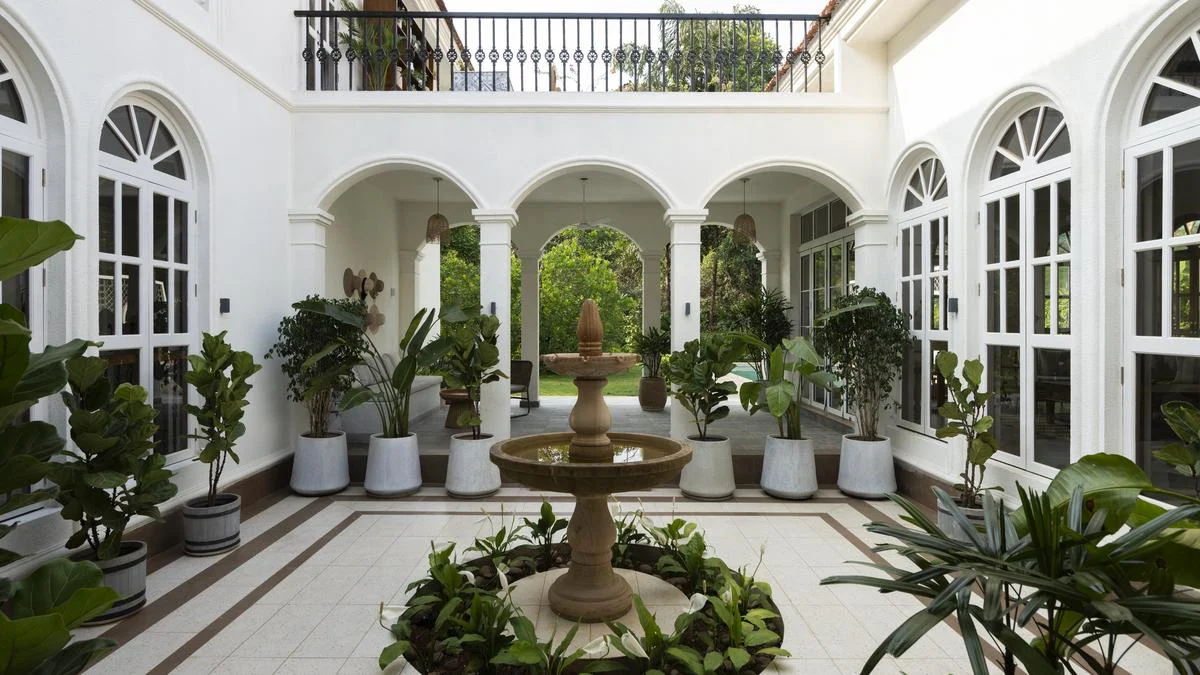
In a decade, the Isprava Group has redefined the concept of luxury real estate in India, moving beyond ostentatious displays of wealth to craft homes imbued with history, individuality, and an almost artisanal sensibility. The brothers behind the enterprise, Dhimaan and Nibhrant Shah, have cultivated a business model that not only builds bespoke residences but also manages their entire lifecycle, from conception to curated social experiences, offering a unique proposition in a burgeoning market.
The Genesis of an Unconventional Dream
Ten years ago, when Dhimaan and Nibhrant Shah embarked on their real estate journey in Goa, the prevailing notion of luxury was largely defined by opulence: expansive marble floors, floor-to-ceiling glass facades, and sheer square footage. However, the Shah brothers harbored a different vision. Their own homes were intended to tell a story, to evoke a sense of accumulated history rather than a stark, immediate grandeur.
This philosophy was vividly illustrated by one of their earliest acquisitions for an Isprava property. It wasn’t a piece of contemporary furniture, but the façade of a dilapidated haveli from Gujarat. Dhimaan recalls the meticulous process: the entire architectural element was carefully dismantled, transported to a warehouse for restoration, and then shipped to Goa. There, it was ingeniously repurposed as a grand cabinet, becoming a striking centerpiece in the living and dining area of their second home. "It was our second home," Dhimaan muses, underscoring the deeply personal and experimental nature of their initial endeavors. "We had four employees, including the two of us."
This foundational instinct—to imbue new constructions with the patina of age and personal narrative—remains the cornerstone of Isprava’s ethos. What began as a niche developer in Goa has blossomed into a diversified collection of businesses encompassing luxury homes, villa rentals, and a private club. The company’s footprint has expanded beyond its Goan origins to include sought-after locales like Alibaug and Kasauli, aligning with the growing Indian appetite for professionally managed second homes. The central question now facing Isprava is whether it can successfully scale a business that is intrinsically built on rarity and individuality.

Cultivating Uniqueness: The Isprava Design Philosophy
The Shahs are adamant that no two Isprava homes are identical. Their design process begins from a blank slate, prioritizing elements that are inherently unique and often irreplaceable. One home might feature handcrafted tiles, meticulously commissioned in small, artisanal batches. Another could showcase vintage teak furniture or salvaged architectural fragments sourced from historical palaces and havelis. At one property, a charming birdbath is ingeniously fashioned from a repurposed haveli basin. In another, the door handles are crafted from the walking sticks of the homeowner’s grandfather, imbuing the everyday with profound personal meaning.
"We prefer things that are so unique that literally even if you had the money, you couldn’t buy it," Dhimaan explains, highlighting their commitment to exclusivity that transcends mere financial transaction. This dedication to sourcing and integrating unique elements ensures that each Isprava home possesses a distinct character and a palpable sense of history.
Global Aspirations, Local Sensibilities: Air, Light, and Sustainable Design
Interestingly, Isprava’s clientele is not necessarily seeking an overtly traditional Indian aesthetic. Many of their buyers are well-traveled individuals whose design inspirations often draw from international experiences. They frequently present photographs of homes encountered in Europe or Southeast Asia during initial consultations. The challenge for Isprava, therefore, lies in translating these global expectations of luxury into a context that feels authentically local.
In Goa, this translates to a design approach that respects the region’s Portuguese-influenced architectural vernacular for exteriors, while allowing interiors to embrace a more contemporary sensibility. While the homes are equipped with sophisticated home automation and state-of-the-art appliances, they are equally adorned with indigenous landscaping, reclaimed furniture, and locally sourced finishes.

Dhimaan emphasizes two non-negotiable aspects in the planning of their houses: "air and light." This commitment extends to their preference for lower-density construction, intentionally leaving a larger portion of a site undeveloped compared to their competitors. Their development philosophy is eloquently encapsulated by Dhimaan’s observation about Goa: development should be "additive to the natural environment, not extractive." This approach resonates particularly in a state where rapid luxury development has, in some instances, altered the very landscapes that initially drew people to the destination. However, it is a claim that warrants continued scrutiny, and Isprava’s narrative of its engagement with local communities and investments in infrastructure is best understood through the lens of those communities themselves.
The Evolving Second Home: From Retreat to Hybrid Asset
The Isprava model also reflects a significant evolution in the concept of the second home. It is no longer merely a passive retreat visited for a few weeks annually. India’s rapidly expanding market for managed villas has given rise to a hybrid property model: a blend of private residence, investment vehicle, and boutique hotel.
This is where Lohono, Isprava’s hospitality arm, plays a pivotal role. Launched just prior to the onset of the COVID-19 pandemic, Lohono expertly manages its homeowners’ properties, providing a comprehensive suite of services including housekeeping, landscaping, pool maintenance, security, and concierge assistance. According to the Shah brothers, approximately three-quarters of Isprava homeowners eventually opt to place their properties into the rental pool. This allows the homes to generate income when their owners are absent, while retaining the service infrastructure akin to a luxury hotel.
The lines between a private home and a hotel become particularly blurred in the intricate details, where customization is paramount. Isprava has catered to diverse client needs, from a film enthusiast desiring a private cinema to a hidden bedroom concealed behind a bookcase. Homes have been thoughtfully redesigned to accommodate families with young children, individuals with physical disabilities, elderly residents, and even, in at least one notable instance, beloved family dogs, for whom the owners sought only the finest accommodations.

The Shahs recognize that their clientele’s definition of luxury is less about ostentatious displays of wealth and more about the seamless elimination of inconvenience. This translates into practical design considerations, such as wider passageways, bathrooms equipped with reading nooks, doors designed for easy access for pets, and bespoke beds and benches. Concurrently, the service infrastructure ensures that a technician is available at a moment’s notice to address any issues, or a celebratory party can be arranged with minimal notice.
Beyond the Walls: The Isprava Ecosystem
The company’s commitment to an elevated lifestyle extends beyond the confines of individual properties. Solene, Isprava’s private club in Goa, launched last year, offering a curated third space for homeowners and like-minded members. Initially anticipating around 150 members, the club has surpassed expectations, now boasting more than double that number, prompting a pause in active membership expansion.
This deliberate evolution from a real estate developer to a hospitality provider, and subsequently to a private club, underscores a strategic vision. "Ten years ago, the goal was never to build a real estate business," Dhimaan, the more voluble of the two brothers, reveals. "It was: let’s build a stable of luxury lifestyle brands." While this ambition is not uncommon in the Indian luxury sector, Isprava’s model represents a distinctive effort to exert control over nearly every facet of the luxury home experience: its architectural design, interior décor, furnishing, ongoing maintenance, rental management, and ultimately, the social milieu surrounding it. This comprehensive approach may well prove to be its most significant differentiator for its discerning clientele.
The Scalability Paradox: Maintaining Intimacy in Growth
While the allure of an Isprava home lies in its perceived individuality, crafted specifically for a particular person in a particular place, the company is simultaneously building a robust and scalable business. The enduring question for its next decade will be whether these meticulously crafted homes can continue to feel as intimately personal as they do today, even as the company expands.

"A home should feel collected, not assembled," Dhimaan insists. He also highlights another significant advantage: the profound privacy afforded to their clients. "You’ll notice none of our buyers’ details are ever in the press," he observes. "Today, if a celebrity buys an apartment in Mumbai, it’s all over the news. And people really appreciate that about us." This commitment to discretion further enhances the exclusivity and desirability of the Isprava experience, offering a sanctuary where personal lives remain sacrosanct, even amidst the growing visibility of their luxury brand.
