

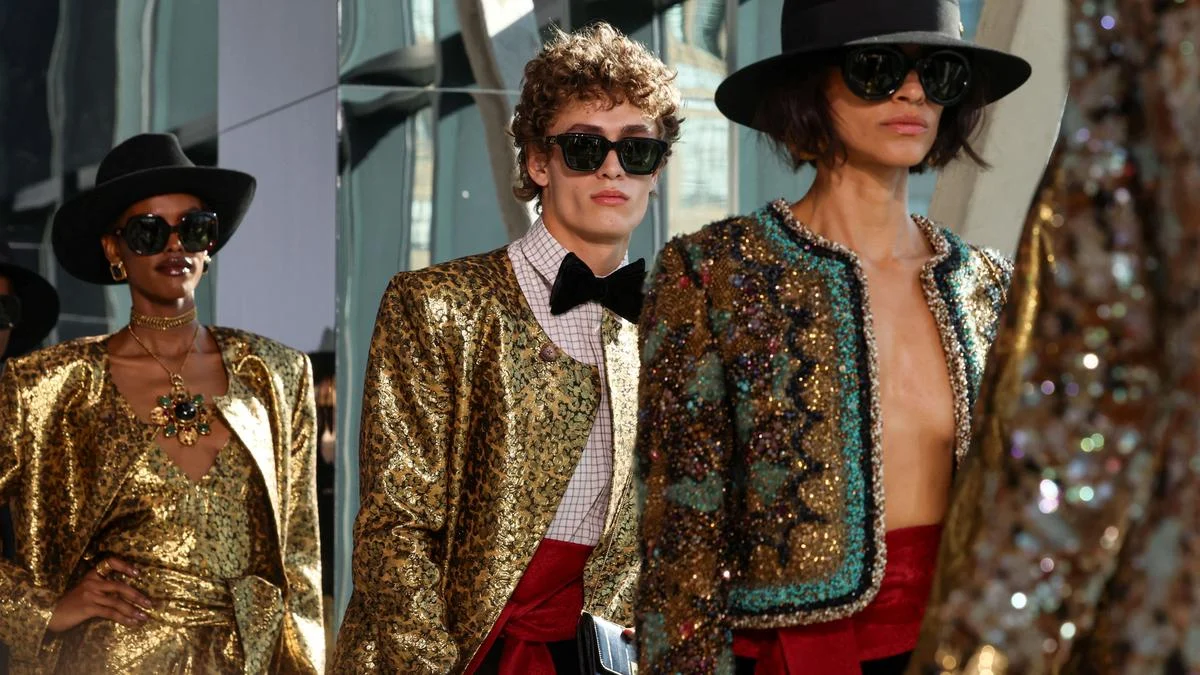
New York, NY – September 16, 2026 – Two decades after a formative, albeit challenging, debut, celebrated Indian designer Sabyasachi Mukherjee has made a resplendent and powerful return to the global fashion stage, electrifying New York Fashion Week with his latest collection, "Bengal Byzantine Broadway." The show, a breathtaking fusion of Indian heritage and Western sartorial influences, marked a significant milestone for Mukherjee, validating his long-held ambition and showcasing the evolution of his distinctive aesthetic to an international audience.
The collection, a vibrant tapestry woven from the rich cultural threads of Bengal and the opulent grandeur of the Byzantine Empire, resonated deeply with attendees, drawing widespread critical acclaim. It served not only as a testament to Mukherjee’s enduring artistry but also as a potent symbol of his journey from a nascent designer seeking his footing to a globally recognized couturier.
A Long-Awaited Homecoming: The Significance of Sabyasachi’s Return
Sabyasachi Mukherjee’s presence at New York Fashion Week in 2026 is more than just a scheduled appearance; it’s a poignant narrative of perseverance and strategic growth. Twenty years prior, in 2006, Mukherjee ventured to the bustling metropolis with a collection titled "Snail." This was a deliberate, almost paradoxical, statement from a designer renowned for his flamboyant bohemia and intricate handcraft. The collection featured understated school uniforms, practical maternity wear, clean silhouettes, and cotton fabrics adorned with restrained embroidery. His intention was to advocate for a slower, more mindful approach to fashion in an era increasingly dominated by mass production and fleeting trends.
However, his inaugural foray into the unforgiving landscape of New York Fashion Week proved to be a stark lesson in the realities of the global fashion industry. Mukherjee himself has been candid about the experience, describing it as "too ambitious, too little power." The debut, while conceptually rich, lacked the necessary infrastructure and influence to make the intended impact. This humbling experience led him to make a solemn promise to himself: he would return, but only when the timing was precisely right, when his brand had cultivated the strength and recognition to truly make its mark.
Tuesday afternoon’s spectacle at New York Fashion Week was the realization of that promise. The air crackled with anticipation as the show commenced, and the debut of "Bengal Byzantine Broadway" immediately signaled a departure from his earlier, more subdued approach. This was a Sabyasachi ready to command attention, his vision amplified by years of honing his craft and building a formidable global brand.
"Bengal Byzantine Broadway": A Symphony of Cultures and Craftsmanship
The collection itself was a masterclass in cultural dialogue, a seamless amalgamation of the artisanal traditions of Bengal and the historical opulence of the Byzantine era. This ambitious fusion was immediately evident as American supermodel Christy Turlington, a figure synonymous with grace and timeless elegance, opened the show. Turlington stepped onto the runway in a striking denim-on-denim Canadian tuxedo, an unexpected yet brilliant choice that juxtaposed the quotidian with the extraordinary. This seemingly simple outfit was elevated by the presence of breathtaking high jewelry, a sly pairing of the everyday with the spectacular that set the tone for the entire collection.
The jewelry, a central element of the "Bengal Byzantine Broadway" narrative, was nothing short of museum-worthy. A magnificent gold cuff, its form exquisitely borrowed from a third-century Roman sarcophagus, adorned Turlington’s wrist. Its surface was intricately set with garnet and tourmaline cabochons, hinting at the rich history and craftsmanship that inspired the pieces. Further along, a Byzantine animal panel was reimagined as a captivating tiger-claw necklace. The brown diamonds embedded within its design caught the light with every subtle movement of Turlington’s stride, imbuing the piece with a dynamic, almost alive, quality. This was not mere adornment; it was a narrative woven in precious metals and stones, where museum objects were granted bodies, gestures, and an undeniable attitude.
The collection continued to unfold as a visual poem, showcasing Mukherjee’s unparalleled ability to translate historical narratives into contemporary fashion. Silks of Bengal, renowned for their luxurious sheen and intricate weaves, were reimagined in silhouettes that echoed Byzantine robes and regal attire. The vibrant color palettes, often seen in traditional Indian textiles, were infused with the deep jewel tones characteristic of Byzantine art – rich purples, emerald greens, sapphire blues, and opulent golds.
Mukherjee’s signature use of hand embroidery, a hallmark of his design philosophy, was elevated to new heights. Intricate zardozi work, a traditional Persian embroidery technique that uses gold and silver threads, was applied to contemporary fabrics, creating a stunning interplay of texture and shine. Motifs drawn from ancient Indian art, such as peacocks, lotus flowers, and paisley patterns, were subtly interwoven with Byzantine-inspired iconography, including eagles, crosses, and geometric patterns. This meticulous attention to detail and the seamless integration of diverse cultural elements underscored Mukherjee’s mastery of his craft.
The menswear component of "Bengal Byzantine Broadway" was equally compelling. Sharp tailoring met traditional Indian garments, with intricately embroidered sherwanis paired with modern trousers and jackets. The collection explored the duality of the modern man, one who is rooted in heritage yet embraces contemporary style. The use of rich velvets, brocades, and silks in deep, resonant colors added a layer of sophisticated luxury.
A Journey Through Time: The Evolution of Sabyasachi’s Aesthetic
The "Bengal Byzantine Broadway" collection is a potent manifestation of Sabyasachi Mukherjee’s twenty-year evolution as a designer. His initial foray into New York was characterized by a desire to champion a slower, more thoughtful approach to fashion. While the "Snail" collection might have been ahead of its time in its philosophical underpinnings, its aesthetic was perhaps too restrained to capture the attention of a market accustomed to bolder statements.

However, the intervening years have seen Mukherjee refine his vision, build a robust brand, and gain a profound understanding of the global fashion landscape. He has successfully integrated his commitment to handcraft and traditional techniques with contemporary sensibilities and commercial viability. The "Bengal Byzantine Broadway" collection demonstrates this maturity. It is both a celebration of his Indian roots and a sophisticated engagement with international fashion discourse.
The choice of a denim-on-denim ensemble to open the show was a deliberate and strategic move. It signaled a willingness to subvert expectations and to demonstrate that high fashion can be born from seemingly humble beginnings. This pairing of the accessible with the extraordinary is a recurring theme in Mukherjee’s work, reflecting his belief that true luxury lies not just in the materials used but in the story, the craftsmanship, and the emotional connection they evoke.
The use of historical references, particularly from the Roman sarcophagus and Byzantine art, adds a layer of intellectual depth to the collection. Mukherjee is not merely referencing the past; he is reinterpreting it, imbuing it with new life and relevance for the contemporary wearer. This ability to bridge epochs and cultures is what sets him apart and what has cemented his status as a designer of international repute.
Supporting Data and Critical Acclaim
The success of "Bengal Byzantine Broadway" was reflected in the immediate and overwhelmingly positive reaction from fashion critics, industry insiders, and attendees alike. Social media buzzed with images and commentary, highlighting the collection’s innovative designs, impeccable craftsmanship, and Sabyasachi’s triumphant return.
Fashion publications lauded the collection’s thematic coherence and its ability to blend disparate cultural influences with such grace. The intricate detailing, the luxurious fabrics, and the bold yet sophisticated styling were consistently praised. Critics noted the collection’s strong narrative, which spoke of heritage, ambition, and the enduring power of storytelling through fashion.
The choice of Christy Turlington to open the show was also widely celebrated, seen as a powerful endorsement of Mukherjee’s vision and his growing influence on the global fashion scene. Her presence lent an air of timeless elegance and gravitas, perfectly complementing the collection’s historical and artistic references.
Industry analysts are projecting a significant boost in global sales for Sabyasachi Mukherjee following this successful New York Fashion Week presentation. The collection is expected to resonate with a discerning international clientele looking for unique, handcrafted pieces with a strong cultural narrative. The brand’s strategic expansion into new markets and its continued focus on quality and craftsmanship are likely to further solidify its position as a leading luxury fashion house.
Official Responses and Future Implications
While specific official statements from fashion week organizers regarding Sabyasachi’s show were not immediately available, the overwhelming positive reception from the fashion community serves as an implicit endorsement. The presence of a designer of Mukherjee’s caliber and the critical acclaim his collection received undoubtedly adds significant prestige to New York Fashion Week.
The implications of "Bengal Byzantine Broadway" for Sabyasachi Mukherjee and for the broader fashion industry are substantial. For Mukherjee, this collection represents a significant personal and professional triumph. It validates his twenty-year journey and solidifies his position as a designer capable of captivating the most discerning international audiences. His return to New York marks a new chapter, one where he is not just participating but leading, setting trends, and influencing global fashion conversations.
For the fashion industry, Sabyasachi’s success underscores the growing importance of cultural heritage and artisanal craftsmanship in luxury fashion. His ability to weave together diverse cultural narratives into cohesive and commercially successful collections demonstrates a powerful model for global brands. It signals a shift towards a more inclusive and globally conscious fashion landscape, where designers from different backgrounds can find a platform to showcase their unique perspectives.
The collection’s success also highlights the enduring appeal of unique storytelling in fashion. In an era of rapid consumption, consumers are increasingly seeking out brands that offer more than just clothing; they desire pieces that carry meaning, history, and a connection to the wearer’s identity. Sabyasachi Mukherjee, with his profound understanding of cultural narratives and his unwavering commitment to craftsmanship, is perfectly positioned to meet this demand. His triumphant return to New York Fashion Week is a testament to his vision, his resilience, and the timeless allure of his artistry.
