

The Indian two-wheeler industry has signaled a robust recovery and a transformative shift in consumer preferences as domestic sales for August 2026 breached the psychological milestone of 2 million units. According to the latest industry data, the total domestic volume reached 20,34,698 units, marking a healthy 10.46% year-on-year (YoY) growth compared to the 18,41,954 units recorded in August 2025.
This growth trajectory was underpinned by the stellar performance of the top 10 best-selling models, which collectively accounted for 13,28,231 units—a 65% share of the total market. While traditional internal combustion engine (ICE) commuters like the Hero Splendor continue to anchor the market, the month was defined by two distinct trends: the aggressive surge of electric mobility led by the Bajaj Chetak and a significant pivot toward scooters as the primary driver of industry expansion.
Main Facts: A Market in Ascent
The August 2026 sales figures reveal a market that is both expanding and evolving. The top 10 two-wheelers saw a combined volume increase of 1,02,999 units, representing an 8.41% growth for the elite group.
Key Highlights:
- The Undisputed Leader: Hero Splendor maintained its throne, crossing the 3.5 lakh mark with 3,53,842 units sold. It alone contributed over a quarter of the top 10’s total volume.
- The Electric Breakout: The Bajaj Chetak emerged as the "star of the month," recording a staggering 272.83% growth. This leap from 14,014 units in August 2025 to 52,248 units in August 2026 marks one of the fastest escalations for an EV in the top 10 rankings.
- Scooter Dominance: Scooters were the primary engine of growth for the entire industry. Domestic scooter sales rose by 23.76% YoY, contributing roughly 85% of the industry’s net volume gains.
- Export Strength: Beyond domestic borders, Indian manufacturers found significant success abroad, with exports growing by 28.53% to reach 5,55,292 units.
Chronology: The Road to August 2026
The lead-up to these figures has been marked by strategic product interventions and a stabilizing macroeconomic environment.
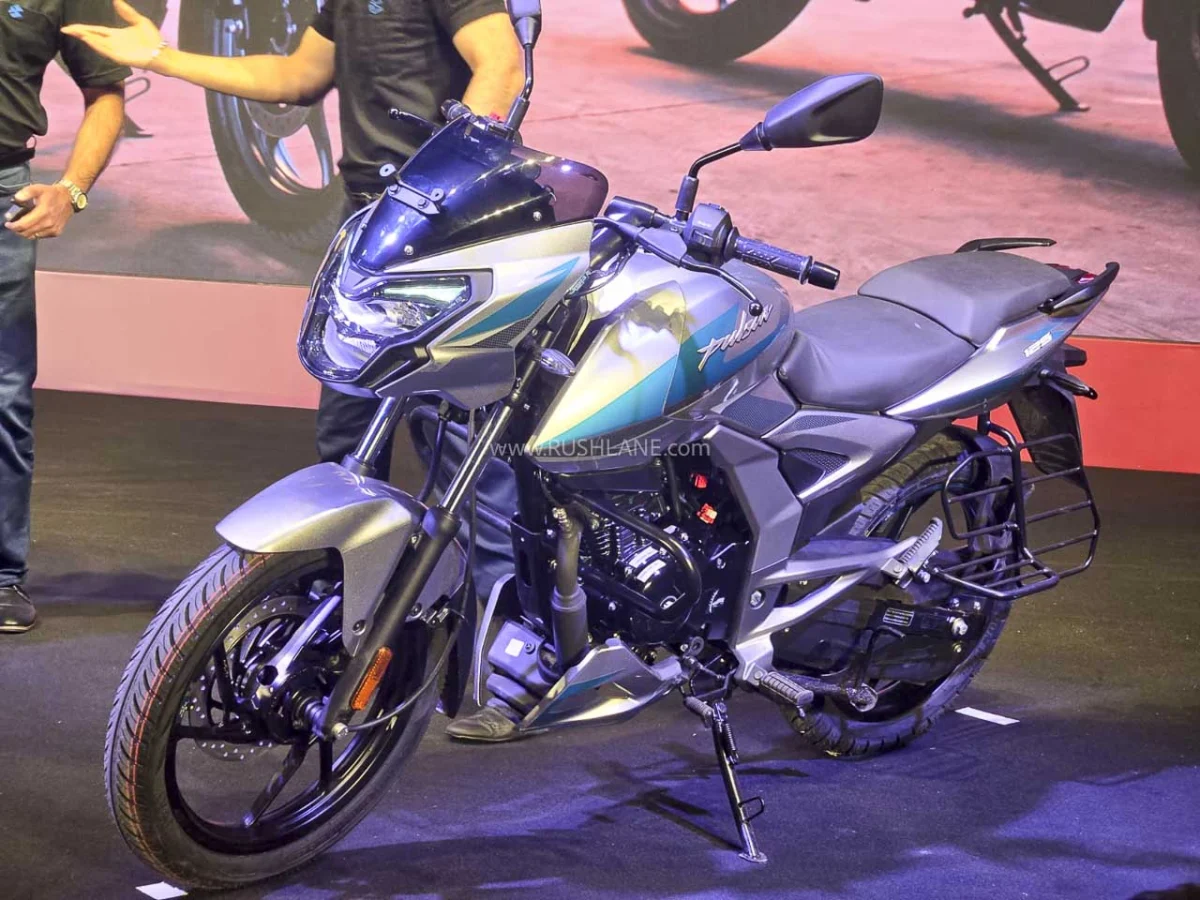
In early 2026, several manufacturers anticipated a shift in consumer demand toward feature-rich and tech-enabled vehicles. Bajaj Auto, for instance, began a phased update of its Pulsar lineup. While some variants saw a temporary dip in sales (10.55% decline) due to inventory transitions and the phasing out of older iterations, the brand is currently in the midst of launching the 2026 NS200 and N250, equipped with advanced TFT screens and WP Apex forks.

Similarly, TVS Motor Company utilized the month of August to refresh its legendary Apache range. The launch of updated 160cc and 200cc variants, featuring new top-tier trims and enhanced connectivity, helped the Apache brand post a 22.39% growth.
On the commuter side, the decline of the Hero HF Deluxe (down 22.25%) suggests a shifting tide in the entry-level segment. Consumers who previously opted for basic 100cc commuters are increasingly gravitating toward either premium commuters like the Honda Shine or transitioning directly to electric alternatives as charging infrastructure improves.
Supporting Data: A Detailed Breakdown
To understand the health of the industry, one must look at the performance of the individual heavyweights and the segment-wise distribution.
The Top 10 Leaderboard (August 2026)
| Rank | Model | Aug-26 Sales | Aug-25 Sales | YoY Growth (%) |
|---|---|---|---|---|
| 1 | Hero Splendor | 3,53,842 | 3,11,698 | 13.52% |
| 2 | Honda Activa | 2,55,815 | 2,44,271 | 4.73% |
| 3 | Honda Shine | 1,80,626 | 1,63,963 | 10.16% |
| 4 | TVS Jupiter | 1,47,450 | 1,42,411 | 3.54% |
| 5 | Bajaj Pulsar | 97,839 | 1,09,382 | -10.55% |
| 6 | Hero HF Deluxe | 69,794 | 89,762 | -22.25% |
| 7 | Suzuki Access | 69,558 | 60,807 | 14.39% |
| 8 | TVS Apache | 55,123 | 45,038 | 22.39% |
| 9 | Bajaj Chetak | 52,248 | 14,014 | 272.83% |
| 10 | TVS XL 100 | 45,936 | 43,886 | 4.67% |
Segment-Wise Performance
The disparity between the growth of scooters and motorcycles is perhaps the most telling statistic of the year.
- Scooters: Totaled 8,55,715 units in domestic sales. The 23.76% growth reflects increasing urbanization and a preference for gearless convenience. The Suzuki Access and TVS Jupiter continue to provide strong competition to the market-leading Honda Activa.
- Motorcycles: While still the larger segment by volume (11,33,047 units), the growth was a modest 2.39%. This suggests a saturated market in the traditional commuter space, even as the premium motorcycle segment (350cc and above) begins to gain traction.
- Mopeds: The TVS XL 100 remains the sole survivor in this category, showing a resilient 4.67% growth domestically, though moped exports collapsed by over 67%.
Export Dynamics
Indian two-wheelers are increasingly being viewed as global products. The 28.53% jump in exports was driven primarily by motorcycles, which saw a 33.43% increase to 4,86,325 units. This highlights the success of "Made in India" products in Southeast Asian, Latin American, and African markets.

Official Responses and Market Context
While specific executive quotes were not released alongside the raw data, industry analysts and company filings provide context for these results.
Bajaj Auto’s performance with the Chetak is being hailed as a masterclass in scaling an EV brand. Analysts point to the company’s decision to expand the Chetak network to more tier-2 and tier-3 cities as the primary driver for its 272% growth. By offering a product that balances heritage styling with modern reliability, Bajaj has managed to capture a significant portion of the "EV-curious" demographic.
TVS Motor Company’s strategy has focused on "feature-loading." The recent updates to the Apache series and the steady performance of the Jupiter indicate that the brand is successfully targeting younger, tech-savvy riders who prioritize digital clusters, ride modes, and Bluetooth connectivity over pure fuel economy.
In contrast, Hero MotoCorp’s reliance on the Splendor remains a double-edged sword. While the Splendor’s 13.52% growth proves the brand’s enduring trust in rural India, the sharp decline of the HF Deluxe suggests that the "bottom-of-the-pyramid" consumer is under financial pressure or is looking for more aspirational products within the same price bracket.
Implications: The Future Landscape
The August 2026 data serves as a roadmap for the final quarter of the year and into 2027. Several long-term implications can be drawn from these figures:

1. The "Scooterization" of Urban India
The fact that scooters accounted for 85% of the industry’s net YoY growth suggests that the "scooterization" of the Indian market is accelerating. As infrastructure in cities becomes more congested, the ease of use offered by scooters like the Activa, Jupiter, and Access is becoming irresistible. Expect manufacturers to divert more R&D funds toward high-performance and electric scooters.
2. EV Mainstreaming
The Bajaj Chetak’s entry into the top 10 with such high growth numbers is a watershed moment. It proves that electric two-wheelers are no longer "niche" products or "second vehicles" for the wealthy. With the Chetak now outselling the TVS XL 100 and nipping at the heels of the TVS Apache, the era of EV dominance in the scooter segment appears to be arriving faster than previously forecasted.
3. Premiumization and Feature Wars
The growth of the TVS Apache and the anticipated refresh of the Bajaj Pulsar range indicate that the 150cc–250cc segment is becoming the new "commuter" class for the middle class. Basic 100cc bikes are losing ground to motorcycles that offer safety features like ABS, better suspension (USD forks), and connectivity.
4. Global Hub Status
With total monthly output (domestic + exports) reaching nearly 2.6 million units, India is cementing its position as the world’s largest two-wheeler manufacturing hub. The 28.5% growth in exports suggests that global supply chains are increasingly relying on Indian manufacturing prowess to meet demand in emerging markets.
Conclusion
August 2026 will be remembered as the month the Indian two-wheeler industry proved its resilience and capacity for transformation. Crossing the 2-million-unit mark in domestic sales is a testament to the country’s economic vitality. However, the real story lies beneath the surface: in the hum of the electric Chetak, the ubiquity of the modern scooter, and the global reach of Indian motorcycles. As manufacturers prepare for the festive season, the momentum gathered in August provides a solid foundation for a record-breaking year.
