

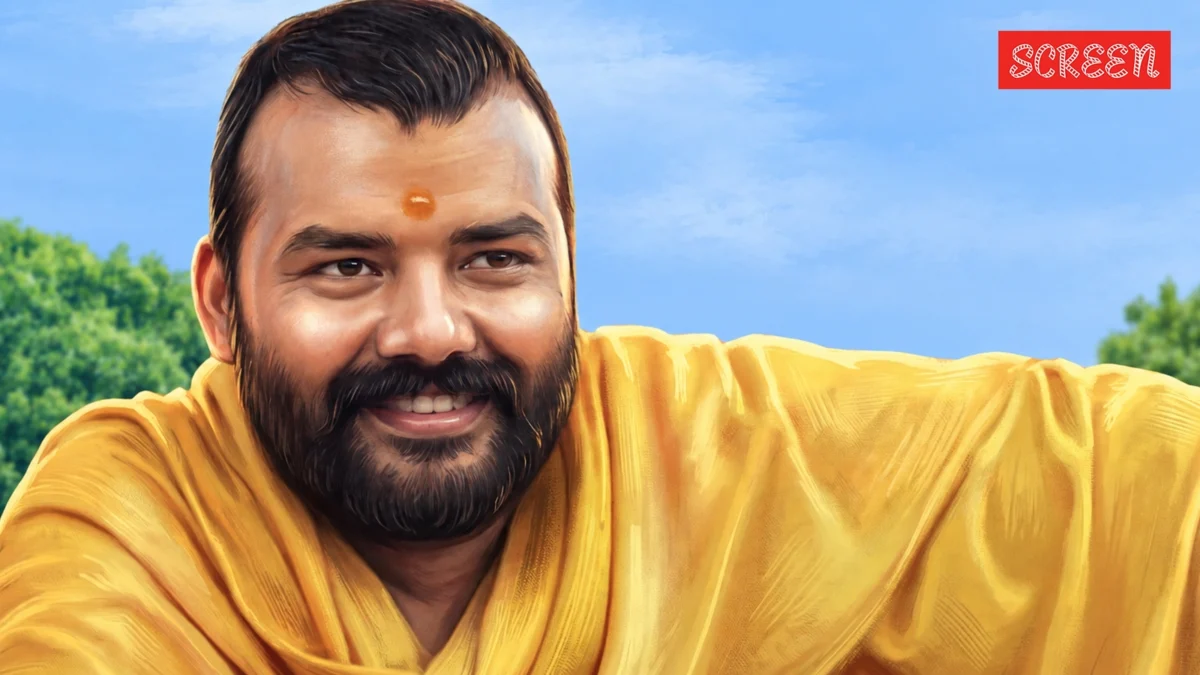
New Delhi, India – The story of "Hanuman Ansh," a film that has defied all odds to become a staggering Rs 300 crore success, is more than just a cinematic triumph; it’s a testament to unwavering faith, improbable coincidences, and a team that refused to surrender. Just eight months before its release, the project teetered on the brink of collapse, plagued by financial woes and a seemingly insurmountable exodus of crew members who deemed it an impossible endeavor on the allocated budget. The final blow was a health crisis befalling the lead actor, a turn of events that threatened to permanently shelve the ambitious undertaking. Yet, as if guided by an unseen hand, individuals with a deep devotion to Neem Karoli Baba began appearing, often at the eleventh hour, breathing new life into a project on the verge of dissolution.
The Genesis of a Divine Vision
The cinematic journey of "Hanuman Ansh" began not in a bustling studio boardroom, but in the quiet contemplation of filmmaker Vishal Chaturvedi. His initial foray into the project was driven by a passion for Neem Karoli Baba, a revered spiritual figure whose life and teachings Chaturvedi was meticulously documenting in a book. It was during this process that the idea of translating this spiritual narrative into a visual medium began to take root.
Chaturvedi shared his nascent film concept with an old friend, Namrata Singh, who, by a remarkable coincidence, was also a devout follower of Neem Karoli Baba. The shared spiritual connection proved to be a potent catalyst. Together, they approached Ragini, another individual deeply inspired by Baba, and in a moment of profound shared belief, the trio decided to officially announce the film. This initial spark, fueled by a common devotion, set in motion a series of events that would test their resolve to its limits.
"People started to show interest. Many called," Chaturvedi recounted in an interview, reflecting on the early days. "During the same time, we decided to take a 43-day Hanuman Chalisa Sankalp, thinking that if we want to put something so divine together, we should do this." This period of intense spiritual practice was intended to imbue the project with divine grace and auspiciousness.
The Financial Chasm and the First Wave of Departures
However, as the spiritual fervor of the Sankalp subsided, a stark reality began to dawn. The initial interest from potential financiers evaporated as quickly as it had appeared. By the time the 43-day ritual concluded, Chaturvedi found himself facing a daunting financial void.
"To set up a team, money is very important," Chaturvedi explained. "At the last minute, the financier on whom we were extremely dependent backed out. Suddenly, our budget became 60% of what we had originally decided." This sudden reduction in financial backing plunged the project into a crisis, forcing a drastic reevaluation of resources and ambitions.
Faced with this unprecedented challenge, Chaturvedi convened an urgent meeting with Namrata Singh and Ragini. The conversation was candid and sobering. To salvage the film, significant sacrifices would be necessary. Chaturvedi, demonstrating an extraordinary commitment to his vision, voluntarily relinquished his own fee and assumed complete responsibility for the production’s financial oversight.
"I can reduce the number of locations. We can take trains in place of flights," he proposed, outlining a strategy for austerity. "But the movie has to be made." A Memorandum of Understanding (MOU) was signed between the three women, solidifying their commitment and financial contributions. Namrata and Ragini then transferred their funds, enabling the formation of a skeletal crew.
With the financial framework tentatively in place, the team embarked on the crucial phase of location scouting. It was during this period that the true extent of the project’s challenges began to manifest, not through financial constraints alone, but through the skepticism and eventual desertion of key personnel.
"A very close friend, who works as an executive producer, we called him for the film," Chaturvedi recalled. "When he saw the budget, he ran away on the third day, saying: ‘It is impossible to make a film in such a low budget.’" This was not an isolated incident. One after another, members of the initial team began to depart, their convictions shattered by the perceived impossibility of realizing the film within the drastically reduced financial parameters. Another assistant producer followed suit a few days later, unable to reconcile the grand vision with the meager resources.
The exodus continued with the costume designer, who, just three days prior to the commencement of shooting, tendered her resignation. "She said this is an impossible task, I can’t do it," Chaturvedi stated, a note of disbelief still present in his voice. Each departure was a blow, reinforcing the pervasive narrative of impossibility that seemed to surround "Hanuman Ansh."
The Intervention of Faith and the Unlikely Replacements
Amidst this escalating crisis, a remarkable pattern began to emerge. As experienced professionals walked away, convinced of the project’s futility, individuals who shared a profound connection to Neem Karoli Baba started to appear. It was as if the spiritual energy that had inspired the film’s inception was now actively drawing in its champions.
The costume designer’s departure opened the door for Upasana Singh, a friend of the first assistant director and, crucially, a "hardcore devotee of Neem Karoli Baba." Upon hearing the story, Singh readily agreed to take on the challenge, demonstrating an extraordinary feat by curating all the costumes in a mere three days. Her faith and dedication proved instrumental in overcoming a critical hurdle.
This phenomenon continued to repeat. As the original team dwindled, replacements were found, and an astonishing number of them turned out to be devotees of Baba. "Whoever believed in Neem Karoli Baba and Lord Hanuman, their effort was unique in the film," Chaturvedi observed. "To fit them all in our budget, we would often negotiate, and all of them readily agreed without ifs and buts." This collective faith transcended financial limitations, fostering an environment of shared purpose and sacrifice.
The production responsibilities, which had been entrusted to a key member of Chaturvedi’s team, also became untenable. The individual ultimately left, citing the insurmountable nature of the task. In a move that further underscored the project’s unconventional trajectory, the production reins were then handed over to a 25-year-old member of Chaturvedi’s team who possessed no prior experience managing a project of such magnitude. "I am sleeping for four hours, but they slept for just two hours to make the film happen," Chaturvedi remarked, highlighting the extraordinary dedication of this young protégé and the entire team. "All this was extremely miraculous."
The challenges, however, were far from over. Permission to shoot a crucial cave sequence at a designated location was unexpectedly revoked by the local priest. With time running out and no viable alternative, Chaturvedi was compelled to recreate the cave himself, a testament to his resourcefulness and determination. It was within this makeshift cave that the film’s now-iconic scene, depicting Shobinaw Satya meditating amidst a swarm of snakes, was eventually filmed.
The Eleventh-Hour Lead and the Miraculous Transformation
The most dramatic and potentially project-ending crisis arrived just a day before the scheduled shoot. The film’s lead actor, the linchpin of the narrative, fell gravely ill. "He vomited about forty times," Chaturvedi recounted, the memory still vivid. "He informed, ‘I had Hepatitis B once and I think it relapsed.’ This news broke me. The entire team is in Chitrakoot for the shoot, and the main lead is backing off."
The situation was dire. With the entire cast and crew assembled in Chitrakoot, a replacement actor was needed with unprecedented speed. It was at this critical juncture that Chaturvedi’s gaze fell upon Shobinaw Satya. According to Chaturvedi, Satya bore a striking resemblance to Neem Karoli Baba, a visual congruence that seemed almost divinely ordained.
Adding to the extraordinary confluence of events, Satya, too, was a devotee of Neem Karoli Baba and Lord Hanuman. He was a vegetarian and, having joined the project as an assistant director, was already intimately familiar with every line of the script. Despite these compelling connections, Satya harbored reservations, questioning his ability to embody the spiritual gravitas of the saint. "He feared if he will do justice to the saint," Chaturvedi explained.
However, Chaturvedi’s unwavering conviction and his persuasive appeal ultimately convinced Satya to embrace the role. Driven by a blend of faith and the filmmaker’s encouragement, Satya stepped into the shoes of Neem Karoli Baba, delivering a performance that, according to Chaturvedi, perfectly captured the essence of the revered spiritual figure. This last-minute casting, born out of crisis, proved to be a pivotal moment in the film’s unlikely survival.
The discipline instilled by Chaturvedi extended to the actors portraying Neem Karoli Baba. He imposed strict rules, including the daily writing of "Ram Ram" for several pages, with photographic evidence to be submitted daily. The actors also abstained from non-vegetarian food, alcohol, and abusive language on set. Chaturvedi himself adopted a rigorous fruit-only diet from the commencement of shooting until the film’s release, aligning his personal discipline with the spiritual nature of the project.
Post-Production Salvation and a Rs 300 Crore Revelation
Even after the arduous shoot concluded, the financial hurdles persisted, leaving the makers in dire need of funds for post-production. It was during this period that they encountered Anupriya Nagar, an individual who had traveled to India specifically seeking Neem Karoli Baba, having first learned about him through an interview with tech visionary Steve Jobs. Nagar’s timely intervention provided the crucial financial lifeline needed to complete the film.
What began as a project that was repeatedly declared "impossible" by those around Vishal Chaturvedi, transformed into a cinematic phenomenon. The overwhelming success of "Hanuman Ansh," culminating in a Rs 300 crore box office collection, stands as a powerful testament to the confluence of unwavering faith, remarkable coincidences, and the indomitable spirit of a team that refused to let doubt extinguish their divine vision. The film’s journey from the precipice of failure to unprecedented triumph serves as an inspiring narrative, suggesting that sometimes, the most extraordinary achievements are born from the most improbable beginnings, guided by a force that transcends conventional understanding.
