

Kolkata, India – In a significant development that has sent ripples through West Bengal’s political landscape, the Election Commission of India (ECI) on Friday officially recognised a deep-seated split within the Trinamool Congress (TMC). Acting on an interim order issued a day prior, the poll body froze the party’s iconic "flowers and grass" symbol and its name, subsequently allotting alternative names and symbols to the two warring factions led by Chief Minister Mamata Banerjee and rebel leader Arup Roy.
The Banerjee-led faction, a dominant force in West Bengal politics, will now contest under the provisional name "Mamata All India Trinamool Congress" with a "football player" as its election symbol. Conversely, the breakaway group, spearheaded by Arup Roy and represented by Ritabrata Banerjee, Leader of Opposition in the West Bengal Assembly, has been designated the "Democratic Trinamool Congress" and will campaign using the "envelope" symbol. This interim decision comes just ahead of crucial by-elections and has ignited a fierce debate about the EC’s role in party disputes and the future of regional political entities in India.
The directive follows a period of escalating internal strife within the TMC, culminating in the EC’s intervention under Para 15 of the Election Symbols (Reservation & Allotment) Order, 1968. Both factions had been asked to submit a list of preferred names and symbols, from which the Commission made its selection. The ruling party in West Bengal, already grappling with the aftermath of recent electoral setbacks and a series of high-profile defections, now faces the daunting challenge of re-establishing its identity and connection with voters under a new banner.
Chronology of a Deepening Divide
The roots of the Trinamool Congress split can be traced back to a period of growing internal dissent, particularly in the wake of the Bengal assembly elections earlier this year. While the party secured a resounding victory, the electoral process exposed fault lines, with some veteran leaders expressing dissatisfaction over candidate selection, perceived centralisation of power, and the growing influence of certain individuals within the party.
Genesis of Discord
The simmering discontent began to boil over as several senior figures and grassroots workers felt increasingly alienated from the party’s core decision-making process. While specific details of Arup Roy’s initial grievances or the exact timing of his emergence as a rebel leader are not fully publicised in the provided text, the reference to "mutinies that followed" the Bengal polls strongly suggests a post-election period of introspection and internal challenges for the Mamata Banerjee-led leadership. The rebel faction’s move to formally approach the Election Commission underscored the irreconcilable differences that had developed, indicating a breakdown in internal party mechanisms for conflict resolution.
EC Intervention and the Call for Options
The Election Commission’s involvement marked a critical turning point. Faced with rival claims to the party’s name and symbol, the EC initiated proceedings to ascertain the legitimacy of each faction. This process, governed by Para 15 of the Election Symbols (Reservation & Allotment) Order, 1968, requires the Commission to determine which of the rival sections or groups of a recognised political party is the recognised political party. As a preliminary step towards this substantive determination, and acknowledging the urgency posed by impending by-elections, the EC mandated both sides to submit up to three options for temporary names and symbols. This request was a clear signal that the Commission viewed the dispute as severe enough to warrant an interim freezing of the original party assets.
The Submission of Preferences
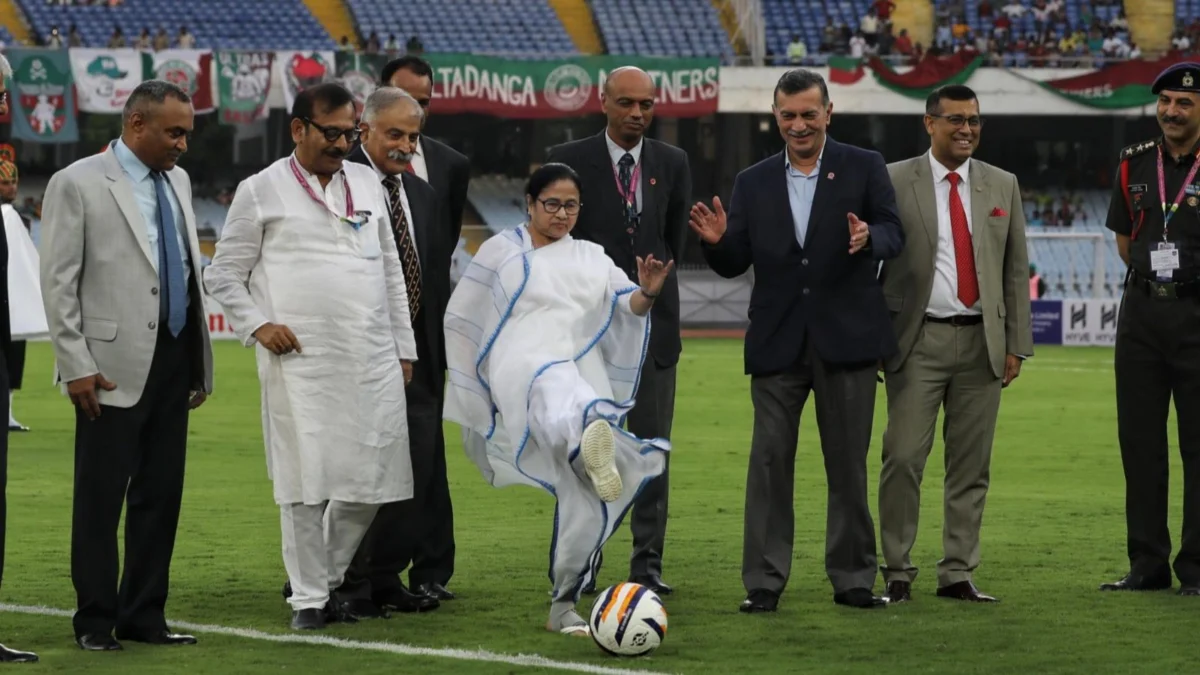
In response to the EC’s directive, both the Mamata Banerjee-led camp and the Arup Roy faction diligently submitted their choices. The Banerjee group, according to sources, proposed "Mamata All India Trinamool Congress" as its preferred name, alongside "football player" and "cricket bat" as symbol options. The selection of a "football player" symbol is particularly poignant in West Bengal, a state where football enjoys immense popularity and cultural significance, potentially aiming to forge an immediate and strong connection with the electorate.
The Arup Roy faction, through Ritabrata Banerjee, put forward "Jatiyatabadi Trinamool Congress" (Nationalistic Trinamool Congress) and "Ganatantrik Trinamool Congress" (Democratic Trinamool Congress) for their names. For symbols, they suggested a "blackboard," an "envelope," and a "torch." The eventual allocation of "Democratic Trinamool Congress" and the "envelope" symbol to this faction provides them with a distinct identity, attempting to project an image of democratic principles and transparency, possibly in contrast to the "cult" allegation they later made against the Banerjee camp.
The Freeze Order and Interim Allotment
The climax of this initial phase came with the Election Commission’s interim order on Thursday, which formally declared the existence of "two rival groups" within the All India Trinamool Congress. The order explicitly stated, "On due consideration of the totality of information available on record…the Commission is of the opinion that there are two rival groups in All India Trinamool Congress, one led by Ms. Mamata Banerjee and the other led by Shri Arup Roy, and each group is now claiming to be the party and therefore the matter requires a substantive determination by the Commission under Para 15 of the Election Symbols (Reservation & Allotment) Order 1968."
Crucially, the EC decided that until a final determination is made in the dispute, neither faction would be allowed to use the original "All India Trinamool Congress" name or the "flowers and grass" symbol. This interim arrangement was deemed necessary to ensure a level playing field for the upcoming by-elections and prevent voter confusion. The subsequent allotment on Friday of "Mamata All India Trinamool Congress" with a "football player" and "Democratic Trinamool Congress" with an "envelope" solidified the temporary identities of the warring factions, setting the stage for a unique electoral battle.
Supporting Context and Legal Framework
The Election Commission’s decision is not merely an administrative formality; it is deeply embedded in India’s electoral jurisprudence and carries significant political weight, particularly in a state like West Bengal, which is known for its passionate political engagement.
The Election Symbols (Reservation & Allotment) Order, 1968: Para 15
At the heart of the EC’s intervention lies Para 15 of the Election Symbols (Reservation & Allotment) Order, 1968. This crucial provision empowers the Commission to decide disputes in cases where there are rival sections or groups of a recognised political party, each claiming to be that party. The EC’s role, in such scenarios, is to determine which faction is the "recognised political party" for the purpose of the Symbols Order. This often involves examining the party’s constitution, membership records, decisions of its organisational bodies, and the extent of support each faction commands among elected representatives and party functionaries.
The EC’s interim order underscores that the matter "requires a substantive determination" under Para 15, indicating that the current allocation of names and symbols is temporary. The final verdict could take months, or even years, depending on the complexity of the evidence presented by both sides and the legal challenges that may ensue. The interim measure, however, is critical for enabling both factions to participate in immediate elections without the advantage or disadvantage of the original, well-known party identity.
Historical Precedents of Party Splits
The Trinamool Congress split is not an isolated incident in the annals of Indian political history. The Election Commission has frequently been called upon to resolve such disputes, with notable cases involving the Shiv Sena and the Nationalist Congress Party (NCP) in recent times, as explicitly mentioned by Rahul Gandhi. In the Shiv Sena case, the EC’s decision to recognise the faction led by Eknath Shinde as the "real" Shiv Sena and allot it the original "bow and arrow" symbol had profound implications for Maharashtra politics. Similarly, the dispute within the NCP saw the Ajit Pawar faction ultimately being recognised over Sharad Pawar’s, leading to a split in the party’s assets and representation.
These precedents highlight a recurring pattern: internal party feuds escalating to the electoral regulator, often with significant consequences for the parties involved. The EC’s rulings, while based on legal and constitutional principles, invariably have a direct impact on the political fortunes of leaders and the broader power dynamics in the respective states. The current Trinamool split thus joins a growing list of such high-stakes battles for party control and identity.
West Bengal’s Charged Political Landscape
West Bengal has historically been a hotbed of intense political activity, with deep-seated loyalties and fierce rivalries. The Trinamool Congress, under the charismatic leadership of Mamata Banerjee, rose to power by dislodging the three-decade-long Left Front rule, establishing itself as a formidable regional force. However, the state has also witnessed the aggressive expansion of the Bharatiya Janata Party (BJP), which has emerged as the principal opposition, significantly eroding the space once occupied by the Congress and the Left.
This split within the TMC comes at a particularly vulnerable time for the party, following a challenging period marked by allegations of corruption against some of its leaders and the aforementioned "mutinies." For the BJP, the internal strife within its main adversary presents a strategic opportunity to further consolidate its position and project itself as a credible alternative. The "football player" symbol for Mamata’s faction is a shrewd choice, given the sport’s immense popularity across all demographics in Bengal, potentially aiding in quicker recall and emotional connect among voters. Conversely, the "envelope" for the rebel faction is a neutral, universally recognisable symbol, which they will have to work hard to imbue with specific political meaning.
Electoral Stakes in Immediate Polls
The immediate electoral stakes are high. Bypolls for the Nandigram and Rejinagar assembly constituencies are scheduled for October 6. These are not just isolated contests but critical litmus tests for the newly assigned symbols and the public’s perception of the fragmented Trinamool. Nandigram, in particular, holds symbolic significance as the constituency where Mamata Banerjee herself contested and lost to Suvendu Adhikari in the last assembly elections. A strong performance by either faction in these bypolls will provide crucial momentum and a narrative boost.
Beyond these by-elections, the Kolkata Municipal Corporation (KMC) and Howrah Municipal Corporation (HMC) polls are slated to be held after the Durga Puja festive season. Municipal elections are vital for controlling urban governance and demonstrating grassroots support. Losing the original party name and symbol will force both factions to undertake intensive campaigning to familiarise voters with their new identities, a challenge made even more complex by the relatively short timeframe.
Official Responses and Political Fallout
The Election Commission’s decision has predictably triggered a flurry of reactions from all political quarters, revealing the profound implications of this development.
Reactions from the Factions
Mamata Camp’s Defiance: Loyalists within the Mamata Banerjee faction have vociferously condemned the EC’s decision, terming it "illegal" and a "sad day." A senior leader in her camp lamented, "It is a sad day since Mamata Banerjee herself made the symbol and chose the party’s name 28 years back." This statement underscores the deep emotional connection of the party cadres to the original symbol and name, which were intrinsically linked to Mamata Banerjee’s political journey and identity. Despite the setback, the loyalists expressed unwavering faith in Mamata Banerjee’s personal appeal, asserting, "Our leader Mamata Banerjee has taken up the challenge. The EC decision will indeed have an effect, but people trust Mamata Banerjee’s face. We will fight the assembly bypolls under Mamata Banerjee. That is what matters, not symbols." This stance indicates a strategy to leverage Banerjee’s personal brand and charisma to overcome the immediate challenge of a new party identity.
Rebel Faction’s Vindication: On the other side, the Arup Roy faction, through Ritabrata Banerjee, welcomed the Election Commission’s decision with a sense of vindication. Banerjee stated, "The Election Commission’s decision to freeze name and symbol reflected that a political party cannot be a private limited company. … It is a fight between the collective and the cult." This strong rhetoric positions their faction as champions of democratic principles against what they portray as an autocratic leadership style within the original TMC. Their acceptance of the EC’s ruling also lends credibility to their claim of representing a legitimate alternative within the Trinamool ideology.
Opposition Condemnation and Solidarity
The EC’s decision has united several opposition parties in a rare show of solidarity with Mamata Banerjee, as they collectively raised concerns about the impartiality and independence of the electoral body.
Rahul Gandhi’s Stinging Critique: Rahul Gandhi, the Leader of the Opposition in Lok Sabha, issued a particularly sharp critique, alleging a pattern of collusion between the BJP and the Election Commission to weaken opposition parties. In a post on X (formerly Twitter), he stated, "First Shiv Sena, then NCP, and now Trinamool Congress. Every time, the same pattern – BJP and the Election Commission join forces to split a party. Then its election symbol is snatched away. When an entire party can be stolen, it’s hardly surprising that the votes of millions of Indians can be stolen too. Vote theft. Government theft. Now party theft – these have become symbols of our democratic decline." He further added, "The ECI’s constitutional responsibility is to protect the mandate – but instead, it’s aiding those very forces that overturn the people’s verdict. This fight isn’t just Mamata Banerjee’s. It’s the fight of every political party, every voter who wants free and fair elections." Gandhi’s strong words not only expressed support for Mamata but also voiced a broader concern about the erosion of democratic institutions and electoral integrity.
AAP and SP’s Support: Echoing similar sentiments, AAP leader Arvind Kejriwal took to X, remarking, "Modi ji’s birthday gift to the country. Will they win the election this way?" His sarcastic tone suggested an underlying belief that the EC’s decision was politically motivated and timed. Samajwadi Party chief Akhilesh Yadav, while more subtle, also raised pointed questions, stating, "If the Election Commission takes decisions to empower democratic values, it will enhance its prestige and honour. And there’s nothing more to say… just this question: Have the affidavits we submitted to the Election Commission been received?" Yadav’s cryptic comment likely refers to his own party’s past interactions or unresolved issues with the EC, implying a perceived inconsistency in the Commission’s approach. This collective stance from prominent opposition figures transforms the Trinamool split from a regional issue into a national debate about the state of Indian democracy and the autonomy of its institutions.
BJP’s Stance
The Bharatiya Janata Party, quick to seize on the internal turmoil of its primary opponent in West Bengal, welcomed the EC’s decision. BJP leaders claimed that the Trinamool Congress was now "on the deathbed," suggesting that the split and the loss of its iconic symbol would fatally weaken the party. This narrative aligns with the BJP’s broader strategy to expand its footprint in West Bengal and consolidate anti-TMC votes. For the BJP, the fragmentation of the ruling party presents an opportune moment to project itself as the only stable and viable alternative in the state.
Long-term Implications and Future Outlook
The Election Commission’s interim order marks a watershed moment for the Trinamool Congress and West Bengal politics, with far-reaching implications for the state’s political trajectory and potentially for India’s federal structure.
Challenge for Mamata Banerjee
For Mamata Banerjee, the "Didi" of Bengal, this decision presents arguably one of her toughest political challenges. Having meticulously built the Trinamool Congress from the ground up 28 years ago, the loss of its original name and symbol — symbols she personally crafted — is not just an administrative hurdle but an emotional and strategic blow. She must now rally her cadres and convince the electorate to vote for a "football player" symbol under the "Mamata All India Trinamool Congress" banner, a significant deviation from the deeply entrenched "flowers and grass." This requires an immediate and massive public awareness campaign, especially in rural areas where symbol recognition is paramount. The task is compounded by the fact that the party is still recovering from internal dissent and the setback of the recent assembly polls where she herself lost Nandigram. Her personal brand and charisma will be tested like never before.
Legitimacy for Democratic Trinamool Congress
Conversely, for the Arup Roy-led "Democratic Trinamool Congress," the EC’s decision grants them a crucial measure of legitimacy. By officially recognising their existence as a distinct faction and allotting them a symbol, the EC provides them with a platform to challenge Mamata Banerjee’s dominance. The "envelope" symbol, while generic, now offers them a clean slate to build their own identity and narrative, potentially attracting disillusioned TMC members and voters who seek an alternative within the broader Trinamool ideology. Their challenge will be to translate this institutional recognition into popular support, demonstrating that they are more than just a splinter group but a viable political force.
Impact on West Bengal Politics
The political landscape of West Bengal is likely to undergo significant realignment. A weakened and bifurcated Trinamool Congress could open doors for the BJP to make further inroads, particularly in the upcoming municipal and general elections. The state could witness a period of increased political instability and shifting loyalties as voters grapple with new party identities. The by-elections and municipal polls will serve as crucial barometers, indicating which faction is gaining traction and how the electorate is responding to the changed political dynamics. The long-term impact could even influence the 2024 Lok Sabha elections and the next state assembly elections in 2026.
The EC’s Role Under Scrutiny
The sharp criticism from opposition leaders like Rahul Gandhi, Arvind Kejriwal, and Akhilesh Yadav highlights a growing concern about the Election Commission’s perceived impartiality. Allegations of the EC acting in concert with the ruling BJP to weaken opposition parties, particularly by facilitating splits and freezing symbols, strike at the heart of democratic trust. While the EC operates under a constitutional mandate, such accusations, even if unsubstantiated, erode public confidence in the fairness of electoral processes. The Commission will need to meticulously demonstrate its neutrality and adherence to constitutional principles in the ongoing determination under Para 15 to safeguard its institutional integrity.
The Road Ahead
The journey for both Trinamool factions is fraught with challenges. The interim nature of the EC’s order means that the ultimate fate of the original Trinamool Congress name and symbol is still undecided. Both sides will now prepare their arguments and evidence for the final determination under Para 15, a process that promises to be lengthy and potentially contentious. In the immediate future, however, the focus shifts to the campaign trail, where Mamata Banerjee’s enduring popularity will face a stern test against the novelty of a new symbol and the challenge posed by a breakaway faction emboldened by the EC’s recognition. The coming months will undoubtedly redefine the political contours of West Bengal.
