

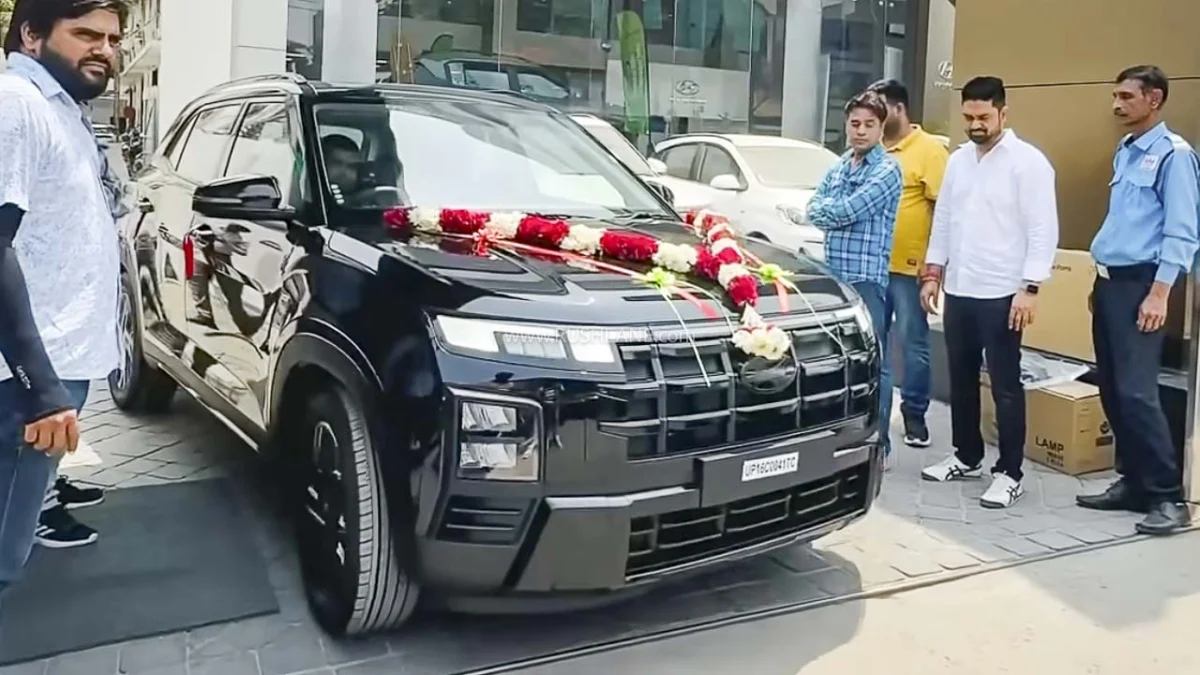
The Indian automotive landscape has undergone a seismic shift over the last twelve months, with the mid-size SUV segment—specifically vehicles measuring between 4.2 and 4.5 metres—emerging as the primary engine of growth for the industry. According to the latest retail and wholesale data for August 2026, this specific sub-sector has recorded a staggering year-on-year (YoY) growth of nearly 67%, signaling a permanent shift in consumer preference toward larger, feature-rich utility vehicles.
While the sub-4-metre SUV category remains a high-volume playground, the 4.2m–4.5m segment has become the "sweet spot" for India’s burgeoning middle class and aspirational buyers. With a total of 79,691 units sold in August 2026, the segment is no longer a niche alternative; it is the new mainstream.
1. Main Facts: A Segment in Overdrive
The headline figure for August 2026 is the 79,691 units registered in the mid-size SUV category. To put this into perspective, the segment sold 47,756 units in August 2025. This represents a massive 66.87% YoY growth, adding 31,935 units to the monthly tally in just one year.
The Dominance of the "Big Three"
Despite the influx of nearly a dozen new competitors, the market remains top-heavy. The trio of the Hyundai Creta, Maruti Victoris, and Kia Seltos accounted for 51.43% of the total segment sales. This concentration of power suggests that while consumers are open to new brands, brand equity and established service networks remain the primary drivers of high-volume success.
The New Entrant Impact
Perhaps the most telling statistic of the August report is the contribution of new models. Seven SUVs that were not on the market a year ago—the Maruti Victoris, Tata Sierra, Maruti eVitara, Nissan Tekton, Renault Duster, Toyota Ebella, and VinFast VF6—collectively contributed 21,638 units. This accounts for 27.15% of the total volume, proving that the segment’s growth is being fueled by an unprecedented expansion of choice.

2. Chronology: From Consolidation to Fragmentation (2025–2026)
To understand the August 2026 figures, one must look at the timeline of the preceding twelve months.
- Late 2025: The segment was largely a duopoly between the Hyundai Creta and Kia Seltos, with the Maruti Grand Vitara providing strong support.
- Q1 2026: The arrival of the Maruti Victoris changed the dynamics. Positioned as a premium alternative within the Maruti stable, it quickly began cannibalizing sales from both its siblings and competitors.
- Q2 2026: Electrification took center stage with the launch of the Tata Sierra and the Maruti eVitara. These models brought "green" credentials to the 4.5m segment, appealing to urban commuters.
- August 2026: The market reached a saturation point of 23 tracked entries. While YoY growth is explosive, the 2.81% month-on-month (MoM) decline from July’s 81,992 units suggests that the market may be entering a period of stabilization ahead of the festive season.
3. Supporting Data: Model-by-Model Breakdown
The performance of individual models in August 2026 reveals a complex web of shifting loyalties and supply-chain efficiencies.
The Incumbents
- Hyundai Creta: Remains the undisputed king with 16,288 units. Although it saw a 9.95% MoM dip, its 20.44% market share is a testament to its "bulletproof" brand image. Hyundai is already looking ahead, with testing underway for the next-generation Creta slated for a 2027 debut.
- Maruti Victoris: In a stunning ascent, the Victoris secured second place with 12,978 units, growing 14.51% MoM. It has successfully moved ahead of the Kia Seltos, proving that Maruti’s "premium" push is yielding results.
- Kia Seltos: Recorded 11,716 units. While this is a massive 149.97% jump from a low base in August 2025, the 6.58% sequential decline indicates stiff internal competition from the Hyundai-Kia group’s own portfolio.
The Mid-Tier Battle
- Toyota Hyryder & Maruti Grand Vitara: These platform siblings continue to perform strongly. The Hyryder sold 8,234 units (up 14.57% MoM), while the Grand Vitara moved 7,808 units.
- Mahindra Thar Roxx: The five-door avatar of the iconic off-roader has found its rhythm, selling 5,817 units. It represents a unique niche—rugged capability combined with mid-size SUV dimensions.
- Tata Sierra: A legendary nameplate resurrected, the Sierra contributed 5,622 units. Despite an 11% MoM decline, it remains a critical volume driver for Tata Motors.
The Electric and Niche Players
The tail end of the list shows the struggle for visibility in a crowded market.
- Tata Curvv & Curvv EV: Sold 1,904 units, showing steady growth.
- Mahindra BE 6: A standout performer in terms of recovery, jumping to 1,696 units from just 541 in July.
- Honda Elevate: Currently in a slump with 1,326 units (down 20.12% YoY), Honda is pinning its hopes on a facelift scheduled for launch in October 2026.
- Global Entrants: The Nissan Tekton (491 units), Renault Duster (406 units), and VinFast VF6 (183 units) are still in their gestation periods, struggling to break into the four-digit club.
4. Official Responses and Industry Sentiment
While official statements from the Society of Indian Automobile Manufacturers (SIAM) emphasize the robust health of the SUV sector, off-the-record conversations with dealer principals suggest a more cautious outlook.
Hyundai Motor India Sources:
"The Creta’s performance remains the benchmark. While the MoM dip is a result of planned maintenance shutdowns and inventory recalibration, the demand for the top-end ADAS variants remains higher than our current production capacity."

Maruti Suzuki Insights:
A senior executive at Maruti Suzuki noted that the combined share of Victoris, Grand Vitara, and eVitara (28.07% of the segment) justifies the company’s multi-pronged SUV strategy. "We are no longer just a small-car maker. Our dominance in the 4.2m–4.5m space shows that the Indian consumer trusts Maruti for premium experiences," the spokesperson stated.
The "Newcomer" Perspective:
Representatives from brands like VinFast and Nissan highlighted that their current numbers reflect limited "Phase 1" dealership rollouts. They expect volumes to normalize once their touchpoints expand to Tier-2 and Tier-3 cities.
5. Implications: What This Means for the Future
The August 2026 sales data offers several critical insights into where the Indian automotive market is headed.
1. The Death of the "One-Car" Strategy
Manufacturers can no longer rely on a single flagship SUV. Maruti’s success with three different models in this segment proves that "hyper-segmentation"—offering a rugged SUV, a premium hybrid, and a pure EV within the same size bracket—is the only way to capture maximum market share.
2. Electrification is No Longer Optional
With the Tata Sierra, Maruti eVitara, and Mahindra BE 6 collectively moving thousands of units, the 4.5m segment is becoming the primary laboratory for India’s EV transition. The success of these models will determine how quickly the country moves away from internal combustion engines (ICE).

3. The "Festive" Pressure Cooker
The 2.81% MoM decline in August is a classic "lull before the storm." Dealerships are currently stocking up for the October–November festive window. If the September numbers do not show a significant bounce-back, it could indicate that high interest rates or market saturation are finally beginning to cool the SUV fever.
4. The Upcoming "Bayon" Factor
The impending launch of the Hyundai Bayon is expected to further disrupt the lower end of this segment. As Hyundai looks to bridge the gap between the Venue and the Creta, the Bayon could potentially steal customers from both the sub-4m and mid-size categories, creating a new "sub-mid" micro-segment.
5. Resale Value and Long-term Viability
As the market becomes flooded with new entrants like VinFast and the revived Renault Duster, the long-term resale value of these vehicles will become a talking point. Established players like Hyundai and Maruti hold a distinct advantage here, which explains why the Creta continues to lead despite being an older platform compared to some newcomers.
Conclusion
The August 2026 sales report for the 4.2m–4.5m SUV segment is a story of unprecedented growth and fierce rivalry. While the Hyundai Creta remains the "North Star" of the segment, the aggressive expansion of Maruti Suzuki and the arrival of specialized EV players have turned this into the most competitive landscape in Indian automotive history. For the consumer, this means better features, more powertrain options, and competitive pricing. For the manufacturers, it is a high-stakes game where even a minor slip in product relevance can result in a rapid loss of market share.
