

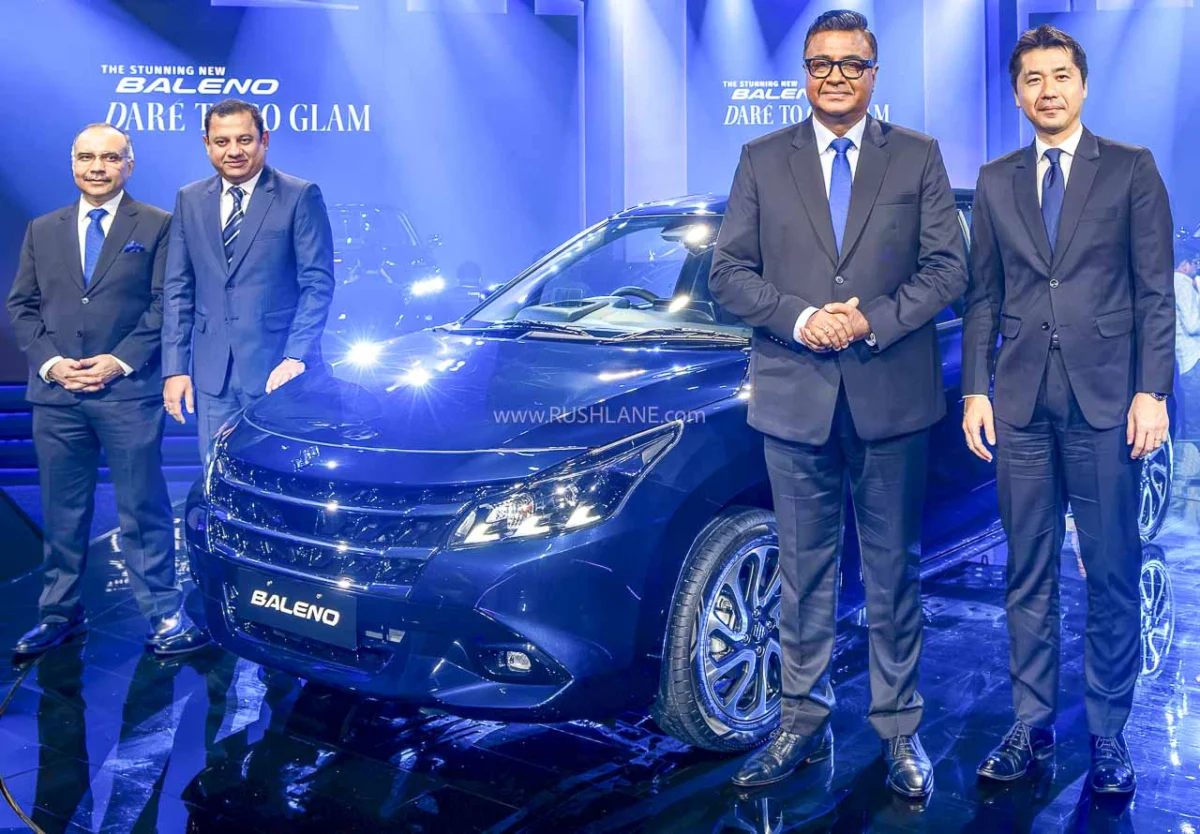
In a significant move that signals a paradigm shift in the Indian automotive landscape, Maruti Suzuki India Limited (MSIL) has officially introduced the Automated Manual Transmission (AMT) technology to its S-CNG (Compressed Natural Gas) lineup. This long-awaited integration has been rolled out across three of the company’s most popular models: the Swift hatchback, the Dzire compact sedan, and the Baleno premium hatchback.
Under the banner of its "Auto Green Mission," India’s largest automaker is addressing a critical white space in its portfolio. For years, Indian consumers were forced to choose between the low running costs of CNG and the convenience of an automatic transmission. By bridging this gap, Maruti Suzuki is not only aiming to consolidate its 70% market share in the CNG segment but is also responding to the evolving needs of the urban commuter who faces ever-increasing traffic congestion.
The Main Facts: Pricing, Variants, and Efficiency
The introduction of the CNG-AMT combination is strategically spread across both the Arena and Nexa retail channels, ensuring a wide reach across different consumer demographics.
Pricing Structure and Variants
The new powertrain combination has been introduced in mid-spec variants, which historically represent the "sweet spot" for value-conscious Indian buyers.
- Maruti Suzuki Swift CNG-AMT (VXI): Priced from ₹7.92 lakh (ex-showroom). The Swift remains the entry point for this new technology, catering to younger buyers and small families.
- Maruti Suzuki Baleno CNG-AMT (Delta): Priced from ₹8.32 lakh (ex-showroom). Sold through the premium Nexa channel, the Baleno offers a more sophisticated interior and a wider footprint for those seeking a premium hatchback experience.
- Maruti Suzuki Dzire CNG-AMT (VXI): Priced from ₹8.53 lakh (ex-showroom). As the most expensive of the trio, the Dzire continues to target the family man and the executive segment, where the sedan silhouette carries a certain prestige.
Industry-Leading Fuel Efficiency
Maruti Suzuki has long been the benchmark for fuel economy in India, and the new CNG-AMT variants are no exception. The company has released "claimed" mileage figures that set a high bar for the industry:
- Dzire CNG-AMT: 36.47 km/kg
- Swift CNG-AMT: 35.34 km/kg
- Baleno CNG-AMT: 34.47 km/kg
These figures represent a significant achievement in engineering, particularly the Dzire’s milestone of crossing the 36 km/kg mark, making it one of the most cost-effective vehicles to operate in the country today.
Chronology: The Road to the CNG-AMT Integration
The launch of these models is not an isolated event but the culmination of a multi-year strategy to diversify Maruti Suzuki’s powertrain offerings as the brand moves away from diesel engines.

The Post-Diesel Era
Following the implementation of BS6 emission norms in 2020, Maruti Suzuki made the bold decision to exit the diesel segment entirely. To fill the void left by the fuel-efficient diesel engines, the company doubled down on its S-CNG technology. While the manual CNG variants were successful, the lack of an automatic option remained a point of criticism, especially as competitors like Tata Motors began experimenting with similar technologies.
The Introduction of the Z12 Engine
Earlier this year, Maruti Suzuki introduced the new Z12-series engine. This 1.2-litre, three-cylinder powerplant was designed specifically to prioritize low-end torque and high thermal efficiency—characteristics that are ideal for both CNG operation and city driving. The Z12 engine replaced the aging four-cylinder K-Series engine in the Swift and Dzire, setting the stage for the current AMT integration.
The Recent Baleno Facelift
Earlier this month, Maruti Suzuki launched the facelifted Baleno, which included minor aesthetic tweaks and an updated feature list, including whispers of Advanced Driver Assistance Systems (ADAS) in higher trims. The launch of the Baleno CNG-AMT follows hot on the heels of this update, ensuring that the premium hatchback remains competitive against the likes of the Hyundai i20 and the Tata Altroz.
Supporting Data: The Synergy of S-CNG and AMT
To understand why this launch is pivotal, one must look at the technical synergy between the S-CNG system and the Automated Manual Transmission.
The Mechanics of the Z12 Powertrain
The 1.2-litre Z12 three-cylinder engine is the heart of this new range. While three-cylinder engines are often criticized for vibrations, Maruti has utilized advanced engine mounts and balancing technology to ensure refinement levels remain high. When running on CNG, the engine produces slightly less power than on petrol, but the AMT’s electronic control unit (ECU) has been recalibrated to manage these shifts seamlessly.
The S-CNG system itself features a dual-ECU setup. One ECU manages the petrol injection, while the other handles the CNG. These units communicate in real-time to ensure that the transition between fuels is imperceptible to the driver and that the AMT selects the optimal gear based on the available torque.
Addressing the Urban Pain Point
Data from urban traffic studies in India suggests that the average commuter in cities like Bengaluru or Delhi spends nearly 90 minutes a day in stop-and-go traffic. In such conditions, the constant use of a clutch pedal in a manual CNG car leads to driver fatigue. The AMT (Automated Manual Transmission) uses hydraulic actuators to operate the clutch and change gears, providing the ease of an automatic at a fraction of the cost of a traditional Torque Converter or CVT (Continuously Variable Transmission).

Cost of Ownership Analysis
While the upfront cost of the CNG-AMT variant is higher than the manual counterpart, the long-term savings are substantial.
- Fuel Cost: With CNG prices significantly lower than petrol in most states, the running cost per kilometer is estimated to be 60-70% lower than a pure petrol automatic.
- Maintenance: Unlike sophisticated dual-clutch transmissions, the AMT is essentially a manual gearbox with an external actuator. This makes it cheaper to service and more durable in the harsh, dusty conditions of the Indian subcontinent.
Official Responses and Strategic Vision
While official statements from Maruti Suzuki executives emphasize the "Auto Green Mission," the move is clearly a tactical response to market shifts.
The "Auto Green Mission"
Maruti Suzuki’s "Auto Green Mission" is the company’s roadmap toward a greener future, focusing on a multi-pathway approach that includes CNG, Hybrids, Biogas, and eventually, Battery Electric Vehicles (BEVs). By expanding the CNG portfolio, Maruti is catering to the "immediate green" needs of the market—reducing carbon emissions today while the infrastructure for EVs continues to mature.
Competitive Positioning
Industry analysts view this launch as a direct counter-offensive against Tata Motors. Tata recently gained first-mover advantage by launching the Tiago and Tigor iCNG with an AMT gearbox. By bringing this technology to its heavy hitters—Swift, Dzire, and Baleno—Maruti is looking to reclaim any ground lost to its domestic rival.
The company’s internal research suggests that a significant portion of "Automatic Petrol" buyers were interested in CNG but were deterred by the manual-only availability. This launch is expected to convert those fence-sitters into CNG buyers.
Implications for the Indian Automotive Market
The introduction of the CNG-AMT combination by the market leader has far-reaching implications for the industry, consumers, and the environment.
1. Democratization of Convenience
For a long time, automatic transmissions were considered a luxury in the budget segment. By pairing it with CNG, Maruti has made "stress-free and affordable" driving a reality for the masses. This is likely to push other manufacturers to accelerate their own CNG-automatic programs.

2. The Squeeze on Diesel and Entry-Level EVs
The high efficiency of the Dzire (36.47 km/kg) makes it a formidable opponent for entry-level electric vehicles. For a buyer who does not have access to a home charging station, a CNG-AMT car offers similar running costs without the "range anxiety" associated with EVs. Furthermore, this move further nails the coffin of small-capacity diesel engines, which are becoming increasingly expensive to produce due to tightening emission norms.
3. Impact on Resale Value
Maruti Suzuki vehicles traditionally enjoy the highest resale value in India. The addition of a factory-fitted CNG-AMT kit is expected to make these models highly sought after in the pre-owned market, as they offer the trifecta of brand reliability, low running costs, and ease of use.
4. Infrastructure Pressure
As Maruti pushes more CNG vehicles onto the road, the pressure on India’s CNG dispensing infrastructure will increase. While the government has been aggressive in expanding the city gas distribution (CGD) network, long queues at CNG stations remain a deterrent. The success of these new models will depend heavily on the continued expansion of gas stations across highway networks and tier-2 cities.
Conclusion: A Masterstroke in Practicality
Maruti Suzuki’s decision to combine factory-fitted CNG with AMT across the Swift, Dzire, and Baleno is a masterstroke in practical engineering. It acknowledges that the modern Indian car buyer is no longer willing to sacrifice comfort for economy.
By offering a starting price of ₹7.92 lakh for the Swift CNG-AMT, Maruti has ensured that the barrier to entry remains low. As the automotive world debates the timeline for total electrification, Maruti Suzuki has provided a compelling, middle-ground solution that works for the "here and now." With claimed mileage figures that challenge the laws of physics and the convenience of clutch-free driving, the CNG-AMT trio is poised to dominate the urban landscape for years to come.
