

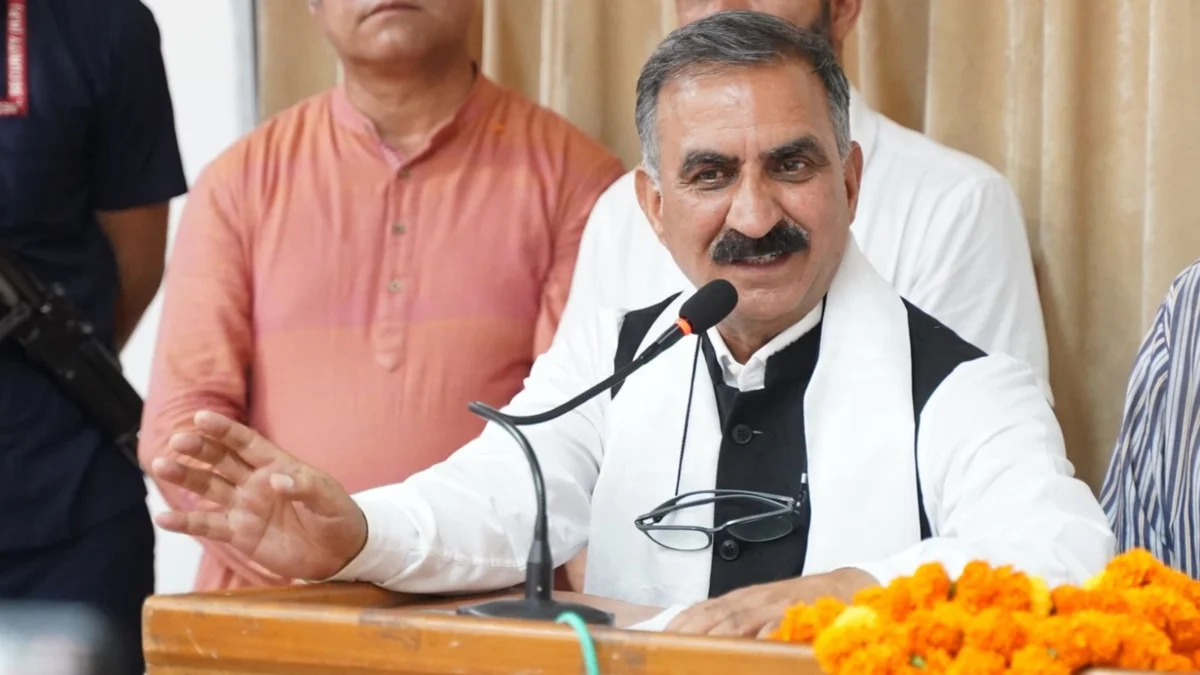
Shimla, Himachal Pradesh – In a significant diplomatic and financial coup for the state, Himachal Pradesh Chief Minister Sukhvinder Singh Sukhu has lauded the recently signed agreement for the ambitious ₹15,624-crore Kishau Multipurpose Dam Project as a "milestone" achievement, asserting that the state will bear no financial burden for its construction. The landmark pact, concluded on September 15, 2026, culminates decades of intricate inter-state negotiations and is being hailed by the Congress-led state government as a testament to its resolve in protecting Himachal’s vital interests and natural resources.
The colossal 422-megawatt project, strategically located on the Tons River along the Himachal Pradesh-Uttarakhand border, is poised to reshape the water and power landscape of Northern India. Its successful agreement among six riparian states – Himachal Pradesh, Uttarakhand, Haryana, Rajasthan, Uttar Pradesh, and the National Capital Territory of Delhi – has not only resolved long-standing disputes over financing and implementation but has also injected a potent political dynamic into Himachal Pradesh’s domestic arena.
"This agreement is not merely about a dam; it is about securing the future of Himachal Pradesh, asserting our rights over our precious land and water resources, and ensuring that development benefits our people without imposing an undue financial strain," Chief Minister Sukhu declared during a press conference in Shimla. His government has swiftly moved to publicize this achievement through extensive state-wide campaigns, featuring large hoardings with his image, positioning the pact as a crowning glory of his administration’s diplomatic prowess and a fulfillment of its commitment to robust state advocacy.
Main Facts: A Watershed Moment for Inter-State Cooperation
The Kishau Multipurpose Dam Project, envisioned to be one of the largest storage dams in the region, represents a critical infrastructure development for power generation, irrigation, and drinking water supply across multiple states. At its core, the project seeks to harness the Tons River, a major tributary of the Yamuna, to create a substantial reservoir capable of storing vast quantities of water, thereby mitigating floods during monsoons and ensuring water availability during lean periods.
The total estimated cost of the project currently stands at a formidable ₹15,624 crore. What makes the September 15 agreement particularly noteworthy for Himachal Pradesh is the explicit provision that absolves the state of any direct financial contribution to this massive outlay. Under the revised funding mechanism facilitated by the Central government, 90% of the project cost will be borne by the Union, with the remaining 10% distributed among the beneficiary states. Himachal Pradesh’s unique position arises from a further arrangement wherein its share of stored water will be allocated to Delhi and Rajasthan, who, in turn, will bear the cost of the power component associated with Himachal’s share. This ingenious financial architecture effectively translates into a zero-financial-burden scenario for the host state, a point of immense pride for the Sukhu administration.
The project is designed to generate 422 MW of hydroelectric power, a substantial addition to the Northern Grid, and is expected to provide regulated water supplies for irrigation and drinking purposes to millions across Uttarakhand, Haryana, Rajasthan, Uttar Pradesh, and Delhi. The agreement’s signing signifies a major breakthrough, ending years of deadlock primarily over cost-sharing formulae and the equitable distribution of benefits.
The political ramifications are palpable. Of the six signatory governments, five are led by the Bharatiya Janata Party (BJP), while Himachal Pradesh stands out as the lone Congress-ruled state. This configuration has allowed Chief Minister Sukhu to present the agreement as a triumph of his government’s ability to negotiate effectively with the Centre and BJP-governed states, safeguarding Himachal’s economic and resource interests against formidable political odds.
Chronology: Decades of Deliberation and Deadlock
The vision for a major dam on the Tons River, a vital component of the larger Yamuna basin development, dates back several decades, reflecting a long-standing aspiration to harness the region’s abundant water resources for development.
Early Conception and Initial Surveys (1970s-1980s)
Initial hydrological surveys and feasibility studies for a dam at Kishau were conducted in the 1970s and 80s, identifying the site’s potential for significant power generation and water storage. However, the sheer scale of the project, coupled with the complexities of inter-state water sharing, meant that it remained largely on paper, awaiting a consensus among the basin states.
Inter-State Disputes and the Yamuna Agreement (1990s)
The 1990s saw intensified discussions, often fraught with disagreements over water allocation and cost-sharing. The Yamuna Water Sharing Agreement of 1994 provided a framework for the distribution of Yamuna waters among the basin states, which included guidelines relevant to projects like Kishau. Despite this, specific project-level agreements for Kishau proved elusive, hampered by divergent financial interests and varying priorities of the participating states. Environmental concerns and rehabilitation challenges for affected populations also began to surface, adding layers of complexity.
National Project Status and Renewed Momentum (2000s)
Recognizing its strategic importance, the Central Government declared the Kishau project a "National Project" in the early 2000s. This designation brought with it the promise of significant central funding and facilitated a renewed push for its implementation. However, even with central intervention, consensus on the detailed financing model and benefit-sharing mechanisms remained a significant hurdle. States like Delhi and Rajasthan, major beneficiaries of drinking water, were often reluctant to bear substantial costs, particularly for the power component, arguing that their primary interest was water.
The Jairam Thakur Era and the 50:50 Proposal (2017-2022)
During the tenure of the BJP government in Himachal Pradesh, led by Chief Minister Jairam Thakur (2017-2022), discussions on the Kishau project intensified. At this time, while no formal Memorandum of Understanding (MoU) was signed, internal state cabinet approvals reportedly indicated a willingness by the then-Himachal government to share the project costs with Uttarakhand on a 50:50 basis. This proposal, however, did not gain full traction among all beneficiary states, particularly those governed by opposition parties, which, according to BJP leaders, complicated its progression. The lack of a comprehensive agreement during this period further prolonged the project’s dormancy.
The Congress Government’s Assertive Stance (2022 Onwards)
Upon assuming office in December 2022, the Congress government under Chief Minister Sukhvinder Singh Sukhu adopted a more assertive stance regarding Himachal Pradesh’s financial interests in major hydro projects. Sukhu consistently advocated for greater returns and minimal financial burden on the state, arguing that as the host state providing land and water resources, Himachal should not be made to shoulder project costs. This policy shift became a cornerstone of his government’s approach to inter-state resource sharing. Intensive negotiations, involving the Union Ministry of Jal Shakti and representatives from all six states, were conducted over several months, culminating in the breakthrough agreement signed on September 15, 2026. The new agreement fundamentally altered the financial equation for Himachal Pradesh, moving away from any direct cost-sharing model.
Supporting Data: Project Scope, Financial Mechanics, and Benefits
The Kishau Multipurpose Dam is an engineering marvel designed to address critical resource deficits in the northern plains while enhancing the energy security of the region.
Project Specifications
- Capacity: 422 MW hydroelectric power. The project will feature two underground powerhouses, each with a capacity of 211 MW.
- Dam Type: A concrete gravity dam, expected to rise to a height of approximately 236 meters above its deepest foundation, creating a vast reservoir.
- Storage Capacity: The reservoir will have a gross storage capacity of approximately 1,824 million cubic meters, with a live storage of 1,324 million cubic meters. This substantial storage will be crucial for regulating river flows throughout the year.
- Location: Spanning the border regions of Himachal Pradesh (Sirmaur district) and Uttarakhand (Dehradun district) on the Tons River.
- Beneficiary States: Himachal Pradesh (host), Uttarakhand (co-host), Haryana, Rajasthan, Uttar Pradesh, and Delhi.
Financial Mechanics of Zero Burden
The ₹15,624-crore estimated cost is a staggering sum, and the innovative financial model is central to the agreement’s success for Himachal Pradesh.
- Central Funding: The Union Government has committed to bearing 90% of the project’s total cost, recognizing its status as a National Project and its immense benefits to multiple states. This substantial central contribution significantly reduces the financial strain on the participating states.
- State Contributions: The remaining 10% of the cost is to be shared by the beneficiary states. However, for Himachal Pradesh, a specific arrangement has been carved out.
- HP’s Exemption: Himachal Pradesh’s share of stored water, critical for downstream consumption, will be allocated to Delhi and Rajasthan. In return for receiving this water, Delhi and Rajasthan will assume the financial responsibility for Himachal Pradesh’s portion of the power component. This unique cross-subsidization mechanism effectively neutralizes Himachal’s financial outlay, ensuring it bears "zero financial burden" for the project’s construction.
- Escalating Costs: Officials underscore the importance of this zero-burden model, noting that the ₹15,624-crore estimate is based on current prices. Given the multi-year construction timeline inherent in projects of this scale, the final cost is almost certain to escalate significantly. By insulating itself from direct financial liability, Himachal Pradesh avoids exposure to these future cost overruns, providing immense long-term relief to the state exchequer.
Multifaceted Benefits
The Kishau Dam project is poised to deliver a cascade of benefits across the region:
- Water Security: Provision of 610 million cubic meters of regulated drinking water annually to Delhi, Haryana, Rajasthan, and Uttar Pradesh, addressing chronic water shortages in these densely populated areas.
- Irrigation: Enhanced irrigation potential for agricultural lands in the downstream states, boosting food production and rural livelihoods.
- Hydroelectric Power: Generation of 422 MW of clean, renewable energy, contributing to the energy security of the Northern Grid and reducing reliance on fossil fuels. Himachal Pradesh, while not directly paying for the power component, will likely receive royalty payments from power generation, further benefiting the state.
- Flood Control: The massive reservoir will play a crucial role in moderating flood peaks in the Tons and Yamuna rivers, protecting downstream communities and infrastructure from devastating inundations.
- Economic Activity: The construction phase will generate significant employment opportunities, both direct and indirect, in the project vicinity and supply chain.
- Regional Development: Improved infrastructure, potential for ancillary industries, and enhanced resource management will contribute to overall regional development.
Official Responses: A Battle for Credit and Narrative Control
The signing of the Kishau Dam agreement has ignited a fierce political debate in Himachal Pradesh, with both the ruling Congress and the opposition BJP vying to claim credit for the breakthrough.
Chief Minister Sukhvinder Singh Sukhu’s Stance
Chief Minister Sukhu has been unequivocal in his assertion that the agreement is a direct outcome of his government’s persistent advocacy and shrewd negotiation. "We inherited a situation where the previous government was prepared to spend hundreds of crores on this project. But we firmly believed that Himachal, as the provider of land and water, should not bear the financial brunt," Sukhu stated emphatically.
He linked the Kishau agreement to a broader policy framework aimed at securing greater financial benefits for Himachal Pradesh from all projects utilizing its natural resources. "The project will be built on our land, the water used for generating power and fulfilling the needs of other states is also ours. The villages and people who will be displaced are also from Himachal. Then why should we bear the cost?" he questioned, highlighting the injustice of previous proposals. The Chief Minister’s office has overseen a vigorous publicity campaign, utilizing government hoardings and media outreach to imprint this narrative firmly in the public consciousness, portraying the pact as a significant administrative and political triumph.
BJP’s Pushback and Counter-Claims
The Bharatiya Janata Party, currently in opposition in Himachal Pradesh, has swiftly rejected the Congress’s attempts to monopolize the credit. Former Chief Minister Jairam Thakur, leader of the opposition, attributed the agreement’s progress to the "capable leadership, foresight, and wisdom of Prime Minister Narendra Modi and Union Home Minister Amit Shah." He argued that the Central government’s proactive role in declaring it a national project and facilitating the 90% funding was the real catalyst, making the path towards the dam’s construction easier.
BJP MLA and spokesperson Randhir Sharma further challenged Sukhu’s narrative, asserting that the previous BJP government faced different political realities. "When BJP was in power in Himachal Pradesh, two main beneficiary states of this multipurpose project – Rajasthan and Delhi – were governed by the Congress and AAP respectively. Both parties had then declined to bear the costs of the project," Sharma contended. He implied that the current agreement might have been easier to achieve due to a changed political landscape or different negotiating dynamics. "Sukhu did not fight anywhere for the rights of the state; it was the Centre’s magnanimity that paved the way," Sharma added.
Official Clarifications and Distinctions
However, officials involved in the negotiation process have provided crucial context that lends weight to Sukhu’s claims. While acknowledging the Centre’s vital role in funding, they pointed to a clear distinction between the previous arrangements and the terms of the current agreement. "Sukhu has weightage in his attacks on BJP for reportedly not advocating the rights of the state during its tenure on this specific project," an official privy to the negotiations explained. "Although no MoU was signed when BJP was in power from 2017 to 2022, the then government under Thakur had approved in the state Cabinet that the cost of the project would be shared by Himachal and Uttarakhand 50:50. As per the new agreement, now we will not share any cost."
This official clarification underscores the tangible financial benefit secured by the current Congress government, highlighting a significant shift from a potential financial liability to a completely burden-free arrangement for Himachal Pradesh. The long-term implications of this change are substantial, particularly given the inherent cost escalations in large-scale infrastructure projects.
Implications: A New Era for Himachal and Regional Development
The Kishau Dam agreement carries profound implications, reshaping Himachal Pradesh’s financial outlook, influencing its political landscape, and setting new precedents for inter-state resource management in India.
Economic Implications
For Himachal Pradesh, the immediate and most significant economic implication is the avoidance of a substantial financial burden. An estimated ₹800 crore (based on the previous 50:50 sharing proposal with Uttarakhand) would have been a significant drain on the state’s comparatively smaller budget. By freeing up these funds, the state can now reallocate resources towards other critical development priorities such as education, healthcare, infrastructure, and social welfare schemes, directly benefiting its citizens. Furthermore, while directly contributing zero to the capital cost, Himachal Pradesh stands to gain from royalty revenues from the generated power and indirect economic activity during the project’s construction and operational phases.
For the beneficiary states, the agreement assures long-term water and power security, essential for sustaining urban growth, agricultural productivity, and industrial development. This stability reduces their vulnerability to climate variability and growing population demands, fostering greater economic resilience across the northern plains.
Political Implications
The political ramifications for Chief Minister Sukhu and the Congress party in Himachal Pradesh are undeniably positive. The agreement allows the government to present itself as a strong, effective negotiator capable of standing up for state interests even when dealing with a powerful Central government and multiple BJP-ruled states. This narrative of "Himachal First" resonates strongly with the electorate, especially ahead of the state Assembly elections slated for November 2027. It positions Sukhu as a leader who delivers tangible benefits and protects the state’s sovereignty over its resources, potentially boosting the party’s electoral prospects.
Conversely, the BJP faces the challenge of countering this narrative. While crediting the Centre for funding, they must explain why a similar "zero burden" agreement for Himachal could not be secured during their own tenure. This could lead to intense political sparring over who truly championed Himachal’s interests.
Social and Environmental Considerations
While the agreement is a financial triumph, the implementation of such a large-scale project necessitates meticulous attention to its social and environmental impacts. The displacement of local populations in the project area, predominantly from Himachal and Uttarakhand, requires robust rehabilitation and resettlement packages that ensure affected families are adequately compensated and integrated into new communities. Environmental safeguards, including comprehensive impact assessments, biodiversity conservation measures, and watershed management plans, will be crucial to mitigate any adverse ecological effects. The success of the project will ultimately hinge not just on its financial and technical aspects, but also on its ability to uphold social justice and environmental sustainability.
Future Outlook
With the agreement signed, the focus now shifts to the meticulous planning and execution phases. This will involve detailed engineering, land acquisition, rehabilitation efforts, and the actual construction of the dam and associated infrastructure. Such a monumental project will likely span several years, if not a decade, until full commissioning. Continuous inter-state coordination, vigilant environmental monitoring, and transparent project management will be paramount to ensure the Kishau Multipurpose Dam realizes its full potential as a beacon of regional development and inter-state cooperation, free of financial burden for its host state, Himachal Pradesh.
