

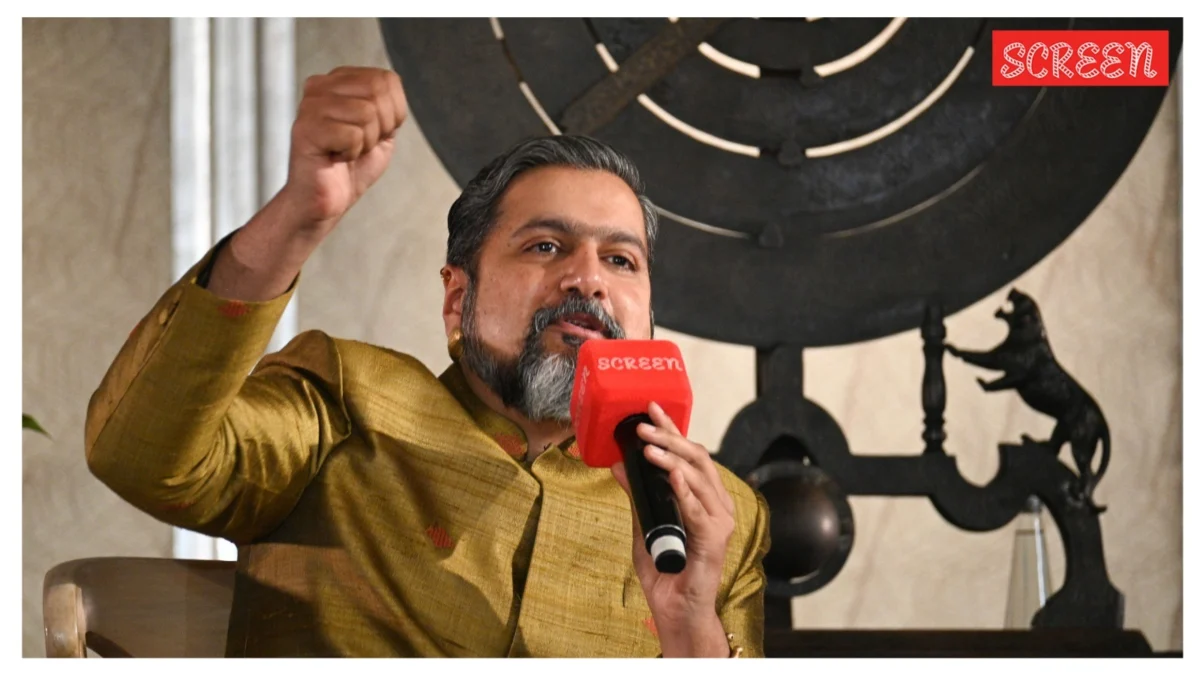
Mumbai, September 20, 2026 – The landscape of Indian film certification has seen a significant shift with the recent reconstitution of the Central Board of Film Certification (CBFC). Among the prominent new members is Grammy Award-winning musician Ricky Kej, an artist renowned for his evocative soundscapes and a deep commitment to environmental causes. Kej has wasted no time in articulating his perspective on the evolving film certification guidelines, particularly those pertaining to age-based classifications and the delicate balance between protecting young audiences and preserving artistic integrity.
In an exclusive interaction, Ricky Kej, who has a substantial body of work primarily designed for children, shared his personal priorities as a board member. His vision centers on leveraging the recently introduced age-based certification categories to empower parents and reduce the necessity for potentially contentious content cuts. "My priority, at least my personal priority on the board, will be to ensure that these classifications are applied accurately, so that parents are empowered to make informed choices and hopefully, we lessen the need to actually edit or cut content meant for mature audiences," Kej stated. This approach underscores a philosophy that emphasizes informed parental guidance over outright censorship, a stance that resonates with a growing demand for more transparent and nuanced film regulation.
The Evolution of Film Certification: A New Era of Age-Based Clarity
The CBFC’s recent revision of its guidelines, particularly the expansion of age-based certification, marks a significant departure from previous practices. These amendments, implemented following the substantial alterations to the Cinematograph Act in May 2023, introduce a more granular approach to film classification. The Cinematograph (Certification) Rules of 2024 have formally incorporated these changes, introducing three new ‘UA’ categories: UA 7+, UA 13+, and UA 16+.
These markers are not arbitrary; they are designed to serve as advisory tools for parents and guardians, prompting them to consider the suitability of a film for children below the stipulated age. The CBFC began issuing these updated UA certificates in October 2024, signaling a proactive move towards providing clearer guidance. This contrasts with the traditional ‘U’ (Unrestricted Public Exhibition) and ‘A’ (Adults Only) certifications, which offered a more binary classification. The new system acknowledges that a film’s suitability for a 10-year-old might differ significantly from its suitability for a 15-year-old, a distinction that the older framework struggled to capture effectively.
The introduction of these age-specific markers is rooted in a broader understanding of child psychology and the diverse nature of cinematic content. While a ‘U’ certificate ensures a film is suitable for all ages, and an ‘A’ certificate restricts it to adults, the new ‘UA’ categories aim to bridge the gap. They allow for films that may contain elements suitable for older children but require parental discretion for younger ones, fostering a more progressive and context-aware certification process.
Ricky Kej: Championing Parental Empowerment and Artistic Freedom
Ricky Kej’s personal connection to content for young audiences has undoubtedly shaped his perspective. Having spent considerable time crafting music specifically for children, he possesses an intimate understanding of the impact that media can have on developing minds. "I care very deeply about the impact on young minds," he emphasized. This deep-seated concern fuels his commitment to ensuring that the new age classifications are implemented with precision, thereby equipping parents with the information they need to make sound decisions for their children’s viewing habits.
However, Kej is also acutely aware of the potential pitfalls of over-sanitization. He firmly believes that the imperative to protect children should not come at the expense of artistic expression for adult audiences. "However, I do acknowledge that protecting children does not mean sanitising cinema for adults," he stated unequivocally to NDTV. This statement is particularly pertinent in the current cinematic climate, which has seen a resurgence in the popularity and critical acclaim of ‘A’-rated films. The commercial and artistic successes of films like Sandeep Reddy Vanga’s 2023 family crime drama Animal and Aditya Dhar’s recent spy thriller franchise Dhurandhar underscore the audience’s appetite for mature storytelling, even with its inherent complexities and challenging themes.
Kej’s stance suggests a nuanced approach to censorship, one that differentiates between protecting children and imposing a blanket moral code on adult entertainment. He advocates for a system where films can be categorized based on their thematic maturity, allowing adults to engage with content that explores complex or mature subjects without fear of undue interference, while simultaneously providing robust guidance for families.
Reconstitution of the CBFC: A New Guard and Evolving Mandates
The recent reconstitution of the CBFC, bringing on board a diverse panel of 18 members, signifies a broader effort to infuse fresh perspectives into the film certification process. Alongside Ricky Kej, the new board includes prominent figures from the entertainment industry such as actors Preity Zinta, Pankaj Tripathi, Suniel Shetty, Pallavi Joshi, and Prosenjit Chatterjee, as well as acclaimed filmmaker Priyadarshan. This eclectic mix of talent and experience is expected to bring a wide spectrum of viewpoints to the board’s deliberations.
The board, under the stewardship of chairperson and former Prasar Bharti CEO Shashi Shekhar Vempati, has been appointed for a term of three years or until further notice. This period of transition is likely to see the implementation and refinement of the revised guidelines.
The CBFC’s core mandate remains the responsible certification of films, ensuring that they adhere to certain ethical and societal standards. The existing guidelines require the board to scrutinize films for content that might:
- Glorify or justify anti-social activities such as violence: The board is tasked with preventing the glorification of criminal behavior or acts of violence.
- Depict the modus operandi of criminals: Content that provides detailed instructions or insights into criminal activities is to be avoided.
- Inciting offences: Films that could potentially encourage or incite illegal activities are flagged.
- Encourage, justify, or glamourise drug addiction: This has been a long-standing concern, now with a more explicit directive.
- Depict violence, cruelty, and sexual content: The guidelines require careful consideration of such depictions to ensure they are not gratuitous or exploitative.
- Endanger public order or national security: Content that could potentially destabilize society or compromise the nation’s security is a critical concern.
- Strain India’s friendly relations with foreign states: Films that could negatively impact diplomatic ties are also subject to review.
A Stronger Stance Against Drugs: The New Warning Mandate
A significant and notably concrete change in the revised guidelines pertains to the depiction of drug use. Under the new regulations, any scene depicting or involving the consumption, use, or trafficking of narcotic drugs or psychotropic substances will necessitate a mandatory on-screen warning: "Illicit Narcotics Destroy Health and Guarantees Imprisonment. Say No to Drugs."
This directive represents a marked shift from the previous guidelines, which primarily focused on preventing the "encouragement, justification, or glamourisation" of drug addiction. While this existing clause aimed to curb the positive portrayal of drug use, it lacked a specific, actionable mechanism for warning audiences. The new mandate, however, introduces a clear and unambiguous warning that directly addresses the viewer, reinforcing the harmful consequences of drug abuse.
This move aligns with a broader national effort to combat drug trafficking and consumption. Last month, the Information & Broadcasting Ministry had already issued directives to OTT platforms and private satellite channels, urging them to prominently display similar warnings during scenes involving drug use. The CBFC’s adoption of this measure within its certification framework ensures a more consistent and widespread application of this critical public health message across all forms of cinematic exhibition.
The inclusion of this explicit warning is a testament to the government’s growing concern over the pervasive issue of drug abuse and its devastating impact on individuals and society. By mandating such a warning, the CBFC is not only fulfilling its role as a regulatory body but also actively participating in a public awareness campaign, leveraging the powerful medium of cinema to deter drug use and promote a healthier lifestyle.
Implications and the Road Ahead
The integration of Ricky Kej into the CBFC, coupled with the revised guidelines, signals a potential recalibration of India’s film censorship policies. Kej’s emphasis on parental empowerment and his nuanced understanding of artistic expression suggest a move towards a more balanced approach, one that respects creative freedom while prioritizing the well-being of young audiences.
The success of these new age-based categories will hinge on their consistent and objective application by the board. The aim is to foster a cinematic ecosystem where filmmakers can explore diverse themes and narratives without undue censorship, and where audiences, particularly parents, are equipped with the necessary information to make informed viewing choices.
The strengthened stance against the depiction of drug use is a clear indication of the government’s commitment to public health and safety. This proactive measure, enforced through cinematic certification, has the potential to reach a vast audience and contribute to a more responsible discourse around substance abuse.
As the newly reconstituted CBFC embarks on its tenure, the industry and the public will be keenly observing how these evolving guidelines translate into practice. The inclusion of voices like Ricky Kej’s, alongside other seasoned professionals, offers a promising outlook for a more progressive, transparent, and socially conscious era of film certification in India. The journey ahead will undoubtedly involve continuous dialogue, adaptation, and a commitment to balancing the multifaceted demands of artistic expression, public interest, and the protection of vulnerable audiences.
