

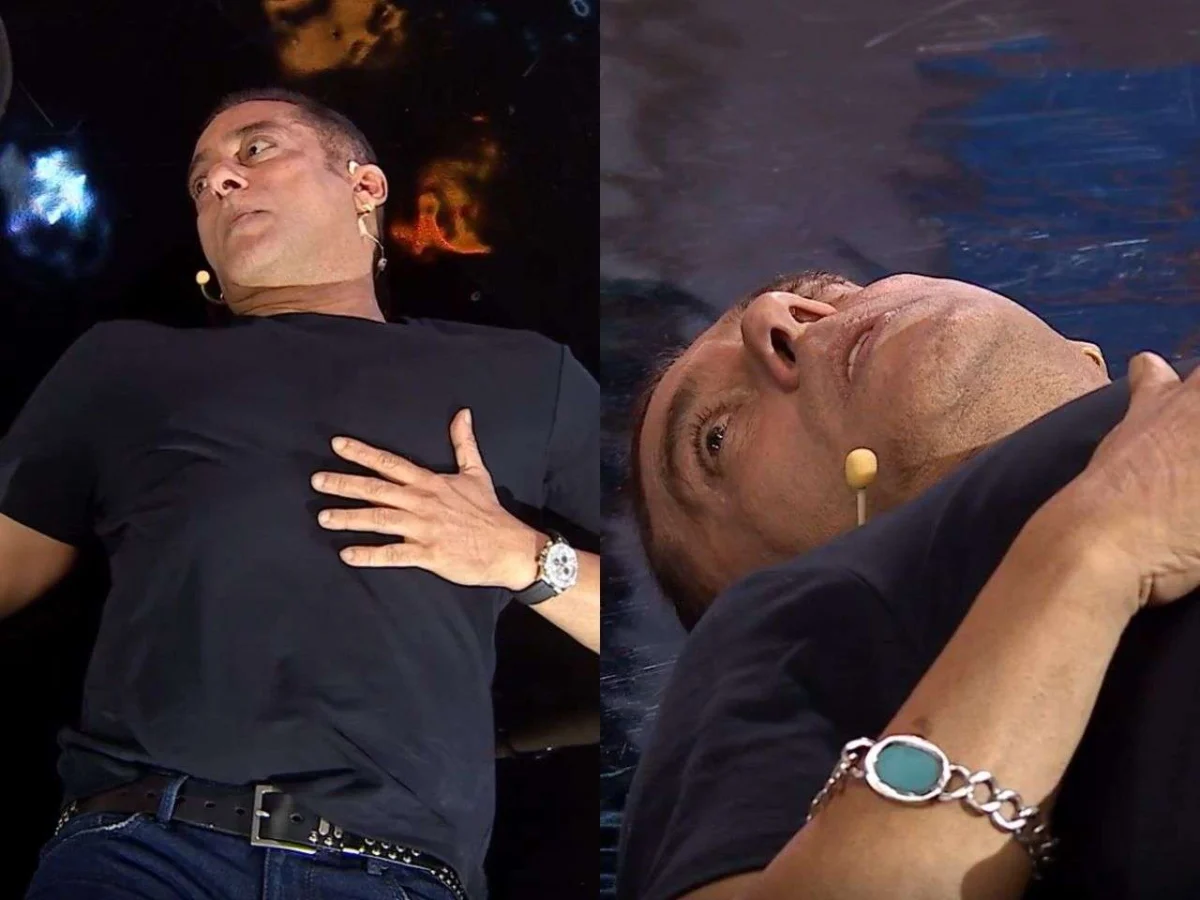
Mumbai, India – The recent episode of "Bigg Boss 20" took an alarming turn when host Salman Khan appeared visibly unwell, experiencing what seemed to be chest pain during the Weekend Ka Vaar segment. The incident sent ripples of concern through his vast fanbase, with social media abuzz with speculation about his health. However, in a swift turn of events, Khan himself clarified the situation, revealing that the dramatic display was a deliberate act intended to address a specific contestant’s behavior, and he has since issued an apology for the distress caused.
The Unfolding Drama: A Glimpse into the "Weekend Ka Vaar" Incident
The tension on the "Bigg Boss 20" sets on Saturday evening was palpable. During the much-anticipated "Weekend Ka Vaar," where Khan typically engages in candid conversations and confrontations with the housemates, the superstar’s demeanor shifted dramatically. Reports and visuals from the episode depicted Khan appearing to be in discomfort, clutching his chest and at one point, lying on the floor. This alarming sequence of events left both the contestants inside the house and the millions of viewers outside in a state of shock and worry.
)
The immediate aftermath saw a flurry of speculation. Many fans, deeply attached to the Bollywood icon, feared the worst, with discussions ranging from a potential cardiac episode to severe chest pain. The abrupt interruption of the show’s filming and Khan’s visibly distressed state fueled these concerns, leading to widespread anxiety across social media platforms.

A Calculated Strategy: Khan’s Explanation and Apology
In the hours following the broadcast, as the concern escalated, Salman Khan took to social media to issue a statement aimed at allaying the fears of his fans. He unequivocally stated that his health is "fine by the grace of God" and attributed the dramatic on-screen incident to a calculated move.
)
Khan revealed that the "chest pain" was a performance, a carefully orchestrated stunt designed to make a point to one of the contestants, Qazi Touqeer. According to Khan, Touqeer had previously feigned a health scare within the Bigg Boss house for dramatic effect, a move that had genuinely worried the other contestants. Khan’s intention was to mirror Touqeer’s actions, thereby demonstrating to him the impact of such deceptive behavior and the anxiety it can cause.
)
"The Bigg Boss promo should not have been cut the way it was cut," Khan stated in his clarification. "It totally beats the purpose and looks like I am doing the same thing that Kazi (Qazi) was doing in the house; the pain was only to show Kazi that what he did was wrong coz he used his health for entertainment, especially when the 15 people in the house were not aware that he was acting and were getting worried for his health."
)
He further expressed regret for the way the promotional video was edited, acknowledging that it contributed to the misunderstanding and the widespread concern. "Sorry abt the way the promo was cut. I guess it’s the format that they use in promoting the shows. I apologise on their behalf." This apology was directed towards his fans and anyone who was distressed by the misleading portrayal.
)
The Deeper Implication: A Lesson in Empathy and Responsibility
Beyond the immediate relief of knowing Khan is well, his explanation sheds light on a deeper aspect of reality television and the responsibilities of its participants. By using himself as a subject to highlight Qazi Touqeer’s transgression, Khan aimed to impart a valuable lesson about the ethical boundaries of entertainment.
)
The incident underscores the power of manipulation within reality shows and the potential for contestants to exploit emotional responses for personal gain or attention. Khan’s move, though unconventional and initially alarming, served as a stark reminder that using one’s health as a prop for entertainment can have significant emotional repercussions on others.
)
The fact that the other housemates were genuinely worried about Khan’s well-being, unaware of his underlying intention, further emphasized the impact of such deceptive tactics. This highlights the delicate balance between creating compelling television and maintaining a sense of integrity and respect for the emotional states of all involved.
)
A New Promo Reinforces the Narrative
Further bolstering Khan’s explanation, a new, extended promo released by the OTT platform of "Bigg Boss 20" provided additional context. This extended version showcased Salman Khan confronting Qazi Touqeer directly after his staged health scare. In this segment, Khan is heard saying, "Aap bhi aisa kuch karte hain, show mein" (You also do something like this on the show). This direct confrontation solidifies the narrative that Khan’s actions were a deliberate response to Touqeer’s previous behavior.
)
The relief evident on the faces of other contestants, such as Amrapali Dubey, Love Gill, and Mahhi Vij, after Khan revealed the truth, further validates his strategy. Their admission, "Aapne dara diya tha, sir" (You had scared us, sir), speaks volumes about the impact of the staged event and reinforces the message Khan intended to convey. Khan’s subsequent advice to Qazi to "entertain people, but not to create a fake health scare" served as a clear directive for responsible conduct within the house.
)
The Fan Reaction: A Mix of Relief and Understanding
The initial wave of panic among Salman Khan’s fans was swiftly followed by a sense of relief and, for many, a growing understanding of his motives. Social media platforms, which had been abuzz with worried messages, soon saw a shift towards expressions of support and appreciation for Khan’s candidness.
)
Fans acknowledged the stressful nature of hosting a show like "Bigg Boss" and commended Khan for taking a proactive approach to address inappropriate contestant behavior. While some expressed a desire for clearer communication in the future to avoid such anxieties, the overarching sentiment was one of trust and affection for their beloved "Bhaijaan."
)
The incident also highlighted the deep emotional connection fans share with their favorite celebrities. Their immediate concern for Khan’s well-being is a testament to the impact he has on their lives, extending beyond his cinematic presence.
)
Broader Implications for Reality Television
The Salman Khan "chest pain" incident on "Bigg Boss 20" serves as a compelling case study for the broader landscape of reality television. It raises pertinent questions about:
)
- The ethics of reality show production: How much creative license is acceptable when it comes to editing and promoting content? The power of a well-placed promo can significantly influence public perception and create unintended distress.
- Contestant accountability: What measures are in place to ensure contestants do not exploit sensitive issues like health for dramatic effect? The incident with Qazi Touqeer suggests a need for clearer guidelines and interventions.
- The role of the host: Salman Khan, as the central figure of "Bigg Boss," wields significant influence. His decision to use himself as a tool for behavioral correction, while ultimately effective in his eyes, also underscores the immense responsibility that comes with such a position.
- The audience’s emotional investment: Reality shows thrive on viewer engagement, and this engagement often translates into a strong emotional connection with the participants. Producers and hosts must be mindful of this investment and avoid actions that could lead to undue emotional distress.
In conclusion, Salman Khan’s dramatic on-screen "chest pain" on "Bigg Boss 20" was a calculated maneuver designed to address a contestant’s misuse of health scares for entertainment. While it initially caused widespread concern among his devoted fans, his subsequent clarification and apology aimed to rectify the situation and reinforce the importance of responsible behavior within the show. The incident, though unsettling in its execution, ultimately serves as a potent reminder of the ethical considerations inherent in the world of reality television and the profound impact it can have on its audience.
