

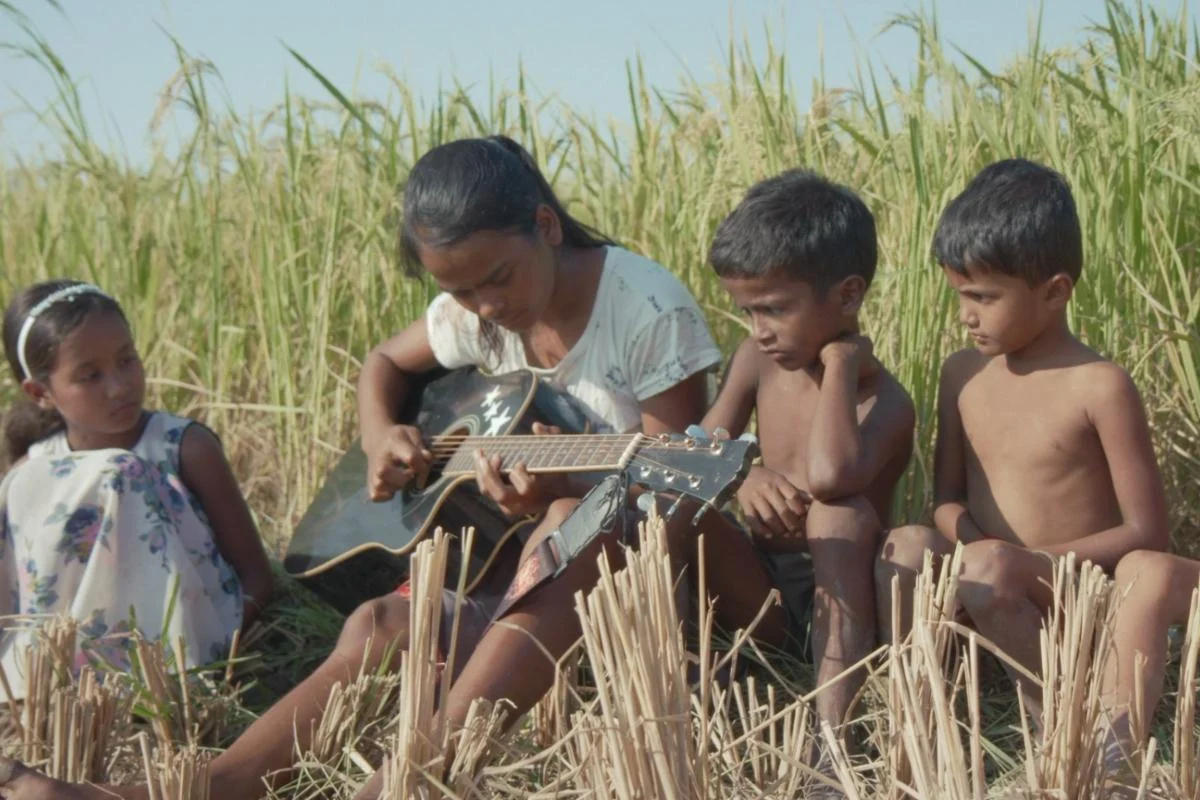
The much-anticipated sequel to Rima Das’s acclaimed "Village Rockstars," the poignant "Village Rockstars 2," has finally graced select theatres, bringing back the verdant landscapes of Assam and the burgeoning musical dreams of its young protagonist, Dhunu. The film’s journey to the screen, however, has been anything but smooth, marked by unforeseen tragedies and the persistent challenges of independent filmmaking in India.
The Return of Dhunu: A Sequel’s Unfolding Narrative
"Village Rockstars 2" continues the story of Dhunu, a spirited young girl from rural Assam whose passion for music was the heart of the original 2017 film. That film, a coming-of-age drama celebrated for its authentic portrayal of childhood dreams and the rural Indian experience, earned the prestigious distinction of being India’s official entry to the Academy Awards. The sequel, premiering at the 29th Busan International Film Festival in October 2024, has since seen a limited theatrical release.
The path to its current release was significantly impacted by the tragic, accidental death of Assam’s beloved singer Zubeen Garg in September 2024. Rima Das, the visionary filmmaker behind both "Village Rockstars" and its sequel, shared the profound impact of this event. "He is a hearthrob, and his death changed everything," Das stated. "Everyone was grieving in Assam. It affected us greatly." This collective sorrow cast a somber shadow over the region, influencing the timing and mood surrounding the film’s subsequent release plans.
A Delayed Debut and Evolving Release Strategies
Following its festival screenings and special events, Das initially opted for a release in Assam on March 6th of this year. This decision was partly influenced by her recent return from the world premiere of her new film, "Not a Hero," at the 76th Berlin International Film Festival. While the Assam release was a deliberate choice to connect with her local audience, Das now reflects on the decision with a tinge of regret.
"I did it because I was really tired," Das confessed, hinting at the exhaustion that often accompanies independent film production and promotion. "I also love to visit theatres, meet people, and celebrate the film with them. That’s when I thought I should take the film to other cities too. But I just don’t have the energy now to do it all over again. From next time, I will release it pan-India." This candid admission highlights the immense personal toll and the logistical complexities involved in bringing independent cinema to a wider audience.
Lessons Learned: The Art and Business of Film Distribution
The experience of releasing "Village Rockstars 2" has been a profound learning curve for Das, offering her invaluable insights into the practicalities of film distribution. "Earlier, I used to just go with the flow and not think too much about marketing," she admitted. "But I learnt that it is important to work on that while releasing a film." This realization underscores a critical aspect of independent filmmaking: the necessity of balancing artistic vision with strategic marketing and distribution.
Das also pointed to the geographical and temporal challenges unique to Assam, citing the long monsoon season that significantly impacts release windows. "To find the correct time to release an independent film is crucial, as is having a good team and marketing budget," she explained. "If you don’t have anything viral or controversial, then it becomes difficult to get the theatrical slot." This statement reveals the uphill battle faced by films that do not rely on sensationalism or widespread pre-existing buzz to secure distribution.
Rima Das’s Cinematic Philosophy: Authenticity Over Spectacle
Rima Das’s filmmaking style stands in stark contrast to the often bombastic nature of mainstream cinema. Her approach is characterized by a deep-seated focus on capturing the quiet nuances of everyday life in rural Assam. Eschewing elaborate scripts, she prioritizes the authentic portrayal of moments, whether it’s children lost in thought on tree branches, as seen in the original "Village Rockstars," or the tender innocence of Dhunu’s connection with nature in the sequel. The image of Dhunu touching her head to a goat as the sun dips below the horizon in "Village Rockstars 2" is a testament to this philosophy – a moment of pure, unadulterated observation.

"I love observing everyday life in nature," Das shared. "It is important in life to see, feel and pause; to have the patience to listen and understand. We should be listening to what nature needs from us when it is continuously giving us unconditionally." This deep respect for the natural world infuses her films with a unique meditative quality, inviting viewers to slow down and appreciate the subtler rhythms of existence.
The Art of Editing: Ruthless Precision in Storytelling
As director, cinematographer, and editor of her films, Rima Das wields significant creative control, allowing her to meticulously shape her narratives. She revealed that an early cut of "Village Rockstars" extended to a lengthy 160 minutes. While many found this extended version compelling, Das understands the imperative of making difficult editorial decisions to serve the film’s overall impact.
"Many people found that cut to be better," she said with a smile, acknowledging the subjective nature of artistic appreciation. "You want to keep a lot of things, but some of them might not work with the audiences. I take that call accordingly and edit my films ruthlessly. It often happens that a scene that took four or five days to shoot needs to be removed on edit. It is a hard choice, but you can’t help it." This dedication to the final vision, even at the cost of cherished footage, demonstrates her commitment to crafting the most effective cinematic experience. "What also matters is my intention. If I want to make a film about nature, then I don’t think about how many people will watch it."
Universal Themes, Young Voices: The Appeal of Children’s Cinema
While Rima Das doesn’t explicitly target a specific audience, her work consistently gravitates towards stories centered on children and young adults. She discovered the universal resonance of her films later in her career. "When I made ‘Village Rockstars,’ I thought it’s a children’s film, but I realized it is for everyone," she explained. "I also felt it was only for the international market, but people loved it even in India." This realization underscores the power of authentic storytelling to transcend cultural and age barriers.

Das’s motivation for making children’s films stems from a perceived lack of narratives that truly speak for them. "I love this generation, and I want them to watch my films. There’s no lesson in them; I just want them to feel what I felt." Her films offer a space for young audiences to see themselves reflected, to connect with experiences and emotions that resonate deeply, fostering empathy and understanding.
The Broader Landscape: Northeast Cinema on the World Stage
"Village Rockstars 2" emerges within a burgeoning wave of critically acclaimed films from Northeast India. The recent success of Manipuri language film "Boong," which received an honour at the 79th British Academy Film Awards, and "Angh," by Nagaland-based filmmaker Theja Rio, which won the Platform Prize at the Toronto International Film Festival on September 15, 2026, are significant milestones. Rima Das views these achievements as collective triumphs.
"It’s a great achievement," she stated, congratulating her fellow filmmakers for "putting Northeast India on the world map." These successes, while celebrated, also highlight the persistent struggles faced by independent filmmakers in the region.
The Unmet Need for Support: Challenges Facing Regional Cinema
The success stories, while inspiring, are often juxtaposed against the stark realities of funding and infrastructure. "I don’t know how everyone is raising funds and taking individual journeys," Das remarked, emphasizing the critical need for governmental support. "We need State support to tell these stories from our region." She acknowledges the diversity within the Northeast, noting that it cannot be treated as a monolithic entity.

"It is a big region. Only Assam has an industry, which is also not well-established," she observed. "Most people in the industry are working for less income, making movies without knowing what’s going to happen to them. The condition is worse in other States with negligible theatres." The precarious nature of this landscape, where filmmakers often work with minimal resources and uncertain outcomes, is a significant barrier. "When some films do well, it gives hope. But where are we headed in practical terms?"
Cultivating a Future for Cinema: The Role of Children’s Film Festivals
Das advocates for the establishment of more children’s film festivals in India, drawing parallels with international initiatives. "Six or seven-year-old kids are watching world-class films and developing a taste for a different kind of cinema," she observed. "But we don’t have as many children film festivals in India. Is it hard to do? Not at all. We just need consistent effort." The lack of such platforms, she argues, hinders the development of a discerning audience and a robust film culture from a young age.
"There’s a lot of talk, but little reflects on the ground level, due to which an entire community of filmmakers are facing problems," she lamented. This disconnect between discussion and action is a recurring theme in the struggles of independent cinema.
A Collective Responsibility: Building a Supportive Ecosystem
Rima Das calls for a unified effort from film enthusiasts, filmmakers, and authorities to foster a more supportive environment for independent movies. "I often feel upset at the situation, but then I also tell myself that it is not my responsibility alone to change things. I cannot keep torturing myself; I need to keep my peace," she stated, emphasizing the importance of personal well-being amidst systemic challenges.

Her concluding words resonate with a call to shared responsibility: "If you need good films, paintings, or books, it is everyone’s responsibility to turn that into reality." This sentiment underscores the idea that the creation and appreciation of art are not solely the domain of artists but a collective endeavor that requires the engagement and support of society as a whole.
"Village Rockstars 2" is currently running in select cities, offering audiences a chance to reconnect with Dhunu’s world and experience Rima Das’s unique cinematic vision.
