

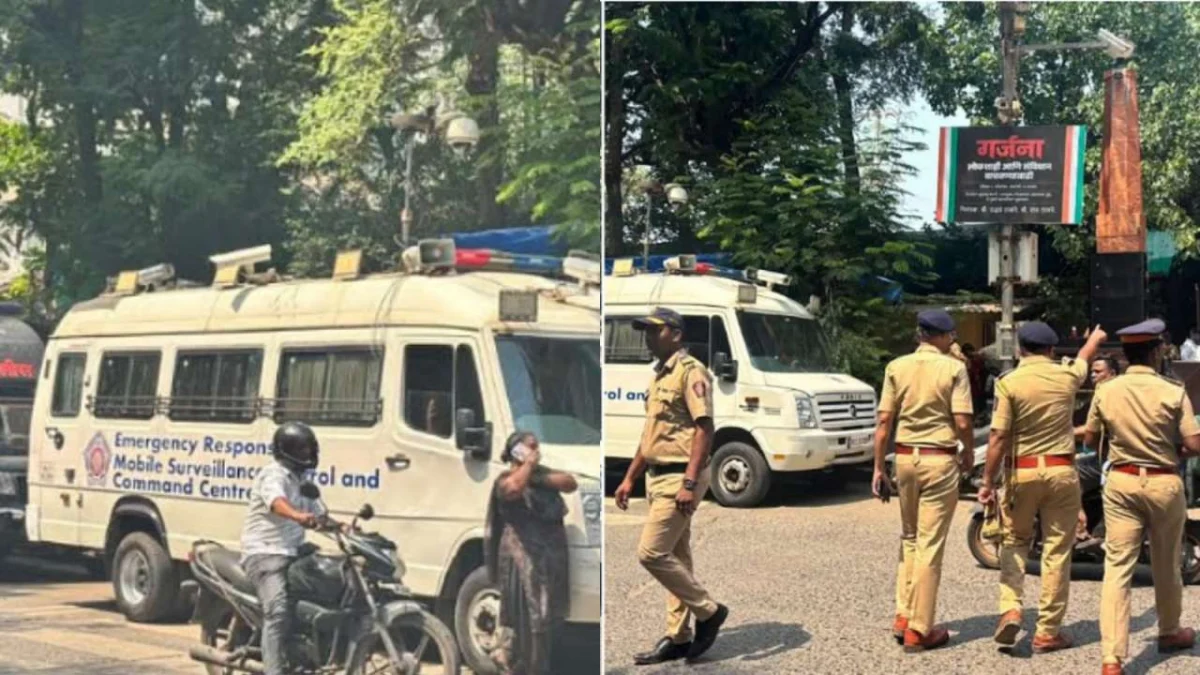
Mumbai, October 2, 2026 – Mumbai’s iconic Shivaji Park, a crucible of political and social movements, has been transformed into an impenetrable fortress today as authorities moved decisively to preempt a planned "Jail Bharo Andolan" (fill jails protest) by the Citizens for Justice and Progress (CJP). With the protest explicitly denied permission by the Mumbai Police, the area is under an unprecedented security lockdown, featuring a formidable array of anti-riot squads, Quick Response Teams, and K9 units, signaling a zero-tolerance stance against any unauthorized assembly. The standoff highlights a burgeoning tension between the fundamental right to peaceful protest and the state’s imperative to maintain public order.
The CJP, a prominent civil rights advocacy group, had announced its intention to stage a mass civil disobedience movement at Shivaji Park, aiming to challenge the recently enacted Public Order and Safety Act (POSA), which they contend severely curtails fundamental freedoms and democratic dissent. However, their fervent call for citizens to voluntarily court arrest has been met with an equally resolute response from law enforcement, turning the traditionally vibrant public space into a theatre of apprehension and heightened vigilance.
Main Facts: A City on Edge
The morning of Friday, October 2, 2026, dawned with an air of palpable tension over Dadar, the bustling locality housing Shivaji Park. The central fact remains: the CJP’s planned "Jail Bharo" protest, intended to commence today, is proceeding without official sanction. Mumbai Police Commissioner, Alok Singh (hypothetical), unequivocally stated that "no permission has been granted for any gathering at Shivaji Park, and any attempt to assemble will be met with lawful action to ensure public safety and order."
At the heart of the matter is the CJP’s vociferous opposition to the Public Order and Safety Act (POSA), a legislative measure passed earlier this year, which critics argue grants sweeping powers to law enforcement agencies and imposes undue restrictions on public assembly and freedom of expression. The CJP views the "Jail Bharo" as a crucial act of defiance, a symbolic gesture of solidarity with those they believe are being silenced by the new law. "Our jails may be filled, but our voices will not be suppressed," declared CJP spokesperson, Dr. Priya Sharma (hypothetical), in a pre-dawn statement circulated online. "This is a fight for the soul of our democracy."
)
Shivaji Park, beyond being a recreational ground, holds immense historical and cultural significance for Mumbaikars. It has been the traditional venue for numerous political rallies, cultural events, and public gatherings, often serving as a barometer of the city’s democratic pulse. Its association with iconic figures like Bal Thackeray and its role in the Samyukta Maharashtra Movement imbues it with a symbolic weight that makes it a potent, and often contested, site for public demonstrations. The choice of Shivaji Park for such a high-stakes protest, therefore, is not merely logistical but deeply symbolic, intended to amplify the message and draw wider public attention.
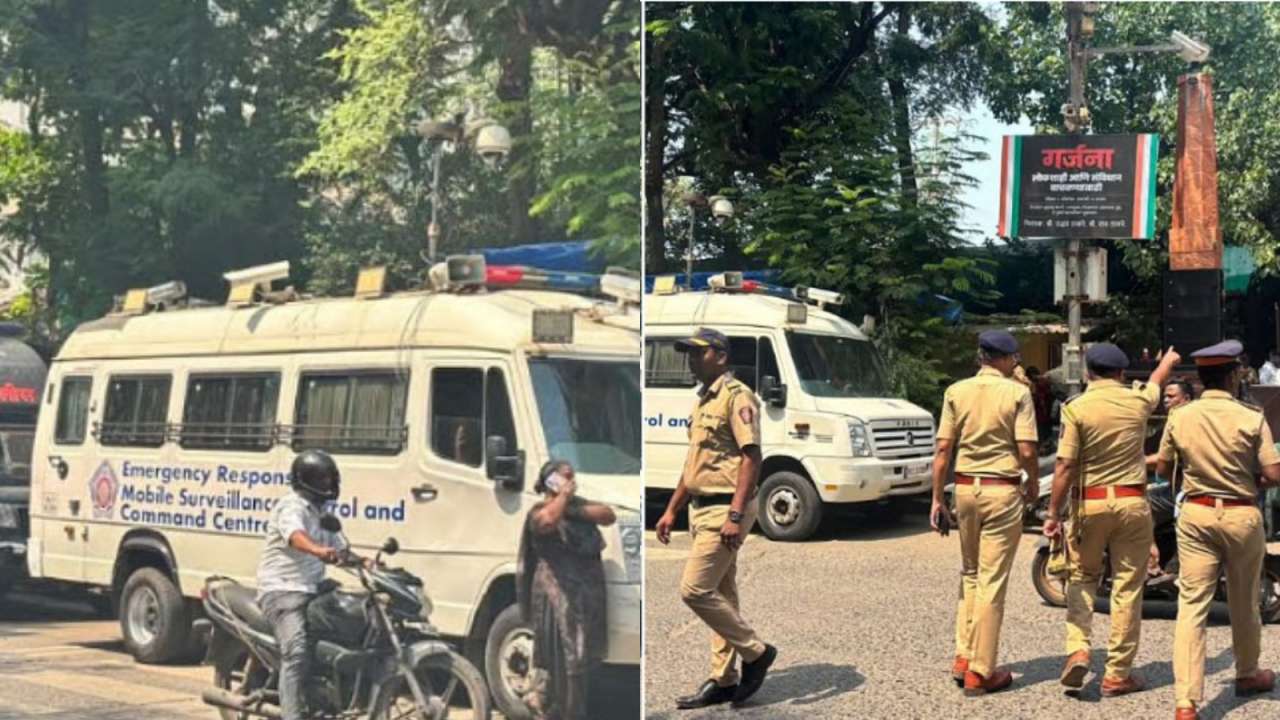
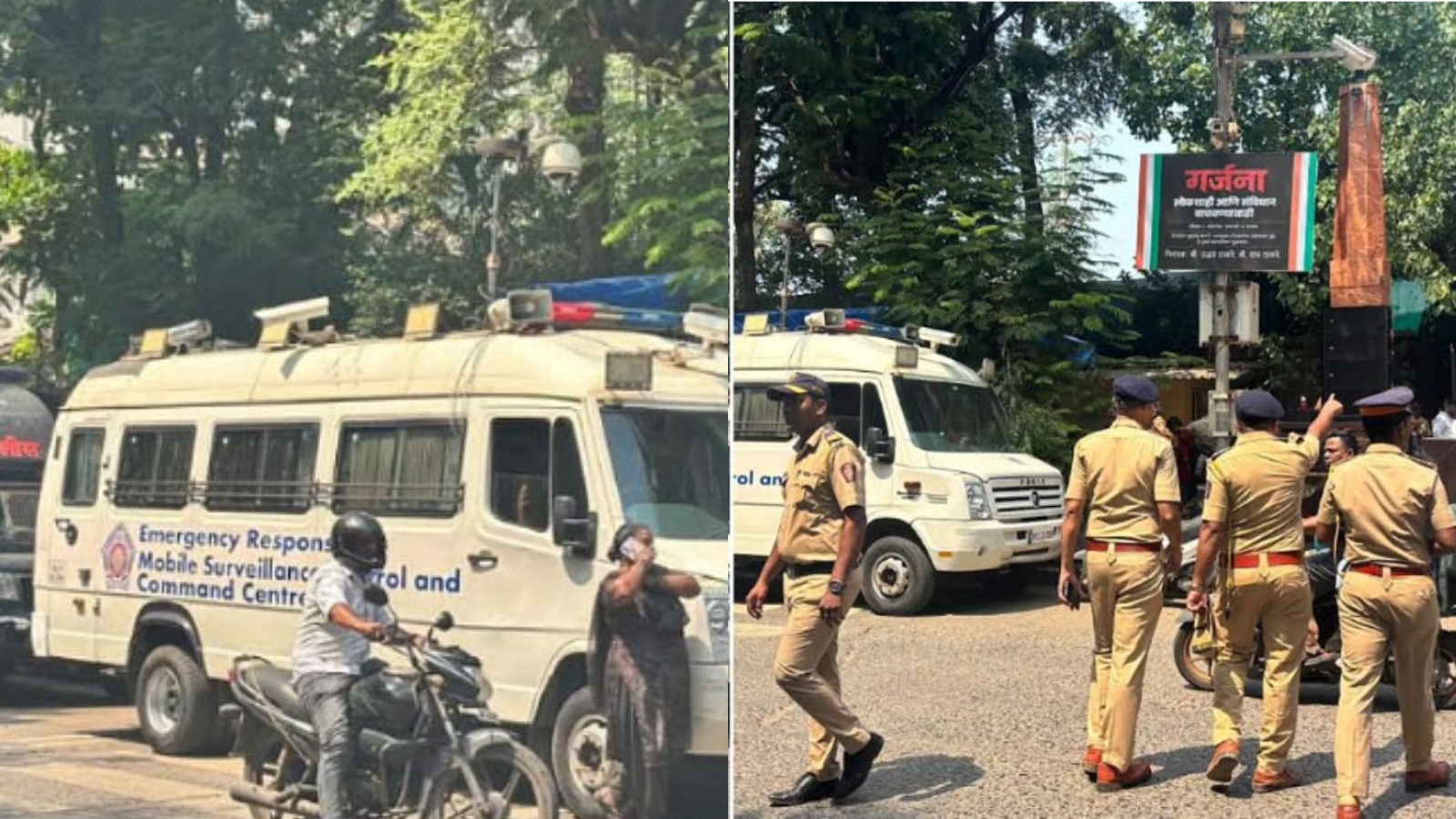
The police response has been swift, comprehensive, and highly visible. Heavy security deployment began in the late hours of Thursday, continuing through the night, transforming the park and its surrounding areas into a no-go zone. Barricades, police vans, and personnel now dominate the landscape, effectively sealing off access and signaling the authorities’ unwavering determination to prevent any congregation. This proactive measure, while aimed at maintaining peace, has inevitably led to disruptions for local residents and businesses, underscoring the broader impact of such a tense standoff.

Chronology: The Escalation of Security and Standoff
The seeds of today’s confrontation were sown weeks ago when the Citizens for Justice and Progress (CJP) first announced their intention to launch a "Jail Bharo Andolan" against the Public Order and Safety Act (POSA). The announcement, made through press conferences and extensive social media campaigns, quickly gained traction, mobilizing various civil society groups, student organizations, and concerned citizens who share similar apprehensions about the new legislation.
Early October 2026: CJP formally applies for permission to hold a protest at Shivaji Park on October 2nd. Their application outlines the nature of the protest – a peaceful, voluntary surrender to arrest – and details the expected number of participants, logistical arrangements, and assurances of non-violence.
)
Mid-October 2026: Mumbai Police denies the permission request. The denial is based on several grounds, including potential disruption to public life, traffic congestion, and intelligence reports suggesting a risk of escalation or infiltration by undesirable elements. Police also cited concerns over the sheer scale of a "Jail Bharo" movement, which could overwhelm city resources.
Late October 2026: Despite the denial, CJP leadership reiterates its commitment to proceed with the protest, arguing that the right to peaceful assembly is fundamental and that the denial itself is an infringement of democratic freedoms. They issue a public call to action, urging citizens to gather at Shivaji Park, emphasizing the non-violent nature of their proposed civil disobedience. Social media becomes a primary battleground for mobilization and counter-mobilization, with CJP sharing logistical details and police issuing advisories and warnings.
)
Thursday, October 1, 2026 – Evening: As the deadline for the protest loomed, the Mumbai Police initiated its comprehensive security operation. Senior police officers, including Deputy Commissioner of Police (DCP) Zone V, along with other high-ranking officials, conducted a thorough inspection of Shivaji Park and its periphery. The inspection, which lasted for several hours, covered key entry points, potential congregation spots, and sensitive areas. Directives were issued to finalize deployment strategies, establish communication channels, and ensure all units were on high alert. This initial deployment saw the installation of the first layer of barricades and the positioning of patrol units.
Thursday Night, October 1, 2026 – Early Friday Morning, October 2, 2026: The security deployment intensified dramatically. Additional platoons of the State Reserve Police Force (SRPF), Quick Response Teams (QRTs), and specialized anti-riot squads were moved into position. The main entrance to Shivaji Park was completely shut, reinforced with multiple layers of steel barricades, effectively sealing off vehicular and pedestrian access. The entire perimeter of the park, spanning several kilometers, was cordoned off with a dozen or more barricade points, creating a buffer zone. Plainclothes personnel were strategically deployed in the surrounding residential and commercial areas to monitor activities and gather intelligence. Surveillance drones were reportedly activated to provide an aerial view of the situation.
)
Friday Morning, October 2, 2026 – Present: As the city awoke, the sheer scale of the police presence became undeniable. Police personnel, clad in riot gear, stood guard at every access point. Dog squads patrolled the outer perimeter, adding another layer of security. Traffic diversions were implemented in the Dadar area, causing inconvenience but ensuring that the police could control movement around the park. The atmosphere remained tense, with a visible police presence far outnumbering any early arrivals from the protesting group. Authorities also confirmed that monitoring of social media posts linked to the protest was ongoing, not only to track mobilization efforts but also to identify and debunk any misinformation or incitement.
A local resident, Mr. Ramesh Shah, out for his usual morning walk, expressed his bewilderment to an IANS reporter: "We are not protesting. We are residents of Shivaji Park, and we are just taking a round of the area. There is such a large crowd here and so many police personnel, and a stage has been set up there… I have never seen such a deployment here, even during major festivals." His comments underscore the unusual nature of the security measures and their impact on daily life for those living in the vicinity.
)
Supporting Data: The Anatomy of a Lockdown
The extensive security measures deployed at Shivaji Park are a testament to the Mumbai Police’s commitment to preventing any unauthorized assembly, particularly one of the scale and nature of a "Jail Bharo Andolan." The data behind this lockdown reveals a carefully orchestrated plan designed to exert maximum control over the protest site.
Personnel Deployment:
While exact figures are rarely disclosed for operational security, estimates suggest a deployment of over 1,500 police personnel. This includes:
)
- Local Police Units: Drawn from multiple police stations in Central Mumbai.
- State Reserve Police Force (SRPF): Several platoons, specially trained in crowd control and equipped with non-lethal weapons.
- Anti-Riot Squads: Equipped with riot shields, helmets, body protectors, and tear gas launchers.
- Quick Response Teams (QRTs): Highly mobile and armed units trained for rapid intervention in volatile situations.
- Dog Squads (K9 Units): Utilized for detection and perimeter security.
- Plainclothes Officers: Deployed for intelligence gathering and monitoring potential instigators within any crowd.
Physical Infrastructure and Technology:
- Barricades: Over 100 heavy-duty steel barricades have been erected, forming multiple layers around the park and its access roads. These are designed to be difficult to breach and to channel any potential crowds.
- Main Entrance Closure: The primary entry points to Shivaji Park have been sealed off completely, preventing direct access.
- Cordoning Off: A wide perimeter around the park has been designated as a ‘no-entry’ zone for unauthorized individuals, enforced by checkpoints.
- CCTV Surveillance: Existing CCTV networks in the area have been fully activated, and additional portable cameras have been installed to provide real-time monitoring of all activities.
- Drone Surveillance: Drones equipped with high-resolution cameras are being used for aerial reconnaissance, offering a panoramic view of the situation and helping to identify any massing crowds or unusual movements.
- Communication Systems: Enhanced radio communication networks ensure seamless coordination between various police units and command centers.
Legal Framework for Police Action:
The Mumbai Police’s actions are grounded in several legal provisions:
)
- Section 144 of the Criminal Procedure Code (CrPC): This section empowers an executive magistrate to issue an order prohibiting the assembly of four or more people in an area if there is an apprehension of obstruction, annoyance, or danger to human life, health, or safety, or a disturbance of the public tranquility. While not explicitly invoked across the entire city, its principles underpin the localized prohibition at Shivaji Park.
- Maharashtra Police Act, 1951: This act grants wide-ranging powers to the police for regulating assemblies and processions, including the power to deny permission and to disperse unlawful assemblies.
- Indian Penal Code (IPC): Sections like 188 (Disobedience to order duly promulgated by public servant) and 141 (Unlawful Assembly) provide legal grounds for arrest and prosecution of individuals participating in unpermitted gatherings.
Traffic and Public Impact:
The extensive security measures have necessitated significant traffic diversions around Dadar. Several arterial roads leading to Shivaji Park have been closed or converted to one-way traffic. This has inevitably led to considerable inconvenience for commuters, local residents, and businesses in the vicinity. Public transport services, particularly local buses, have also been rerouted, adding to the daily challenges for Mumbaikars. While necessary for security, such disruptions highlight the broader societal cost of major protests and police interventions.
Historical Context of Protests at Shivaji Park:
Shivaji Park has a storied history of hosting significant protests and rallies. From the vibrant political speeches of Shiv Sena founder Bal Thackeray to various workers’ rights movements and cultural festivals, the park has always been a focal point for public expression. However, in recent years, particularly post-pandemic and with increasing urban development, regulations around public gatherings have become stricter. The current scenario is perhaps one of the most heavily policed pre-emptive measures seen at the park in decades, underscoring the perceived gravity of the CJP’s intended "Jail Bharo" movement and the authorities’ determination to prevent any breach of order.
)
Official Responses: Firmness and Defiance
The unfolding situation at Shivaji Park has elicited strong and divergent responses from both the authorities and the protesting group, painting a clear picture of the ideological clash at hand.
Mumbai Police’s Official Stance:
The Mumbai Police have maintained a consistent and firm stance, emphasizing their duty to uphold law and order. Speaking to the media earlier today, Joint Commissioner of Police (Law and Order), Mr. Sanjay Jadhav (hypothetical), reiterated, "The CJP’s request for permission was carefully reviewed and subsequently denied, taking into account various factors including potential public disturbance, traffic chaos, and intelligence inputs regarding possible security breaches. Our primary responsibility is the safety and security of all citizens, and we cannot allow any unauthorized gathering that risks disrupting public peace and order."
)
He further added, "We appeal to all citizens to respect the law and refrain from participating in any unpermitted assembly. Any individual attempting to breach the cordon or participate in an unlawful protest will face legal consequences. We have deployed adequate forces to manage any situation and ensure that normalcy is maintained across the city. Our actions are purely preventative and aimed at ensuring no untoward incident occurs." The police have also utilized social media platforms to disseminate official warnings and advisories, urging people to stay away from Shivaji Park and to avoid falling prey to calls for unlawful assembly.
Citizens for Justice and Progress (CJP) Leadership:
In stark contrast, the CJP leadership has expressed profound disappointment and defiance against the police’s actions, framing it as an attack on democratic rights. Dr. Priya Sharma, CJP spokesperson, issued a statement condemning the police lockdown: "This unprecedented militarization of a public space like Shivaji Park is not just an attempt to suppress our protest, but an assault on the very fabric of our democracy. The Public Order and Safety Act (POSA) is designed to silence dissent, and the police’s actions today are a living demonstration of its draconian nature."
)
She continued, "We have repeatedly assured the authorities of our peaceful intentions. A ‘Jail Bharo’ movement is inherently non-violent, a symbolic act of resistance where citizens voluntarily offer themselves for arrest. Denying us this fundamental right to protest, and then deploying such overwhelming force, sends a chilling message to anyone who dares to question authority. We urge our supporters to remain steadfast, to gather peacefully as close as possible to the designated area, and to continue raising their voices against unjust laws, even if it means courting arrest." The CJP has also accused the police of attempting to intimidate potential protesters and undermine their constitutional right to peaceful assembly.
Government’s Implicit Stance:
While no direct statement has been issued by the state government, the heavy-handed police response implicitly signals the government’s backing of the police’s actions and its determination to enforce the Public Order and Safety Act (POSA). The state Home Minister’s office has reportedly been monitoring the situation closely, suggesting a high-level political endorsement of the security measures. The government’s silence, coupled with the robust police presence, indicates a clear policy decision to prioritize public order over allowing an unpermitted mass protest, especially one challenging a significant piece of new legislation.
)
Implications: A Precarious Balance Between Rights and Order
The standoff at Shivaji Park carries significant implications, not just for the immediate outcome of the CJP protest but for the broader landscape of civil liberties, public order, and political discourse in Mumbai and across the nation.
Impact on Civil Liberties and Right to Protest:
The most immediate implication is the potential chilling effect on the right to peaceful protest. If an explicitly non-violent "Jail Bharo" movement, intended as a symbolic act of civil disobedience, is preemptively suppressed with such overwhelming force, it could set a precedent for future restrictions on public assembly. Civil rights activists and legal experts are likely to scrutinize the police’s actions, raising questions about the proportionality of the response and the interpretation of laws governing public gatherings. This event could reignite debates about the delicate balance between the state’s responsibility to maintain law and order and citizens’ fundamental right to express dissent. The CJP’s claim that POSA is being used to curtail fundamental rights will gain more traction if the protest is entirely stifled.
)
Potential for Escalation and Confrontation:
Despite the heavy security, there remains a precarious potential for escalation. If a significant number of CJP supporters attempt to breach the barricades or gather in large numbers in surrounding areas, the situation could quickly turn volatile. While the police have deployed anti-riot squads, any use of force, even non-lethal, could lead to public backlash, accusations of brutality, and further radicalization of protesters. Conversely, a complete lack of turnout due to police deterrence might be perceived as a victory for state control, potentially disheartening future protest movements. The outcome will largely depend on the resolve of the protesters and the patience of the police.
Political Ramifications:
The handling of this protest will undoubtedly have political ramifications. The state government’s decision to enforce the ban so strictly could be seen as a demonstration of its resolve against dissent, potentially consolidating its support base among those who prioritize stability. However, it could also alienate sections of the public and opposition parties who might criticize the heavy-handed approach as authoritarian. Opposition parties are likely to seize upon the event to criticize the government’s policies, particularly the Public Order and Safety Act, and to advocate for greater protection of civil liberties. The CJP, regardless of the immediate success of their "Jail Bharo," will likely leverage the perceived suppression to further their cause.
)
Public Opinion and Media Narrative:
The media’s portrayal of the event will significantly shape public opinion. Images of a heavily fortified Shivaji Park, juxtaposed with narratives of citizens attempting to exercise their right to protest, will evoke strong reactions. The local resident’s comment about the unprecedented deployment highlights the disruption and potential alienation of the general public. The CJP will aim to garner sympathy for their cause by portraying themselves as victims of state repression, while the police will emphasize their role in maintaining peace and preventing chaos. The battle for the narrative is as crucial as the physical standoff.
Future of Protests in Mumbai:
The outcome of today’s standoff could set a precedent for how future protests are managed in Mumbai. If the police successfully prevent the assembly without major incident, it might embolden authorities to adopt similar stringent measures for other unpermitted gatherings. Conversely, if the CJP manages to stage a significant, albeit contained, protest, it could encourage other groups to challenge similar bans. This event will serve as a crucial test case for the implementation of the Public Order and Safety Act and its impact on the democratic space in India’s financial capital.
)
In conclusion, the situation at Shivaji Park is a microcosm of the larger tensions between state power and individual freedoms. As the day progresses, the eyes of the nation will be on Mumbai, watching how this delicate balance is maintained, or potentially disrupted, amidst the barricades and the determined silence of a city on edge.
