

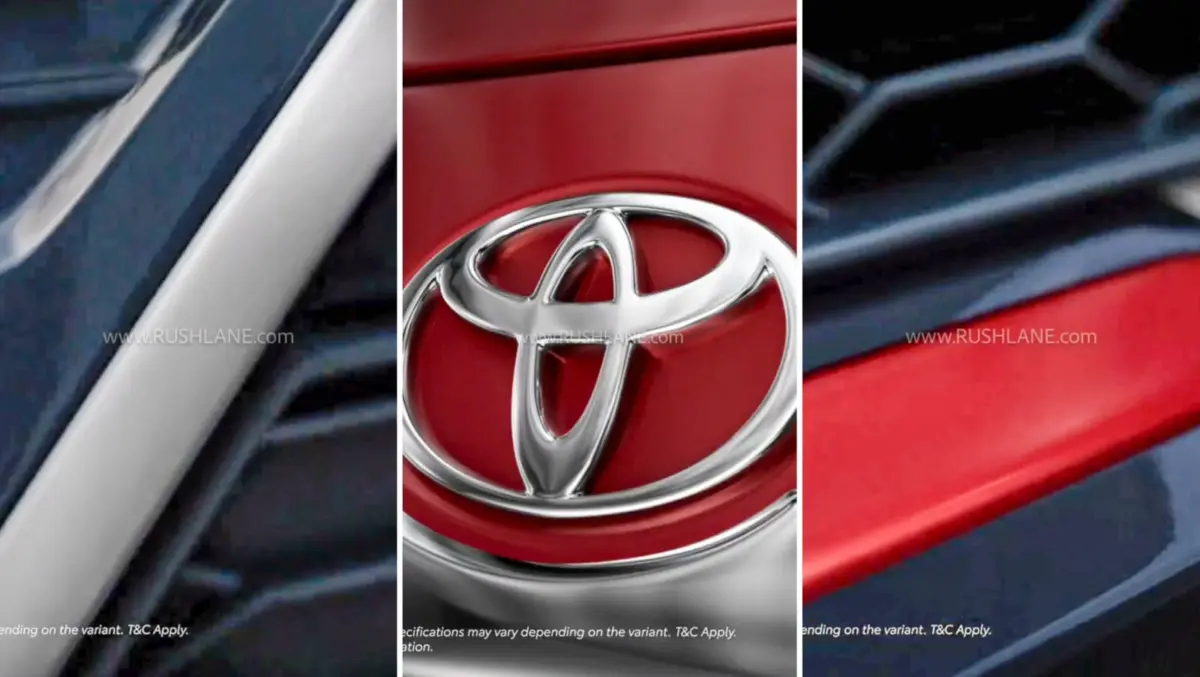
New Delhi, October 10, 2026 – Toyota Kirloskar Motor (TKM) has officially set the stage for one of its most anticipated launches of the year. Following weeks of speculation and spy shots, the Japanese automotive giant has released the first set of official teasers for the 2026 Toyota Glanza facelift. Scheduled for a commercial debut on October 14, the updated Glanza promises to bridge the gap between affordable city commuting and high-end technological sophistication.
The Glanza, which has served as a cornerstone of Toyota’s volume-driven strategy in India through its alliance with Maruti Suzuki, is undergoing a mid-cycle refresh that focuses on three core pillars: visual distinctiveness, advanced safety through ADAS, and a transition toward more fuel-efficient powertrain technology.
Main Facts: A Bold New Identity and Technological Leap
The teaser images released by Toyota India offer a focused look at the front fascia, suggesting a departure from the "rebadging" criticisms of the past. Toyota is increasingly moving toward a unique design language that separates the Glanza from its cousin, the Maruti Suzuki Baleno.
1. Aesthetic Revisions
The most striking revelation from the teasers is the redesigned front grille. The 2026 model features a prominent black honeycomb mesh pattern, bordered by a substantial silver-finished surround. Unlike the previous iteration, which shared a more generic look, the new Glanza utilizes a red body-colored panel on the bonnet edge, housing the Toyota emblem. A sleek metallic-finish trim piece runs beneath the logo, connecting the elements and providing a wider, more planted stance.

2. The ADAS Integration
Perhaps the most significant upgrade is the expected inclusion of Level 2 Advanced Driver Assistance Systems (ADAS). This move aims to position the Glanza as one of the safest vehicles in the premium hatchback segment. Key features anticipated include:
- Automatic Emergency Braking (AEB): To mitigate or avoid frontal collisions.
- Lane Keep Assist (LKA): To provide steering input if the vehicle drifts from its lane.
- Adaptive Cruise Control: Enhancing highway driving comfort by maintaining a set distance from the vehicle ahead.
- High-Beam Assist: Automatically toggling between high and low beams based on oncoming traffic.
3. Powertrain Shift
Mirroring the updates seen in the new-generation Swift and the recently refreshed Baleno, the Glanza facelift is expected to swap its four-cylinder K-series engine for the new 1.2-litre, three-cylinder Z-Series petrol engine. This unit is designed with a focus on thermal efficiency and low-end torque, catering to the urban stop-and-go traffic conditions prevalent in Indian metros.
Chronology: The Glanza’s Journey in the Indian Market
To understand the significance of the 2026 facelift, one must look at the timeline of Toyota’s premium hatchback journey in India.
- June 2019: Toyota launches the first-generation Glanza. It was the first product to emerge from the global Toyota-Suzuki partnership in India. At the time, it was nearly identical to the Maruti Baleno, differing only in badges and the front grille.
- March 2022: The "Cool New Glanza" was introduced. This was a major turning point as Toyota invested in more distinct sheet metal changes and a unique interior color palette (beige and black) compared to the Baleno’s blue and black. It introduced features like a Head-Up Display (HUD) and a 360-degree camera.
- 2023–2025: The Glanza maintains steady sales, often hovering between 4,000 to 6,000 units per month, proving that the Toyota brand equity and the 3-year/100,000 km warranty were major draws for premium buyers.
- October 10, 2026: First teasers for the second major facelift are released, showcasing a more aggressive design and hinting at a massive tech overhaul.
- October 14, 2026: Scheduled official launch and price announcement.
Supporting Data: Engineering and Feature Specifications
The 2026 Toyota Glanza facelift is not merely a cosmetic exercise. The underlying engineering reflects the changing demands of the Indian consumer, who now prioritizes fuel economy and features over pure cylinder count.

The Z-Series Engine Performance
The transition to the 1.2L three-cylinder engine is backed by data suggesting a significant improvement in fuel efficiency. While the outgoing four-cylinder engine was praised for its refinement, the new Z12E engine (expected) offers:
- Estimated Power: ~82 bhp
- Estimated Torque: ~112 Nm
- Fuel Efficiency: Expected to exceed 25 km/l in manual variants and slightly higher in AMT configurations, making it a segment leader in economy.
Interior and Comfort Features
Beyond the safety tech, the Glanza is set to inherit several "big car" features:
- Ventilated Front Seats: A crucial addition for the Indian climate, currently a rarity in the hatchback segment.
- Wireless Charging Pad: Now featuring active cooling to prevent smartphone overheating during fast charging.
- Infotainment: A 9-inch Smart Playcast touchscreen with wireless Android Auto and Apple CarPlay, paired with a premium Clarion sound system.
Transmission Options
Toyota will continue to offer versatility in its transmission lineup:
- 5-speed Manual: For the purists and budget-conscious.
- 5-speed AMT (Automated Manual Transmission): Marketed for its convenience and efficiency.
- CNG Variant: A factory-fitted CNG option will be available from launch, and notably, it is expected to be paired with an AMT option—a combination that has seen surging demand in the "green" mobility sector.
Official Responses: Toyota’s Strategic Vision
In a brief statement accompanying the teaser release on social media, Toyota India remarked: "A whole new vibe is about to hit the road. Get ready to make your move."

Industry analysts suggest that this "vibe" refers to the shift in brand perception. Toyota is no longer viewing the Glanza as a "filler" model but as a gateway for young professionals into the Toyota family. By adding Level 2 ADAS, Toyota is aligning the Glanza with its global "Safety for All" mission.
A spokesperson from Toyota Kirloskar Motor previously hinted that the company’s focus remains on "customer-centricity," implying that the updates in the Glanza were driven by feedback from existing owners who desired more premium features like ventilated seats and advanced safety tech without moving up to a larger SUV segment.
Implications: Impact on the Premium Hatchback Segment
The launch of the Glanza facelift has wide-ranging implications for the Indian automotive landscape.
1. Competitive Pressure on Rivals
The premium hatchback segment is currently a battlefield. The Hyundai i20 has long been the king of features, while the Tata Altroz has dominated the safety narrative with its 5-star GNCAP rating. By introducing Level 2 ADAS, Toyota is directly challenging the i20’s tech supremacy and the Altroz’s safety USP. The Glanza will now offer a combination of Toyota’s reliability, Maruti’s fuel-efficient engineering, and cutting-edge safety.

2. The "Toyota-fication" of Suzuki Products
This facelift demonstrates that Toyota is taking more creative control over the products shared with Suzuki. The distinct front-end styling suggests that Toyota is willing to invest in unique tooling and components to ensure that a Toyota customer feels they are driving a vehicle that is aesthetically different from the Maruti counterpart.
3. Reshaping the "Small Car" Narrative
As the Indian market increasingly pivots toward SUVs (Compact and Mid-size), the premium hatchback segment has felt the pressure. However, by packing the Glanza with ADAS, 360-degree cameras, and ventilated seats, Toyota is making a case for the "luxury small car." This strategy targets urban buyers who want a premium experience but require a smaller footprint for easier parking and maneuvering in congested cities.
4. Resale Value and Total Cost of Ownership
Toyota’s entry into the 1.2L three-cylinder space with the Glanza will likely stabilize the resale market for these engines. Furthermore, the inclusion of a CNG-AMT variant will likely attract the fleet and high-usage private buyers, potentially making the Glanza the most cost-effective premium car to own over a five-year period.
Conclusion: What to Expect on October 14
When the curtains go up on October 14, the automotive world will be looking closely at the pricing strategy. Currently, the Glanza is priced slightly at a premium over the Baleno, justified by Toyota’s superior warranty packages and service experience. With the addition of Level 2 ADAS and ventilated seats, a price hike of ₹40,000 to ₹70,000 for the top-end variants is anticipated.

The 2026 Toyota Glanza facelift represents more than just a new bumper or a different grille; it is a testament to the maturing Indian car buyer who no longer sees hatchbacks as "entry-level" but as a conscious choice for a sophisticated, tech-laden, and efficient lifestyle. As Toyota prepares for the launch, the competition is undoubtedly watching closely, as the benchmarks for the segment are about to be rewritten.
