

The Indian automotive landscape is bracing for a significant refresh in the premium hatchback segment as Toyota Kirloskar Motor (TKM) begins the countdown for the official launch of the Glanza facelift. Scheduled for a high-profile unveiling on October 14, the latest iteration of the Glanza aims to redefine the value proposition of the Toyota-Suzuki global alliance. Through a series of strategically released teasers, Toyota has provided a glimpse into a vehicle that is not merely a "rebadged" sibling to the Maruti Suzuki Baleno, but a distinct product tailored to the aesthetic and functional expectations of the Toyota customer base.
Main Facts: What to Expect from the New Glanza
The upcoming Toyota Glanza facelift represents a mid-cycle refresh designed to align the hatchback with Toyota’s modern global design language while integrating cutting-edge technology typically reserved for higher-segment vehicles.
Aesthetic Overhaul
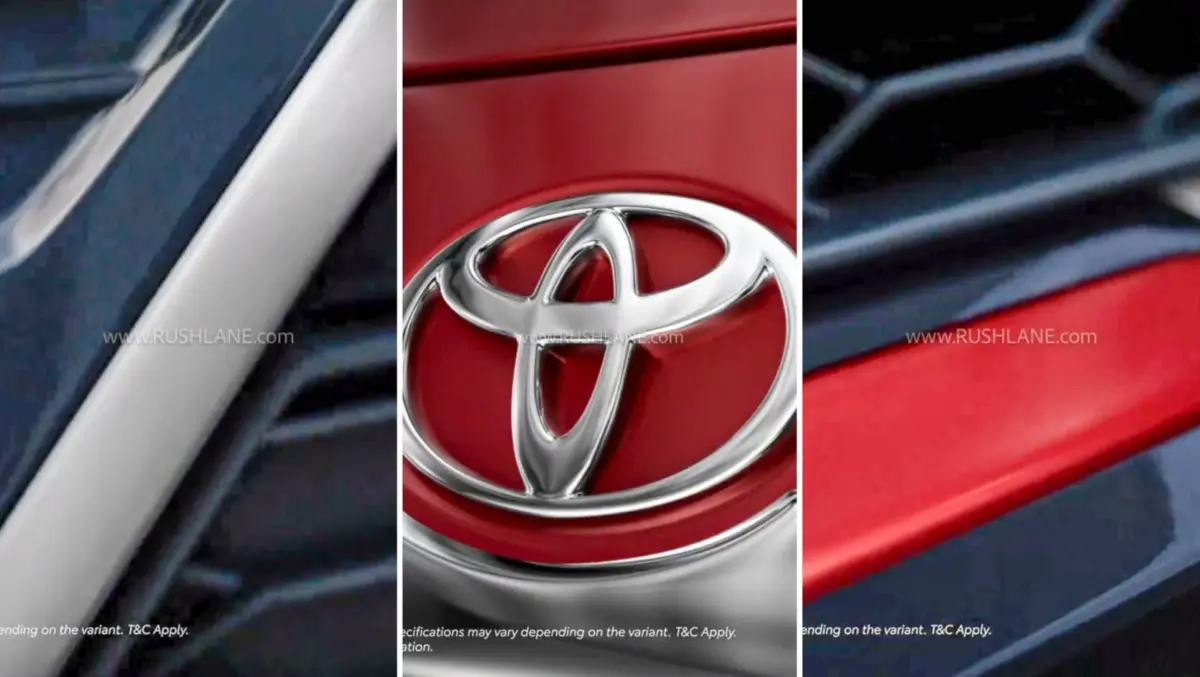
The teasers highlight a revised front fascia. The most prominent change is the new honeycomb-patterned grille, bordered by a thick, silver-finished surround that adds a touch of sophistication. The front bumper has been redesigned with more aggressive lines and contrasting black elements, intended to give the car a wider, more planted stance. The Toyota emblem remains centrally located on a red body-colored panel, underscored by a sleek metallic trim piece that bridges the gap between the hood and the grille.
Technological Advancements
Following the trajectory of the recently updated Baleno, the Glanza is expected to host a suite of "segment-first" or "segment-leading" features. Key among these are ventilated front seats—a necessity in the Indian climate—and a wireless charging pad equipped with active cooling to prevent smartphone overheating. Audiophiles can expect an upgraded sound system, likely sourced from Clarion, similar to the premium setups found in Toyota’s international compact cars.

Safety and ADAS Integration
Perhaps the most significant upgrade is the rumored inclusion of Level 2 Advanced Driver Assistance Systems (ADAS). If confirmed, the Glanza will offer features such as Automatic Emergency Braking (AEB), Lane Keep Assist, and Adaptive Cruise Control. This move marks a pivot toward safety-conscious marketing, aiming to attract urban buyers who prioritize active safety tech.
Powertrain Transition
Under the hood, the Glanza is set to transition from its current four-cylinder architecture to a more fuel-efficient 1.2-litre, three-cylinder "Z-Series" petrol engine. This engine, which debuted in the new Swift and Dzire, focuses on maximizing thermal efficiency and low-end torque, making it ideal for stop-and-go city traffic.
Chronology: The Evolution of the Toyota-Suzuki Synergy
To understand the significance of the 2027 Glanza facelift, one must look at the timeline of the Toyota-Suzuki partnership in India, which has fundamentally altered the competitive dynamics of the market.
- 2017: The Foundation: Toyota and Suzuki signed a memorandum of understanding to explore a business partnership, focusing on environmental technologies, safety, and information technologies.
- 2019: The Birth of the Glanza: Toyota launched the first-generation Glanza in India. It was the first product of the cross-badging agreement, essentially a Maruti Suzuki Baleno with Toyota badges. Despite initial skepticism, the Glanza succeeded due to Toyota’s superior warranty packages and service reputation.
- 2022: The Second Generation / Major Update: Toyota introduced a more distinct version of the Glanza, featuring unique headlights, a different grille, and a bespoke interior color palette. This version moved the Glanza away from being an exact clone of the Baleno.
- 2024-2025: Tech Parity: Throughout these years, both brands worked on integrating connected car tech (Toyota i-Connect) and hybrid experiments, though the Glanza remained a purely internal combustion engine (ICE) or CNG offering.
- October 2026/2027: The Current Facelift: The teaser campaign launched on October 10, 2026, leading to the October 14 launch date. This update represents the most tech-heavy iteration of the hatchback to date, focusing on ADAS and the new Z-Series engine.
Supporting Data: Engineering and Feature Breakdown
The 2027 Glanza is not just a cosmetic exercise; it is a calculated engineering update. Here is a detailed look at the specifications and features that will define the vehicle.

The Z-Series Engine: Efficiency Over Cylinder Count
The shift from the K-Series four-cylinder to the Z-Series three-cylinder engine is a strategic move toward meeting stricter BS6 Phase II (and future) emission norms while boosting fuel economy.
- Expected Power: ~80-82 PS.
- Expected Torque: ~112 Nm.
- Fuel Efficiency: The new engine is expected to deliver upwards of 24-25 km/l in petrol guise and nearly 33 km/kg in CNG mode, making it one of the most efficient cars in its class.
Transmission Options
Toyota will continue to offer a five-speed manual gearbox for purists. For those seeking convenience, the five-speed AMT (Automated Manual Transmission) will be the mainstay. Interestingly, reports suggest that Toyota might offer the AMT with the CNG variant, a combination that is gaining traction among commuters who refuse to sacrifice convenience for low running costs.
Interior and Comfort Features
The cabin layout will remain familiar but will be elevated through material choices.
- Ventilated Seats: Using perforated upholstery and integrated fans to wick away moisture.
- Infotainment: A 9-inch "Smart Playcast" touchscreen with wireless Apple CarPlay and Android Auto.
- 360-Degree Camera: To assist in tight parking spots, providing a bird’s-eye view of the vehicle.
- Head-Up Display (HUD): Projecting speed, navigation, and climate control data onto the driver’s line of sight.
Official Responses: Toyota’s Strategic Positioning
Toyota Kirloskar Motor’s official social media handles have been active, using the slogan "A whole new vibe is about to hit the road." This marketing angle suggests that Toyota is targeting a younger, more "lifestyle-oriented" demographic.

A spokesperson for Toyota India noted in a recent press briefing that the brand’s focus remains on "democratizing advanced technology." By bringing ADAS and ventilated seats to the Glanza, Toyota is signaling that premium features should not be exclusive to SUVs or luxury sedans.
Furthermore, Toyota’s strategy revolves heavily around the "Toyota Touch." This includes their industry-leading 3-year/100,000 km warranty, which can be extended to 5 or 7 years. This service-first approach has allowed Toyota to sell the Glanza at a slight premium over the Baleno, as customers are willing to pay for the peace of mind associated with the Toyota brand.
Implications: Market Impact and Competitive Landscape
The launch of the Glanza facelift has several far-reaching implications for the Indian automotive sector.
Pressure on the Competition
The premium hatchback segment is currently a three-horse race between the Maruti Suzuki Baleno, the Hyundai i20, and the Tata Altroz.

- Hyundai i20: Known for its feature-rich cabin and sporty N-Line variants, the i20 will face stiff competition if the Glanza offers Level 2 ADAS at a competitive price point.
- Tata Altroz: While the Altroz boasts a 5-star Global NCAP safety rating, its infotainment and tech suite have often been criticized as lagging behind. The Glanza’s new tech could lure away buyers who want a modern digital experience.
The Rise of ADAS in Small Cars
The Glanza (and by extension, the Baleno) adopting ADAS marks a tipping point. As these high-volume models integrate active safety, it forces other manufacturers to follow suit to remain relevant. This "safety arms race" ultimately benefits the consumer, as advanced safety tech becomes standard across more price brackets.
The Future of the Hatchback
Despite the overwhelming consumer shift toward Compact SUVs (like the Toyota Taisor or Tata Nexon), the Glanza facelift proves that there is still a robust market for low-slung, aerodynamic, and fuel-efficient hatchbacks. For the urban commuter, a premium hatchback offers better handling, easier parking, and superior fuel economy compared to a bulkier SUV.
Pricing Strategy
Industry analysts expect a price hike of approximately ₹30,000 to ₹60,000 across various trims to account for the new engine and ADAS hardware. The Glanza is likely to be positioned in the ₹7.00 lakh to ₹10.50 lakh (ex-showroom) range.
Conclusion
The Toyota Glanza facelift is more than just a seasonal update; it is a testament to the maturing of the Indian car buyer. No longer satisfied with just "a reliable car," the modern consumer demands a vehicle that is an extension of their digital life, a fortress of safety, and a marvel of efficiency.

With the October 14 launch, Toyota Kirloskar Motor is set to prove that the premium hatchback still has plenty of "vibe" left. By blending Suzuki’s mastery of small-car engineering with Toyota’s stringent quality standards and premium feature sets, the new Glanza is poised to remain a dominant force in its segment for years to come.
