

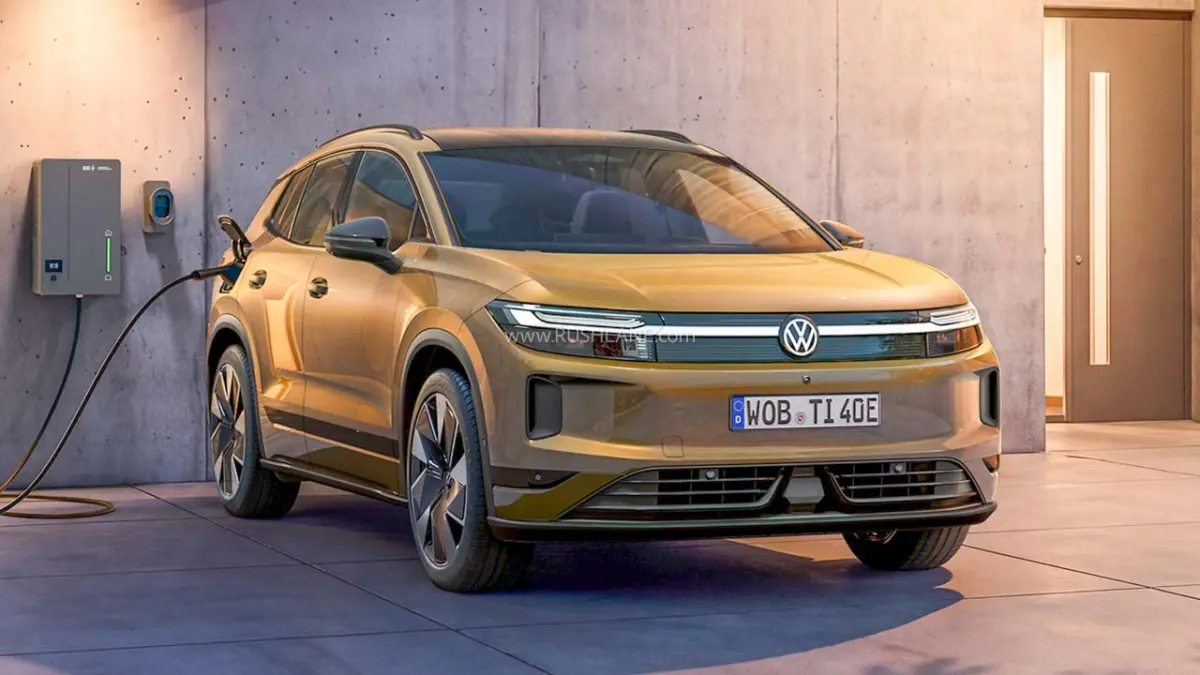
WOLFSBURG, GERMANY — In a move that signals a significant pivot in its global electrification strategy, Volkswagen has officially unveiled the ID. Tiguan. This all-electric SUV is not merely a new addition to the lineup; it represents a strategic consolidation of the brand’s electric portfolio, serving as the direct successor to both the ID.4 and ID.5. By leveraging one of its most powerful and recognizable nameplates, Volkswagen aims to reclaim its dominance in the highly competitive mid-size SUV segment, blending the heritage of the internal combustion engine (ICE) Tiguan with the cutting-edge technology of the MEB+ platform.
The ID. Tiguan is scheduled to commence pre-sales in European markets on October 13, with an entry-level price point of EUR 42,695 (approximately Rs 46.30 lakh). As the automotive giant navigates a complex transition toward a zero-emission future, the ID. Tiguan stands as a testament to the brand’s commitment to "timeless design" and functional innovation.
I. Main Facts: Engineering the New Standard for Electric SUVs
The Volkswagen ID. Tiguan is more than an electrified version of a popular car; it is a ground-up reimagining of what a family SUV should be in the electric age. Built on the evolved MEB+ architecture, the vehicle addresses several criticisms leveled at earlier ID models, specifically regarding design language and user interface.
Performance and Powertrains
Volkswagen is launching the ID. Tiguan with a versatile range of battery and motor configurations to suit diverse driving needs:
- Entry-Level Efficiency: The base variants feature a 58 kWh battery pack paired with a rear-mounted electric motor producing 140 kW (190 hp).
- Long-Range Capability: The larger 77 kWh battery pack is the centerpiece of the lineup, offering a maximum range of up to 600 km (WLTP) on a single charge.
- Drivetrain Options: Customers can choose between a Rear-Wheel Drive (RWD) setup producing 210 kW (286 hp) or the high-performance 4MOTION All-Wheel Drive (AWD) system, which delivers 220 kW (299 hp).
- Utility: Reflecting its "Tiguan" heritage, the EV boasts a robust towing capacity of up to 2 tons, a figure that places it at the top of its class for electric crossovers.
Design Philosophy: "Pure Positive"
Stylistically, the ID. Tiguan moves away from the "jellybean" curves of the ID.4 and returns to a more traditional, commanding SUV silhouette. This shift is part of Volkswagen’s new "Pure Positive" design language. The vehicle features:

- Front Fascia: A closed-off grille flanked by sleek, high-definition LED lighting and an illuminated VW logo.
- Profile: Squared-off wheel arches and aero-optimized alloy wheels that reduce drag while maintaining a rugged aesthetic.
- Rear: A connected LED tail-lamp strip and an illuminated "ID. TIGUAN" badge.
- Aerodynamics: Despite its boxier look, the roofline features a gentle arc and a sharp rear spoiler to optimize airflow, crucial for maximizing electric range.
II. Chronology: The Roadmap to Global Distribution
The rollout of the ID. Tiguan is a phased operation designed to stabilize Volkswagen’s position in Europe before expanding into more volatile international markets.
- October 13, 2024: Pre-sales officially open across major European territories. This window allows early adopters to secure production slots for the initial "First Edition" trims.
- Early 2025: Deliveries are expected to begin across Europe. This period will also see the formal discontinuation of the ID.4 and ID.5 production lines as the factory shifts focus to the consolidated Tiguan EV.
- Mid-2025 to 2026: Volkswagen plans to introduce specialized trims, including the high-performance GTX (or an equivalent R-Line performance variant) and potential software-over-the-air (SOTA) updates to enhance battery management.
- 2027: The ID. Tiguan is slated for its global debut in secondary markets, including North America and parts of Asia. This delay is attributed to the need to adapt the MEB+ platform for regional charging infrastructure and localized manufacturing requirements.
Notably, Volkswagen has confirmed that the ICE-powered Tiguan will continue to be sold alongside the ID. version for the foreseeable future. This dual-track strategy ensures that the brand does not alienate customers in regions where EV infrastructure remains underdeveloped.
III. Supporting Data: Dimensions, Tech, and Cargo
To compete with the likes of the Tesla Model Y and the Hyundai Ioniq 5, Volkswagen has packed the ID. Tiguan with class-leading specifications and a revised interior ergonomics package.
Interior Innovations
The cabin of the ID. Tiguan represents a major overhaul of the Volkswagen digital experience. It features a "Triple Screen" layout:
- Primary Display: A massive 15-inch centrally positioned touchscreen for navigation and infotainment.
- Passenger Display: A 12-inch dedicated screen for the front passenger, allowing for independent media control.
- Digital Cockpit: A 10-inch driver instrument cluster that prioritizes essential telemetry.
Unlike previous ID models, Volkswagen has reintroduced physical haptic buttons on the steering wheel and improved the backlit sliders for volume and temperature control, responding directly to global consumer feedback.

Spatial Utility
One of the Tiguan’s historical selling points has been its practicality. The ID. Tiguan maintains this reputation with:
- Main Boot Space: 534 liters, expandable with folding rear seats.
- Front Trunk (Frunk): A 32-liter compartment ideal for charging cables and small items.
- V2L (Vehicle-to-Load): The SUV can act as a mobile power bank, allowing users to power external appliances, camping gear, or even charge other electric vehicles.
IV. Official Responses: A Strategic Pivot
Volkswagen leadership has been vocal about the necessity of this transition. During the reveal, spokespersons emphasized that the "ID. Tiguan" name was chosen specifically to bridge the gap between the brand’s storied past and its electric future.
"The Tiguan name carries immense trust and brand equity worldwide," a Volkswagen marketing executive stated during the press briefing. "By transitioning this nameplate to our MEB+ platform, we are telling our customers that the ‘People’s Car’ is now ready for the electric era without compromising on the utility and presence they expect from a VW SUV."
Industry analysts suggest that the decision to phase out the ID.4 and ID.5 in favor of the ID. Tiguan is a corrective measure. While the ID.4 was a global sales success, it struggled to establish a distinct identity in a crowded market. By returning to the Tiguan moniker, Volkswagen is betting on "heritage marketing" to drive sales among traditional car buyers who may have been hesitant to switch to the "ID" alphanumeric naming convention.
V. Implications: The Future of the Wolfsburg Giant
The introduction of the ID. Tiguan has several far-reaching implications for the automotive industry and Volkswagen’s internal operations.

1. Market Consolidation
By merging two models (ID.4 and ID.5) into one (ID. Tiguan), Volkswagen is streamlining its manufacturing processes. This reduces complexity in the supply chain and allows for better economies of scale on the MEB+ platform. It also simplifies the consumer’s choice, offering a single, high-quality SUV that covers the bases of both a traditional crossover and a sporty "coupe-SUV."
2. The Pressure on Competitors
With a starting price of roughly €42,695, the ID. Tiguan is positioned aggressively against the Tesla Model Y. With its 600 km range and superior interior materials, VW is aiming for the premium-mass-market sweet spot. This move will likely force competitors to accelerate their own updates or reconsider their pricing strategies in Europe.
3. Survival of the ICE Heritage
The decision to run the ICE Tiguan and ID. Tiguan in parallel is a calculated risk. It prevents "Osborne Effect" sales cannibalization while providing a safety net if EV adoption rates fluctuate due to changing government subsidies or energy costs.
4. Technological Maturation
The shift to the MEB+ platform indicates that Volkswagen has moved past the "early adopter" phase of EV development. The inclusion of V2L, advanced ADAS (Advanced Driver Assistance Systems), and a more sophisticated thermal management system for the battery packs suggests a product that is refined and ready for the rigors of long-term ownership.
In conclusion, the Volkswagen ID. Tiguan is not just a new car; it is a declaration of intent. As it prepares to hit European roads in early 2025, the automotive world will be watching closely to see if the strength of a legendary nameplate is enough to power Volkswagen to the top of the electric leaderboard. With a blend of 600 km range, 299 hp performance, and a "Pure Positive" design, the ID. Tiguan is well-equipped to lead the charge.
