

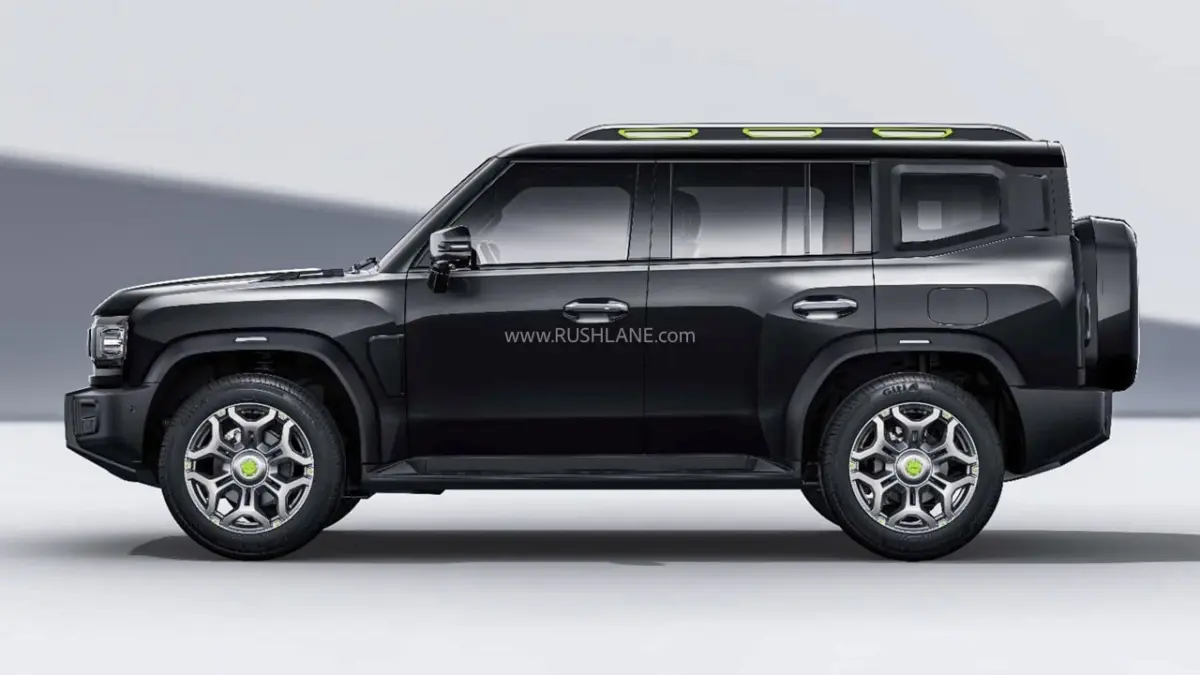
The Indian automotive landscape is on the cusp of a significant transformation as the JSW Group, a multi-billion dollar conglomerate with interests spanning steel, energy, and infrastructure, prepares to mark its territory as a standalone vehicle manufacturer. In a strategic move that signals a departure from its existing joint venture operations, the company has officially slated the launch of its maiden vehicle—the JSW Combat—for December 4, 2026.
Positioned as a rugged, premium Plug-in Hybrid Electric Vehicle (PHEV), the JSW Combat represents the first chapter of JSW Motors’ independent journey. While the group has already established a presence through its partnership with MG Motor India, JSW Motors aims to carve out a distinct identity with a lineup of vehicles that emphasize "lifestyle" utility, off-road capability, and cutting-edge hybrid technology.
Main Facts: The Arrival of the JSW Combat
The JSW Combat is not merely a new car; it is a statement of intent. Derived from the internationally acclaimed Jetour T2 (a sub-brand of China’s Chery Automobile), the Combat is designed to compete in the burgeoning "lifestyle SUV" segment—a space currently dominated by the likes of the Mahindra Thar ROXX and the Jeep Compass.
Key highlights of the upcoming launch include:
- Launch Date: December 4, 2026.
- Powertrain: A sophisticated Plug-in Hybrid Electric Vehicle (PHEV) system combining a 1.5L turbocharged petrol engine with dual electric motors.
- Performance: A combined output of 360 bhp and 610 Nm of torque, making it one of the most powerful SUVs in its price bracket.
- Range: An impressive electric-only range of approximately 90 km, with a total hybrid range exceeding 1,100 km.
- Market Strategy: Initial units will arrive via the Completely Built Unit (CBU) route, with plans for local assembly (CKD) and full-scale domestic manufacturing at JSW’s upcoming facility in Maharashtra.
Chronology: From Partnership to Independence
The road to the JSW Combat has been one of rapid strategic pivots. To understand the significance of the December 2026 launch, one must look at the timeline of JSW’s automotive ambitions:

Late 2023 – Early 2024: The MG Partnership
JSW Group entered the automotive sector by acquiring a 35% stake in MG Motor India, forming JSW MG Motor India Pvt. Ltd. This partnership focused on expanding MG’s footprint and accelerating its EV roadmap. However, internal whispers suggested that the JSW leadership, led by Sajjan Jindal, harbored ambitions beyond being a minority partner.
Mid-2024: The Standalone Vision
The company began laying the groundwork for "JSW Motors," a separate entity that would function independently of the MG venture. This brand would focus on sourcing global platforms to create a unique product portfolio tailored for the Indian market.
September 2024: The Manufacturing Commitment
The JSW Group signed a Memorandum of Understanding (MoU) with the Government of Maharashtra to set up a massive integrated manufacturing facility in Chhatrapati Sambhajinagar (formerly Aurangabad). This facility is earmarked for both battery production and electric vehicle assembly, representing an investment of several thousand crores.
October 2026: The Initial Target and Delay
Originally, the JSW Combat was slated for a pre-Diwali launch in 2026. This was intended to capitalize on the festive buying surge. However, logistical adjustments and the decision to align the launch with the completion of specific infrastructure milestones led to a revised date of December 4, 2026.
December 2026: The New Era
The launch of the Combat will officially transition JSW from a strategic investor to a direct competitor in the Indian passenger vehicle market.
Supporting Data: Technical Specifications and Features
The JSW Combat is a rebadged and localized version of the Jetour T2, a vehicle that has gained a reputation for its "box-office" design and robust mechanicals. Below is a detailed breakdown of what Indian consumers can expect.

Dimensions and Road Presence
The Combat is designed to look intimidating. It features a boxy, upright silhouette that prioritizes interior volume and ground clearance.
- Length: 4,785 mm
- Width: 2,006 mm
- Height: 1,880 mm
- Wheelbase: 2,800 mm
- Ground Clearance: 220 mm
- Boot Capacity: 752 Liters (expandable)
The vehicle sits on large 20-inch alloy wheels, and the front grille is expected to swap the "JETOUR" branding for "COMBAT" lettering in a bold, blocky font.
The PHEV Powertrain
While many competitors are choosing between pure Internal Combustion Engines (ICE) or Battery Electric Vehicles (BEV), JSW is betting on the "best of both worlds" with a PHEV.
- Engine: 1.5-liter Turbocharged Petrol.
- Battery Pack: 18.4 kWh Lithium-ion.
- Electric Motors: Two motors driving the front wheels (though AWD variants exist globally and may be introduced later).
- Transmission: A dedicated 3-speed Dual-Mode Hybrid Transmission (DHT) designed to optimize efficiency across city and highway speeds.
Interior and Technology
The cabin is expected to be a high-tech sanctuary, contrasting with the rugged exterior.
- Infotainment: A massive 15.6-inch central touchscreen.
- Driver Display: A 10.25-inch fully digital instrument cluster.
- Audio: A premium 12-speaker Sony sound system.
- Safety: Level-2 Advanced Driver Assistance Systems (ADAS), a 540-degree camera (including underbody view), and multiple airbags as standard.
- Comfort: Ventilated front seats, powered driver’s seat with memory function, and a panoramic sunroof.
Official Responses and Strategic Rationale
While JSW Motors has maintained a degree of confidentiality regarding its long-term pricing, company insiders suggest that the "Combat" moniker was chosen to reflect the brand’s entry into a highly competitive market.
A spokesperson for the JSW Group previously highlighted that their automotive strategy is built on the pillar of "indigenization." By starting with CBUs, the company can gauge market reaction while simultaneously readying the Chhatrapati Sambhajinagar plant for local production. This "top-down" approach—starting with a flagship premium SUV—is a proven strategy for establishing brand prestige.

Industry analysts note that the choice of Chery as a platform partner is significant. Chery is one of China’s most successful exporters, and its Jetour and Jaecoo brands are designed specifically for global markets. By leveraging these platforms, JSW avoids the multi-billion dollar R&D costs of developing a vehicle from scratch, allowing them to bring products to market faster.
Implications: Impact on the Indian Market
The entry of JSW Motors as a standalone player has several far-reaching implications for the Indian automotive industry:
1. The Rise of PHEVs
The Indian market has largely skipped PHEVs in favor of strong hybrids (like the Toyota Innova Hycross) or pure EVs. The JSW Combat will be a litmus test for whether Indian consumers value a vehicle that can do the daily commute on pure electricity (90 km) while offering the long-range security of a petrol engine for weekend getaways.
2. Pressure on Domestic Giants
Mahindra and Tata Motors have long enjoyed a duopoly in the rugged SUV and EV spaces, respectively. The Combat, with its superior power figures (360 bhp) and premium interior, could pull customers away from the top-end variants of the Thar ROXX and the Safari.
3. Expanding the Portfolio
The Combat is just the beginning. JSW has already been spotted testing other Chery-sourced models on Indian roads, including the Jaecoo J5, Jaecoo J7, and the retro-styled iCar V23. This suggests a rapid-fire product offensive following the December launch.
4. Strategic Autonomy
By establishing JSW Motors as a separate entity from the MG joint venture, the JSW Group ensures it has complete control over its supply chain, branding, and dealership network. This autonomy allows them to be more agile in responding to market trends without the complexities of a multi-partner decision-making process.

5. Boost to Maharashtra’s Auto Hub
The development of the Chhatrapati Sambhajinagar facility will further cement Maharashtra’s status as the "Detroit of the East." The investment is expected to create thousands of jobs and foster a local ecosystem of component suppliers specialized in hybrid and EV technology.
Conclusion
The delay of the JSW Combat from October to December 2026 may be a minor setback for eager enthusiasts, but it underscores the company’s commitment to a flawless market entry. In a country where the SUV is king, a 360-horsepower, tech-laden, plug-in hybrid with an "intimidating road presence" has all the ingredients for success.
As December 4, 2026, approaches, the industry will be watching closely. If JSW can price the Combat competitively—balancing its CBU status with the features on offer—it may not just "combat" the competition; it might just redefine the premium SUV segment in India.
