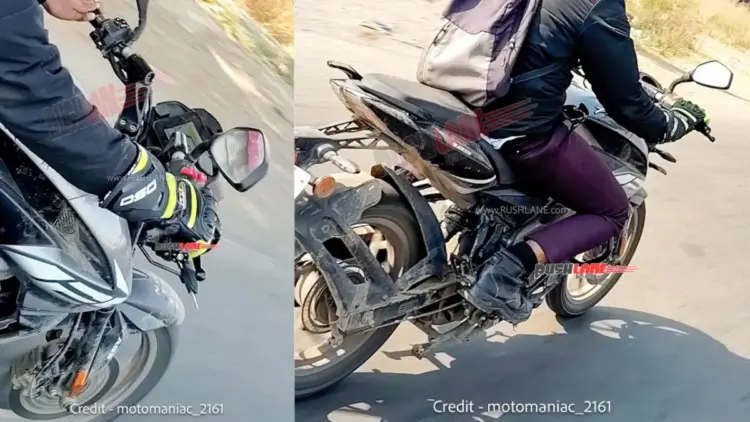
The Indian two-wheeler market, particularly the 125cc segment, is currently undergoing a radical transformation. Once considered the "commuter" class—defined by fuel efficiency and utilitarian design—the category is rapidly evolving into a "premium commuter" or "entry-level sporty" segment. Leading this charge is Bajaj Auto, a manufacturer that has historically used its Pulsar brand to redefine market expectations. Recent spy shots of the upcoming 2027 Bajaj Pulsar NS125 suggest that the Chakan-based manufacturer is preparing to raise the bar yet again, integrating high-end technology that was, until recently, reserved for motorcycles in the 250cc to 400cc categories.
Main Facts: The Evolution of the NS125
The Pulsar NS125 has long served as the entry point into Bajaj’s "Naked Sport" (NS) sub-brand, inheriting the aggressive perimeter frame and street-fighter aesthetics of its larger siblings, the NS160 and NS200. However, the latest spy images reveal a significant technological leap for the 2027 model year.
The most striking revelation is the inclusion of a full-color TFT instrument cluster. This isn’t merely a cosmetic upgrade; it represents a shift in the digital architecture of the motorcycle. The new unit is expected to offer:
- Turn-by-Turn Navigation: Potentially featuring Google Maps mirroring via Bluetooth connectivity.
- Comprehensive Connectivity: Music control, call/SMS alerts, and document storage via a dedicated mobile application.
- Performance Tracking: A lap timer, a feature usually found on track-oriented machines, underscoring the "NS" racing DNA.
- Advanced Safety and Control: The presence of a hazard light switch, panic brake alerts, and the rumored inclusion of an electronic throttle body (Ride-by-Wire), which could facilitate multiple ride modes—a first for the 125cc segment in India.
Chronology: The Road to the 2027 Update
To understand the significance of this update, one must look at the recent timeline of Bajaj’s 125cc strategy. The 125cc Pulsar family, comprising the Classic Pulsar 125 and the NS125, has consistently been Bajaj’s highest volume generator. The short-lived Pulsar N125 was an attempt to diversify the portfolio, but Bajaj appears to have consolidated its focus back onto the "NS" and "Classic" platforms to maintain brand clarity.
- Late 2023 – Early 2024: Bajaj began updating the Pulsar range with digital "inverted" LCD screens and LED lighting. The NS125 received a minor refresh to keep it competitive against the TVS Raider 125.
- October 2026 (Spied at Dealerships): Reports emerged of a "base" variant of the updated NS125 arriving at dealerships. This version featured a simplified LCD cluster and halogen turn indicators, catering to the price-sensitive buyer.
- November 2026 (Mid-Spec Sighting): A second variant was spotted, sporting the same LCD screen but upgraded with LED indicators and a dedicated hazard light switch, indicating a tiered product strategy.
- Late November 2026 (Current Sighting): The latest test mule, identified as the "2027 Variant," was spied on public roads. This version showcases the flagship TFT display and more sophisticated switchgear, likely intended to sit at the top of the NS125 hierarchy.
Supporting Data: Mechanicals and Performance Expectations
While the electronic suite is receiving a massive overhaul, the underlying mechanical architecture of the NS125 remains rooted in the robust engineering that has made the NS series a staple of the Indian streets.

The Perimeter Frame and Chassis
The 2027 NS125 continues to utilize the high-rigidity perimeter frame. Unlike the tubular frames found on most 125cc competitors, the perimeter frame offers superior lateral stiffness, providing the "big bike" handling characteristics that Pulsar enthusiasts value. The suspension duties are handled by conventional Right-Side Up (RSU) telescopic forks at the front and a Nitrox-charged mono-shock at the rear.
Braking and Safety
The spy shots confirm a disc brake setup at the front and a drum brake at the rear. While enthusiasts have clamored for a rear disc option, the current configuration helps keep the weight and cost in check. However, the integration of a "Panic Brake Alert" system—which flashes the indicators during sudden deceleration—suggests that Bajaj is prioritizing active safety features within the constraints of the 125cc price bracket.
The Powertrain
The current NS125 is powered by a 124.45cc, 4-valve, SOHC, air-cooled engine. It currently produces 12 PS of power at 8,500 rpm and 11 Nm of torque at 7,000 rpm, mated to a 5-speed gearbox.
Speculation within the industry suggests that for the 2027 model year, Bajaj might optimize the fuel mapping and exhaust gas recirculation (EGR) systems to squeeze out a marginal increase in performance. If the rumors of an electronic throttle body (Ride-by-Wire) hold true, the NS125 could offer a "Rain" or "Eco" mode alongside a "Sport" mode, allowing riders to prioritize fuel efficiency or throttle response depending on the conditions.
| Feature | Current NS125 | 2027 NS125 (Speculated) |
|---|---|---|
| Instrument Cluster | Semi-Digital / LCD | Full-Color TFT |
| Connectivity | Basic Bluetooth (on top trims) | Google Maps Mirroring, App Support |
| Lighting | Halogen / LED mix | Full LED with Hazard Lights |
| Throttle | Cable-actuated | Electronic (Ride-by-Wire) |
| Brakes | Front Disc / Rear Drum | Front Disc / Rear Drum with Panic Alert |
| Adjustability | Fixed Levers | Adjustable Brake/Clutch Levers |
Official Responses and Market Context
As is customary with pre-production testing, Bajaj Auto has not released an official statement regarding the specifications or the launch timeline of the 2027 NS125. However, during recent investor calls, Bajaj management has emphasized a "Premiumization Strategy," focusing on increasing the Average Selling Price (ASP) of their motorcycles by offering higher technology and better features.

The 125cc segment is no longer just about the "commute to work." Data from the Society of Indian Automobile Manufacturers (SIAM) indicates that the 125cc segment is the only internal combustion engine (ICE) category showing consistent double-digit growth, as buyers migrate away from the 100cc segment in search of better styling and features.
The Competition
Bajaj’s aggressive move is a direct response to its rivals:
- TVS Raider 125: The Raider was the first to bring a TFT screen and ride modes to this segment. Bajaj’s update is a clear attempt to reclaim the "Tech Leader" title.
- Hero Xtreme 125R: Hero’s recent entry focused heavily on aggressive styling and ABS safety. Bajaj is countering by focusing on the digital cockpit experience.
- Honda CB125 Hornet (Global/Potential): While Honda dominates the utility side with the Shine, the premium 125cc space is an area where Bajaj feels it can out-maneuver the Japanese giant with more "soul" and "tech."
Implications: What This Means for the Consumer
The emergence of a TFT-equipped NS125 has several broader implications for the Indian motorcycle industry.
1. The Democratization of Technology
Features that were once luxury items are now becoming standard. By bringing a TFT display and navigation to a 125cc bike, Bajaj is forcing other manufacturers to follow suit. This "feature war" benefits the consumer, who now receives high-end tech at a fraction of the cost of a middleweight motorcycle.
2. A New Pricing Ceiling
With the addition of a TFT screen, LED lighting, and advanced electronics, the NS125 top variant will likely see a price hike. This pushes the 125cc segment closer to the ₹1.10 lakh to ₹1.20 lakh (ex-showroom) mark. The challenge for Bajaj will be justifying this premium to a buyer who might otherwise consider a base-model 150cc or 160cc motorcycle.

3. The "NS" Brand Revitalization
The NS series was beginning to look dated compared to the newer "N" series Pulsars (like the N160 and N250). By giving the NS125 the most advanced screen in the entire Pulsar lineup (potentially even better than the current NS200’s unit), Bajaj is signaling that the "Naked Sport" brand remains a priority for the future.
4. Preparation for Stricter Norms
The move toward electronic throttles and more complex ECUs isn’t just for ride modes; it’s a proactive step toward meeting future OBD-3 (On-Board Diagnostics) and even stricter emission norms. Digital systems allow for more precise engine management, which will be crucial as environmental regulations tighten toward the end of the decade.
Conclusion
The 2027 Bajaj Pulsar NS125 is shaping up to be more than just a minor facelift. It is a statement of intent. By equipping a 125cc motorcycle with a TFT display, navigation, and sophisticated electronics, Bajaj is acknowledging that today’s young riders value connectivity and "screen time" as much as they value horsepower. As the test mules shed their camouflage and head toward production, the industry will be watching closely to see if this tech-heavy approach will solidify Bajaj’s hegemony in the most competitive segment of the world’s largest two-wheeler market.