

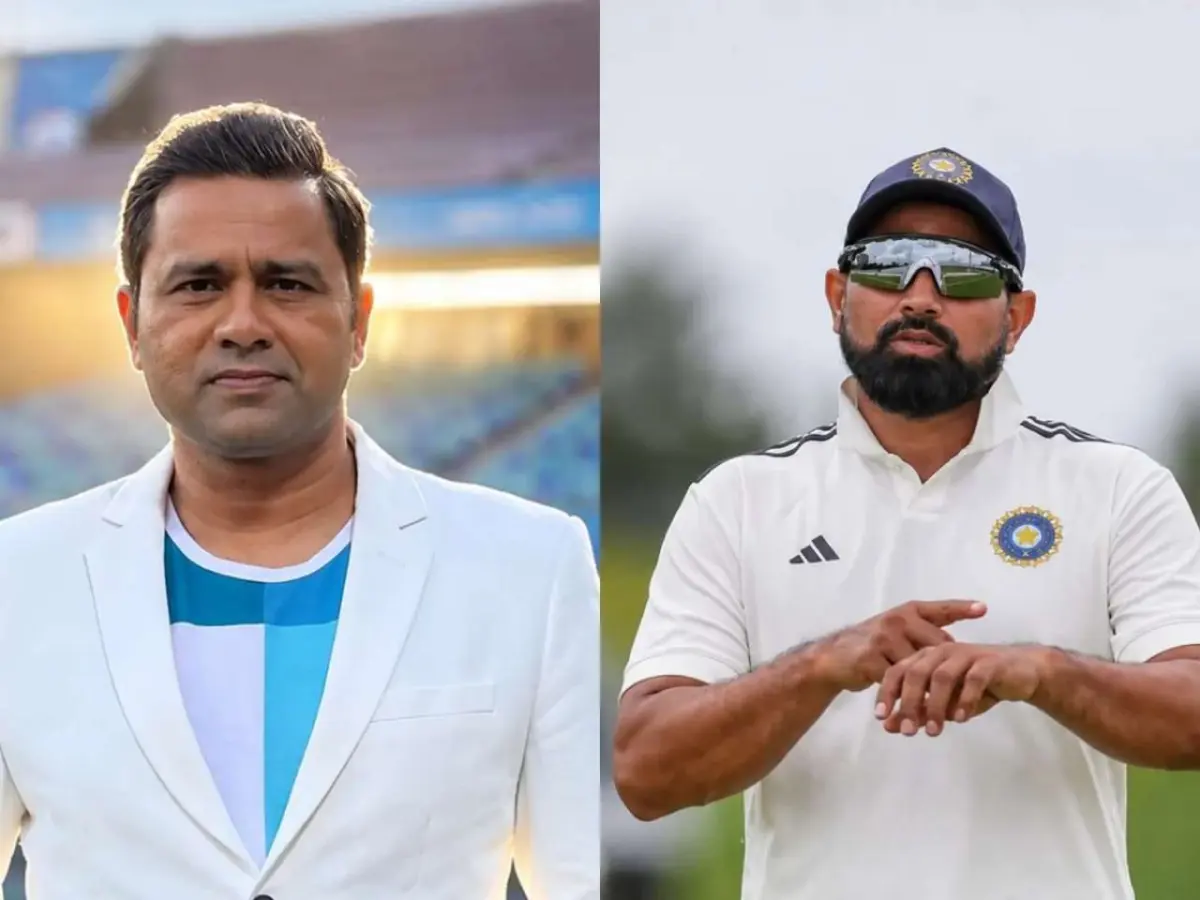
NEW DELHI, India – The landscape of Indian cricket selection has been thrown into renewed focus following the departure of chief selector Ajit Agarkar, sparking widespread speculation about the potential return of veteran fast bowler Mohammed Shami. Amidst a significant shift that saw the recall of 36-year-old Bhuvneshwar Kumar, the cricketing fraternity is abuzz with questions: Is the door now open for Shami, another seasoned campaigner, to don the national colours once more? Or are the challenges facing the prolific pacer more profound than a single individual’s influence?
Former India cricketer and renowned commentator Aakash Chopra has offered a characteristically blunt assessment, suggesting that while Shami’s international future remains uncertain, the hurdles to his comeback are multifaceted and extend beyond the tenure of any one selector. The debate encapsulates the perpetual tension in Indian cricket: balancing the proven might of experienced players with the imperative to groom a fresh generation for future global challenges.
Unpacking the Main Facts: A Return to the Crossroads
The central question gripping Indian cricket aficionados is straightforward: Will Mohammed Shami, a bowler who epitomizes grit and seam movement, find his way back into the national team? This query gained significant traction with the recent selection committee decisions, particularly the surprising inclusion of fellow veteran pacer Bhuvneshwar Kumar, aged 36, in the squad. Kumar’s recall, after a period of absence, has inevitably led many to connect the dots and ponder if Shami, also in his mid-thirties and coming off a stellar World Cup performance, might also be considered.
However, the narrative is far from simple. Aakash Chopra, a voice often listened to for his candid insights, has largely tempered expectations. His assessment suggests that the barriers to Shami’s return are not solely attributable to the erstwhile chief selector, Ajit Agarkar, but rather represent a broader consensus within the selection committee. This perspective challenges the popular notion that a change at the top might automatically pave the way for a previously overlooked player.
)
Chopra’s remarks highlight a critical aspect of team selection: it is a collective decision, not the unilateral dictate of one individual. If Shami’s exclusion was indeed a unanimous choice by a five-member committee, then Agarkar’s exit might not be the singular catalyst for a dramatic policy reversal many hope for. The unfolding developments, especially with the demanding New Zealand tour on the horizon, will undoubtedly serve as a crucial barometer for the selection committee’s evolving philosophy regarding experience versus youth in India’s pace attack.
A Chronology of Shami’s Journey and India’s Evolving Pace Attack
Mohammed Shami’s journey in international cricket has been marked by periods of incandescent brilliance, resilience through injuries, and an unwavering commitment to his craft. Debuting for India in 2013, Shami quickly established himself as a potent force, particularly in Test and One-Day International (ODI) cricket, with his ability to extract seam movement and bowl incisive spells.

Shami’s Illustrious Career Highlights:
- Test Cricket: A consistent performer, Shami has been a cornerstone of India’s formidable Test pace battery, often providing crucial breakthroughs with the old ball and leading the attack in diverse conditions. His ability to reverse swing and bowl long spells has been invaluable.
- ODI Cricket: Despite a brief period of fluctuating form, Shami has been a match-winner in the 50-over format, particularly in global tournaments. His performance in the 2015 and 2019 World Cups showcased his big-match temperament.
- The 2023 World Cup Resurgence: Perhaps the most compelling argument for his continued relevance, Shami’s extraordinary performance in the 2023 ICC Cricket World Cup was nothing short of sensational. Despite missing the initial matches, he stormed back into the side, finishing as the tournament’s leading wicket-taker with 24 wickets in just 7 matches, including three five-wicket hauls. His spell against New Zealand in the semi-final, where he picked up 7/57, is etched in cricketing folklore. This performance, achieved at the age of 33 (at the time), made his subsequent exclusion from white-ball formats even more perplexing for many observers.
Post-World Cup Absence and Selection Trends:
Following the 2023 World Cup, Shami found himself increasingly sidelined from the white-ball squads, particularly in T20Is, with selectors seemingly prioritizing younger, more athletic options or those offering batting prowess. While his Test career continued, his absence from ODIs and T20Is became a talking point, especially given his supreme form. The unofficial narrative suggested a strategic shift towards building a team for the 2027 World Cup, focusing on players who would be in their prime for the next global showpiece.
)
The Agarkar Era and Selection Philosophy:
Ajit Agarkar, during his tenure as chief selector, presided over a period where India aimed to transition its white-ball teams, particularly in T20Is, towards a more aggressive, fearless brand of cricket. This often meant a preference for dynamic fielders, powerful hitters, and multi-dimensional players. While experience was valued, there appeared to be a concerted effort to blood younger talent like Arshdeep Singh, Umran Malik, and Mukesh Kumar, alongside established names like Jasprit Bumrah and Mohammed Siraj. The emphasis on all-rounders, a long-standing desire for India, also played a role in squad compositions. Shami, primarily a specialist bowler, might have found himself at a disadvantage in this evolving strategy, particularly in T20Is where his death bowling or batting contributions were not considered as strong as others.
The Curious Case of Bhuvneshwar Kumar’s Recall:
The recent decision to recall Bhuvneshwar Kumar, also 36, is a pivotal moment that fuels the Shami debate. Kumar, known for his swing and variations, had been out of the national setup for a significant period. His return suggests that the selection committee, post-Agarkar, might be reconsidering the role of seasoned pacers, especially with the impending workload and injury concerns. However, Kumar’s recall could also be a specific, short-term tactical decision for a particular series or format, rather than a broad shift in philosophy applicable to all veterans. The contrast between his recall and Shami’s continued absence is precisely what has ignited the current discussion.
)
Supporting Data: Chopra’s Insights and Deeper Analysis
Aakash Chopra’s insights, delivered through his popular YouTube channel, serve as the primary "supporting data" in understanding the current selection dynamics around Mohammed Shami. His candid remarks cut through the popular speculation and offer a more nuanced perspective on the inner workings of the selection committee.
The "Not Just Agarkar" Revelation:
Chopra’s most significant assertion is that "Agarkar wasn’t the only obstacle." He emphatically states, "If Bhuvi has come, will Shami also come? I think we will be fooling ourselves if we feel that one guy was stopping everyone and that only he was resisting and everyone else wanted to pick them." This statement directly challenges the narrative that Agarkar alone was responsible for Shami’s continued exclusion.
Chopra further solidified this by stating, "It is not possible because it is a five-member selection committee. I can actually vouch that I have spoken to the selectors, and all of them are on the same page. So, it’s not like the chairman randomly said it and everyone was agreeing." This revelation is crucial. It indicates that the decision to omit Shami was a collective one, reflecting a shared vision or concern among all selectors. If this is true, then Agarkar’s departure, while significant, may not fundamentally alter the underlying rationale for Shami’s current status.
)
The "Last Shot" for the 2027 World Cup:
Chopra also highlighted the urgency surrounding Shami’s potential comeback, particularly in the context of the 2027 ODI World Cup cycle. "There are discussions that Shami’s name might come in the ODI team. I am not saying that it cannot come, but will it come just because Ajit Agarkar has left? That I don’t agree," he clarified. He then pressed the point: "The big thing is that this is his last opportunity if you are looking at the 2027 World Cup, because if not now, then when after this?"
This perspective underscores the ticking clock for a 36-year-old pacer. If Shami is not integrated into the ODI setup soon, especially for a crucial series like the upcoming New Zealand tour, his chances of being part of the long-term plans for the next World Cup would diminish significantly. The selectors would need to commit to him for a sustained period to build rhythm and confidence, a commitment that becomes harder with each passing year.
Statistical Excellence vs. Age and Fitness Concerns:
From a purely statistical standpoint, Shami’s case for selection remains incredibly strong, especially in ODIs. His 2023 World Cup performance (24 wickets at an average of 10.70 and an economy rate of 5.26) was arguably the best by any bowler in the tournament. His overall ODI record boasts 195 wickets in 100 matches at an average of 24.31, a testament to his effectiveness.
However, selectors often look beyond raw numbers, particularly for fast bowlers in their mid-thirties. Concerns typically revolve around:
)
- Age-related decline: While Shami has defied this so far, the physical demands of international cricket, especially across formats, increase with age.
- Injury susceptibility: Fast bowlers are inherently prone to injuries. Shami has had his share of fitness issues in the past, and managing his workload to ensure peak performance for key events is a challenge.
- Fielding and athleticism: In the modern era, particularly in white-ball cricket, fielding prowess and overall athleticism are increasingly valued. While Shami is a dedicated professional, younger options might offer more in these departments.
- Long-term vision: For the 2027 World Cup, selectors might be inclined to invest in players who will be 30-33 years old then, rather than 37.
Public and Media Sentiment:
The public discourse is largely in favour of Shami’s return. Fans often point to his exceptional World Cup performance and his proven ability to deliver under pressure. Social media platforms are frequently alight with calls for his inclusion, arguing that form, not age, should be the primary criterion. Many view his exclusion as a missed opportunity, especially given the ongoing search for consistent wicket-taking options in the middle overs of ODIs. Media analysts also frequently debate the balance between experience and youth, with Shami often serving as the prime example of a veteran being overlooked despite peak performance.
Official Responses: Silence and Strategic Choices
In the world of high-stakes international cricket, official responses from selection committees or team management regarding individual player exclusions are typically rare and often couched in diplomatic language. The case of Mohammed Shami is no exception. There have been no explicit official statements from the BCCI or the selection committee detailing the precise reasons for his sustained absence from white-ball formats post-2023 World Cup.
)
The Absence of Direct Communication:
Selection committees generally operate with a degree of discretion, preferring to let their squad announcements speak for themselves. Explaining every omission in detail could set a precedent, lead to further controversies, or reveal strategic thinking that they prefer to keep internal. Therefore, the lack of a direct official response on Shami’s status is standard operating procedure rather than an indication of anything unusual.
Inference from Selection Patterns:
The most concrete "official response" comes in the form of the squads that are actually picked. The consistent omission of Shami from T20I squads, and more recently from ODI squads after the World Cup, implicitly signals the selectors’ current preferences and strategic direction. The recent recall of Bhuvneshwar Kumar, while surprising, might be interpreted as a specific tactical move for a particular series, perhaps due to the conditions or the opposition, rather than a blanket reversal of policy towards all senior pacers.
)
Previous Managerial Statements (Limited Scope):
While there might have been occasional comments from former coaches or captains about managing Shami’s workload or his importance in specific formats (especially Test cricket), there has been no public communication explicitly stating that he was being moved on from white-ball cricket due to age or any other specific factor. Such declarations are usually avoided to keep options open and maintain player morale.
The Nature of Selection Committee Decisions:
As Aakash Chopra highlighted, selection is a collective process. Decisions are made after extensive discussions among five members, often in consultation with the captain and coach. These discussions encompass current form, fitness, workload management, team balance, opposition, conditions, and the long-term vision (e.g., the 2027 World Cup cycle). The official squad announcement is the culmination of this complex decision-making matrix. The recent change in the chairmanship of the selection committee might lead to subtle shifts in perspective, but as Chopra suggests, a fundamental overhaul of a collective viewpoint is less likely to happen overnight.
)
Implications: Future Outlook and Broader Impact
The ongoing debate surrounding Mohammed Shami’s future carries significant implications not just for the player himself, but for the Indian cricket team’s strategic direction, selection philosophy, and the delicate balance between experience and youth.
For Mohammed Shami:
)
- Career Trajectory: If Shami continues to be overlooked for white-ball cricket, especially after his 2023 World Cup heroics, it signals a potential winding down of his limited-overs international career. He might then focus predominantly on Test cricket, where he remains a vital asset, and possibly franchise leagues.
- Mental Impact: Being overlooked despite strong performances can be challenging for any athlete. Shami, known for his dedication, will need to navigate this phase, potentially redoubling his efforts in domestic cricket or focusing on specific formats where he believes he still has a strong case.
- Legacy: His legacy as one of India’s most impactful fast bowlers is already secured, but a strong comeback could add another glorious chapter. Conversely, a quiet fading away from white-ball cricket might leave fans wondering "what if" given his form.
For the Indian Team:
- Pace Attack Strategy: The New Zealand tour, featuring five T20Is, five ODIs, and two Tests, is a critical juncture. India faces genuine questions regarding its pace attack depth, especially with Jasprit Bumrah’s workload concerns and recent injuries to Harshit Rana, Prasidh Krishna, and Hardik Pandya. The need for a "big group of fast bowlers" is evident.
- Balance of Experience vs. Youth: The Shami conundrum highlights the perpetual challenge of balancing proven experience with the need to groom young talent. While youth offers long-term prospects and athleticism, experienced campaigners like Shami bring invaluable big-match temperament, skill, and a calming presence. Over-reliance on untested youth, especially in critical bilateral series or tournaments, carries risks.
- 2027 World Cup Vision: The selection decisions now will heavily influence the squad composition for the 2027 ODI World Cup. If Shami is not seen as part of that long-term plan, the selectors must ensure they have adequately prepared a cohort of younger pacers to step into those significant shoes. The recall of Bhuvneshwar Kumar at 36 could suggest a short-term need for experienced backup, but whether this applies broadly to Shami remains the core question.
For Indian Cricket Selection Philosophy:
)
- Post-Agarkar Era: While Aakash Chopra suggests the collective committee was "on the same page," the departure of a chief selector often brings subtle shifts in emphasis or approach. The upcoming squad announcements for the New Zealand tour’s ODI leg (expected mid-October) will be closely scrutinized for any discernible changes in philosophy.
- Form vs. Age Debate: The Shami case intensifies the debate about whether age should be a disqualifying factor when a player is in peak form. His performance in the 2023 World Cup serves as a powerful counter-argument to age-based exclusions.
- Workload Management and Injury Concerns: The continuous challenge of managing the workloads of premier pacers like Bumrah and mitigating the impact of injuries on others (Krishna, Rana, Pandya) will dictate selection decisions. This might, paradoxically, open a window for experienced players like Shami if the available younger talent is either injured or deemed not quite ready for international rigours.
In conclusion, Mohammed Shami’s future in the Indian white-ball setup remains shrouded in uncertainty. While the departure of Ajit Agarkar has reignited hope among fans and some pundits, Aakash Chopra’s insightful commentary suggests that the obstacles are more systemic, reflecting a collective vision within the selection committee. The upcoming New Zealand tour and the squad announcements will be pivotal, serving as a critical indicator of whether the door will truly open for the veteran pacer, or if Indian cricket is indeed committed to a definitive transition towards a younger guard, even at the cost of sidelining one of its most potent weapons. The saga of Mohammed Shami is a microcosm of the dynamic and often challenging decisions that define modern international cricket selection.
