

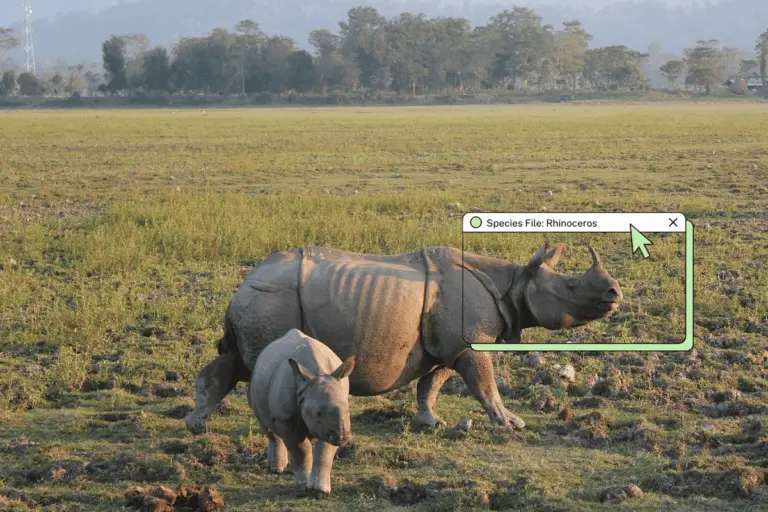
The return of the greater one-horned rhinoceros (Rhinoceros unicornis) to Assam’s Manas National Park stands as one of the most significant conservation success stories in modern Indian history. Once decimated to the point of local extinction due to civil unrest and rampant poaching, the species has not only been reintroduced but is now thriving, according to recent scientific evaluations. This re-establishment, achieved through a combination of wild-to-wild translocations and dedicated rehabilitation programs, signals a new era for the biodiversity of the Eastern Himalayas.
Main Facts: The Biology and Status of a Grassland Giant
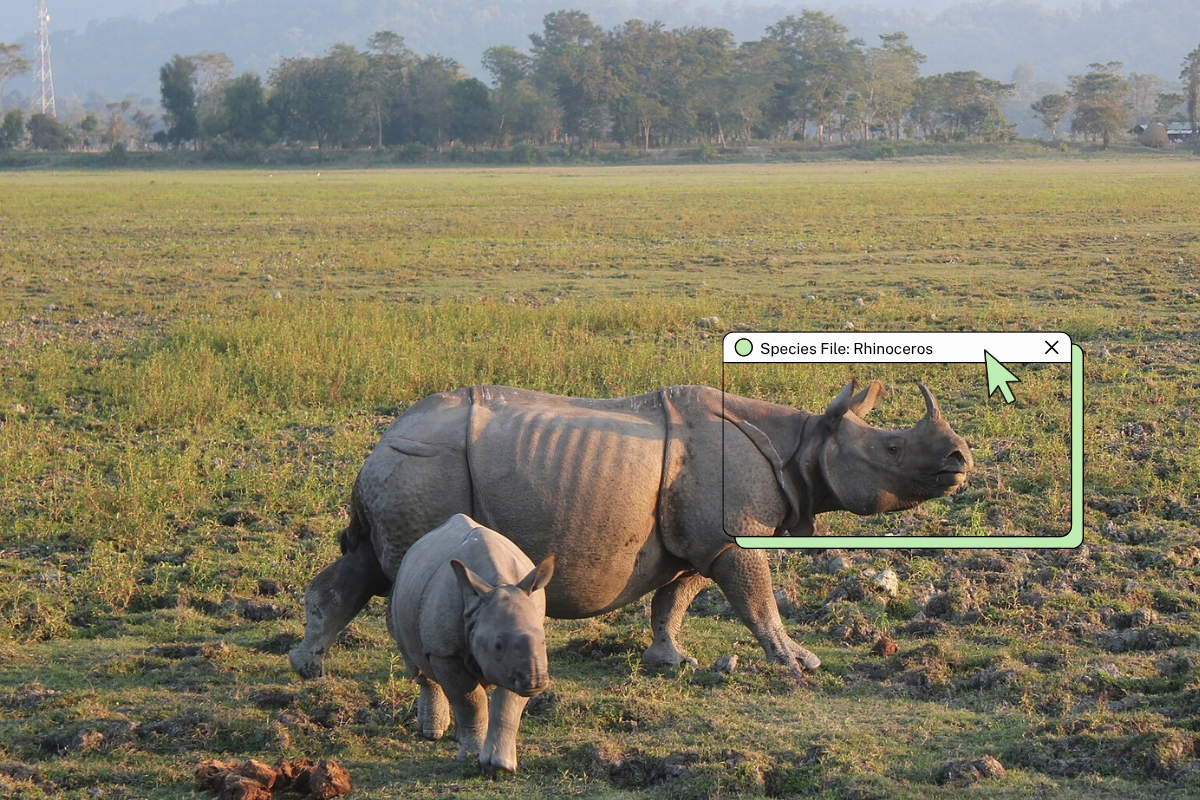
The greater one-horned rhinoceros is a marvel of evolutionary biology and the largest of the three rhino species native to Asia. Known as the "Indian Rhino," it is distinguished by a single black horn, which can grow between 8 and 25 inches in length. Its most striking physical feature is its grey-brown hide, characterized by thick skin folds that create an "armour-plated" appearance.
Weighing up to 2,700 kilograms—roughly half the weight of an African elephant—and standing approximately 6.5 feet tall at the shoulder, these mega-herbivores are surprisingly agile. They are proficient swimmers, often found submerged in the wetlands and alluvial grasslands of the Brahmaputra valley. Their diet is diverse, consisting primarily of grasses, but also including leaves, branches of shrubs, fruit, and various aquatic plants.
Currently, the global population of the greater one-horned rhino stands at approximately 4,075 individuals. These survivors are confined to fragmented pockets of grassland in India and Nepal. Because of this limited range and the constant threat of poaching, the International Union for Conservation of Nature (IUCN) Red List classifies the species as Vulnerable. In India, the rhino is afforded the highest possible legal protection under Schedule I of the Wildlife (Protection) Act, 1972. Internationally, it is listed under Appendix I of CITES (Convention on International Trade in Endangered Species of Wild Fauna and Flora), which strictly prohibits any international trade of rhino parts.
Chronology: From Devastation to Recovery
The journey of the rhino in Manas National Park is a narrative of loss and redemption. To understand the current success, one must look back at the dark period of the late 20th century.
The Era of Local Extinction (1980s–2000s)
During the late 1980s and early 1990s, the Bodoland movement and associated civil unrest in Assam led to a breakdown of administrative and protective infrastructure in Manas. The park, a UNESCO World Heritage site, became a haven for insurgents, and the rhino population—once numbering around 100—was completely wiped out by poachers. By the early 2000s, Manas was declared a "World Heritage Site in Danger."
The Birth of Indian Rhino Vision 2020 (2005)
In 2005, the Government of Assam, in collaboration with the World Wide Fund for Nature (WWF), the International Rhino Foundation (IRF), and the U.S. Fish and Wildlife Service, launched Indian Rhino Vision 2020 (IRV 2020). The ambitious goal was to attain a wild population of at least 3,000 rhinos in Assam, distributed over seven protected areas, by the year 2020. Manas was selected as the primary site for reintroduction.
Reintroduction and Rehabilitation (2008–Present)
The first translocations to Manas began in 2008. These were "wild-to-wild" transfers, where rhinos were captured in Kaziranga National Park and Pobitora Wildlife Sanctuary and moved to Manas. Simultaneously, the Centre for Wildlife Rehabilitation and Conservation (CWRC) began releasing orphaned rhinos that had been hand-reared back into the park.
By 2021, the IRV 2020 program concluded, having successfully established a breeding population in Manas. Today, the park is no longer a "site in danger," but a vibrant ecosystem where the "wild unicorn" once again reigns.
Supporting Data: Adaptation and Recruitment Patterns
A recent study published in 2024/2025 has provided the scientific community with encouraging data regarding the health of the reintroduced population. Researchers focused on the "recruitment pattern"—the rate at which new individuals are added to the population through births—and the "inter-calving interval" (the time between successive births for a single female).
Key Findings from the Study:
- Successful Adaptation: The rhinos have shown a high degree of adaptation to the specific grasslands of Manas, which differ slightly in floral composition from Kaziranga.
- Breeding Success: The recruitment rate in Manas is now comparable to stable populations in other protected areas. This indicates that the habitat provides sufficient nutrition and security for females to successfully rear calves.
- Population Density: While the total number of rhinos in Manas is still a fraction of Kaziranga’s 2,600+, the steady growth suggests that the park can eventually support a much larger population, acting as a vital "insurance policy" against catastrophic events (like floods or disease) in other areas.
The current global census of 4,075 rhinos represents a significant increase from the early 20th century, when fewer than 200 individuals remained. However, the concentration of the majority of the population in just one or two sites (like Kaziranga) remains a high-risk scenario, making the success in Manas statistically vital for the species’ long-term survival.
Official Responses: The Battle Against Poaching
Conservationists and government officials remain cautiously optimistic, acknowledging that while the population is growing, the "fragility" of this recovery cannot be overstated.
Mudit Gupta, Landscape Lead for the Eastern Terai at WWF-India, emphasized the necessity of constant vigilance. In a statement regarding long-term conservation plans, Gupta noted:
“Poaching remains a potential threat once rhinos are outside fenced protection. It is countered by increased ground patrols, intelligence-led protection initiatives, ongoing radiotelemetry tracking of released rhinos, and close cooperation with enforcement agencies across borders.”
The Assam Forest Department has also intensified its efforts. The "Zero Poaching" initiative, which saw no rhinos poached in Assam in 2022—a historic first in decades—has been a cornerstone of this success. Officials credit this to the use of advanced technology, including drones and thermal sensing cameras, alongside the deployment of the Special Rhino Protection Force (SRPF).
Furthermore, the integration of local communities into conservation efforts has changed the landscape. Many former poachers have turned into "forest protectors," utilizing their knowledge of the terrain to assist rangers, proving that socio-economic stability is inextricably linked to wildlife survival.
Implications: The Rhino as an Ecosystem Engineer
The successful reintroduction of the rhino to Manas has implications that extend far beyond the survival of a single species. Rhinos are considered "ecosystem engineers" or "keystone species."
Ecological Impact
By grazing on tall grasses, rhinos maintain the structure of the grasslands, creating "grazing lawns" that benefit smaller herbivores like the Hog Deer and the Critically Endangered Pygmy Hog. Their movement through the bush creates paths used by other animals, and their dung serves as a vital nutrient source for insects and birds, while also acting as a seed dispersal mechanism for various plants.
Challenges Ahead
Despite the success, several hurdles remain:
- Invasive Species: Plants like Mimosa invisa and Chromolaena odorata are encroaching on the native grasslands of Manas, choking out the fodder species that rhinos depend on.
- Habitat Fragmentation: As human populations grow around the park boundaries, traditional migratory corridors are being blocked, leading to potential human-wildlife conflict.
- Climate Change: Increased frequency of erratic flooding in the Brahmaputra basin poses a constant threat to low-lying habitats.
Conclusion
The restoration of the greater one-horned rhinoceros in Manas National Park is a testament to what can be achieved through political will, scientific rigor, and international cooperation. It serves as a global model for rewilding projects. However, as the 2024 study suggests, the recovery remains "fragile." Continued investment in habitat management and anti-poaching infrastructure is essential to ensure that the "wild unicorn" of Assam does not just survive, but thrives for generations to come.
The story of Manas is a reminder that while extinction is forever, local loss can be reversed with persistence and passion. The thunderous footfalls of the rhino once again echoing through the Manas valley is a sound of hope for conservationists worldwide.
