

GUWAHATI — Every summer, the national discourse in India is dominated by the scorching heatwaves of the Northwest and Central plains. As temperatures in Rajasthan or Delhi breach the 45°C mark, the India Meteorological Department (IMD) issues "Red Alerts," and the nation watches the mercury with bated breath. However, tucked away in the humid corridors of Northeast India, the state of Assam is grappling with a different, more deceptive kind of thermal crisis—one that rarely triggers national alarms but poses a lethal threat to its population.
While Assam is historically known for its lush tea gardens and torrential monsoon rains, recent years have seen a terrifying shift in its climate profile. The state is increasingly recording temperatures that rival the plains, but with a critical difference: extreme humidity. This combination creates a "feels-like" temperature that far exceeds the official figures, exposing a significant "definitional blind spot" in India’s heatwave criteria and leaving the state without a formal Heat Action Plan (HAP).
Main Facts: The Paradox of the "Humid Heat"
The core of Assam’s crisis lies in the disconnect between air temperature and physiological heat stress. Under current IMD criteria, a heatwave in the plains is declared only when the maximum temperature reaches at least 40°C and departs from the normal by 4.5°C to 6.4°C for two consecutive days. Because Assam’s dry-bulb temperatures often hover between 36°C and 39°C, it rarely meets the technical threshold for an official heatwave.
However, environmental scientists argue that these thresholds are insufficient for the Northeast. In Assam, relative humidity during the pre-monsoon and monsoon months (March to September) frequently ranges between 75% and 95%. This moisture prevents the evaporation of sweat—the human body’s primary cooling mechanism—leading to internal overheating even at lower temperatures.
Partha Jyoti Das, an environmental scientist and Professor of Practice at Gauhati University, notes that this is not a contradiction of data but a failure of definition. "Standard dry-bulb temperatures in Assam rarely cross the 40°C threshold," Das explains. "However, a temperature of 35°C alongside 80% humidity can create more physiological stress than 42°C in a dry climate. The ‘feels-like’ temperature in Assam is often 10 to 15 degrees higher than what the thermometer shows."
Chronology: A Rising Thermal Trajectory (2020–2026)
The warming trend in Assam is not a sudden spike but a sustained escalation. Data from the Assam State Action Plan on Climate Change 2.0 (ASAPCC 2.0) shows a consistent rise in temperatures between 1990 and 2019, with the annual average maximum temperature increasing by 0.049°C per year.

September 2023: The state witnessed an unusual late-season surge. Guwahati recorded 38.2°C (6.4°C above normal), while Silchar reached 39.4°C, a staggering 7.4°C above the seasonal average.
May 25, 2024: A milestone of concern was reached when Guwahati recorded 40.1°C. While this barely crossed the IMD’s 40°C threshold for a heatwave, the relative humidity that day peaked at 100%. The resulting "apparent temperature" or Heat Index was calculated to be approximately 52°C.
September 2024: Guwahati broke its all-time record for the month, hitting 39.3°C. High humidity levels (up to 94%) pushed the feels-like temperature to 53°C.
July 2026: Recent data indicates that the trend is accelerating. In July 2026, maximum temperatures across Guwahati, Dibrugarh, Tezpur, and Dhubri remained 4-5°C above normal. The IMD was forced to issue a rare "Yellow Alert," a signal that the state’s climate is entering uncharted territory.
Supporting Data: The Science of the Wet-Bulb
To understand why Assam is suffering, one must look at the Wet-Bulb Temperature (WBT). Unlike the standard Dry-Bulb Temperature (DBT) used by the IMD, WBT measures the lowest temperature achievable through evaporative cooling.
A WBT of 35°C is widely considered the theoretical limit of human survivability; beyond this point, the body can no longer cool itself, leading to organ failure and death within hours, regardless of fitness or shade. Recent studies, however, suggest that the danger zone for most humans actually begins at a much lower WBT—around 31°C.

In Assam, while the DBT might be a "moderate" 36°C, the high humidity often pushes the WBT to 31-32°C. An October 2026 report by IMD scientists confirmed that Heat Index values in Guwahati exceeded 40°C consistently from May to October during the 2022–2024 period. During the peak of September, these values hit an "Extreme Danger" peak of 55.5°C. This category is associated with a high likelihood of heatstroke even during moderate physical activity.
The Urban Heat Island (UHI) Effect
The crisis is further exacerbated by rapid, unplanned urbanization. Assessments by the Directorate of Town and Country Planning (2020–2025) highlight a shifting thermal landscape in Assam’s three major hubs:
- Guwahati: Heat islands are no longer isolated pockets; they have merged into "heat corridors" due to the loss of greenery and the shrinking of water bodies like the Deepor Beel.
- Dibrugarh: The densely built core is seeing intensifying heat retention, with night-time temperatures failing to drop sufficiently to allow human recovery.
- Silchar: Emerging as the fastest-warming urban center in the state, Silchar has seen a sharp rise in "critical heat-risk zones" where concrete density is highest.
Official Responses and the Policy Gap
Despite the mounting evidence, Assam remains one of the few heat-vulnerable states in India without an operational Heat Action Plan (HAP). Currently, over 250 cities and districts across 23 other Indian states have such plans in place.
The lack of a formal HAP is largely attributed to the state’s failure to meet the IMD’s historical dry-heat criteria. Without an "official" heatwave declaration, heat is often not categorized as a high-priority risk in state disaster management frameworks.
However, the tide is beginning to turn. Madhulika Jonathan, UNICEF Chief of Field Office for Assam and Northeast States, highlights that the vulnerability in Assam is multi-layered. "Heat exposure affects health, nutrition, and education simultaneously," she says. "In Assam, this exists alongside recurring floods. Heat is no longer a secondary concern; it is a primary risk."
The Heat Action Alliance
In response, a coalition including UNICEF, the Assam State Disaster Management Authority (ASDMA), and the Assam Climate Change Management Society (ACCMS) is exploring the creation of a "Heat Action Alliance."

Rizwan Uz Zaman, a technical consultant at ACCMS, notes that the state’s diversity requires a nuanced approach. "Assam has six agro-climatic zones. A single temperature threshold for the whole state won’t work. We need a multi-criteria index that accounts for the specific humidity and geography of each zone."
There is also a significant shift in national policy. Following a recommendation from the Sixteenth Finance Commission, heatwaves have been added to India’s national list of notified natural calamities. This move opens up formal financing routes through the State and National Disaster Response Funds (SDRF and NDRF) for heat-related relief and mitigation.
Implications: A Vulnerable Future
The implications of ignoring Assam’s humid heat are profound, particularly for its most vulnerable citizens.
1. The Toll on Children
A 2026 study published in Science found that human-induced climate change has significantly increased the number of heat-stress days for children. In tropical regions like South Asia, children under the age of 10 are experiencing nearly 10 additional dangerous heat-stress days per year compared to previous generations. Children are physiologically less able to regulate their body temperature, making the "feels-like" temperatures of 50°C+ in Assam schools a looming public health crisis.
2. The Flood-Heat Double Whammy
One of the most unique and cruel aspects of Assam’s climate is the intersection of heat and floods. During the monsoon, displaced populations staying in relief camps or makeshift shelters are often exposed to extreme humid heat without adequate ventilation or cooling. "We see situations where flood-affected people are simultaneously battling rising waters and life-threatening heat stress," says Partha Jyoti Das.
3. Economic and Labor Productivity
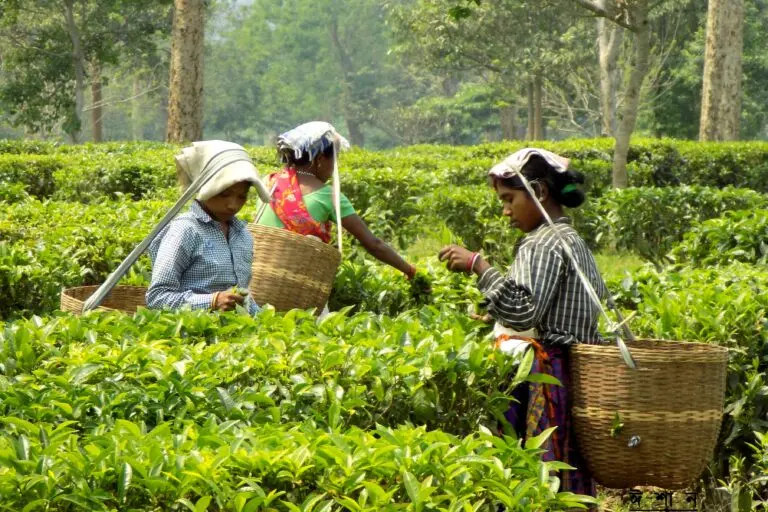
For Assam’s tea industry—the backbone of its economy—the rising Heat Index is a direct threat to the health of outdoor workers. Tea pluckers, primarily women, work in high-humidity environments where the risk of heat exhaustion is constant. Without localized HAPs that mandate work-rest cycles and hydration stations based on the Heat Index rather than just air temperature, the labor force faces long-term health degradation.

4. The Need for Public Awareness
Experts agree that the first step in building resilience is changing how heat is communicated to the public. "IMD should publicly disseminate heat indices that account for ‘feels-like’ temperatures," argues Das. If the public only hears that it is 36°C, they may not take the necessary precautions, unaware that their body is actually contending with the equivalent of 52°C.
Conclusion
As the climate continues to shift, the traditional definitions of environmental hazards must evolve. Assam’s experience proves that a "heatwave" is not merely a number on a dry thermometer, but a complex physiological challenge driven by the invisible weight of humidity.
The proposed Heat Action Alliance and the development of a localized, multi-criteria HAP are critical steps forward. However, for the people of Guwahati, Silchar, and Dibrugarh, the transition from "disaster relief" to "anticipatory action" cannot come soon enough. In the humid corridors of the Northeast, the sun is no longer the only enemy—the air itself has become a source of silent, sweltering danger.
